
 Worksheets
Ch 7 - Types & Benefits of PA, Enablers & Barriers Quiz
Total questions: 77
Worksheet time: 39mins
What is physical activity? Fill in the blank: Physical activity is any activity that involves or requires some form of _________.
physical exertion
mental relaxation
digital interaction
verbal communication
Which of the following are types of physical activity? (Select all that apply)
Chores
Play
Games
Exercise
Sports (informal and formal)
Which of the following are benefits of engaging in regular movement?
Improved physical health, enhanced mood, increased energy levels
Decreased physical health, increased stress, lower energy
Weaker immune system, poor sleep, reduced focus
Increased risk of disease, lower mood, less energy
Two sociocultural factors that can act as both enablers and barriers to individual physical activity are:
Gender and socioeconomic status
Weather and genetics
Age and diet
Technology and environment
Fill in the blank: Factors that can influence physical activity and sedentary behaviour include socioeconomic status (SES), ________, cultural norms, and peers.
Community
Weather
Technology
Diet
The barriers and enablers of physical activity and sedentary behaviour can differ greatly from person to person and across the lifespan.
True
False
Fill in the blank: Sedentary behaviour involves activities requiring little to no ________.
movement
noise
light
food
What is the purpose of the Australian Physical Activity and Sedentary Behaviour Guidelines?
To restrict physical activity
To educate people about the benefits of being active and the dangers of being inactive
To promote only sedentary behaviour
To encourage unhealthy habits
Fill in the blank: The Australian Physical Activity and Sedentary Behaviour Guidelines have been developed for children, adolescents, adults and ________ Australians.
older
young
urban
female
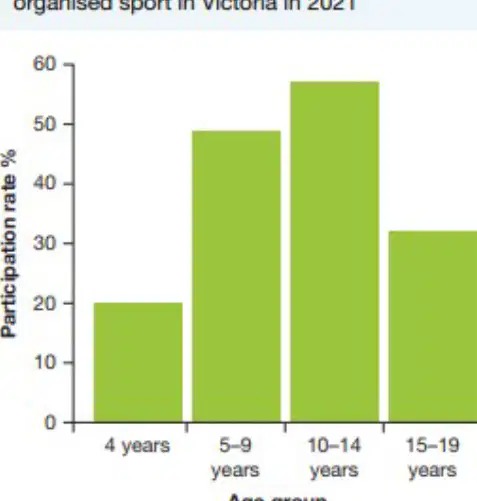
Based on the bar graph showing participation in organised sport in Victoria in 2021, which age group had the highest participation rate?
4 years
5-9 years
10-14 years
15-19 years
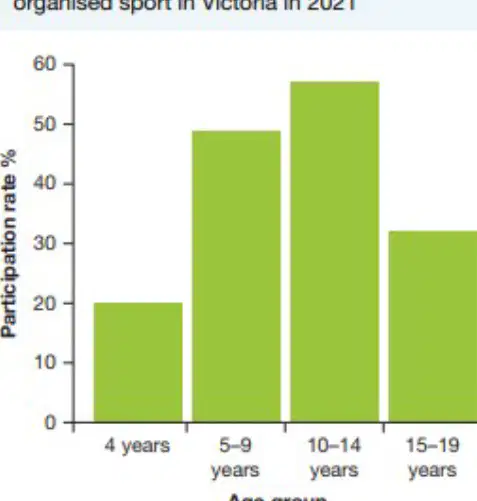
The participation rate in organised sport for the 15-19 years age group is higher than that for the 5-9 years age group, according to the bar graph for Victoria in 2021.
True
False
Which type of physical activity is described as 'Activities engaged in for enjoyment and recreation, rather than a serious or practical purpose'?
Play
Exercise
Chores
Transportation
Which type of physical activity is characterized by being 'Rule-exist' and 'Goal-oriented'?
Games
Sports
Informal sports
Recreational activities
Which type of physical activity involves 'physical exertion and skill, in which an individual or team competes against another or others for entertainment'?
Sports
Chores
Exercise
Play
Which type of physical activity is described as 'Self-organized activities with adaptable rules and organization'?
Informal sports
Games
Transportation
Exercise
Which type of physical activity involves 'Travel between destinations that involves physical movement'?
Transportation
Exercise
Chores
Play
Which type of physical activity is 'carried out to sustain or improve health and fitness'?
Exercise
Play
Chores
Games
Which type of physical activity is described as 'Routine tasks, for example, jobs done around the house'?
Chores
Sports
Recreational activities
Games
Which type of physical activity is described as 'Leisure activities. Leisure is discretionary time, which is time outside of work and study commitments'?
Recreational activities
Exercise
Play
Transportation
According to the diagram, regular physical activity promotes physical health in many ways. One benefit of regular physical activity is ________ body weight.
healthy
excessive
unstable
increasing
Which of the following is a physical benefit of regular physical activity?
Boosted immune system
Poor sleep
Increased stress
Weaker muscles
According to the textbook regular physical activity can lead to reduced ________ risks.
health
financial
environmental
educational
Name two physical benefits of regular physical activity.
Improved heart health and increased energy levels
Decreased bone strength and poor sleep
Weaker muscles and higher stress
Slower metabolism and increased fatigue
Regular physical activity promotes mental health in many ways. Fill in the blank: One mental benefit of regular physical activity is ________ thought patterns.
positive
confused
negative
disorganized
Regular physical activity promotes mental health in many ways. Fill in the blank: One mental benefit of regular physical activity is reduced ________ levels.
stress
sugar
oxygen
calcium
Regular physical activity promotes mental health in many ways. Fill in the blank: One mental benefit of regular physical activity is improved thinking and ________ processing.
information
muscle
oxygen
sugar
Regular physical activity promotes mental health in many ways. Fill in the blank: One mental benefit of regular physical activity is increased self-________.
confidence
doubt
neglect
isolation
Regular physical activity promotes mental health in many ways. Fill in the blank: One mental benefit of regular physical activity is increased self-________.
esteem
doubt
neglect
pity
Regular physical activity promotes emotional health in many ways. Fill in the blank: One emotional benefit of regular physical activity is a _________.
positive mood
increased stress
decreased energy
negative attitude
Regular physical activity helps build _________, which is an emotional benefit of being active.
resilience
confusion
laziness
ignorance
Regular physical activity provides emotional benefits, such as encouraging the appropriate display of _________.
emotions
colors
numbers
furniture
Fill in the blank: Regular physical activity promotes social health and benefits by providing ______
wider exposure to new people.
limited exposure to new people.
narrow exposure to new people.
rare exposure to new people.
Fill in the blank: Regular physical activity can lead to social benefits such as _________
improved communication skills
improved cooking skills
less stress
less health concerns
Fill in the blank: Regular physical activity can result in the following social benefit.
reduced feelings of isolation and lonelines
greater muscle and bone strength
more excitement
better emotional control
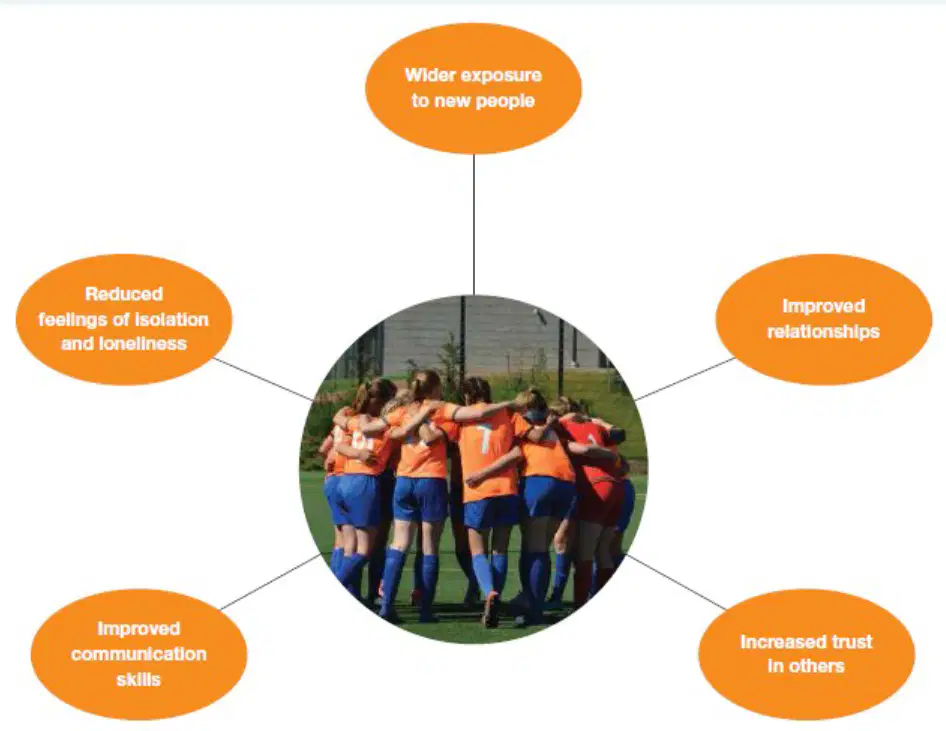
Fill in the blank: Regular physical activity can lead to improved ______.
relationships
weather
furniture
traffic
Regular physical activity promotes spiritual health in a variety of ways. One benefit is a deepened connection to ________.
nature
technology
money
competition
Regular physical activity promotes spiritual health in a variety of ways. One benefit is an enhanced sense of mindfulness and spiritual ________.
awareness
confusion
neglect
ignorance
Regular physical activity promotes spiritual health in a variety of ways. One benefit is an elevated state of ________.
serenity
confusion
agitation
boredom
Regular physical activity promotes spiritual health in a variety of ways. One benefit is an improved sense of ________.
belonging
confusion
loneliness
boredom
Which of the following is an enabler that helps children adopt physical activity behaviours modelled by their family?
Lack of role models
Role models
Limited resources
Lack of opportunities
Providing access to sports equipment and coaching is an example of which enabler?
Resources
Encouragement
Shared activities
Opportunities
Inclusion in shared physical activities, such as hikes or bike rides, strengthens family bonds and promotes a healthy lifestyle.
True
False
Active parents and siblings can create a variety of opportunities for physical activity, encouraging participation.
True
False
Absence of active role models in the family is a barrier to physical activity.
True
False
Limited access to resources restricts children's ability to engage in and explore a variety of physical activities.
True
False
Absence of shared physical activities within the family limits the exposure to physical activity and reduces opportunities for bonding and modelling healthy behaviours.
True
False
A lack of opportunities reduces children's exposure to and participation in physical activities, limiting their ability to develop an active lifestyle.
True
False
Fill in the blank: Participation in sports is often motivated by the desire to be part of a ________ group.
friendship
competitive
isolated
rival
Peers provide essential _________________, which are vital for staying active, especially during recovery from injuries. Which enabler does this describe?
Motivation to participate
Support and encouragement
Accountability and performance
Introduction to new activities
Friends can serve as gym buddies, fostering __________ and participation in regular exercise. It also provides competitive but friendly rivalries that can enhance performance. Which enabler is being described?
Motivation
encouragement
Accountability
Introductions
In skill-based sports, not matching the proficiency levels of friends can diminish motivation and lead to avoidance of physical activities. Which barrier does this describe?
Social exclusion
Undervaluing physical activity
If the peer group undervalues physical activity in favour of sedentary activities, such as video gaming, individuals are likely to mirror these habits, reducing their overall activity levels. Which barrier is being described?
Social exclusion
Undervaluing physical activity
How does higher income enable access to physical activity according to the table?
Higher incomes facilitate access to a diverse range of exercise facilities and equipment.
Higher incomes limit the availability of exercise options in the community.
Higher incomes reduce the motivation to participate in physical activities.
Higher incomes restrict access to public parks and recreational areas.
What is one example of how income(SES) can enable physical activity?
Affordability of gym memberships allows for regular use of specialised facilities, such as swimming pools, enhancing physical activity opportunities.
Income determines the color of sports uniforms, which can motivate individuals to exercise more.
Higher income guarantees better weather conditions for outdoor activities.
Income directly increases an individual's physical strength, making activity easier.
How do higher levels of education and occupational status influence physical activity?
Higher levels of education and occupational status lead to a greater understanding of the benefits of physical activity.
They decrease the likelihood of engaging in any physical activity.
They have no impact on physical activity levels.
They discourage participation in physical activity.
Individuals with higher SES are more likely to engage in regular physical activity due to what reasons?
Comprehensive awareness and better time-management skills.
Limited access to recreational facilities.
Lack of motivation and support.
Increased work-related stress.
How does access to equipment act as an enabler for physical activity?
Higher SES provides the ability to afford personal fitness equipment or gym memberships.
It reduces the need for any physical effort.
It guarantees professional athletic performance.
It eliminates the need for motivation to exercise.
What is an example of how higher-income individuals benefit from access to equipment?
Higher-income individuals can access strength-training equipment and other resources, enhancing their ability to maintain an active lifestyle.
Higher-income individuals have less access to public parks and recreational areas.
Higher-income individuals are less likely to use any fitness equipment due to busy schedules.
Higher-income individuals face more barriers to physical activity than lower-income individuals.
How does transportation act as an enabler for physical activity according to the table?
Higher SES provides better access to transportation, facilitating access to physical activity venues.
Transportation limits access to physical activity venues for all SES groups equally.
Transportation is unrelated to physical activity opportunities.
Lower SES groups have more transportation options, increasing physical activity.
According to the table, how does income(SES) act as a barrier to physical activity?
Lower incomes may restrict access to exercise facilities and equipment.
Higher incomes always guarantee better physical fitness.
Income has no effect on physical activity participation.
Lower incomes increase motivation to exercise.
What is an example of how lower income can be a barrier to physical activity?
Individuals with lower incomes face limitations in accessing specialised facilities, such as swimming pools, reducing physical activity options.
Lower income individuals are more likely to have access to private gyms.
Lower income individuals often receive free memberships to sports clubs.
Lower income individuals are provided with more opportunities for physical activity at work.
How do chronic diseases act as a barrier to physical activity for those with lower SES?
Having a lower SES is associated with higher rates of chronic diseases, hindering physical activity.
Chronic diseases are less common in lower SES groups, making physical activity easier.
Lower SES individuals have more access to healthcare, reducing the impact of chronic diseases on activity.
Chronic diseases encourage more physical activity among those with lower SES.
Which is an example of how chronic diseases can be a barrier to physical activity?
Physical limitations from chronic conditions reduce activity levels in lower SES groups, exacerbating health disparities.
Chronic diseases always increase motivation for physical activity in all SES groups.
Chronic diseases have no impact on physical activity levels regardless of SES.
Chronic diseases only affect physical activity in high SES groups.
How does transportation act as a barrier to physical activity for those with lower SES?
Having a lower SES may limit efficient transportation options to physical activity venues.
Lower SES individuals have more access to private gyms.
Public transportation is always free for lower SES groups.
Lower SES individuals are more likely to own personal vehicles.
What is an example of how transportation can be a barrier to physical activity for those with lower SES?
Reliance on public transportation with fewer direct routes and longer travel times makes accessing physical activity locations more challenging for those from a lower SES background.
Having access to a private gym within walking distance in every neighborhood.
Owning multiple cars that provide easy access to recreational facilities.
Living in an area with abundant bike lanes and pedestrian paths.
Match each barrier to its impact on women's participation in physical activity:
Role models
Limited access to necessary facilities and programs, reducing participation
Gender stereotypes
Self-imposed exclusion from a range of sports due to stigma
Limited opportunities
Further limits access for female athletes, decreasing participation
Societal emphasis on male-dominated sports
Suggests women’s sports are less important, reducing their appeal
Media coverage and sponsorship
Results in inadequate facilities due to under-investment, creating barriers to participation
Fill in the blank: Racial discrimination can deter participation and access to physical activities. An example is an individual being treated differently because of their ______ or cultural background.
ethnic
athletic
economic
academic
Fill in the blank: Limited opportunities mean fewer opportunities for sports that hold cultural significance. An example is that traditional First Nations games do not get as much formal recognition as mainstream sports such as ______.
basketball
lacrosse
badminton
archery
Providing program details in multiple languages to improve accessibility is an example of ______ information. Providing information about sports in languages other than English is an example.
multilingual
monolingual
digital
visual
Fill in the blank: Adjusting programs to be culturally sensitive and inclusive is called ______. Netball Australia’s One Netball program is an example.
cultural accessibility
cultural assimilation
cultural segregation
cultural exclusion
Fill in the blank: Allowing adjustments for cultural practices within sports programs is an example of flexibility in ______. Muslim former AFL player Bachar Houli being allowed to pray during training is an example.
programs
equipment
rules
coaching
Fill in the blank: Promoting multicultural role models and awareness programs is an example of role models and ______. AFL’s multicultural round is an example.
awareness
competition
training
sponsorship
Fill in the blank: Some sports get more attention than others. Swimming is considered to be a national sport in Australia. Factors such as Australia’s extensive coastline influence this perception, and high-profile swimmers are ______ models for many.
role
goal
doll
whole
Fill in the blank: In certain regions, specific sports are more popular (e.g. rugby in Queensland and New South Wales, and AFL in Victoria). This regional preference can boost _______ and interest in these sports.
participation
conflict
decline
confusion
Fill in the blank: In some areas, high crime rates may deter people from engaging in outdoor activities such as running, walking, or bike riding, due to _______ concerns.
safety
weather
financial
dietary
Which of the following is an enabler for physical activity participation related to safety?
High crime rates
Safe communities that cater to the needs of the public who want to exercise
Lack of sporting teams
Reduced opportunities for participation
Which of the following is a barrier to physical activity participation related to availability to sports?
Regional preference for specific sports
Safe communities
Challenging to find enough people to fill sporting teams in country towns
Increased physical activity participation

