
 Worksheets
DNA Structure and Base Pairing Mini-Quiz
Total questions: 9
Worksheet time: 6mins
Identify where DNA is located in the cell.
Golgi apparatus
Cytoplasm
Nucleus
Rough ER
DNA has the shape of a:
Double helix
Single strand
Circle
Square
The function of DNA is:
To store genetic information
To provide energy for the cell
To transport oxygen in the blood
To break down nutrients
DNA is like a blueprint for your cells because it:
Provides instructions for building and operating the cell
Stores energy for the cell
Protects the cell from viruses
Helps the cell move
If there is an error in the way the bases are set up, what might happen?
The genetic code may be read incorrectly, leading to mutations.
The DNA will become stronger.
The cell will divide faster.
No changes will occur.
Determine the complementary DNA strand for the given DNA strand: CGT AAG CGC TAA TTA
GCA TTC GCG ATT AAT
GCT TTC GCC TAT TAT
CGT AAG CGC TAA TTA
TGC AAC GCT ATT TAA
Determine the complementary DNA strand for the given DNA strand: TCT TAA ATG ATC GAT
AGA ATT TAC TAG CTA
AGA TTA TAC TAG CTA
TCT ATT TAC TAG CTA
AGA ATT TAC ATC CTA
Determine the complementary DNA strand for the given DNA strand: AAT GAA TAG CTA GCT
TTA CTT ATC GAT CGA
AAT GAA TAG CTA GCT
TTA GTT TAC GAA CGA
TTA CTT TAC GAT CGT
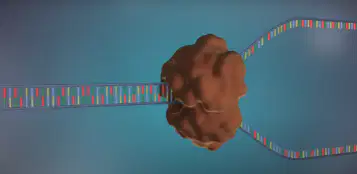
Which of the following correctly describes the three basic steps of DNA replication and identifies the enzymes involved in each step?
1. Unwinding of DNA by helicase, 2. Synthesis of new strands by DNA polymerase, 3. Joining of fragments by DNA ligase
1. Unwinding of DNA by DNA polymerase, 2. Synthesis of new strands by helicase, 3. Joining of fragments by DNA ligase
1. Unwinding of DNA by ligase, 2. Synthesis of new strands by helicase, 3. Joining of fragments by DNA polymerase
1. Unwinding of DNA by DNA ligase, 2. Synthesis of new strands by DNA polymerase, 3. Joining of fragments by helicase

