wayground logo

Free Printable Worksheets

Font size

S
M
L
XL
Worksheets

World War I History Quiz 3-4

Total questions: 26

Worksheet time: 13mins

Name
Class
Date
1.
How did the power of the U.S. government change during World War I?
a)

It expanded; gov. takes control over the economy

b)

It was weakened significantly due to war fatigue

c)
It became decentralized to the states
d)

It was handed over to generals in a military dictatorship

2.
What major role did the War Industries Board (WIB) play during WWI?
a)

It raised taxes on industry profits to redistribute among citizens

b)
It encouraged mass production and increased output
c)
It organized military training programs
d)

It handled foreign diplomacy with Central Powers

3.
Which of the following was NOT a method used by the Food Administration to conserve food?
a)
Declaring “meatless” and “wheatless” days
b)
Planting victory gardens
c)
Having children grow food in parks
d)
Mandatory food rations and ration cards
4.
How did the U.S. government raise about one-third of the money needed for the war?
a)
By cutting domestic spending
b)
Through income tax and sin taxes
c)
By raising tariffs on imported goods
d)
By confiscating German-owned businesses
5.
How did the government raise the rest of the war funding?
a)

By seizing assets in German-controlled Canada

b)
Through the sale of Liberty and Victory Bonds
c)

By selling its colonies, namely the Philippines, back to Spain

d)

Cryptocurrency and NFT rug-pulls

6.
Who led the Committee on Public Information, the U.S.'s first propaganda agency?
a)
William McAdoo
b)
George Creel
c)
Bernard Baruch
d)
Herbert Hoover
7.
Which laws were passed to silence anti-war dissent and limit civil liberties during WWI?
a)
War Powers Resolution
b)
Civil Restrictions Code
c)
Alien and Enemy Acts
d)
Espionage and Sedition Acts
8.
What was the Great Migration during World War I?
a)
The relocation of troops to the Western Front
b)
A mass deportation of German immigrants
c)

Movement of African Americans from the South to the North

d)
The movement of women into industrial jobs
e)

Moses leading the Israelites to the Promised Land

9.
What impact did women have on the U.S. home front during the war?
a)
They primarily supported through domestic duties
b)
They were drafted for military service
c)
They filled many industrial and support jobs left by men
d)
They moved into government leadership roles
10.
What major crisis struck the United States in the fall of 1918?
a)
A stock market crash
b)
A wave of labor strikes
c)
A severe drought across the Midwest
d)

A deadly flu epidemic

11.
What was the primary goal of Wilson’s Fourteen Points?
a)
To outline a plan for lasting peace after WWI
b)
To punish Germany for starting the war
c)
To reduce U.S. involvement in world affairs
d)
To increase U.S. colonial power
12.
Which of the following was NOT one of Wilson’s Fourteen Points?
a)
Freedom of the seas
b)
No secret treaties
c)
Reduction of arms
d)
Expansion of colonial empires
13.
What was the purpose of the League of Nations, as proposed in Wilson’s plan?
a)
To promote peace and prevent future wars
b)
To enforce war reparations
c)
To support American economic interests
d)
To create a unified world government
14.
What did Wilson give up to ensure the League of Nations would be included in the treaty?
a)
U.S. control over European trade
b)
His domestic policy agenda
c)
Most of his Fourteen Points
d)
American neutrality
15.
Where was the Treaty of Versailles signed?
a)
Hall of Mirrors at Versailles
b)
The Palace of Nations in Geneva
c)
Château de Chantilly
d)
The Paris Convention Center
16.
What major consequence did the Treaty of Versailles impose on Germany?
a)
Required them to join the League of Nations
b)
Barred them from trade with other nations
c)
Forced them to admit guilt and pay $33 billion in reparations
d)
Turned them into a British protectorate
17.
What happened to the Austro-Hungarian and Ottoman Empires after WWI?
a)
They expanded into Eastern Europe
b)
They merged to form a new superpower
c)
They were broken up into several new nations
d)
They went under American control
18.
Why did many U.S. senators oppose joining the League of Nations?
a)
They feared it would force the U.S. into foreign wars
b)
They believed it would lead to tax increases
c)
They wanted more economic concessions
d)
They thought it would reduce states' rights
19.
What was the final decision of the U.S. Congress regarding the Treaty of Versailles?
a)
It ratified the treaty but rejected the League
b)
It approved the treaty with reservations
c)
It rejected both the treaty and the League of Nations
d)
It passed it through executive action
20.
Which of the following best describes the long-term legacy of World War I?
a)
Worldwide transition to communism
b)
A peaceful and cooperative Europe
c)
Political instability and unresolved conflicts
d)

Holding hands and singing Kumbaya

21.

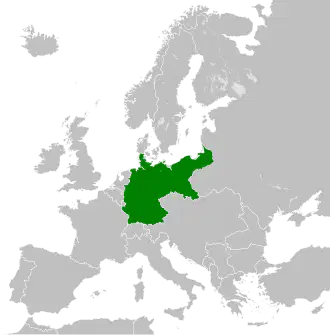
What Empire is pictured here?

a)

German Empire

b)
Ottoman Empire
c)

Russian Empire

d)

Byzantine Empire

22.

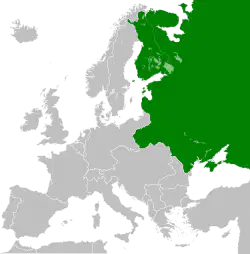
What empire is pictured here?

a)

German Empire

b)

French Empire

c)

Russian Empire

d)
Ottoman Empire
23.

What empire is featured here?

a)

Austro-Hungarian Empire

b)

German Empire

c)
Ottoman Empire
d)

Russian Empire

24.

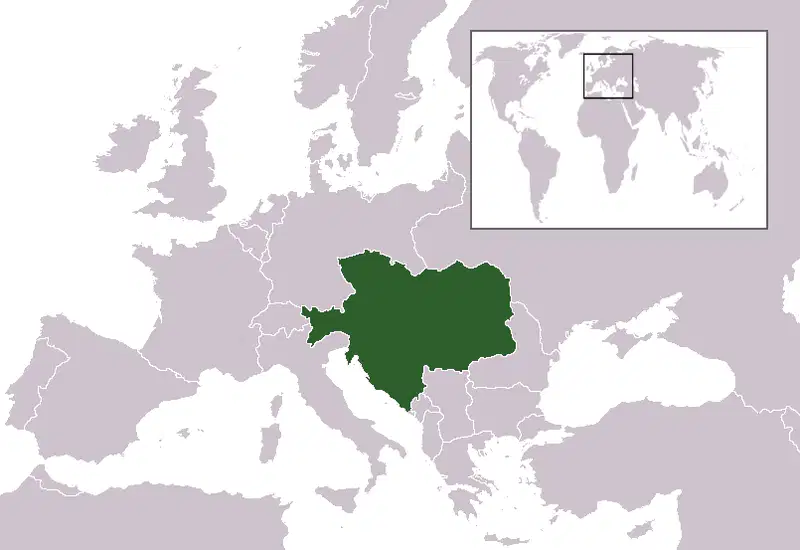
What empire is featured here?

a)

American Empire

b)

French Empire

c)

German Empire

d)

Austro-Hungarian Empire

25.

What empire is featured here?

a)

Byzantine Empire

b)

Holy Roman Empire

c)

Mongol Empire

d)

Austro-Hungarian Empire

26.

What country listed here was NOT created from the fall of the Austro-Hungarian Empire?

a)
Czechoslovakia
b)
Hungary
c)
Yugoslavia
d)

Hapsburgia