
 Worksheets
HMS- Respiratory System
Total questions: 15
Worksheet time: 8mins
What is the main goal described in the material?
To explain the structure of the digestive system
To explain the interrelationship between the respiratory and circulatory systems and movement
To describe the process of photosynthesis
To list the organs of the nervous system
What process occurs when oxygen enters the blood and carbon dioxide exits the lungs?
Photosynthesis
Gaseous exchange
Filtration
Fermentation
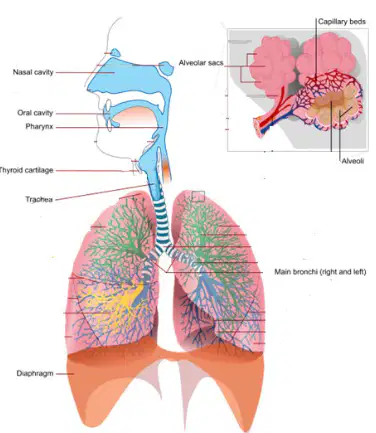
Why is it important for the respiratory system to have separate sections such as air passages, lungs, and diaphragm?
Each section performs a specific function necessary for breathing and gas exchange.
It makes the system more complex for no reason.
It helps the body digest food.
It allows the body to move faster.
Which part of the respiratory system is responsible for producing sound when air passes over it?
Trachea
Larynx
Bronchi
Alveoli
Where does air enter the respiratory system?
Through the alveoli
Through the bronchioles
Through the nasal cavity and mouth
Through the larynx
Explain how diffusion occurs in the alveoli and why it is important for respiration.
Diffusion moves gas from low to high concentration, which helps filter air.
Diffusion moves gas from high to low concentration, allowing O₂ and CO₂ to be exchanged efficiently.
Diffusion only occurs in the nasal cavity to warm the air.
Diffusion is not involved in respiration.
What is the primary function of the trachea?
To produce sound
To trap dust particles
To act as the major airway to the lungs and divide into the bronchi
To carry food to the oesophagus
Describe the functional significance of having bronchi, bronchioles, and alveoli within the lungs.
They help filter blood
They increase the surface area for gas exchange and ensure efficient oxygen delivery to the bloodstream
They produce digestive enzymes
They regulate body temperature
Why is diffusion important in the process of respiration?
It allows the movement of gases from low to high concentration.
It enables the exchange of oxygen and carbon dioxide at specific sites in the body.
It helps in the digestion of food.
It produces glucose from water.
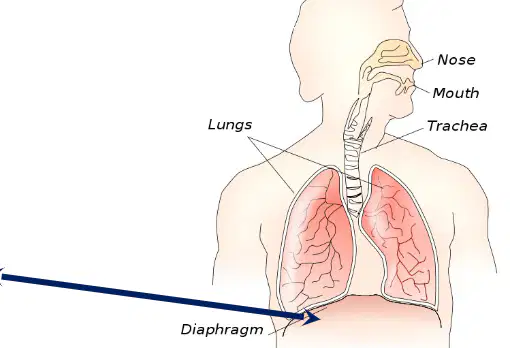
Explain how the diaphragm contributes to the process of breathing.
By pumping blood through the lungs
By contracting and relaxing, changing the size of the chest cavity and causing air to move in and out of the lungs
By filtering air before it enters the lungs
By producing mucus to trap dust particles
Which structure divides into smaller branches called bronchioles once inside the lungs?
Bronchus
Alveoli
Lungs
Trachea
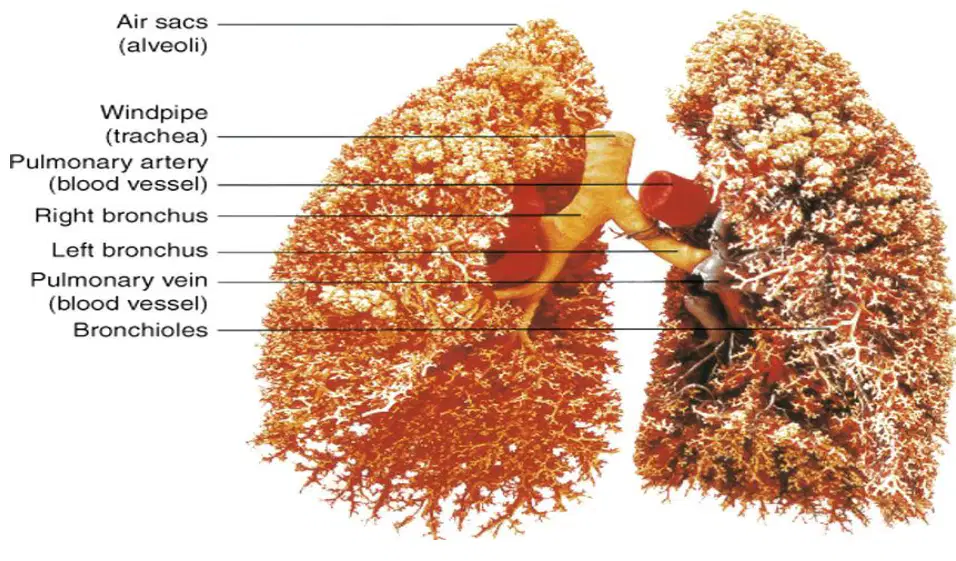
Explain how the structure of the bronchioles supports their function in the respiratory system.
Their small diameter allows for efficient gas exchange by increasing surface area.
Their thick walls help pump air into the lungs.
Their rigid structure prevents collapse during breathing.
Their large size allows for rapid movement of blood.
When humans inhale, through which structures does oxygen pass before reaching the trachea?
Mouth and nose, then larynx
Larynx and alveoli
Bronchi and bronchioles
Alveoli and pharynx
What is the main function of the alveoli in the human lungs?
To produce speech sounds
To filter dust from the air
To exchange gases between the lungs and the blood
To move air into the trachea
Why is the removal of carbon dioxide from the body important for humans?
It prevents the buildup of poisonous gases and allows efficient movement
It increases the amount of blood in the body
It helps in the digestion of food
It strengthens the bones

