
 Worksheets
KRUSKAL WALLIS TEST
Total questions: 17
Worksheet time: 10mins
1. The Kruskal-Wallis test is used to compare how many samples :
A. Two independent samples
B. More than two related samples
C. More than two independent samples
D. One sample at two time points
2. The Kruskal-Wallis test is a :
A. Parametric test
B. Non-parametric test
C. Z-test
D. T-test
3. Which of the following assumptions is NOT required for the Kruskal-Wallis test?
A. Random sampling
B. Normal distribution
C. Independent observations
D. Ordinal or continuous data
4. The Kruskal-Wallis test is an alternative to which parametric test?
A. Independent t-test
B. One-way ANOVA
C. Paired t-test
D. Chi-square test
5. In the Kruskal-Wallis test, what is ranked before calculating the test statistic?
A. Means of groups
B. Medians of groups
C. Raw data values
D. Ranks of all observations across groups
6. What type of data is suitable for the Kruskal-Wallis test?
A. Nominal
B. Ordinal or interval (non-normal)
C. Ratio with normal distribution
D. Only binary
7. After finding a significant result in the Kruskal-Wallis test, what should be done next?
A. Do nothing, the test is complete
B. Perform post-hoc tests
C. Re-run the test with fewer groups
D. Convert to ANOVA
8. The Kruskal-Wallis test is used to compare the means of more than two groups.
The Kruskal-Wallis test is a non-parametric alternative to one-way ANOVA.
The Kruskal-Wallis test assumes that the data in each group are normally distributed.
Post-hoc tests are not needed after a significant Kruskal-Wallis test result.
Which of the following is the correct formula for the Kruskal-Wallis test ?

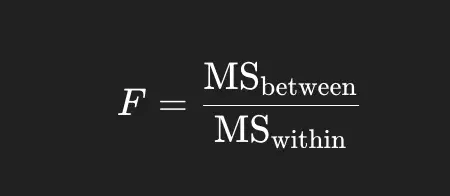
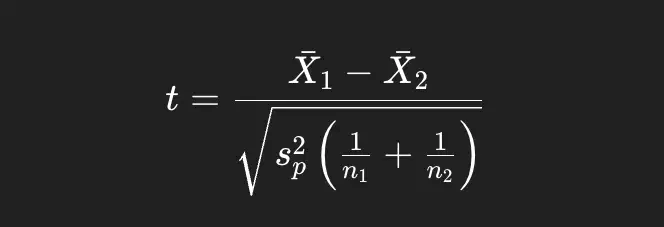
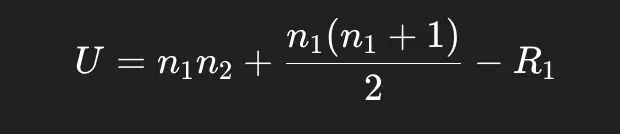
Which of the following represent potential future scopes or applications of the Kruskal-Wallis test?
SUSTAINABILITY DOMAIN !!!!!
Analyzing user behavior across multiple platforms in UX research
Comparing effectiveness of multiple non-normally distributed treatments in healthcare studies
Evaluating customer satisfaction ratings across different regions for a product
9. Which of the following is a limitation of the Kruskal-Wallis test?
D. It can only be used for paired samples
A. It cannot handle more than three groups
B. It does not provide information about which groups are different
C. It requires normally distributed data
10. In the context of the Kruskal-Wallis test, what does a significant result indicate?
A. All groups have the same median
D. The sample sizes are equal
C. The data is normally distributed
B. At least one group differs from the others
11. What is the primary purpose of the Kruskal-Wallis test?
C. To compare the medians of more than two independent groups
A. To compare variances across groups
D. To test for normality in data
B. To assess the relationship between two variables
In the Kruskal-Wallis test, to reject the null hypothesis at the 5% significance level, the p-value must be less than what value?
p-value = ?
(a)

