
 Worksheets
Chemistry 2nd Semester Review
Total questions: 77
Worksheet time: 3hrs 34mins
An exothermic reaction means the transfer to heat energy goes from the (a) to the (b)
You have 150g of water that is heated from 10.0°C until its temperature is 27°C. If the specific heat of water is 4.18 J/g°C, calculate the amount of heat energy needed to cause this rise in temperature. (type answers in without units and no decimals)
(a)
A negative Q value means...
it was exothermic
it was endothermic
energy left and entered the system
it was reactive
If a sample of 5.2 g of water (c=4.18) loses 7,923 J of energy, what was the change in temperature?
364.5 Co
-364.5 Co
11,000 Co
32 Co
Calculate ΔT when a substance goes from 10*C to 75*C
-65*C
75*C
10*C
65*C
Calculate A 50g sample is heated with 500 joules of energy and has a 10*C temperature change. Calculate it’s specific heat.
1 j/g*C
250000 j/g*C
500 j/g*C
10 j/g*C
A sample of a compound has a mass of 77 g and a specific heat of 0.885 J/g*K. In order to increase the temperature by 25 degrees Celsius, how much heat must be added? ( q=mcΔT )
-3.48 J
3.48 J
1704 J
-1704 J
A sample of a compound has a mass of 30 g and a specific heat of 0.258 J/g*K. If its temperature drops 40 K, how much heat was released? ( q=mcΔT )
309.6 J
-309.6 J
465 J
-465 J
The quantity of heat required to change the temperature of 1 g of water 1 C
Specific Heat
Heat
Joule
Calorie
The law of conservation of energy states that
in any chemical or physical change, energy cannot be created or destroyed, only changed in form.
heat changes occur during chemical and physical changes.
energy is the capacity to do work or to supply heat
there are two types of energy, kinetic and potential
What device is used to measure the amount of heat involved in a chemical reaction or physical process?
barometer
calorimeter
thermometer

A mixture with more solute dissolved in the solvent than is usually soluble is called:
concentrated
supersaturated
saturated
unsaturated


How does a solution become supersaturated?
Vigorous stirring to dissolve more solute than usual.
Heat the solution to increase the solute then let it cool.
Add more solvent to lower the concentration.
Keep pouring solute in the solvent until it goes in.


Which of the following actions would dilute a solution?
Adding more solute
Removing some solvent
Adding more solvent
Heating the solution
Which of the following solutions is the most dilute?
25 ml citric acid
50 ml water
10 ml citric acid
50 ml water
25 ml citric acid
150 ml water
75 ml citric acid
150 ml water
Jackson is making dinner and is trying to dissolve salt into a pot of water. The salt is dissolving slowly. What should Jackson do to speed up the rate of dissolving?
He should put larger salt particles in the water.
He should heat the water to a higher temperature.
He should completely stop stirring the pot of water.
He should slow down the speed he is stirring the pot.
What combination would dissolve a solid solute the fastest?
high temperature, no stirring
no heat, no stirring
sugar cube, no heat
high temperature, stirring
What is the molarity of 1.2 moles of CaCO3 in 1.22 L of solution?
0.98 M
9.8 M
5.11 M
0.16 M
What is the percent by mass of a solution made by dissolving 20.0 g of NaCl into 180.0 g of water?
10.0 %
11.1 %
80.0 %
20.0 %
What is the percent concentration of sugar in pink lemonade if 28 g of sugar is added to 209 g of water?
14.7 %
5.14 %
13.4 %
8.47 %
11.8 %

For the problem below, what is the value for the final pressure?
A gas with a volume of 4.0 L at 90.0 kPa expands until the pressure drops to 20.0 kPa. What is its new volume if the temperature doesn’t change?
14.0 L
20.0 L
90.0 L
18.0 L
1.25 L
1.56 L
0.173 L
None of these is very close.
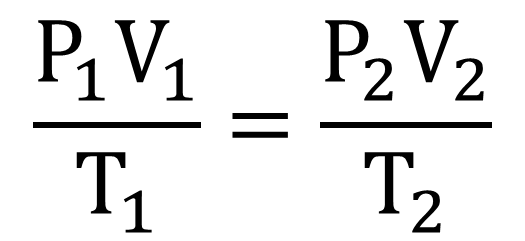
The coldest temperature, 0 Kelvin, that can be reached. It is the temperature at which all molecular motion stops.
Zero Celsius
Freezing Point
STP
Absolute Zero
a hypothetical gas that perfectly fits all the assumptions of the kinetic-molecular theory
Real Gas
Ideal Gas
Standard Gas
Universal Gas
Movement of molecules from an area of higher concentration to an area of lower concentration.
Effusion
Diffusion
Ideal Gas
Kinetic Molecular Theory
An instrument that measures atmospheric pressure
Barometer
Thermometer
Spirometer
Altimeter

Which factors increase the rate of a reaction?
increasing temperature
increasing concentration
increasing surface area
all of the above
Which alteration will shift the equilibrium reaction below to form more reactants? NH4Cl + heat <-> NH3 + HCl
Increase concentration of NH3 and HCl
decrease concentration of NH3 and HCl
increase the temperature
add a catayst
N2(g) + 3H2(g) ↔ 2NH3(g)
Increasing the concentration of N2(g) will increase the forward reaction rate due to
N2(g) + 3H2(g) --> 2NH3(g) + energy
Which change causes the equilibrium to shift to the right?
Which direction does the reaction shift if N2 was removed?
Which direction does the reaction shift if H2 was removed?

Consider the following reaction. What would be the equilibrium constant expression?
4Br2(g) + CH4(g) ↔ 4HBr(g) + CBr4(g)
Kc = [Br2]4 [CH4]/ [HBr]4 [CBr4]
Kc = [HBr]4 [CBr4]/ [Br2]4 [CH4]
Kc = [HBr ]/ [Br2]4 [CH4]
Kc = [HBr]4 [CBr4]/ [Br2]4 [CH]4

What is the reaction/equation for this Kc expression
2N2 + O2 ⇌ 2NO
N2 + O2 ⇌ NO
NO ⇌ 2NO
N2 + O2 ⇌ 2NO
When acid and base react with each other.what compound are formed?
Water only
Metal oxide only
Salt and water
All the above
What is the nature of water
Acidic
Basic
Netural
None of the above

This image represents
neutralization reaction
synthesis
decompostion
single displacement
Which is the correct set of acid properties?
sour taste, reacts with metals, change litmus paper blue
sour taste, reacts with metals, change litmus paper red
bitter taste, slippery, change litmus paper red
sour taste, slippery, change litmus paper red
According to Bronsted-Lowry, what does an acid do?
It donates a proton (H+).
It accepts a proton (H+)
It produces H+ in water.
It produces OH- in water.
What is the Lewis definition of acid and bases (Remember what do we know Lewis from?)
Acids have H
Bases have OH
Acids are proton donors
Bases are proton acceptors
Acids can gain protons, Bases can lose protons
Acids are electron acceptors
Bases are electron donors
Which of the following pH values represents a base?
2.1
4.6
6.8
8.1
The strongest bases have pH values close to
0
14
7
5
NaOH is a strong base.
What is the pH of a 0.01 M NaOH soltuion?
2
9
12
14
The pH of a solution is 8.43. What is the hydrogen ion H+ concentration?
3.7 x 10⁻⁹ M
2.7 x 10⁻⁶ M
1.0 x 10-8.43 M
1.0 x 10⁻¹⁴
If the [H+] of a solution is 6.8 x 10⁻⁹ M, the pH is
8.17
5.73
9.99
8.62
if the [H+] of a solution is 8.4 x 10⁻³ M, the pOH of the solution will be
2.08
11.92
1.02
12.98
What is the pOH of a solution where the [OH-] is 7.3 x 10⁻² M?
-1.14
1.14
2.01
11.99
Find the pH of a solution with [OH-] = 8.41 x 10⁻⁴.
3.08
10.92
9.88
11.23

