
 Worksheets
3 Fixing Plasterboard
Total questions: 15
Worksheet time: 8mins
Which one of the following documents shows information on types of fixings for plasterboard?
COSHH assessment.
Specification.
Risk assessment.
Method statement.
A material schedule will provide information on
standards
types of plasterboard
method of fixing
manufacturers.
Accurate cutting and measuring of plasterboard will
minimise waste
increase timescales
increase labour
reduce tools needed.
Plasterboards are fixed mechanically using
pins
staples
screws
bolts.
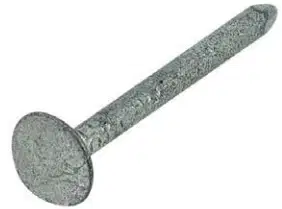
What is the fixing in the image below?
Galvanised nail.
Dry wall screw.
Twist nail.
Panel pin.
The main reason for staggering joints when fixing plasterboard is to
reduce waste
reduce fixings
improve efficiency
improve strength.
Which one of the following is used to reinforce joints between plasterboard?
Adhesive.
Scrim.
EML.
Compound.
Plasterboards that have square reveals or returns are formed using
thin coat stop bead
thin coat angle bead
expansion bead
render stop bead.
Expanded metal lath strips should be fixed to
wall plates
internal angles
external angles
plasterboard joints.
It is important to measure thin coat beads before fixing to
avoid damage
check for plumb
check for level
avoid re-cutting.
Galvanised nails are used to fix expanded metal lath strips to
steel
plastic
timber
concrete
When fixing thin coat beads, the type of fixings used to prevent rust staining are
galvanised nails
round head ovals
wire nails
panel pins.
Which one of the following materials is used to fix thin coat angle beads?
Cement.
Plaster.
Lime.
Sealant.
Thin coat beads are cut to length using which of the following tools?
Snips.
Scissors.
Pliers.
Pinchers.
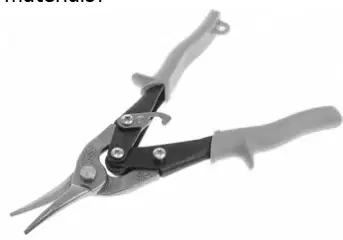
The tool in the image below is used to cut which of the following materials?
Scrim.
Hessian.
Tape.
EML.

