
 Worksheets
Paper Airplane Design Principles Quiz
Total questions: 25
Worksheet time: 14mins
What is the primary source of thrust for a paper airplane?
Gravity
Wind
Initial throw
Turbines
Which of the following is NOT a force acting on a paper airplane?
Thrust
Lift
Drag
Magnetism
What is the main purpose of having strong leading edges on paper airplane wings?
To reduce lift
To increase weight
To improve aesthetics
To withstand hard throws
What is the effect of having wider wings on a paper airplane?
Decreases lift
Decreases drag
Increases flight time
Increases thrust
What is the role of the fuselage in a paper airplane?
Acts as a vertical stabilizer
Increases lift
Reduces drag
Provides thrust
What is the dihedral angle used for in paper airplane design?
To enhance aesthetics
To reduce weight
To improve directional stability
To increase lift
What should be minimized to improve a paper airplane's performance?
Lift
Thrust
Weight
Drag
What is a common material used in constructing origami planes?
Plastic
Wood
Metal
Paper
What is the main goal when designing a paper airplane for long-distance flight?
Maximize weight
Minimize stability
Maximize thrust
Minimize lift
What is the effect of having a small fuselage on a paper airplane?
Improves straight path flight
Reduces flight time
Reduces straight path flight
Increases drag
What is the primary consideration when designing a plane to fly for a long time?
Short wings
Heavy weight
Wide wings
Narrow wings
What is the main disadvantage of having forward-facing pockets on a paper airplane?
Decreases weight
Increases drag
Increases lift
Decreases thrust
What is the main benefit of folding planes with layers that obey the direction of airflow?
Reduces weight
Enhances performance
Improves aesthetics
Increases drag
What is the main challenge when designing a paper airplane with large wings?
Maintaining structural integrity
Reducing lift
Increasing weight
Decreasing thrust
What is the effect of angling wings downward on a paper airplane?
Increases stability
Increases lift
Decreases drag
Decreases both lift and stability
What is the main reason for using a single sheet of paper in origami plane design?
To increase complexity
To improve performance
To follow traditional origami rules
To reduce cost
What is the main goal of maximizing lift in paper airplane design?
To increase weight
To reduce drag
To improve aesthetics
To enhance flight time
What is the main purpose of experimenting with different wing sizes and angles?
To find the best balance for performance
To improve aesthetics
To increase weight
To reduce complexity
What is the main reason for folding strong wings with many layers on their leading edges?
To reduce weight
To improve aesthetics
To withstand high launch velocity
To increase drag
What is the main challenge of having a small fuselage in a paper airplane?
Decreases lift
Increases drag
Reduces straight path flight
Increases weight
What is the main benefit of having a high concentration of layers on the front edge of wings?
Reduces lift
Maintains forward momentum
Improves aesthetics
Increases weight
What is the main reason for minimizing drag in paper airplane design?
To reduce complexity
To enhance performance
To improve aesthetics
To increase weight
What is the main goal of designing a paper airplane with narrow wings?
To fly far
To reduce complexity
To improve aesthetics
To increase weight
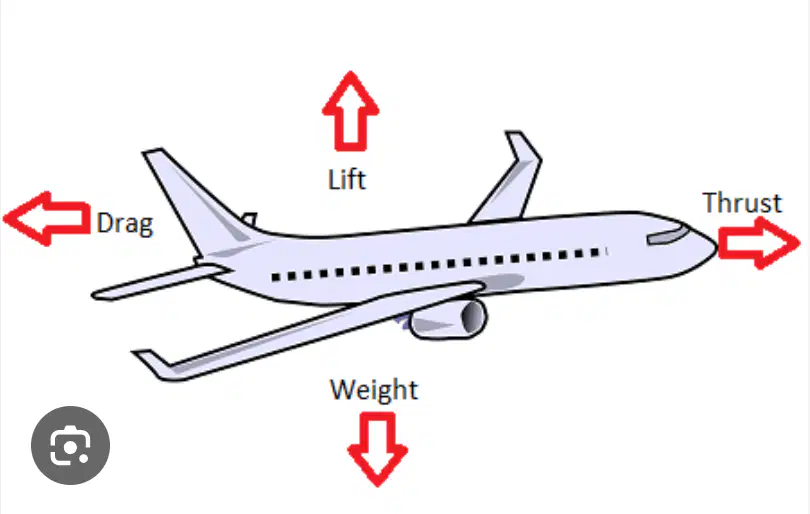
(a) : the force that acts in the opposite direction of the plane and slows the plane down. (b) : the upward force that allows an airplane to stay in the air. (c) : the forward force that propels the plane forward. (d) the downward force of gravity that pulls the plane toward the ground.
gravity
Match the following:
Force
A push or pull on an object.
Lift
An upward force created by the flow of air over the wing.
Drag
The force of air resistance on a plane. It opposes thrust.
Thrust
The force that pushes a plane forwards. Created by the engine/propeller.
Weight
The downward force on the plane caused by gravity.

