
 Worksheets
Coding Basics Final Exam 2025
Total questions: 35
Worksheet time: 18mins
Name
Class
Date
1.
Arrange the four stages of problem solving in the order of execution.
a)
Define, Try, Prepare, Reflect
b)
Try, Prepare, Reflect, Define
c)
Prepare, Define, Try
d)
Define, Prepare, Try, Reflect
2.
The work done (possibly by a computer) to turn input into output
a)
Input
b)
Storage
c)
Output
d)
Process
3.
A precise sequence of instructions for processes that can be executed by a computer.
a)
Input
b)
Storage
c)
Algorithm
d)
Define
4.
Finding and fixing problems in an algorithm or program.
a)
Algorithm
b)
Program
c)
Debugging
d)
CSS
5.
An algorithm that has been coded into something that can be run by a machine.
a)
Bug
b)
Debugging
c)
Program
d)
Function
6.
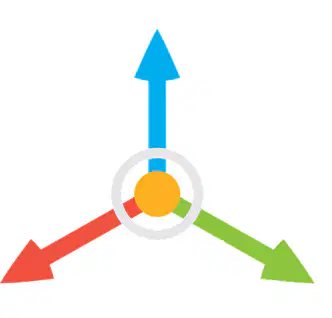
What color arrow represents the Z axis?
a)
red arrow
b)
blue arrow
c)
green arrow
7.
List the 3 mains parts to the 3D printing process.
a)
3D design, slicing, 3D printed model
b)
Slicing, Coding, Drawing
c)
3D design, Slicing, Drawing
d)
3D design, Printed Model, Drawing
8.
What does CAD mean?
a)
Computer assisted designs
b)
Computer added design
c)
Computer aided design
d)
Computer additive design
9.

What is a workplane?
a)
A surface you can work on.
b)
A virtual surface you use as a starting point to draw a 3D model on.
c)
A virtual surface to begin your code on.
d)
A work area to complete a website.
10.
Which shape has fillets on the corners?
a)
Option 1
b)
Option 2
c)
Option 3
d)
Option 4
11.
Finding patterns in data that doesn’t have any labels.
a)
Features
b)
Unsupervised Learning
c)
Supervised Learning
d)
Training
12.
The process of giving examples to a model so it can learn.
a)
Features
b)
Model
c)
Supervised Learning
d)
Training
13.
When a human trains a model to learn with examples.
a)
Features
b)
Unsupervised Learning
c)
Supervised Learning
d)
Training
14.
The output you are trying to decide or predict with a model.
a)
Features
b)
Unsupervised Learning
c)
Training
d)
Label
15.
Predicting a category based on other features.
a)
Features
b)
Classification
c)
Training
d)
Label
16.
The inputs that the model uses to make decisions.
a)
Features
b)
Model
c)
Supervised Learning
d)
Training
17.
When a decision favors some things and de-prioritizes or excludes others.
a)
Bias
b)
Model
c)
Priority
d)
Correct
18.
Guidelines for good behavior.
a)
Bias
b)
Truth
c)
Ethics
d)
Correct
19.
Data that can be separated into groups.
a)
Featured Data
b)
Numerical Data
c)
Categorical Data
d)
Trained Data
20.
Data that can be counted or measured.
a)
Featured Data
b)
Numerical Data
c)
Categorical Data
d)
Trained Data
21.
A computer program designed to make a decision.
a)
Features
b)
Model
c)
Supervised Learning
d)
Training
22.
You see someone playing your favorite song on a piano. After they leave, you sit at the piano and press random notes on the piano until you start to recreate the melody from the song.
a)
Unsupervised Learning
b)
Supervised Learning
23.
You go to a swim coach who helps you learn how to swim in a pool. You watch them demonstrate basic strokes before practicing on your own.
a)
Unsupervised Learning
b)
Supervised Learning
24.
A toddler watches all of the adults in their life walk around the house. Eventually, after a lot of falling and stumbling, they learn to find their balance and start walking.
a)
Unsupervised Learning
b)
Supervised Learning
25.
You have a collection of different teas, but you don’t know which ones you’ll like. You brew small amounts of each, tasting and adjusting until you find a blend that suits your preference.
a)
Unsupervised Learning
b)
Supervised Learning
26.
You are preparing for a history test by making a list of important dates and their events. As you review the list, you begin to remember which event matches each date.
a)
Unsupervised Learning
b)
Supervised Learning
27.
Why is a model card useful when creating a model in AI Lab? (Choose 3)
a)
Provides Transparency
b)
Helps to customize your app
c)
Helps document decisions
d)
Makes your app work
e)
Helps to make the app fair
28.
An event in programming typically represents:
a)
A mathematical calculation
b)
An action that triggers a response
c)
A permanent computer setting
d)
A type of sprite design
29.
What is the primary purpose of a loop in programming?
a)
To create permanent variables
b)
To repeat a set of instructions multiple times
c)
To stop a program completely
d)
To generate random numbers
30.
Sequencing in programming refers to:
a)
Sorting numbers in order
b)
Arranging commands in a logical order for computer execution
c)
Creating mathematical sequences
d)
Designing computer graphics
31.
A sprite in programming is most closely related to:
a)
A mathematical symbol
b)
A computer virus
c)
A graphic on screen with specific properties
d)
A programming language
32.
Programming can best be described as:
a)
Only writing complex mathematical equations
b)
The creative process of creating computer programs
c)
A method of repairing computer hardware
d)
A type of computer game
33.
An algorithm is fundamentally a:
a)
Complex mathematical formula
b)
List of steps to complete a specific task
c)
Type of computer hardware
d)
Random collection of instructions
34.
An algorithm is..
a)
.. A set of instructions
b)
... A motion block
c)
... A character
d)
... A loop statement
35.
What is <h1></h1>?
a)
A heading to the first degree
b)
The first heading on a page
c)
A heading to end all headings
d)
The largest heading
100 %

