
 Worksheets
Diagnostic Testing in Patient Care
Total questions: 100
Worksheet time: 50mins
Which of the following is a primary role of diagnostic testing in patient care?
To prove the patient is healthy
To prescribe medication
To perform surgery
To provide physical therapy
How can diagnostic testing contribute to disease prevention?
By promoting good health and disease prevention
By increasing the risk of illness
By delaying treatment
By causing unnecessary stress
Which of the following is NOT a reason for conducting diagnostic testing?
To visualize and analyze body structures, tissues, and fluids
To establish a baseline for patients under treatment or scheduled for surgery
To validate or invalidate initial diagnosis
To guarantee a cure for all diseases
A physician uses diagnostic testing to monitor a patient's progress during treatment. What is the main purpose of this action?
To establish diagnosis and to monitor progress and response to treatment
To increase the cost of care
To avoid making any changes in the treatment plan
To delay the recovery process
Why might diagnostic testing be important for legal purposes in patient care?
It provides documented evidence of patient health status and care decisions
It guarantees patient privacy
It replaces the need for medical records
It eliminates the need for informed consent
A patient’s initial diagnosis is questioned after new test results are obtained. What role of diagnostic testing does this scenario illustrate?
Validate or invalidate initial diagnosis
Promote good health and disease prevention
For legal purposes
To perform surgery
If a diagnostic test leads to a change in a patient’s treatment plan, which role of diagnostic testing is being demonstrated?
May lead to changes in treatment plan
To prove the patient is healthy
To visualize and analyze body structures
For legal purposes
What is the purpose of test results, physical examination, and patient history in the diagnostic process?
To determine the cost of treatment
To help lead to a diagnosis
To decide the patient's insurance coverage
To schedule follow-up appointments
What is a "reference range" in the context of medical testing?
The price range for medical tests
The expected results of a particular test
The time range for receiving test results
The range of possible diagnoses
Why might reference ranges differ between laboratories?
Because each lab uses different equipment and standards
Because patients have different insurance plans
Because doctors have different specialties
Because test results are always the same
What are "critical values" in medical testing?
Normal test results
Abnormal test results that may be life threatening and must be dealt with immediately
The average values for a population
The costliest test results
A patient receives a test result that falls outside the reference range. What should be the next step if the value is considered a "critical value"?
Wait for the next routine check-up
Deal with it immediately as it may be life threatening
Ignore the result
Compare it with the patient's insurance policy
Where is diagnostic testing typically performed?
In licensed labs and facilities, both private and within hospitals
Only in private homes
Exclusively in pharmacies
Only in research universities
Which of the following is NOT a characteristic of private labs in Canada?
They are only found in rural areas
They are widely spread across Canada
They can be centrally located in medical buildings or large urgent care clinics
They provide routine testing on blood, body fluids, and tissue analysis
What type of testing do private labs provide?
Routine testing on blood, body fluids, and tissue analysis
Only genetic testing
Only vision and hearing tests
Only emergency surgery
Why might a limited number of tests be performed in a physician’s office rather than a lab?
Because only a few tests can be managed outside licensed labs
Because all tests require hospital admission
Because physicians are not allowed to perform any tests
Because labs are not available in Canada
Suppose a new urgent care clinic is opening in a large city in Canada. Based on the information provided, what would be a logical location for its private lab services?
Centrally located within the medical building of the clinic
In a remote area far from the clinic
Only in a hospital basement
In a retail store
Which of the following is a function of smaller satellite labs according to the learning material?
They perform complex surgeries
They collect specimens and send them to a central location for analysis
They provide emergency care
They manufacture medical equipment
What does diagnostic imaging provide?
A detailed view beneath the skin
A summary of patient history
A list of medications
A nutritional plan
Which of the following is NOT typically offered by private and hospital-based diagnostic imaging sites?
X-rays
Blood transfusion
Computed tomography (CT) scan
Magnetic resonance imaging (MRI)
A patient needs a detailed image of soft tissues in their body. Which diagnostic imaging technique is most appropriate?
X-ray
Magnetic resonance imaging (MRI)
Blood test
Electrocardiogram (ECG)
Explain why diagnostic imaging is important in medical testing facilities. Use evidence from the learning material to support your answer.
It provides a detailed view beneath the skin, which helps in accurate diagnosis.
It is used to prescribe medication.
It is only used for administrative purposes.
It replaces the need for physical examinations.
Which city is home to the National Microbiology Lab that conducts tests to diagnose the West Nile Virus?
Toronto
Vancouver
Winnipeg
Montreal
How many labs worldwide are mentioned as dealing with diagnosing and testing deadly infections and diseases, including the National Microbiology Lab in Winnipeg?
10
15
20
5
What is a likely difference between most hospitals and larger hospitals regarding testing facilities?
Most hospitals do not have any labs.
Larger hospitals may offer more complex or specialized testing.
Most hospitals only treat minor injuries.
Larger hospitals do not have diagnostic imaging.
Explain why specialized labs, such as the National Microbiology Lab in Winnipeg, are important in the context of global health.
They only treat local patients.
They provide routine check-ups.
They help diagnose and test deadly infections and diseases, contributing to global health security.
They focus on cosmetic procedures.
Which of the following is a typical laboratory investigation related to the study of blood?
Hematology
Histology
Ultrasonography
Fluoroscopy
Which investigation technique uses magnetic fields and radio waves to create detailed images of the organs and tissues within the body?
Magnetic resonance imaging (MRI)
Computed tomography (CT)
Routine/plain film X-rays
Blood Bank or Blood Transfusions
Which of the following investigations is most likely to be used for detecting microorganisms in a sample?
Microbiology
Chemistry
Fluoroscopy
Contrast techniques
A patient needs to have their tissue structure examined for signs of disease. Which investigation is most appropriate?
Histology/Pathology/Cytology
Blood Bank or Blood Transfusions
Ultrasonography
Chemistry
Which investigation technique is best described as using X-rays to obtain real-time moving images of the interior of the body?
Fluoroscopy
Computed tomography (CT)
Ultrasonography
Microbiology
If a doctor wants to visualize soft tissues and organs using sound waves, which investigation would they most likely use?
Ultrasonography
Routine/plain film X-rays
Chemistry
Blood Bank or Blood Transfusions
Which of the following is NOT typically considered a radiological investigation?
Chemistry
Computed tomography (CT)
Magnetic resonance imaging (MRI)
Routine/plain film X-rays
Contrast techniques are often used in conjunction with which type of investigation to enhance image quality?
X-rays
Microbiology
Blood Bank
Chemistry
Which of the following statements is true about cardiac and respiratory diagnostic services offered by hospitals?
They are always processed and interpreted within the hospital.
They often need to be sent out for processing or interpretation.
They are never offered by hospitals.
They are only available to outpatients.
How long should patients typically expect to wait for results from certain diagnostic tests?
1-2 days
2-4 weeks
6-8 weeks
1 year
Which of the following is generally true about diagnostic tests deemed medically necessary?
They are never covered by OHIP.
Most are covered by OHIP.
Only cardiac tests are covered by OHIP.
Only respiratory tests are covered by OHIP.
If a diagnostic test is not covered by OHIP, whose responsibility is it to inform the patient of the cost?
The patient’s family
The provider
The hospital administration
The insurance company
A healthcare provider (HCP) wants to know which diagnostic tests are not covered by the lab. What should they do?
Ask the patient
Obtain a list from the lab for reference
Search online forums
Refer to the patient’s insurance policy
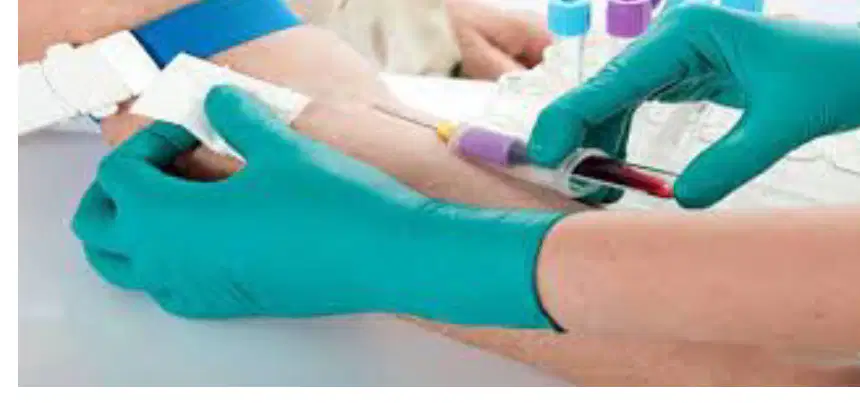
What is one of the main duties of a phlebotomist?
Drawing blood specimens
Prescribing medication
Performing surgery
Diagnosing diseases
Where might a phlebotomist be employed?
Only in private clinics
Only in research laboratories
In public, private, or hospital settings
Only in pharmacies
Which educational qualification is required for a Medical Laboratory Technologist (MLT)?
High school diploma
Three-year college diploma or Bachelor’s degree
One-year certificate
Master’s degree only
Which of the following is a responsibility that may be included in the duties of a Medical Laboratory Technologist (MLT)?
Supervising hospital construction
Educating peers and students
Administering anesthesia
Conducting patient surgeries
A Medical Laboratory Technologist (MLT) is required to make independent decisions concerning which aspect of their work?
The quality of lab results
The design of hospital buildings
The scheduling of hospital staff
The marketing of medical equipment
Compare the roles of a phlebotomist and a Medical Laboratory Technologist (MLT) in terms of their training and responsibilities. (DoK Level 3)
Phlebotomists are trained on the job and focus on specimen collection, while MLTs require a college diploma or degree and perform specialized tests and make independent decisions.
Both require a Bachelor’s degree and perform surgeries.
Phlebotomists supervise labs, while MLTs only collect blood.
Both only work in private clinics and do clerical work.
Which of the following is a requirement to become a Medical Laboratory Assistant?
Must have a college degree with a certificate
Must have a medical doctorate
Must have a high school diploma only
Must have a master's degree in laboratory science
What is one of the main duties of a Medical Laboratory Assistant?
Performing routine laboratory testing
Prescribing medication
Conducting surgical procedures
Diagnosing diseases
Under whose supervision does a Medical Laboratory Assistant usually work?
Medical Technologist
Chief Surgeon
Hospital Administrator
Pharmacist
A hospital is looking to hire someone to perform routine laboratory testing. Which professional would be most appropriate for this role, based on their typical responsibilities?
Medical Laboratory Assistant
Radiologist
Physical Therapist
Nutritionist
Which physician specialist primarily deals with disorders of the blood and lymphatic systems?
Hematologist
Pathologist
Radiologist
Cardiologist
What is one of the main responsibilities of a pathologist?
Interpreting diagnostic images
Performing surgeries
Examining tissue samples and interpreting results
Treating heart diseases
A radiologist is most likely to specialize in which of the following tasks?
Prescribing medication for infections
Interpreting diagnostic images
Performing physical therapy
Conducting psychological evaluations
If a patient needs an autopsy performed, which specialist would be responsible?
Hematologist
Pathologist
Radiologist
Neurologist
A hematologist may work in which of the following settings?
Only in hospitals
Only in research institutions
In private practice or laboratory
Only in emergency rooms
Which of the following best explains the difference between a pathologist and a radiologist?
Pathologists interpret diagnostic images, while radiologists examine tissue samples.
Pathologists perform autopsies and examine tissue samples, while radiologists interpret diagnostic images.
Pathologists treat blood disorders, while radiologists perform surgeries.
Pathologists work only in laboratories, while radiologists work only in private practice.
Which of the following is NOT a role of a healthcare professional (HCP) in diagnostic testing?
Completing and giving out requisitions
Reporting and filing results
Educating patients
Prescribing medication for all patients
Why is patient education considered important in diagnostic testing?
It helps patients avoid all medical tests
It is the single most important factor in successful tests
It allows patients to perform tests themselves
It reduces the cost of testing
Which of the following questions should patients be prepared to ask before a diagnostic test?
How long is the test?
Will it hurt?
Can I drive after the test?
All of the above
What is a likely outcome for an informed patient undergoing diagnostic testing?
They will be more apprehensive
They will be less apprehensive
They will refuse the test
They will not need any preparation
A patient is unsure about where to go for a diagnostic test and what to do to prepare. According to the material, what should the healthcare professional do?
Ignore the patient's concerns
Educate the patient about the location and preparation steps
Tell the patient to look it up online
Refer the patient to another hospital
Which of the following is a basic requirement for a Health Care Professional (HCP) regarding commonly ordered tests?
Understanding how and where to order them
Memorizing all possible diseases
Performing surgeries independently
Prescribing medication without supervision
Why should an HCP be aware of "critical values"?
To ensure timely and appropriate responses to abnormal test results
To increase the number of tests ordered
To reduce the cost of healthcare
To avoid reading reports
Which skill is important for an HCP when reviewing patient reports?
Noting abnormal results
Ignoring test outcomes
Delegating all report reading to others
Only reading positive results
Which of the following is essential when filling out a requisition for a medical test?
Fill out the requisition quickly without checking
Fill out the requisition accurately and always double check the information
Only fill out the requisition if the test is urgent
Leave the requisition blank for the physician to complete
What should you do if a patient has a future surgery booked?
Ignore the surgery date and time
Indicate the date and time of the surgery on the requisition
Only mention the surgery if it is within a week
Call the patient to confirm the surgery
Which of the following is NOT typically required on a test requisition?
Names of any physicians to be copied (cc)
List of medications for some tests
Patient’s favorite color
Whether the test is urgent, routine, or ASAP
Why is it important to note whether a test is urgent (STAT), routine, or ASAP on a requisition?
It determines the order in which the test is performed
It changes the type of test required
It affects the patient’s insurance coverage
It is only for record-keeping purposes
A patient is scheduled for multiple tests. What is a key step to ensure all necessary information is included on the requisition?
Only fill out the patient’s name
Double check all information and include any required physician names and medication lists
Leave the requisition incomplete for the lab to finish
Only include information about the first test
Which of the following specimens might you be asked to collect and label in a doctor's office?
Urine, stool, sputum, blood, or swabs
Only blood samples
Only urine samples
Only saliva samples
What information is essential to include when labeling a specimen?
Patient’s name, date, and time of collection
Only the patient’s name
Only the date of collection
Only the type of specimen
Why is it important to keep urine specimens in the fridge until lab or courier pickup?
To prevent spoilage and ensure accurate test results
To make them easier to transport
To change their color for identification
To reduce their weight
If you are working as an HCP in a doctor's office, what is a likely responsibility regarding specimens?
Collecting and labeling specimens for testing
Only observing the collection process
Disposing of all specimens immediately
Refusing to handle any specimens
A specimen is collected but not labeled with the date and time. What potential issue could this cause?
The specimen may be rejected or result in inaccurate test results
The specimen will be tested faster
The specimen will be automatically labeled by the lab
The specimen will be stored indefinitely
Which of the following is NOT a method by which test reports may be received according to the guidelines for receiving and recording test results?
Fax
Social media post
Telephone call
When taking a report over the phone, what information should you repeat back to the caller?
Patient's name, DOB, hospital ID number, type of test, and results
Patient's address and insurance details
Only the test results
Only the hospital ID number
Why is it important not to rush through a call when receiving test results over the phone?
It may annoy the caller
A misplaced decimal point could have serious consequences
The call might get disconnected
The report could be lost in the mail
Suppose you receive a test report by e-mail and need to file it. What is the first step you should take to ensure accuracy and patient safety?
Forward the e-mail to another department without checking
File the report without reading it
Verify the patient's name, DOB, hospital ID number, type of test, and results before filing
Delete the e-mail after reading
What should you do with test reports as they arrive?
Discard them immediately
Place them in a random drawer
Sort through them and place on the doctor’s desk for review
Give them to the patient directly
When should you bring “abnormal” or “critical value” test results to the doctor’s attention?
At the end of the day
Immediately
After the doctor finishes all appointments
Only if the patient asks
Why is it important to report critical values to the physician immediately, even if it means interrupting them?
Because the physician might forget otherwise
Because critical values may require urgent medical attention
Because the lab requires a signature
Because the patient is waiting
How does the lab usually communicate a “critical result” to the office?
By sending a letter
By calling the office
By emailing the patient
By posting on a notice board
What information will printed test reports usually include?
The patient’s home address
The doctor’s personal notes
A note of “abnormal results”
The lab technician’s favorite color
What should a healthcare provider (HCP) do before filing test results to avoid placing information in the wrong patient’s chart?
File the results immediately after receiving them
Double check the name on the report and match it to the name and date of birth on the chart
Ask the patient to confirm their results
Only file results for new patients
Which of the following best describes source oriented filing?
Results are sorted by the date they were ordered, regardless of category
Results are separated by category with the most recent result on top
Results are filed alphabetically by patient name
Results are grouped by physician
What is the main difference between source oriented filing and integrated format filing?
Source oriented filing sorts by date, integrated format sorts by category
Source oriented filing separates by category, integrated format sorts all tests by date regardless of category
Both methods sort by patient age
Integrated format uses color coding, source oriented does not
Why is it important to check with a physician or hospital policy regarding the method of filing test results?
Because every hospital uses the same method
Because the preferred method may vary by institution
Because filing is not necessary in some hospitals
Because only physicians are allowed to file results
A hospital wants to ensure that the most recent test result is always easy to find, regardless of the test category. Which filing method should they use?
Source oriented filing
Alphabetical filing
Integrated format
Random filing
What is generally done before surgery for preoperative patients?
Standard blood work
X-ray imaging
Physical therapy
Dietary assessment
Whose responsibility is it to ensure that the required blood work is on the chart before the patient goes to the OR?
The patient's family
The Health Care Provider (HCP)
The hospital administrator
The anesthesiologist
According to the learning material, what should you do if you notice that some required blood work is missing from the pre-op checklist?
Ignore it and proceed
Track and order what is missing
Wait for the patient to remind you
Cancel the surgery
Why is it important to look over the pre-op checklist before a patient goes to the OR?
To ensure all required blood work is completed and nothing is missing
To check the patient's insurance status
To confirm the patient's dietary restrictions
To schedule the next appointment
What is the study of blood called?
Hematology
Cardiology
Neurology
Immunology
How much blood does the human body typically contain?
1-2 liters
3-4 liters
5-6 liters
7-8 liters
Which of the following is the most commonly ordered blood test?
Blood glucose test
Complete blood count (CBC)
Liver function test
Urinalysis
Which of the following is NOT included in a complete blood count (CBC)?
Red Blood Cell Count (RBC)
Hematocrit (Hct)
Blood glucose level
Platelet Count
A doctor wants to evaluate a patient’s immune response. Which component of the CBC would be most relevant?
Hemoglobin (Hb)
White Blood Cell Count (WBC)
Platelet Count
Hematocrit (Hct)
If a patient has abnormal bleeding, which part of the CBC would be most important to check?
Platelet Count
Hematocrit (Hct)
Hemoglobin (Hb)
Differential Blood Count (Diff)
Which of the following is a common reason for sending specimens from a physician’s office to a central laboratory?
To ensure specialized equipment and expertise are used for analysis
To reduce paperwork
To avoid patient interaction
To speed up the billing process
What is the main advantage of using diagnostic imaging techniques such as CT scans and MRIs in patient care?
They eliminate the need for laboratory tests
They provide detailed internal images that assist in accurate diagnosis
They can be performed at home
They are less expensive than blood tests
Which professional is primarily responsible for collecting blood samples and preparing them for laboratory analysis?
Radiologist
Medical Laboratory Assistant
Surgeon
Pharmacist

