wayground logo

Free Printable Worksheets

NEW

Font size

S
M
L
XL
Worksheets

Review-Optics

Total questions: 40

Worksheet time: 40mins

Name
Class
Date
1.
The lowest part of the wave is?
a)
crest
b)
trough
c)
rarefaction
d)
wavelength
2.
The highest point on a wave
a)
trough
b)
amplitude
c)
crest
d)
wavelength
3.
Material that allows light to pass through allowing you to see "clearly" to the other side
a)
opaque
b)
translucent
c)
transparent
4.
Light travels in a straight line
a)
True
b)
False
5.

High frequency equals

a)

high energy

b)

low energy

c)

no change in energy

d)

none of the above

6.

The distance between 2 crests or troughs

a)

wavelength

b)

amplitude

c)

frequency

d)

wave speed

7.

The number of waves that pass in a given amount of time.

a)

wavelength

b)

wave speed

c)

amplitude

d)

frequency

8.
What does refletion mean?
a)
It is when the light changes the material and the direction of it changes as well. 
b)
It is when the material is rebounding the light.
9.
Which explains why the fork looks different under water?
a)
light can't pass through the glass
b)
the wavelength of light lengthens
c)
the amount of light increases when going through water
d)
light is refracted at an angle
10.
The Law of Reflection:
The angle of incidence is _________ the angle of reflection
a)
bigger than
b)
the same as
c)
smaller than
11.
Luminous means...
a)
Gives out its own light
b)
Reflects light from other things
12.
Opaque means...
a)
No light passes through it
b)
All light passes through it
c)
Some light passes through it
13.
Blurs light as it passes through
a)
Transparent
b)
Translucent
c)
Opaque
d)
Refraction
14.
If light strikes a mirror at a 50⁰ angle, what angle will it come off of the mirror?
a)
50⁰
b)
70⁰
c)
45⁰
d)
30⁰
15.
Which color absorbs all light?
a)
White
b)
Black
c)
Orange
d)
Green
16.
Light can travel through empty space.
a)
True
b)
False
17.
All of the following are sources of light except ______________
a)
the sun
b)
a light bulb
c)
fire
d)
the moon
18.
A specific type of light that is produced by living organisms is called _______. 
a)
fluorescence
b)
chemiluminescence
c)
bioluminescence
d)
incandescence
19.
The type of light energy that is stored by certain particles for a period of time is called ________.
a)
fluorescence
b)
reflection
c)
incandescence
d)
phosphorescence
20.

The production of light energy when an object is heated describes which source of light?

a)

Fluorescence

b)

Incandescence

c)

Chemiluminescence

d)

Triboluminescence

21.
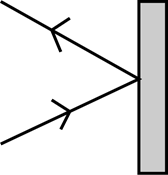
The illustration shows a light ray striking an object.
In the illustration, the light ray striking the object is-
a)
absorbed
b)
stopped
c)
reflected
d)
refracted
22.
The type of light humans can see is called ___________ light.
a)
electromagnetic
b)
red
c)
white
d)
visible
23.

________________ is an imaginary line perpendicular to the surface

a)

Normal line

b)

Incident line

c)

Reflected line

24.
a flat sheet of glass that has a smooth, silver-colored coating on one side
a)
plane mirror
b)
concave mirror
c)
convex mirror
d)
solid mirror
25.
A light ray hits a plane surface at 20 degrees. What is the angle between the incident and reflected rays. 
a)
20o
b)
40o
c)
70o
d)
30o
26.
This is an example of a _____________ mirror
a)
Concave
b)
Convex
c)
Plane
d)
Magnifying
27.
The following is a picture of what type of mirror? 
a)
Convex Mirror
b)
Concave Mirror
c)
Plane Mirror
d)
Flat Mirror
28.
An image that you can see , but does not really exist is called which of the following?
a)
Real Image
b)
Fake Image
c)
Virtual Image
d)
Digital Image
29.
If an incident ray passes through C and hits a concave mirror then it will reflects
a)
Parallel
b)
Towards F
c)
Towards C
d)
Away from the mirror
30.
What does the word "converging" mean?
a)
to separate
b)
to come together
c)
parallel 
d)
perpendicular
31.
Which type of mirror is shown.
a)
Concave
b)
Convex
c)
Specular
d)
Plane
32.
Which type of mirror magnifies a close up image, like a make-up mirror.
a)
Concave
b)
Convex
c)
Specular
d)
Plane
33.
a)
Reflection
b)
Refraction
34.
Light has the lowest velocity in which medium?
flint glass n=1.70
barium glass n=1.60
crown glass n=1.523
water n=1.33
diamond n=2.45
a)
diamond
b)
water
c)
flint glass
d)
barium glass
35.
Glass has a _____________ index of refraction than air.
a)
Equal
b)
Greater
c)
Less
d)
Impossible to say
36.
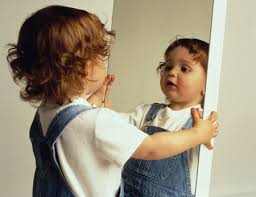
The image formed in a flat mirror is
a)
larger than the object and farther away.
b)
reduced and closer to the mirror.
c)
a real image of the object.
d)
equal to the height and distance of the object.
37.

The diagram shows a ray of light going from medium A into medium B. Which one of the following statements cannot be correct?

a)

A is air and B is glass.

b)

A is water and B is vacuum.

c)

A is water and B is air.

d)

A is glass and B is vacuum.

38.

A ray of light is shone on a rectangular glass block as shown. Identify A, B and C.

a)

A = Refracted ray, B = Incident ray, C = Normal

b)

A = Incident ray, B = Refracted ray, C = Normal

c)

A = Normal, B = Refracted ray, C = Incident ray

d)

A = Refracted ray, B = Angle of incidence, C = Angle of refraction

39.

The ratio of sin (x °) of the angle of incidence to sin (x °) of the angle of refraction is

a)

Gravitational law

b)

Reflection law

c)

Snell's law

d)

refraction law

40.

The best definition of refraction is ____.

a)

passing through a boundary

b)

changing direction when crossing a boundary

c)

changing speed at a boundary

d)

bouncing off a boundary