
 Worksheets
Science 8 ENL Review
Total questions: 100
Worksheet time: 50mins
Name
Class
Date
1.
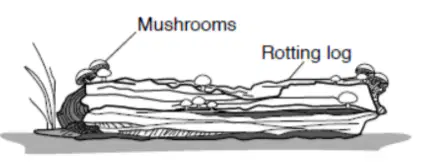
The diagram below shows mushrooms, a type of decomposer, growing on a rotting log. Why are the mushrooms using the log?
a)
The log uses the mushrooms as a source of oxygen.
b)
The mushrooms use the log as a source of oxygen.
c)
The mushrooms use the log as a food source.
2.
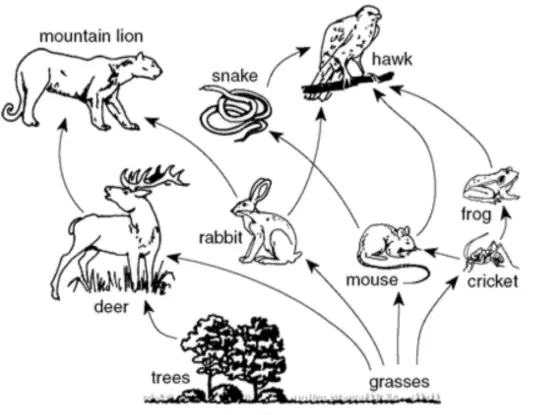
Which statement best describes what would happen if a disease enters this environment and reduces the population of mice ?
a)
The cricket population will increase.
b)
The snake population will increase.
3.
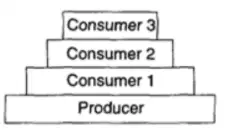
Which statement concerning the energy in this pyramid is correct?
a)
Stored energy decreases from consumer 2 to consumer 3.
b)
Consumer 3 contains the greatest amount of stored energy.
4.
Why are decomposers important to the food chain?
a)
They provide nutrients for the growth of plants.
b)
They convert energy from the sun.
c)
They are pets to humans.
5.
Which organisms would most likely have a predator-prey relationship?
a)
barnacle and whale
b)
hawk and mouse
6.
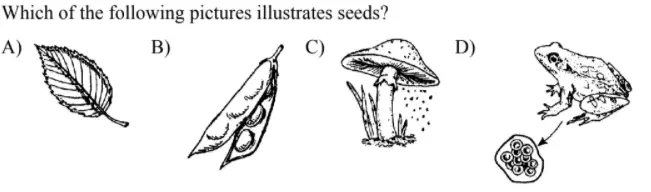
a)
A
b)
B
c)
D
7.
What is the name for chemical changes in your body?
a)
equilibrium
b)
inheritance
c)
metabolism
8.
How does your body removes harmful substances?
a)
secretion
b)
pinocytosis
c)
excretion
9.
Which example is an autotroph (makes its own food)?
a)
An eagle kills and eats a snake.
b)
A mushroom decomposes a dead log.
c)
A tree makes food during photosynthesis.
10.
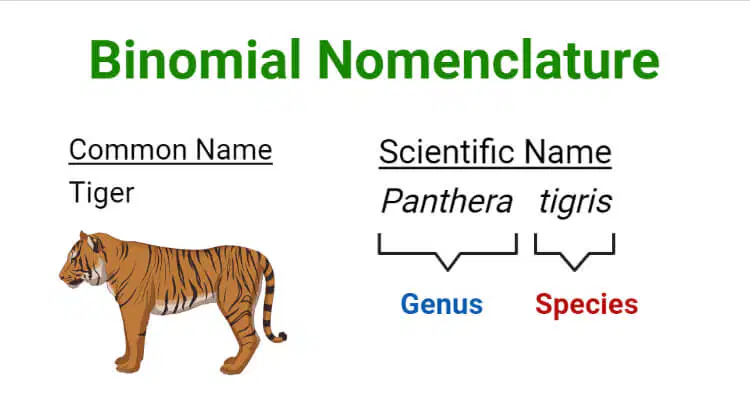
What group is “Drosophila” in the name Drosophila melanogaster?
a)
phylum
b)
genus
c)
species
11.
Which substance is an inorganic (not made) compound?
a)
water
b)
protein
c)
DNA
12.
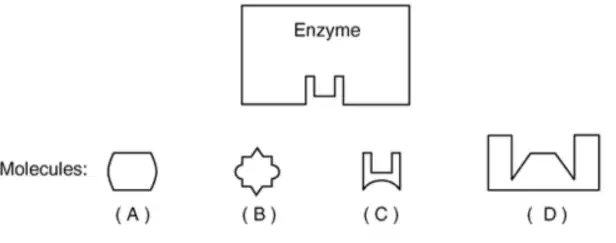
An enzyme helps chemical reactions happen. Look at the picture. Which molecules can the enzyme work with?
a)
molecule C, only
b)
molecules B and D
13.
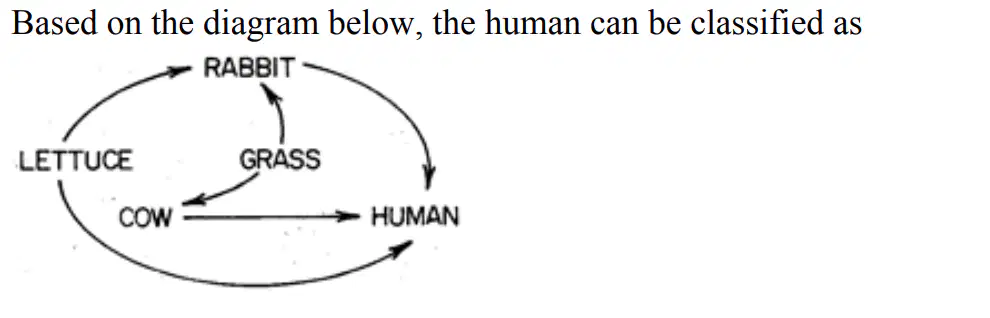
a)
an omnivore
b)
a saprophyte
c)
an autotroph
d)
a producer
14.
What is it called when a sperm and egg join together?
a)
cleavage
b)
fertilization
15.
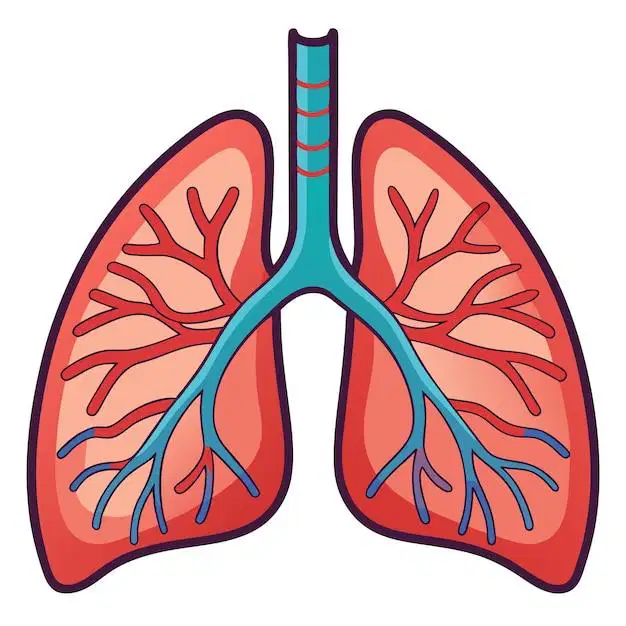
Where does your body swap oxygen and carbon dioxide?
a)
pharynx
b)
lungs
c)
larynx
16.
What sickness can happen if someone eats too much fat?
a)
meningitis
b)
hemophilia
c)
heart disease
17.
Which list shows the order plants grow over time in nature?
a)
lichens - shrubs - grasses - trees
b)
lichens - grasses - shrubs - trees
18.
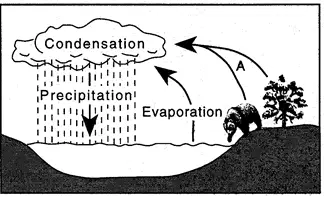
Look at the picture. What two processes go with arrows labeled A?
a)
runoff and respiration
b)
respiration and transpiration
c)
nitrogen fixation and synthesis
19.
What do scientists use to make observations?
a)
the senses
b)
proportions
20.
Where does your food break down with chemicals (chemical digestion) ?
a)
large intestine
b)
gall bladder
c)
stomach
21.
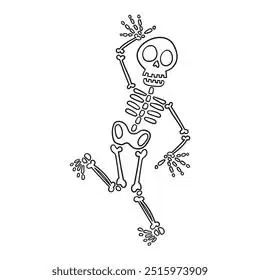
Which is NOT a function of a skeleton?
a)
transport of nutrients
b)
anchorage for muscle action
c)
body movement
22.

What helps a microscope zoom in on things?
a)
eyepiece and objective lenses
b)
low-power objective and high-power objective lenses
23.
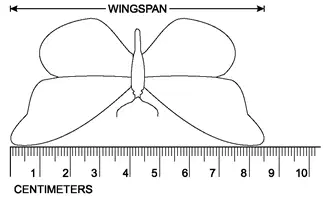
The wingspan of this butterfly is closest to
a)
4.0 cm.
b)
8.0 cm.
c)
8.5 cm.
24.
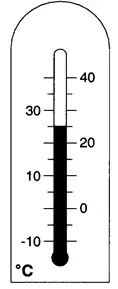
What temperature is shown on the thermometer below?
a)
20° C
b)
25° C
25.
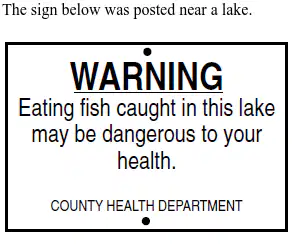
Which environmental problem is shown on the sign?
a)
toxic waste
b)
ozone depletion
c)
global warming
26.

What helped bring back the bald eagle population?
a)
protection of their natural habitat
b)
importation of food to their nesting sites
c)
increased use of pesticides
27.
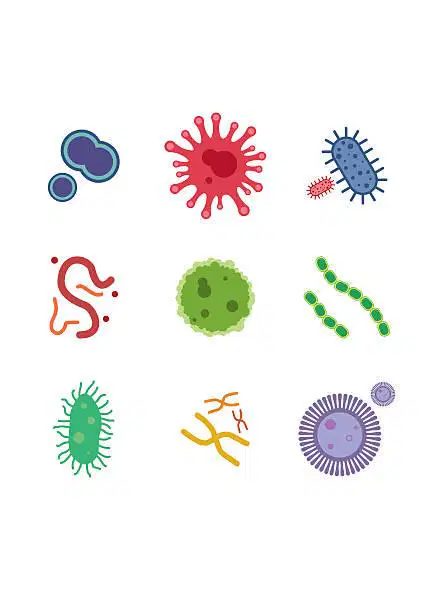
A deer tick drinks blood and harms the deer. What is it?
a)
parasite
b)
host
28.
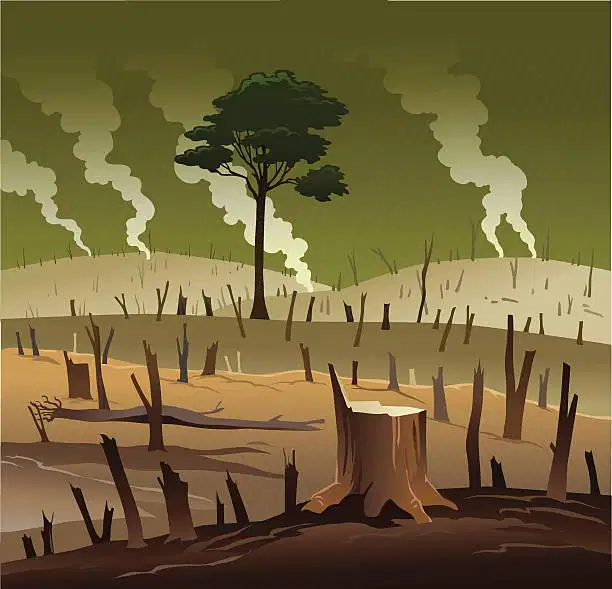
A hurricane destroys a forest. Why is it less stable (less balanced) now?
a)
a decrease in biodiversity
b)
a decrease in the rate of mutation
29.

A bird eats ticks off a deer. The bird gets food, and the deer stays clean. What is this called?
a)
mutualism
b)
commensalism
c)
saprophytism
30.
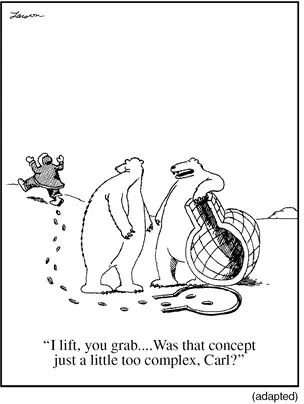
What kind of animal is a polar bear?
a)
parasites
b)
carnivores
c)
producers
31.
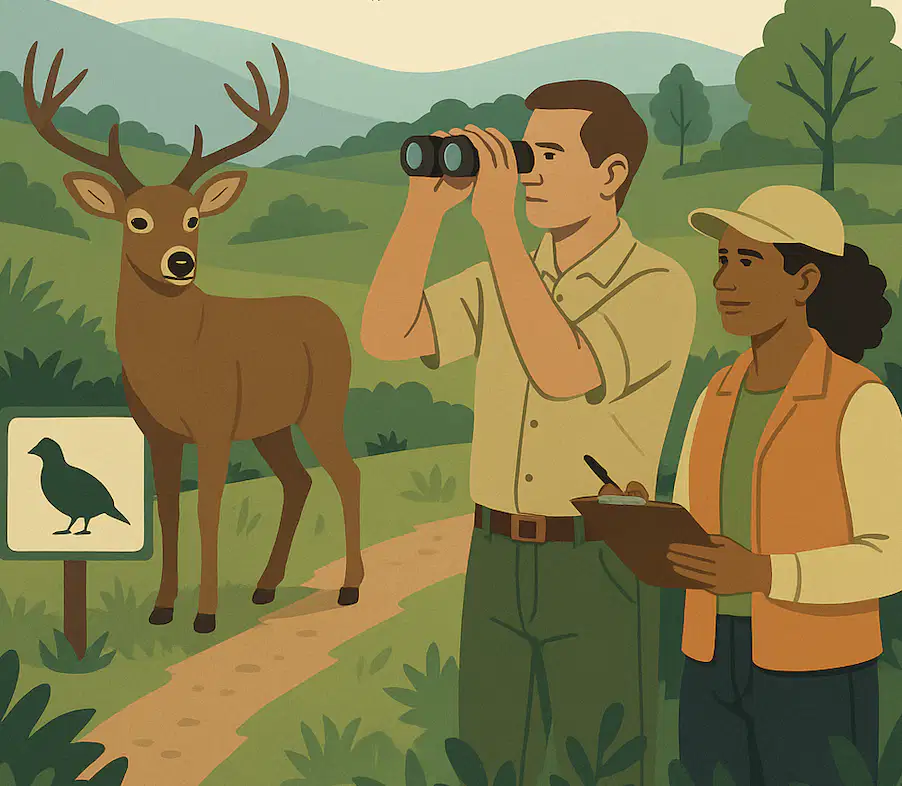
What have people done to save animals from extinction?
a)
increased wildlife management and habitat protection.
b)
attempted to mate organisms from different species to create new and stronger organisms.
32.

Which of these can be recycled?
a)
Oil
b)
Gasoline
c)
Glass Bottles
33.

Japanese beetles and gypsy moths were accidentally introduced into North America.
Why are Japanese beetles and gypsy moths a problem in North America?
a)
are protected by environmental laws and feed on other insect species
b)
have few natural enemies and reproduce successfully
34.
Pat has two kinds of plant food. What would be the best way for Pat to find out which plant food helps a particular type of houseplant grow the most?
a)
Put some Quickgrow on a few plants, put the same amount of Supergrow on a few other plants of the same type, put all the plants in the same place, and see which group of plants grows the most.
b)
Look at the advertisements for Quickgrow, look at the advertisements for Supergrow, and see which one says it helps plants grow the most.
35.
What problem happened because people started using cars?
a)
increase in air pollution
b)
increased use of pesticides
c)
flooding in the Midwest
36.
Why did people hurt nature in the past?
a)
frequently lacked an understanding of how their activities affect the environment
b)
passed laws to protect certain wetlands
37.
A polar bear has white fur that helps it survive and stay safe. What is that an example of?
a)
an adaptation helping an organism to survive
b)
an organism exchanging materials with its environment
c)
metabolism regulating an organism's activities
38.
What happens when a big change happens in nature?
a)
All animals live through it.
b)
The members of the population differ so that only some survive when the environment changes.
c)
No animals can change.
39.
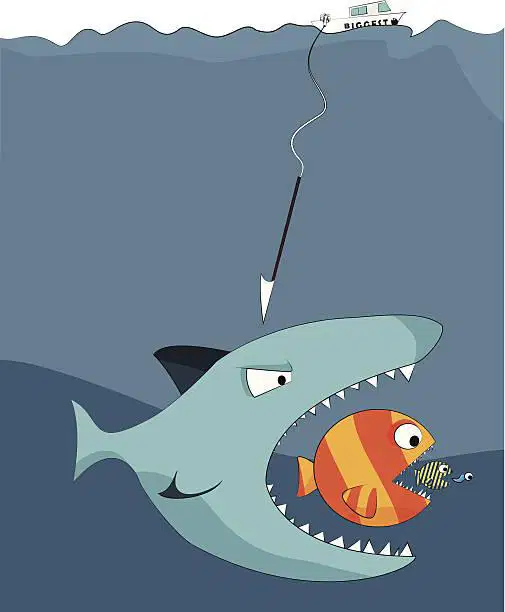
What does “survival of the fittest” mean?
a)
use and disuse
b)
inheritance of acquired characteristics
c)
The strongest ones live and grow
40.
A farmer grows beans. The plants that produced the most beans and only used those beans to produce new plants. This procedure is part of the process of
a)
selective breeding
b)
genetic engineering
41.
Genes are a part of a
a)
cell wall
b)
chromosome
c)
vitamin
42.
A woman changes her hair color to red; however, her children will not inherit (have) this red hair color because the woman does not have
a)
genes for red hair in her sex cells
b)
proteins for red hair in her placenta
43.
What is a change in DNA called?
a)
a mutation
b)
an infection
c)
selective breeding
d)
sexual reproduction
44.
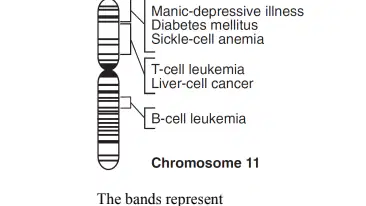
What carries traits like eye color or hair type?
a)
genes
b)
starches
45.
If a living thing makes a baby without a partner (asexullay), how will the baby be?
a)
genetically identical to the parent
b)
produced as a result of fertilization
46.
How much genetic material is in a sperm cell compared to a body cell?
a)
one-half as much
b)
one-fourth as much
47.
After a cell divides (mitosis), how many chromosomes are in each new cell?
a)
only one-half as many chromosomes as the parent cell
b)
the same number of chromosomes as the parent cell
48.
What process helps bacteria make human insulin?
a)
karyotyping
b)
genetic engineering
c)
amniocentesis
49.
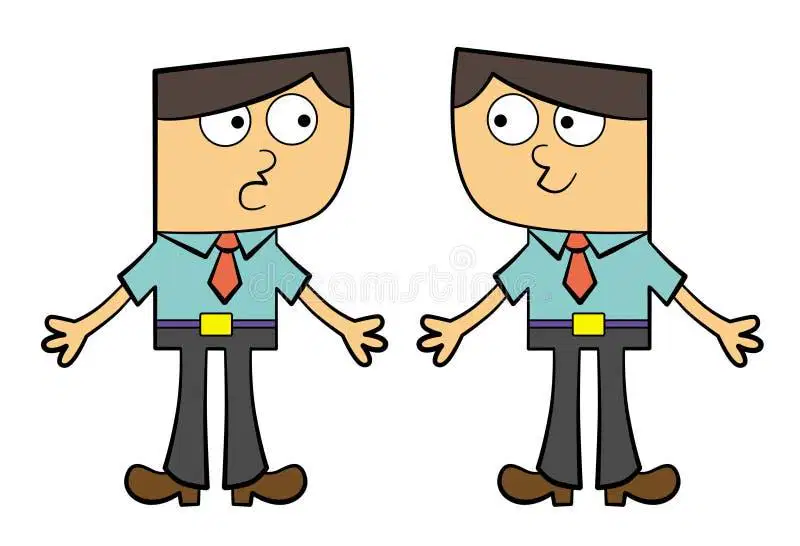
What makes many copies of the same living thing?
a)
cloning
b)
meiosis
c)
external fertilization
50.
Why were there more dark moths than white moths after cities got dirty?
a)
the new environment favored the survival of dark moths over light moths
b)
light colored moths turned dark
51.
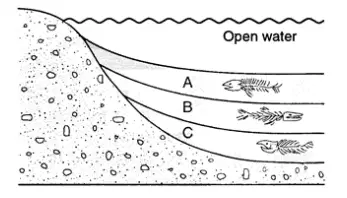
What do layers of fossils tell us?
a)
The fossils in layer C are older than those in layer A.
b)
The fossils in layer A are older than those in layer B.
52.
What helps keep plastic out of the ocean?
a)
Ban the production and usage of all bags made from recycled plastic.
b)
Clean up plastic trash from shorelines, rivers, and other waterways that flow into the oceans.
53.

What should people do to keep Earth clean for the future?
a)
acquire and apply knowledge of ecological principles
b)
continue to take part in deforestation
c)
use Earth's finite resources
54.
What happens if the ozone layer keeps getting smaller?
a)
an increase in skin cancer among humans
b)
an increase in marine ecosystem stability
55.
What causes us to use up Earth’s resources too fast (depletion)?
a)
environmental laws
b)
human population growth
c)
reforestation
56.
A detailed laboratory procedure was performed and showed that plants given a growth solution grew faster than those not given the solution.
To make sure a science test is fair, what should others do?
a)
make sure the conditions are identical to those in the first study
b)
double the amount of growth solution given to the first group
57.
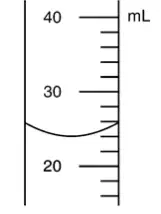
How much liquid is in the graduation cylinder?
a)
32 mL
b)
24 mL
c)
26 mL
58.
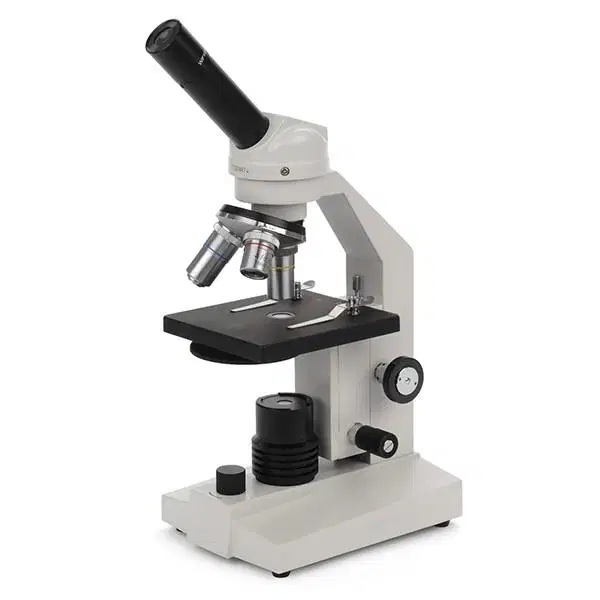
What should you do before using high power on a microscope?
a)
center the image being viewed
b)
remove the coverslip
59.
Why use iodine on animal cells?
a)
ribosomes
b)
nuclei
c)
contractile vacuoles
60.
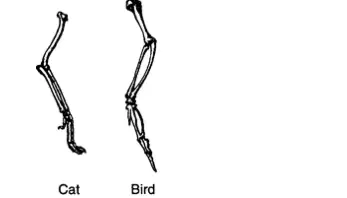
Why do cats and birds have similar bones?
a)
evolved from a common ancestor
b)
evolved gradually over a long period of time
61.
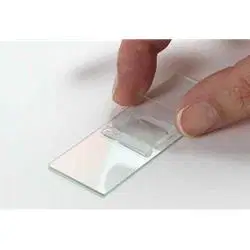
A cover slip should be used when preparing a
a)
frog for dissection
b)
wet mount of elodea
c)
suspension of cells for centrifugation
62.
What do we call body changes that help plants live in dry places?
a)
adaptations
b)
succession
c)
energy-flow relationships
63.
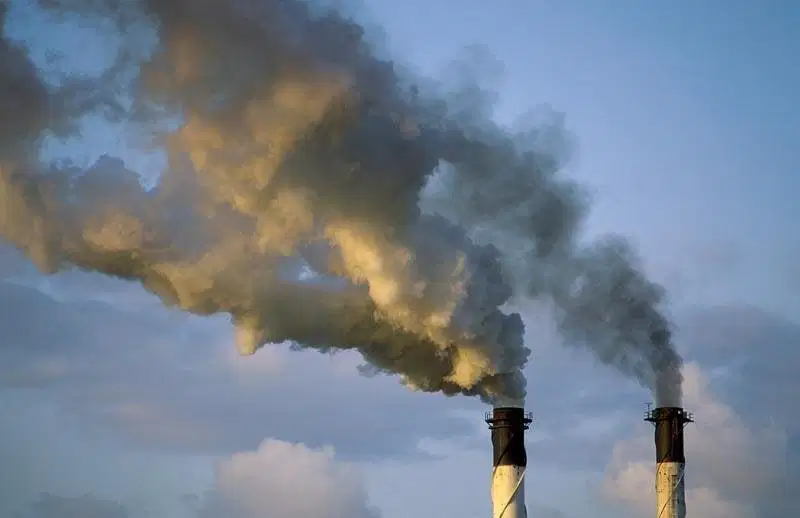
What activity adds the most carbon dioxide to the air?
a)
driving cars long distances
b)
planting large numbers of trees
64.
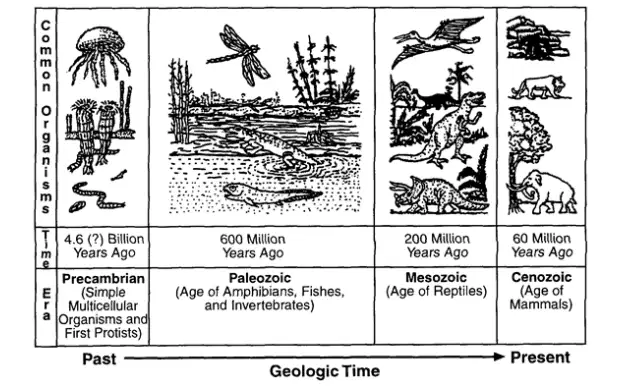
What does the fossil record tell us?
a)
Life on Earth has remained the same.
b)
Life on Earth has changed from primitive organisms to more complex organisms.
65.
What might happen if Earth gets 1–2°C hotter?
a)
sea levels might rise enough to flood some coastal areas
b)
long-term stability of the climate will benefit ecosystems
66.

The power that wind turbines generate will be enough to power the entire first floor of the tower, including the restaurants, shops, and exhibits.
What is good about using wind power at the Eiffel Tower?
a)
is renewable, so it will decrease the environmental impact of the tower businesses
b)
increases the use of resources that cannot be renewed in the future
67.
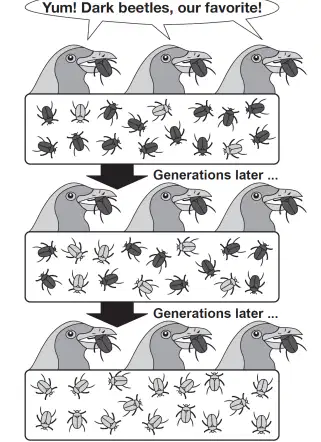
What idea says only the best animals survive and grow?
a)
natural selection
b)
homeostasis
c)
ecological succession
68.
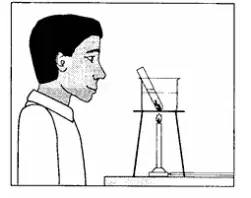
Which statement describes TWO unsafe laboratory practices represented in the diagram?
a)
The flame is too high and the test tube is unstoppered.
b)
The opening of the test tube is pointed toward the student and the student is not wearing googles.
69.
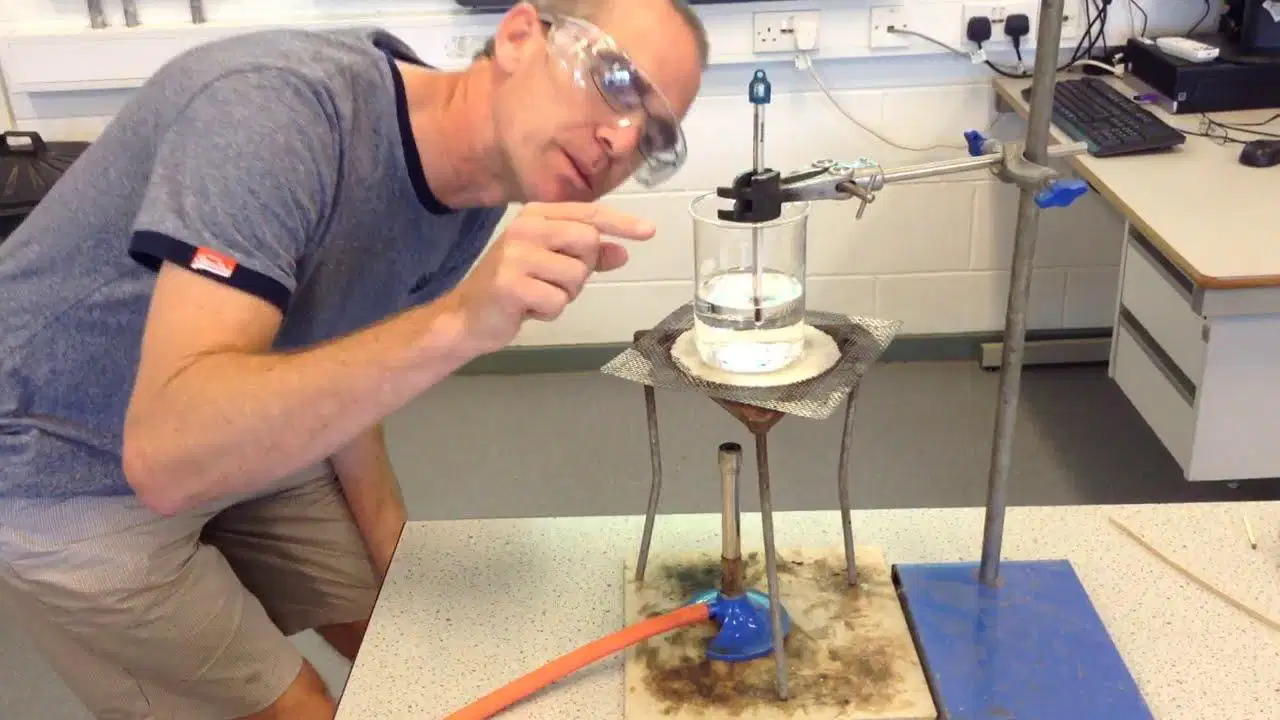
What should you wear when heating something in science?
a)
Direct the flame of the burner into the open end of the test tube.
b)
Stopper the test tube with a rubber stopper.
c)
Wear goggles and a laboratory apron.
70.
Organisms are classified as producers or consumers according to the way they
a)
obtain energy
b)
release wastes
71.
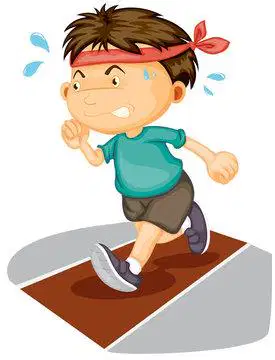
When you sweat during a race, what is that called?
a)
homeostasis.
b)
an allergic reaction.
c)
muscle fatigue.
72.
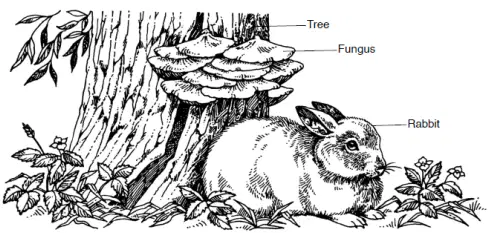
What do the rabbit, fungus, and tree have in common?
a)
They are all omnivores.
b)
They are all multicellular organisms.
73.
The cell theory states that
a)
all cells have nuclei that contain genetic information
b)
living organisms are made of cells that arise from preexisting cells
74.
The invention of the microscope allowed scientists to observe cells, helping them to
a)
discover the cell as a basic similarity among organisms
b)
study the behavior of chordates
c)
develop techniques for growing plants in a laboratory
75.
Which cell structure is found in plant cells, but NOT in animal cells?
a)
cell wall
b)
cell membrane
c)
cytoplasm
76.
In a cell, DNA is mainly found in the
a)
cell wall.
b)
ribosomes.
c)
nucleus.
77.
The control center of the cell is the
a)
cytoplasm.
b)
nucleus.
c)
chloroplasts.
78.
The sound from an automobile horn caused a dog to run to the side of the road. This sound is an example of a
a)
stimulus
b)
reflex
c)
synapse
79.
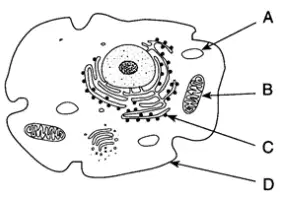
Which letter in the diagram below indicates the cell membrane?
a)
A
b)
C
c)
D
80.
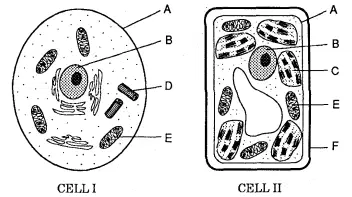
n both cells, the organelles labeled B are the
a)
vacuoles
b)
nuclei
81.
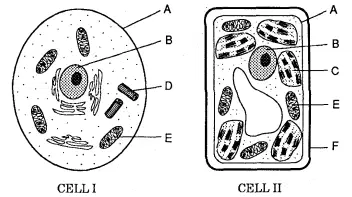
Cell II most likely represents a plant cell due to the presence of
a)
cell membrane
b)
cell wall
82.

a)
B
b)
C
83.
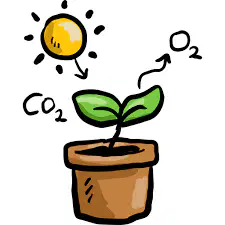
Photosynthesis changes water and carbon dioxide into
a)
sugar and oxygen
b)
sugar and nitrogen
84.
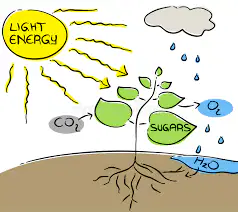
Most of the oxygen in the air is made in the process of
a)
photosynthesis
b)
regulation
c)
respiration
85.
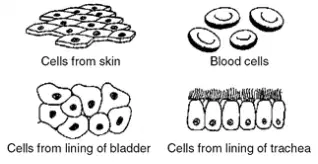
Some human body cells are shown in the diagrams below. These groups of cells represent different
a)
tissues in which similar cells function together.
b)
organs that help to carry out a specific life activity.
86.
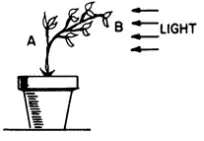
What is the stimulus (reason) for the growth pattern of the plant shown below?
a)
light
b)
carbon dioxide
87.
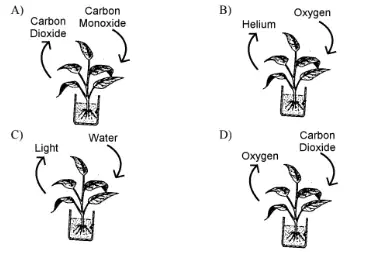
Which picture shows what plants take in and release during photosynthesis?
a)
A
b)
C
c)
D
88.
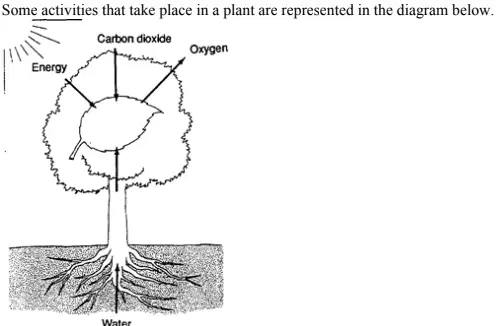
What part of the plant cell uses sunlight for food-making?
a)
mitochondria
b)
chloroplasts
c)
vacuoles
89.
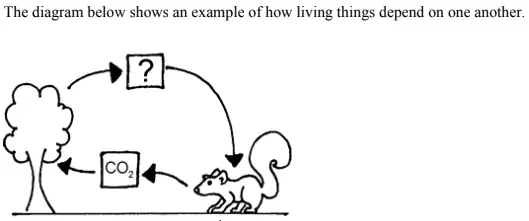
Which gas would best complete the diagram?
a)
nitrogen
b)
oxygen
90.
What gas do cells get rid of after respiration?
a)
carbon dioxide
b)
glucose
c)
water
91.
Which process involves the release of energy from carbohydrates (sugar) such as glucose?
a)
respiration
b)
excretion
92.
In green plants, most photosynthesis takes place in
a)
leaves.
b)
stems.
c)
flowers.
93.
What abiotic (non-living) factor can affect shrub growth?
a)
number of predatory animals present.
b)
amount of annual rainfall.
c)
availability of autotrophic organisms.
94.
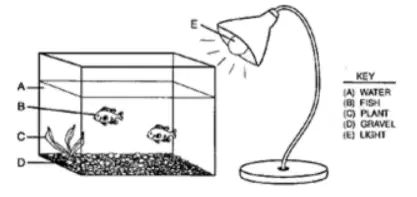
In the diagram of an aquarium setup below, which letters indicate abiotic (non-living) factors?
a)
A, B, D, and E, only
b)
A, D, and E, only
95.
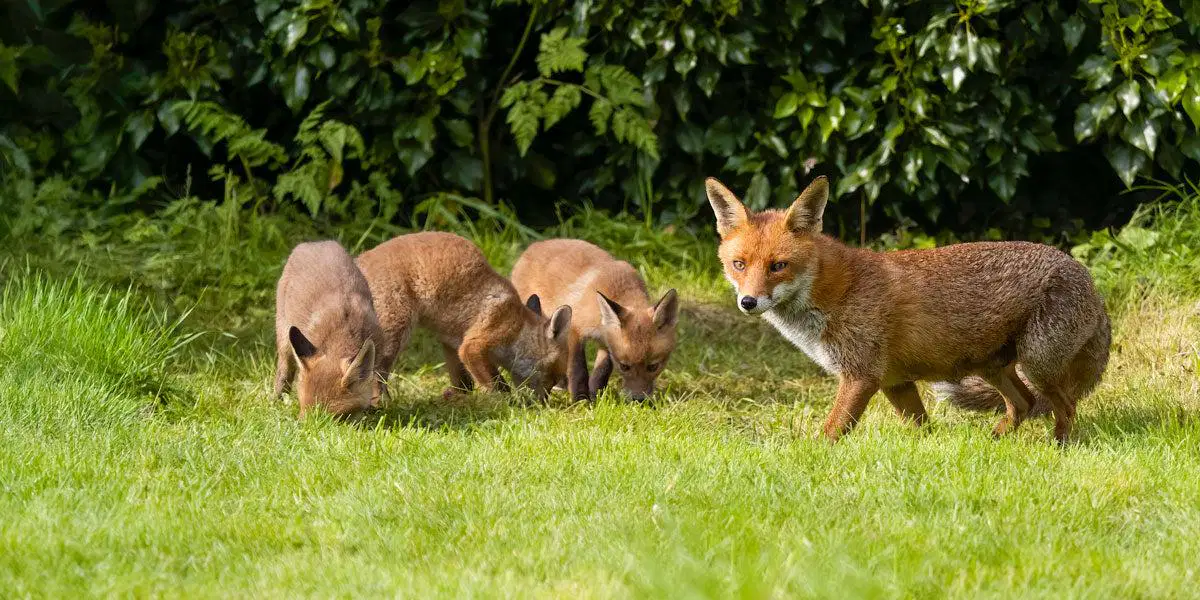
All the red foxes living in one forest make a-
a)
population.
b)
biome.
c)
biosphere.
96.
An island has a population of mice whose population doubled over the course of two years. What caused the number of mice on the island to increase?
a)
competition among mice for food
b)
a decrease in the island's owl population
97.
In a marine ecosystem, algae are able to use sunlight and inorganic materials to produce their own food. Clams and other organisms feed on the algae. In this ecosystem, the algae acts as a
a)
decomposer.
b)
producer.
c)
scavenger.
98.
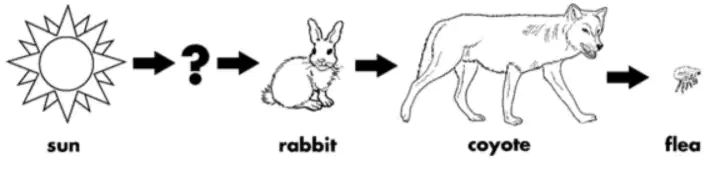
Which of the following is missing from the food chain?
a)
plants
b)
hawks
99.
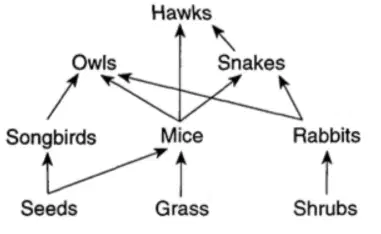
Which organisms are primary consumers (eats plants)?
a)
grass, mice, and hawks
b)
songbirds, mice, and rabbits
100.
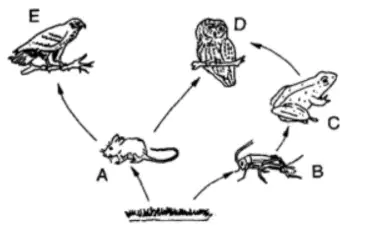
Which organisms would most likely be competitors (challengers)?
a)
A and C
b)
B and D
c)
D and E
100 %

