
 Worksheets
What is Excretion?
Total questions: 44
Worksheet time: 22mins
Fill in the blank: Excretion is the removal of ______ materials, the waste products of metabolism and excess materials.
toxic
nutritious
essential
beneficial
What does metabolism mean?
The removal of toxic materials
The chemical processes going on in the body
The removal of digested food
The removal of faeces
Fill in the blank: One type of waste is not excreted from the body - ______!
faeces
urine
sweat
carbon dioxide
Fill in the blank: The removal of digested food is called ______.
egestion
ingestion
absorption
assimilation
What material is made from respiration and excreted by the body?
Carbon dioxide
Glucose
Oxygen
Nitrogen
What nitrogen waste is produced when excess proteins or amino acids are broken down?
Urea
Glucose
Oxygen
Carbon dioxide
What is made from respiration and excreted by the body?
Water
Glucose
Oxygen
Protein
Which of the following materials are excreted by the body?
Carbon dioxide
Urea
Heat
Water
All of the above

Which organ is responsible for filtering waste from the blood in the excretory system?
Lungs
Kidneys
Liver
Skin

Which of the following is NOT part of the excretory system as shown in the diagram?
Skin
Lungs
Heart
Kidneys
It is necessary for the body to rid itself of waste products.
True
False
It is important to regulate the volume and composition of body fluids.
True
False

Fill in the blank: The ________ is responsible for removing carbon dioxide from the body as part of the excretory system.
Lungs
Kidneys
Liver
Skin
How do kidneys help remove nitrogen waste from the body?
By filtering out urea to produce urine.
By absorbing nitrogen into the bloodstream.
By converting nitrogen waste into oxygen.
By storing nitrogen waste in the liver.
What do kidneys regulate by excreting different amounts of urine?
Water levels
Blood sugar
Body temperature
Oxygen levels
Which organ excretes carbon dioxide and water as you breathe out?
Lungs
Kidneys
Liver
Skin
How does your skin help remove waste from the body?
By shedding excess salt through sweat.
By producing vitamin D.
By absorbing oxygen from the air.
By digesting food.
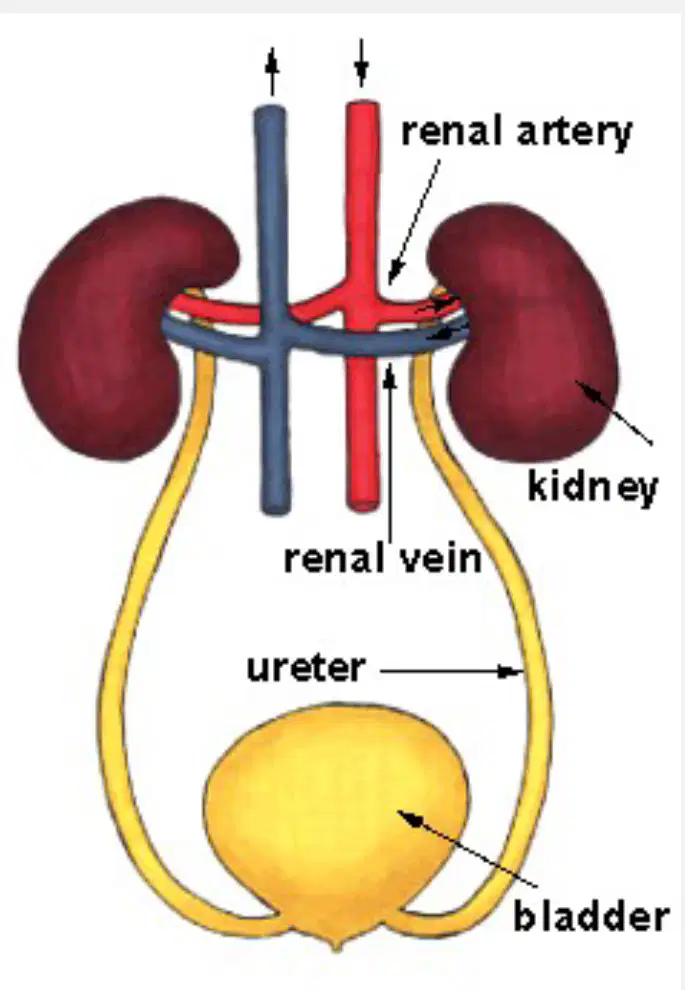
How many kidneys do you have?
Two
One
Three
Four
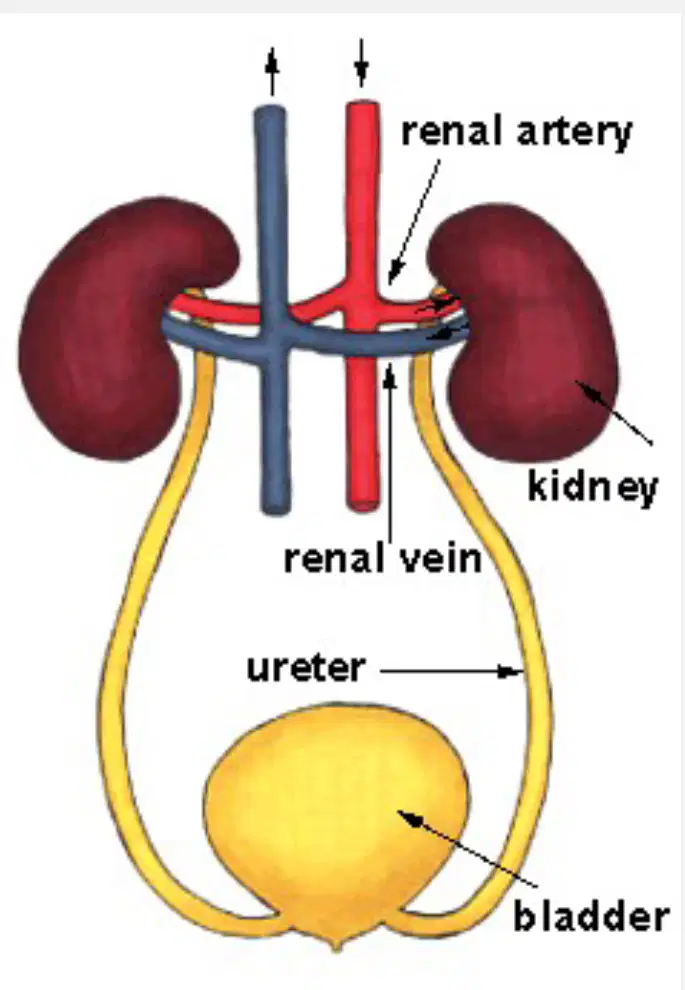
Each kidney receives blood from the ________.
renal artery
renal vein
aorta
pulmonary artery

What do kidneys act like, removing urea?
Filters
Engines
Pumps
Heaters

The urea is diluted with water and is called ________.
urine
plasma
bile
saliva

Urine is sent to the bladder for storage via the ________.
ureter
esophagus
trachea
aorta
Once the bladder fills, the urine passes out the _______.
urethra
esophagus
trachea
rectum
Any sugar that enters the kidneys is _______ (saved), as are some salts.
reabsorbed
excreted
diluted
filtered
The amount of water in the urine is adjusted to suit the body's _______.
needs
temperature
color
weight
Which organ is responsible for reabsorbing sugar and some salts in the body?
Heart
Kidney
Liver
Bladder
Which of the following is NOT a part of the urinary system?
Kidney
Ureter
Liver
Bladder
What is the meaning of the term 'Metabolism'?
Metabolism is the set of life-sustaining chemical reactions in organisms.
Metabolism is the process of cell division in plants.
Metabolism refers to the study of weather patterns.
Metabolism is the movement of muscles during exercise.
What are 'Renal arteries'?
Renal arteries are blood vessels that carry blood to the kidneys.
Renal arteries are nerves that control kidney function.
Renal arteries are tubes that carry urine from the kidneys to the bladder.
Renal arteries are glands that produce hormones for the kidneys.
What is the 'Bladder'?
The bladder is an organ that stores urine before it is excreted from the body.
The bladder is a gland that produces digestive enzymes.
The bladder is a muscle that controls breathing.
The bladder is a bone in the human leg.
What is the 'Urethra'?
The urethra is the tube that carries urine from the bladder to the outside of the body.
The urethra is a gland that produces hormones.
The urethra is a muscle that controls breathing.
The urethra is a bone in the leg.
What is the 'Ureter'?
The ureter is the tube that carries urine from the kidney to the bladder.
The ureter is the tube that carries urine from the bladder to the outside of the body.
The ureter is the organ that produces urine in the body.
The ureter is the muscle that controls the release of urine from the bladder.
What is the 'Renal vein'?
The renal vein is the blood vessel that carries filtered blood away from the kidney.
The renal vein is the tube that carries urine from the kidney to the bladder.
The renal vein is the structure that produces hormones in the kidney.
The renal vein is the duct that transports bile from the liver to the intestine.
What does 'Egested' mean?
Egested means expelled from the body, usually referring to undigested food.
Egested means absorbed into the bloodstream.
Egested means digested and used for energy.
Egested means broken down by enzymes.
What does 'Excreted' mean?
Excreted means eliminated from the body, usually referring to waste products produced by metabolism.
Excreted means absorbed into the bloodstream for energy.
Excreted means stored in the liver for future use.
Excreted means converted into nutrients for growth.
Excretion is defined as the removal from organisms of toxic materials. What is the function of the kidneys?
To remove toxic materials from the blood
To produce hormones
To digest food
To transport oxygen
The removal of urea and excess water from the body is called:
Respiration
Excretion
Digestion
Circulation
The function of the kidneys in removal of waste and reabsorption of glucose and salts is to:
Filter blood, remove waste, and reabsorb essential substances like glucose and salts
Produce digestive enzymes
Regulate body temperature
Store bile for digestion
Fill in the blank: Excess proteins or amino acids are broken down to produce a nitrogen waste called ________.
urea
glucose
ammonia
lactic acid

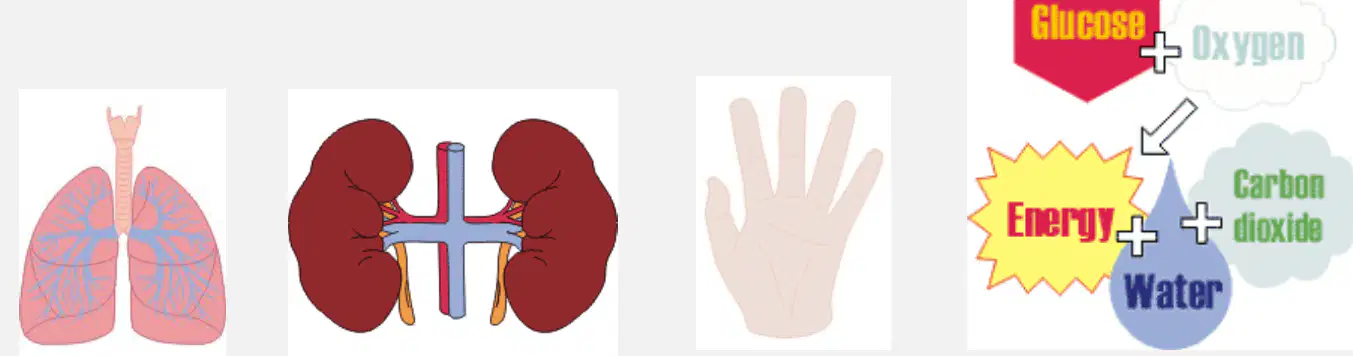
Label the organ shown in the diagram that is responsible for filtering blood and producing urine.
Kidneys
Liver
Lungs
Heart

Which organ in the diagram is involved in removing carbon dioxide from the body?
Lungs
Liver
Kidney
Stomach

Which part of the excretory system is responsible for removing solid waste from the body?
Large intestine
Kidney
Urinary bladder
Lungs
It is necessary for the body to rid itself of waste products because:
It helps maintain health and prevent toxic buildup.
It increases body temperature.
It provides energy for growth.
It strengthens bones.
Which of the following correctly labels the parts of the urinary system?
Kidney, Ureter, Bladder, Urethra
Liver, Stomach, Intestine, Pancreas
Heart, Lung, Brain, Spinal cord
Femur, Tibia, Fibula, Patella

