
NEW
Font size
 Worksheets
Exercise for Chemistry Exam
Total questions: 32
Worksheet time: 2hrs 30mins
Which statement correctly describes the particle structure of gases?
Particles are tightly packed and cannot move
Particles are close together and can flow around each other
Particles are far apart and move freely
Particles are arranged in a fixed pattern
Which statement correctly describes the particle structure of liquids?
Particles are tightly packed and locked in place
Particles are far apart and move freely in all directions
Particles are close together and can move around each other
Particles are in a fixed position and vibrate only
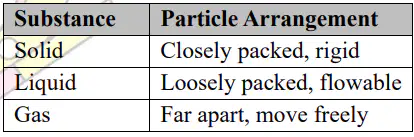
Which of the following correctly shows the particle arrangement of solids, liquids, and gases?
All statements are correct
Only solids and gases are correct
Only liquids and gases are correct
None of the statements are correct
Which of the following describes the shape and volume of liquids?
Definite shape and volume
Indefinite shape and definite volume
Indefinite shape and volume
Definite shape and indefinite volume
Which of the following describes the shape and volume of gases?
Definite shape and definite volume
Indefinite shape and definite volume
Indefinite shape and indefinite volume
Definite shape and indefinite volume
..... is an example of a substance that has a definite shape and a definite volume
Water
Oxygen gas
Bottle
Syrup
... is an example of a substance that has indefinite shape but has a definite volume.
Air
Rock
Water
Wood
... is an example of a substance that has indefinite shape and indefinite volume.
Juice
Oxygen
Plastic
Ice
What is the process of changing from gas to solid called?
Condensation
Freezing
Deposition
Sublimation
The process of changing from solid directly to gas is called...
Freezing
Condensation
Sublimation
Deposition
When gas changes into liquid, the process is called...
Melting
Condensation
Sublimation
Freezing
The atom is ...
a large part of a living organism
the biggest unit in a cell
the smallest particle of a substance
a group of organs
The element is ...
a pure substance made up of only one type of atom
combination of two or more elements or atoms of the same element
substances former when two or more different elements chemically combined
an atom or a group of atoms that has either a positive or negative charge
The molecule is ...
A type of mixture of different elements and atoms
A substance made of two or more atoms bonded together
A metal atom with a positive charge
A pure substance made of only one atom
The compound is ...
A single atom with no charge
A group of atoms from the same element
A substance formed when two or more different elements chemically combine
A mixture of elements without chemical bonding
The examples of elements are ...
O2, H2, and S2
O, H and S
CO2, H2O, H2S
CO, O, H2
The examples of molecule are ...
O2, H2, and S2
O, H and S
CO2, H2O, H2S
CO, O, H2
The examples of compound are ...
O2, H2, and S2
O, H and S
CO2, H2O, H2S
CO, O, H2
The correct notation for the element potassium is ...
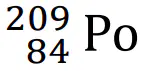
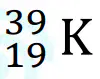
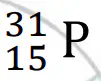
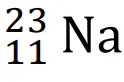
How many neutrons are in a gold atom?
79
118
197
276
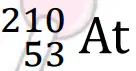
The notation for an element with atomic number 53 is ...
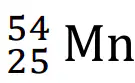
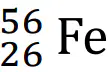
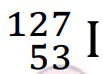
The ion is ...
a pure substance made up of only one type of atom
combination of two or more elements or atoms of the same element
substances former when two or more different elements chemically combined
an atom or a group of atoms that has either a positive or negative charge
The cation is...
an atom that gains electrons and becomes negatively charged
an atom or molecule that loses electrons and becomes positively charged
a neutral atom found only in metals
an element that cannot form ions
The anion is...
an atom or molecule that loses electrons and becomes positively charged
an element that shares protons with another atom
an atom that gains electrons and becomes negatively charged
a pure substance made of one type of atom
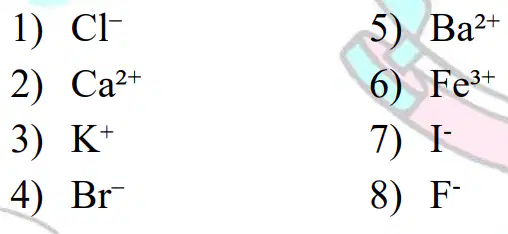
Look at the ion data!
Examples of cations are ...
1, 4, and 8
2, 7 and 8
3, 5 and 6
4, 6 and 7
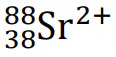
look at the picture!
What is the number of protons and electrons in an ion?
38 protons, 38 electrons
38 protons, 36 electrons
88 protons, 38 electrons
38 protons, 40 electrons
The Lewis symbol for the valence electron of calcium (Ca) is ...
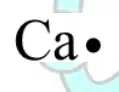
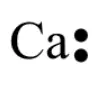
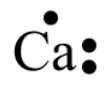
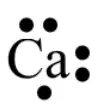
The Lewis symbol for the valence electron of Sulfur (S) is ...




The definition of an ionic bond is ...
combination of two or more elements or atoms of the same element
a bond formed by the movement of protons between atoms
the electrostatic attraction between oppositely charged ions formed by electron transfer between a metal and a non-metal
a weak force between neutral atoms in a molecule
What chemical formula is formed from the formation of ions between Mg and Br?
MgBr
MgBr₂
Mg₂Br
Mg₂Br₃
What chemical formula is formed from the formation of ions between Calcium (Ca) and Chlorine (Cl)?
CaCl
CaCl₂
Ca₂Cl
CaCl₃
ini adalah link download soal untuk latihan persiapan ujian CHEMISTRY
klik link ini atau copy
https://drive.google.com/file/d/1JCWmnNihAcE8eOM9AXWHBLSHgurK0W1W/view?usp=sharing
sudah
tidak berminat

