
 Worksheets
ACADEC Summer 2025 Art Test #1
Total questions: 100
Worksheet time: 3hrs 34mins

Complex, ornate, fussy, light, lots of cupids and pastels, very dreamlike and even feminine, focuses on aristocracy.
Medieval
Rococo
Baroque
Cubism

Flat, unrealistic, no depth or perspective, heavy use of gold & unnatural colors, often lots of people, religious (teaches lessons for the illiterate).
Medieval
Romantic
Dadaism
Neoclassical

Abstract art form that shows multiple points of view simultaneously. The subject matter is broken down, analyzed, and reassembled in abstract form. Shows more than one view at a time.
Post-Impressionism
Realism
Cubism
Dadaism

Emotional, passionate, mysterious, sentimental, intuitive, intense, “rugged” individual, power and fury of nature, the exotic/occult/macabre, nationalism.
Realism
Neoclassical
Renaissance
Romanticism

Arose during the collapse during WWI of social and moral values; attacks accepted standards of behavior/ridicules contemporary culture & traditional art forms; nihilistic and random; purpose was to enrage and engage their audience; literally means “hobbyhorse.”
Cubism
Dadaism
Post-Impressionism
Realism

They wanted to add emotion and symbolic meaning to their art. Their works often contain bold, unrealistic colors and expressive brushstrokes.
Post-Impressionism
Surrealism
Northern Renaissance
Expressionism

Realistic (but still beautiful); emotions & expressions are naturally depicted; mastery of perspective; geometrical arrangement of figures (harmony, balance, and proportion); . Subject matter: mythology, or religion, or individual portrait
Northern Renaissance
Baroque
Italian Renaissance
Rococo

Very dramatic and emotional and bold; evokes movement; extravagant; not merely religious….Very Catholic
Baroque
Northern Renaissance
Neoclassical
Surrealism

Arose in response to Romanticism; shows ordinary people going about their ordinary business. Often unattractive (but that’s reality). Subjects are that which are real and exist.
Impressionism
Realism
Expressionism
Neoclassicalism

Art form that attempts to portray dreamlike qualities and tries to explore the subconscious of the individual. Greatly influenced by Freudian psychology. Fascination with dreams, the grotesque, most importantly the UNCONSCIOUS.
Cubism
Realism
Surrealism
Impressionism

Harsh reality (lifelike features, unflattering honesty); often religious; “everyday life” (even middle & lower class); more landscapes and domestic interiors; often moral tales or warnings.
Dutch Golden Age
Realism
Expressionism
Northern Renaissance

Sought to capture the momentary effects of the way light fell on a subject. No attempt made to capture how the object actually looked; more about how the object was perceived. Subjects are wide-ranging, from people to nature to modern inventions. Pure, intense colors and smaller, more fragmented brushstrokes.
Post-Modern
Impressionism
Italian Renaissance
Expressionism

Used bright colors to express a particular emotion; much less concerned with form or technique…much more about expression (Basically “art therapy for the artist;” intended to portray the artist’s inner state and express feelings.).
Expressionism
Impressionism
Post-Impressionism
Neoclassical

Scenes of daily life and “comfortable domesticity;” normal scenes of normal people (but generally attractive, middle class people); rarely history or religion; Hint: if you see a windmill, it’s this category!!
Dutch Golden Age
Northern Renaissance
Realism
Post-Modern

Associated with the democracy of Greece/republicanism of Rome (symbolic mythological stories but no silly cupids); emphasizes courage and dignity and heroism; dutiful, sacrificial patriotism; composition is calm and rational with most figures in the foreground; stressed drawing with lines,
not color; no trace of brushstroke.
Rococo
Baroque
Neoclassical
Romanticism
Which step of A Critical Method involves listing the facts (artist, medium, date, etc.) of an artwork, as well as the elements of art?
¿Qué paso de Un método crítico implica enumerar los hechos (artista, medio, fecha, etc.) de una obra de arte, así como los elementos del arte?
Description
Analysis
Interpretation
Evaluation
Which step of A Critical Method involves identifying how the artist used the principles of design?
¿Qué paso de Un método crítico implica identificar cómo el artista utilizó los principios del diseño?
Description
Analysis
Interpretation
Evaluation
Which step of A Critical Method involves formulating an opinion about the success and importance of the artwork?
¿Qué paso de Un método crítico implica formular una opinión sobre el éxito y la importancia de la obra de arte?
Description
Analysis
Interpretation
Evaluation
Which step of A Critical Method involves finding meaning of an artwork, or determining what the artist is trying to say?
¿Qué paso de Un método crítico implica encontrar el significado de una obra de arte o determinar lo que el artista intenta decir?
Description
Analysis
Interpretation
Evaluation

Which art historical movement challenged traditions of "fine art" by using imagery and mass-produced objects from popular culture?
¿Qué movimiento histórico del arte desafió las tradiciones de las "bellas artes" mediante el uso de imágenes y objetos producidos en masa de la cultura popular?
Pop Art
Realism
Fauvism
Impressionism

Pablo Picasso is typically associated with which art moment that focuses on geometric shapes and contrasting viewpoints?
¿Con qué momento artístico se asocia típicamente Pablo Picasso que se centra en formas geométricas y puntos de vista contrastantes?
Renaissance
Realism
Cubism
Impressionism
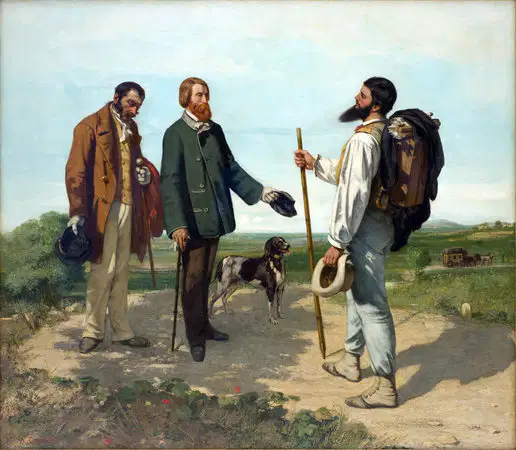
An art historical movement characterized by serious looking subjects performing labor or other ordinary, mundane tasks is known as _____?
¿Un movimiento histórico del arte caracterizado por sujetos de apariencia seria que realizan trabajos u otras tareas ordinarias y mundanas se conoce como _____?
Renaissance
Realism
Cubism
Impressionism
Leonardo da Vinci, Michelangelo, and Raphael are known as the Holy Trinity of which art historical movement?
Leonardo da Vinci, Miguel Ángel y Rafael son conocidos como la Santísima Trinidad ¿de qué movimiento histórico del arte?
Baroque
Renaissance
Cubism
Fauvism

Paintings during the ______ art period often featured religious subjects with strong contrast, deep colors, intricate details, and a sense of drama.
Las pinturas del período artístico ______ a menudo presentaban temas religiosos con fuertes contrastes, colores profundos, detalles intrincados y una sensación de dramatismo.
Baroque
Renaissance
Pop Art
Post-Impressionism

This art historical movement is characterized by small, noticeable brush strokes, no sharp edges, and movement within open compositions.
Este movimiento histórico del arte se caracteriza por pinceladas pequeñas y notables, sin bordes afilados y con movimiento dentro de composiciones abiertas.
Baroque
Renaissance
Pop Art
Post-Impressionism
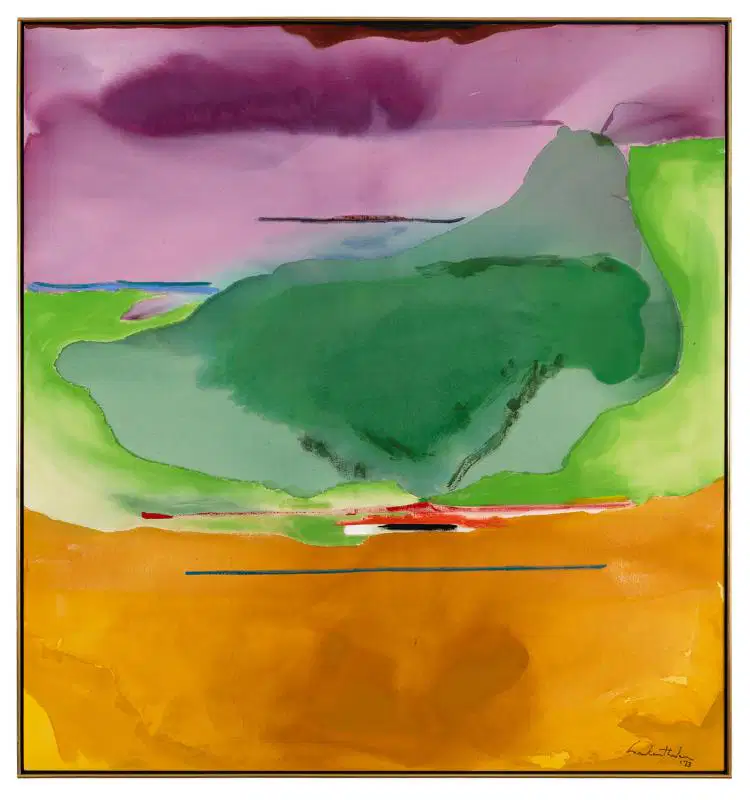
Which art historical movement focuses less on figures and objects, and more on communicating emotions through spontaneous brush work or large fields of color?
¿Qué movimiento histórico del arte se centra menos en figuras y objetos y más en comunicar emociones a través del trabajo espontáneo con pincel o grandes campos de color?
Realism
Abstract Expressionism
Superflat
Post-Impressionism

Which art historical movement is characterized by bold, bright colors, simplified designs, and non-naturalistic subjects?
¿Qué movimiento histórico del arte se caracteriza por colores llamativos y brillantes, diseños simplificados y temas no naturalistas?
Realism
Abstract Expressionism
Superflat
Fauvism
What is the source of an artist’s ideas for a new work of art that does not have any basis in reality?
¿Cuál es la fuente de las ideas de un artista para una nueva obra de arte que no tiene ninguna base en la realidad?
Memory
Representation
Imagination
Direct Observation

What principle of design is dominant in this artwork?
¿Qué principio de diseño es dominante en esta obra de arte?
Color
Pattern
Space
Balance
Which of the following images is the best example of Renaissance Art?
¿Cuál de las siguientes imágenes es el mejor ejemplo del arte renacentista?


Which of the following images is the best example of Fauvism?
¿Cuál de las siguientes imágenes es el mejor ejemplo del fauvismo?


Which of the following images is the best example of Pop Art?
¿Cuál de las siguientes imágenes es el mejor ejemplo de Pop Art?


Which of the following images is the best example of Abstract Expressionism?
¿Cuál de las siguientes imágenes es el mejor ejemplo del expresionismo abstracto?


Which of the following images is the best example of Impressionism?
¿Cuál de las siguientes imágenes es el mejor ejemplo del impresionismo?


Andy Warhol appropriates the Campbell’s soup can in this artwork by —
Andy Warhol se apropia de la lata de sopa Campbell en esta obra de arte de:
portraying it from direct observation (retratarlo a partir de la observación directa)
using a copyrighted logo in a creative way (usar un logotipo con derechos de autor de una manera creativa)
painting a sculpture he created (pintando una escultura que creó)
Which of the following are Principles of Design? Select ALL that apply.
¿Cuáles de los siguientes son principios de diseño? Seleccione todas las que correspondan.
Shape
Pattern
Balance
Color
Unity

In this mandala, the artist uses radial symmetry to create a sense of which principle of design?
En este mandala, el artista usa simetría radial para crear una idea de qué principio de diseño.
Balance (Equilibrio)
Contrast
Texture

Which type of perspective is seen in this famous Renaissance piece by Michelangelo?
¿Qué tipo de perspectiva se ve en esta famosa pieza renacentista de Miguel Ángel?
one-point
two-point
three-point

The contrasting viewpoints and the fragmented, geometric shapes in this artwork can best be described as which artistic style?
Los puntos de vista contrastantes y las formas geométricas fragmentadas en esta obra de arte se pueden describir mejor como ¿qué estilo artístico?
Renaissance
Cubism
Pop Art
The materials or method an artist uses to create a work of art, such as a pencils, paint, or clay is known as:
Los materiales o métodos que utiliza un artista para crear una obra de arte, como lápices, pintura o arcilla, se conocen como:
sketch
media/medium
technique
What is Value?
The shape of a thing or person
A mark or stroke in proportion to its width
The lightness or darkness of a color.
The quality of an object or substance with respect to light reflected by the object, usually determined visually by measurement of hue, saturation, and brightness
What is Color?
The shape of a thing or person
A mark or stroke in proportion to its width
A degree of lightness or darkness of a color
The quality of an object or substance with respect to light reflected by the object, usually determined visually by measurement of hue, saturation, and brightness
What is Line?
The shape of a thing or person
A mark or stroke that is longer than it is wide.
A degree of lightness or darkness of a color
The quality of an object or substance with respect to light reflected by the object, usually determined visually by measurement of hue, saturation, and brightness
What is Texture?
The distance or areas around, between and within the components of a piece
A mark or stroke in proportion to its width
The visual and especially tactile quality of a surface
The quality of a distinct object or person in having an external surface or outline
What is Space?
The distance or areas around, between and within the components of a piece
A mark or stroke in proportion to its width
The visual and especially tactile quality of a surface
The quality of a distinct object or person in having an external surface or outline
How many elements of art are there?
5
7
3
Form is
2- Dimensional
3- Dimensional
Non-existent
The elements of art can compre to...
basketball drills
the ingredients of a recipe
the song I heard this morning

This image is an example of what element of art?
form
texture
line
It has length, width and also depth
value
texture
form
Refers to how a surface feels
texture
form
shape
An artist must use all every element of art to create a work of art.
True
False
What occurred during the modernist era?
limited options
profound religious dedication
extreme poverty
new possibilities
Which is NOT a Modernist Poet
T.S. Elliot
Ezra Pound
Angie Thomas
Virginia Woolf
What is Modernism?
A reaction that began during the WWI period that focused on a break from convention and tradition in art, literature, culture, etc.
A reaction against the Romantic authors that focused on creating realistic, gritty narratives
A continuation of the Realist movement that now focused on WWI and the horrors of war
A break from Imagism that turned against using imagery and focused on hidden meaning in poetry
What were writers during this time period considered?
The New Generation
Fools of the Night
Hood Babies
The Lost Generation
Which of these Art Movements developed during this time?
Baroque
Futurism
Rococo
Renaissance
What did Modernist reject the existence of?
Love
God
Dogs
Deodorant
What artist founded the Cubism art movement?
Michelangelo
Snoop Dogg
Famgoon Ralo
Pablo Picasso

What's the style of this painting?
pop-art
expressionism
impressionism
abstraction
What is the main characteristic of Impressionism?
Use of dark colors and heavy textures.
Focus on historical events and realism.
Emphasis on geometric shapes and forms.
Loose brushwork, vibrant colors, and an emphasis on the play of light on surfaces.
Which artistic style prioritizes form, color, and line over realistic depiction, inviting viewers to interpret the artwork based on their personal experiences and emotions?

What's the style of this painting?
pop art
expressionism
abstraction
realism
What does the term 'abstract art' refer to?
A style of art that strictly follows realistic representation.
A style of art that focuses geometric shapes, bold colors, and dynamic compositions to evoke feelings and ideas.
An art form that only uses black and white colors.
A technique that emphasizes detailed and lifelike portraits.

What's the style of this painting?
abstraction
expressionism
realism
surrealism
Which art style would an artist use if they wanted to depict subjects as they appear in everyday life, without embellishment or interpretation?
Which painting style emphasizes bold colors, exaggerated forms, and a focus on conveying emotional experience rather than realistic representation?
Impressionism
Cubism
Expressionism
Surrealism
Which art style is characterized by meticulous attention to detail, accurate representation of light and shadow, and a focus on ordinary subjects?
Surrealism
Impressionism
Realism
Dada

What style is displayed in the painting?
Romanticism
Cubism
Baroque
Which art style seeks to express inner feelings and reactions to the world around them, often using distortion and abstraction to convey their messages?
Which art movement is known for its focus on fleeting moments, observation of light and its changing conditions?
Surrealism
Cubism
Baroque
Impressionism
Modernism was a reaction to
WWII
Victorian Culture
Abnormal bruising and swelling
The Roaring 20's
Which of the following is not true about Modernism?
it was about reinvention
Focuses on the individual
It displayed the hypocrisy of the aristocracy
It said life was not ordered
Which of the following is true about modernism?
It was hopeful
It was mainly about naturalism and politics
It was pessimistic
It stated that the government was the highest form of authority

This photograph titled, " Blessed Art Thou Among Women" was taken by this photographer at the beginning of the 20th century.
Alfred Stieglitz
Peter Henry Emerson
Eduard Steichen
Gertrude Käsebier

Who was the German Pictorial Photographer that took this photograph titled, "Still Life" (1907)?
Baron Adolph Meyer
Gertrude Käsebier
Alfred Stieglitz
Eduard Steichen

Who took this iconic portrait image of Greta Garbo in 1928?
Alfred Stieglitz
Eduard Steichen
Gertrude Käsebier
Peter Henry Emerson

Who is this American photographer and modern art promoter?
Peter Henry Emerson
Alfred Stieglitz
Eduard Steichen
Baron Adolph Meyer

This photograph titled, "Gathering Water Lilies" (1886) was taken by which of these photographers?
Gertrude Käsebier
Eduard Steichen
Alfred Stieglitz
Peter Henry Emerson

In 1893 this photograph/photogravure was create by which of the following photographers?
Gertrude Käsebier
Eduard Steichen
Alfred Stieglitz
Peter Henry Emerson
Which of Alfred Stieglitz's photographs was discussed in the video, "The First Modern Photograph? - Alfred Stieglitz" that we watched in class?
"Paula, or Sun Rays" 1889
"Winter on 5th Avenue, New York" 1893
"Portrait of Georgia O'Keefe" 1922
"The Steerage" 1907

Claude Monet began creating his first series of oil paintings titled "Water Lilies" between the years 1897-1899. Which pictorial photographer took similar images a few years earlier in 1886 using a camera?
Alfred Stieglitz
Peter Henry Emerson
Eduard Steichen
Gertrude Käsebier

