
 Worksheets
Lesson 1.1
Total questions: 82
Worksheet time: 41mins
Jot down the definition of an issue.
A problem or matter that is in dispute or needs to be resolved.
A type of celebration.
A form of entertainment.
A kind of food.
Geography can take you to which of the following careers after high school?
Teaching
Urban planning
Environmental consulting
All of the above
The 3 questions geographers ask are:
What is it? Where is it? Why is it there?
Who discovered it? When was it found? How old is it?
What is the population? What is the climate? What is the language?
How big is it? How far is it? How high is it?
The 4 Geographic Thinking Concepts are:
Location, Place, Region, Movement
Spatial Significance, Patterns and Trends, Interrelationships, Geographic Perspective
Latitude, Longitude, Equator, Prime Meridian
Climate, Population, Resources, Economy
The 5 steps to the Geographic Inquiry Process are:
Ask, Acquire, Organize, Analyze, Answer
Ask, Collect, Analyze, Interpret, Act
Ask, Acquire, Examine, Analyze, Act
Ask, Acquire, Organize, Analyze, Act
Select the 5 transferable skills you will be learning about in Unit 1.
Communication, teamwork, problem-solving, time management, adaptability
Mathematics, biology, chemistry, physics, history
Drawing, painting, sculpting, dancing, singing
Cooking, cleaning, gardening, shopping, driving
A knowledge of geography would be helpful in which of the following careers?
Travel agent
Software developer
Chef
Accountant
A Political Map of Canada as described in 1.1.3. shows which of the following?
Physical features such as mountains and rivers
Provincial and territorial boundaries, major cities, and capitals
Climate zones and vegetation regions
Population density by region
What is the first unit in Exploring Canadian Geography?
Becoming a Geographer
Canadian Landforms
Climate and Weather
Natural Resources
Which of the following is NOT a unit in Exploring Canadian Geography?
Physical Geography
Economic Geography
Human Geography
World History
Which of the following lists all the units in Exploring Canadian Geography?
Physical Regions, Climate, Natural Resources, Population, Urbanization
Provinces, Territories, Capitals, Landmarks
History, Government, Economy, Culture
Mountains, Rivers, Lakes, Forests
Is Sustainability one of the units in Exploring Canadian Geography?
True
False
Match the unit number with its name:
Becoming a Geographer
Becoming a Geographer
Physical Geography
Physical Geography
Economic Geography
Economic Geography
Human Geography
Human Geography
Sustainability
Sustainability
Which of the following is the first lesson in the 'Becoming a Geographer Unit Lessons'?
Patterns and Trends
Geography is Awesome!
Interrelationships
Spatial Significance
Fill in the blank: The second lesson in the 'Becoming a Geographer Unit Lessons' is __________.
Geographic Perspective
Map Skills
Physical Geography
Human Environment Interaction
Which lesson in the 'Becoming a Geographer Unit Lessons' focuses on 'Patterns and Trends'?
1st
2nd
3rd
4th
Fill in the blank: The fourth lesson in the 'Becoming a Geographer Unit Lessons' is __________.
Interrelationships
Location
Movement
Regions
Which of the following is NOT a lesson in the 'Becoming a Geographer Unit Lessons'?
A) Spatial Significance
B) Geographic Inquiry
C) World History
D) Geographic Perspective
Fill in the blank: The last lesson in the 'Becoming a Geographer Unit Lessons' is __________.
Geographic Inquiry
Map Skills
Physical Geography
Human-Environment Interaction

Fill in the blank: The learning goal for this geography lesson is to understand the scope of Geography and how we study _______.
issues
continents
languages
animals
What is the 'Big Idea' of the geography course as shown in the slide?
Learning about world history
Developing a foundation of knowledge and skills in geography to analyze the themes of the course
Studying mathematics
Practicing sports
Fill in the blank: One of the transferable skills developed in Unit 1 is _________
Critical thinking and problem solving
Time travel
Telepathy
Invisibility
Fill in the blank: One of the transferable skills developed in Unit 1 is _________
Global citizenship and sustainability
Time travel and teleportation
Invisibility and mind reading
Alchemy and potion making
Fill in the blank: One of the transferable skills developed in Unit 1 is _________
Digital literacy
Cooking skills
Carpentry
Driving
Fill in the blank: One of the transferable skills developed in Unit 1 is _________
Self-directed learning
Time travel
Telepathy
Invisibility
Fill in the blank: One of the transferable skills developed in Unit 1 is _________
Communication
Photosynthesis
Gravity
Osmosis
Which topic is studied in Grade 7 Physical Geography?
Wetlands
Natural disasters
Resources
Which topic is studied in Grade 8 Human Geography?
Urbanization
Quality of Life
Feeding the Planet
Fill in the blank: Wetlands are a topic covered in Grade 7 _______ Geography.
Physical
Human
Economic
Political
Fill in the blank: Urbanization is a topic covered in Grade 8 _______ Geography.
Human
Physical
Economic
Political
Fill in the blank: Natural disasters are studied in Grade 7 _______ Geography.
Physical
Human
Economic
Political
Fill in the blank: Feeding the Planet is studied in Grade 8 _______ Geography.
Human
Physical
Economic
Political
Grade 9 Geography will give you an understanding of the environment (Gr 7), people (Gr 8), and the ________ amongst and between them. Fill in the blank.
interactions
distances
barriers
conflicts
Which of the following will you use in Grade 9 Geography to analyze issues and propose solutions?
Scientific Method
Geographic Thinking Concepts and the Geographic Inquiry Process
Mathematical Equations
Historical Analysis
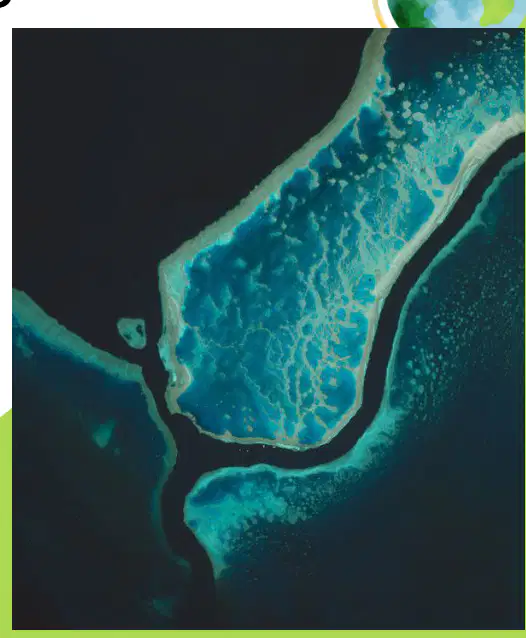
For example, Earth's largest structure that is made up of living things. It covers an area of over 300,000 km². A diver’s paradise, but we may ruin it with tourism if we’re not careful! What is it?
The Great Barrier Reef
The Amazon Rainforest
Mount Everest
The Sahara Desert
According to the slide 'The Geographic Continuum - Grade 9', what is an issue? Fill in the blank: An issue is a _______ problem or dispute.
complex
simple
minor
temporary
According to the slide 'The Geographic Continuum - Grade 9', what is an issue? Fill in the blank: An issue is _______ lasting.
long
short
quick
temporary
According to the slide 'The Geographic Continuum - Grade 9', what is an issue? Fill in the blank: An issue has a _______ impact.
large
small
temporary
personal
According to the slide 'The Geographic Continuum - Grade 9', what is an issue? Fill in the blank: An issue has more than one '_______ answer'.
right
wrong
simple
clear
Which topic is covered in Grades 10 or 11 Geography? Fill in the blank: (a)
Tourism
Urban Geography
World Issues
Environment
Which topic is covered in Grades 10 or 11 Geography? Fill in the blank: (a) (Options: Natural Disasters, Urban Geography, World Issues, Environment)
Natural Disasters
Urban Geography
World Issues
Environment
Which topic is covered in Grades 11 or 12 Geography? Fill in the blank: (a)
Urban Geography
Tourism
Natural Disasters
Environment
Which topic is covered in Grades 11 or 12 Geography? Fill in the blank: (a)
World Issues
Tourism
Natural Disasters
Environment
Which topic is covered in Grades 11 or 12 Geography as part of the Outdoor Ed program? Fill in the blank: (a) (Options: Environment, Tourism, Natural Disasters, Urban Geography)
Environment
Tourism
Natural Disasters
Urban Geography
Fill in the blank: One of the fields in 'The Geographic Continuum - College' is ________ and Tourism.
Travel and Tourism
Geography
History
Economics
Fill in the blank: One of the fields in 'The Geographic Continuum - College' is Geographic Information ________.
Systems
Networks
Models
Structures
Fill in the blank: One of the fields in 'The Geographic Continuum - College' is Sustainable Urban and ________ Planning.
Transportation
Agriculture
Medicine
Finance
Fill in the blank: One of the fields in 'The Geographic Continuum - College' is Environmental ________.
Management
Cooking
Dancing
Painting
Fill in the blank: One of the fields in 'The Geographic Continuum - College' is ________. (related to the management of forests)
Forestry
Geology
Meteorology
Oceanography
Fill in the blank: One of the fields in 'The Geographic Continuum - College' is ________. (related to extracting minerals from the earth)
Mining
Forestry
Agriculture
Meteorology
Fill in the blank: One of the fields in 'The Geographic Continuum - College' is ________. (related to protecting natural resources)
Conservation
Urbanization
Industrialization
Deforestation
Name one university-level topic in the Geographic Continuum related to the study of people and their environments.
Human Geography
Physical Chemistry
Quantum Mechanics
Abstract Algebra
Name one university-level topic in the Geographic Continuum that deals with preparing for and responding to natural and human-made hazards.
Disaster Management
Urban Geography
Cartography
Climatology
Name one university-level topic in the Geographic Continuum that combines the study of geography with the science of flight.
Geography and Aviation
Geography and Botany
Geography and Literature
Geography and Music
Name one university-level topic in the Geographic Continuum that involves the science of gathering, storing, processing, and delivering geographic information.
Geomatics
Climatology
Urban Sociology
Marine Biology
Name one university-level topic in the Geographic Continuum that focuses on the development and organization of cities.
Urban Planning
Climatology
Geomorphology
Oceanography
Name one university-level topic in the Geographic Continuum that studies changes in climate and the environment.
Climate and Environmental Change
Urban Economic Systems
Political Geography
Cultural Landscapes
Name one university-level topic in the Geographic Continuum that examines the use and management of natural resources.
Environmental and Resource Studies
Urban Sociology
Ancient History
Modern Linguistics
Name one university-level topic in the Geographic Continuum that focuses on sustainable farming and food production systems.
Sustainable Agriculture and Food Systems
Urban Transportation Planning
Geospatial Data Analysis
Environmental Law and Policy
Which of the following is a trade listed under 'The Geographic Continuum - Trades'?
Agriculture
Teaching
Engineering
Banking
Which of the following is a trade listed under 'The Geographic Continuum - Trades'?
Arborist
Lawyer
Pilot
Chef
Which of the following is a trade listed under 'The Geographic Continuum - Trades'?
Carpentry
Medicine
Architecture
Journalism
Which of the following is a trade listed under 'The Geographic Continuum - Trades'?
Heat and Frost Insulation
Dentistry
Law
Accounting
Which of the following is a trade listed under 'The Geographic Continuum - Trades'?
Plumbing
Nursing
Teaching
Programming
Which of the following is a trade listed under 'The Geographic Continuum - Trades'?
Roofing
Marketing
Sales
Design
Which of the following is a trade listed under 'The Geographic Continuum - Trades'?
Well Drilling
Editing
Finance
Law Enforcement

Fill in the blank: One aspect of the Geographic Continuum in daily life is _________.
Navigation
Cooking
Painting
Singing
Fill in the blank: Energy _________ is an important part of the Geographic Continuum in daily life.
Consumption
Production
Distribution
Storage
Fill in the blank: Waste _________ is a key consideration in the Geographic Continuum for daily life.
Diversion
Collection
Incineration
Production
Fill in the blank: Local ___________ Conditions are part of the Geographic Continuum in daily life.
Environmental
Economic
Political
Cultural

Fill in the blank: Deciding what to ________ is influenced by the Geographic Continuum in daily life.
Wear
Eat
Read
Write
Fill in the blank: ________ Quality is an important factor in the Geographic Continuum for daily life.
Air
Water
Noise
Light
Fill in the blank: ________ Quality is another important aspect of the Geographic Continuum in daily life.
Water
Air
Noise
Light

What is the main focus of the question 'Where?' in geographic thinking?
A) Importance & Consequences
B) Location (Absolute & Relative Location)
C) Patterns, Processes, Movement

Which of the following is an example of a condition or connection geographers study when asking 'Why there'?
Address
Conflict & Cooperation
Culture
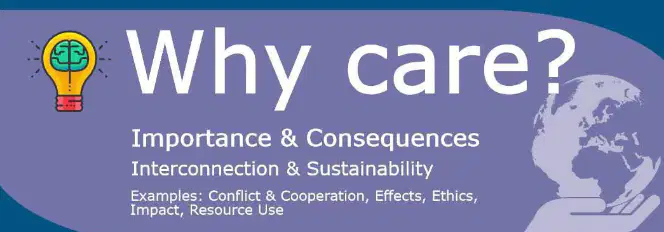
The question 'Why care?' in geographic thinking is mainly concerned with:
Patterns, Processes, Movement
Importance & Consequences (Interconnection & Sustainability)
Latitude/Longitude
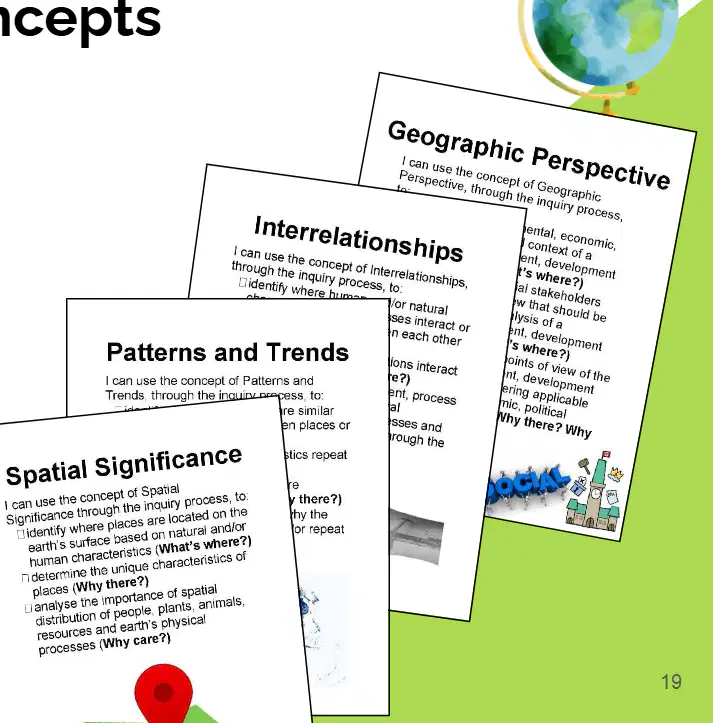
What are the four Geographic Thinking Concepts that geographers use in the Geographic Inquiry Process?
Geographic Perspective, Interrelationships, Patterns and Trends, Spatial Significance
Latitude, Longitude, Climate, Population
Maps, Charts, Graphs, Data
Weather, Climate, Ecosystem, Population
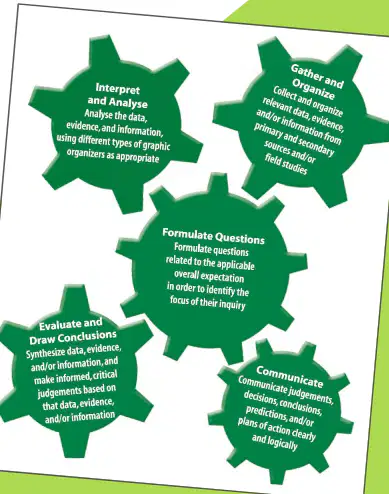
What is the first step of the Geographic Inquiry Process?
Formulate Questions
Analyze Data
Draw Conclusions
Present Findings
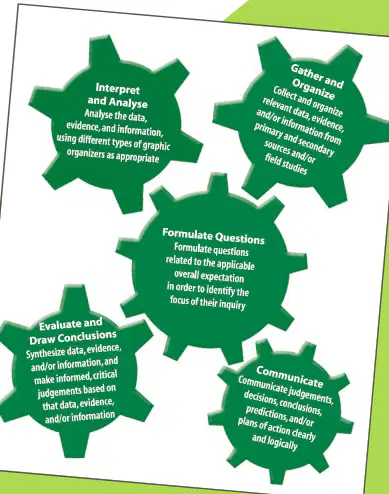
What is the second step of the Geographic Inquiry Process?
Gather and Organize
Draw Conclusions
Present Findings
Ask Geographic Questions
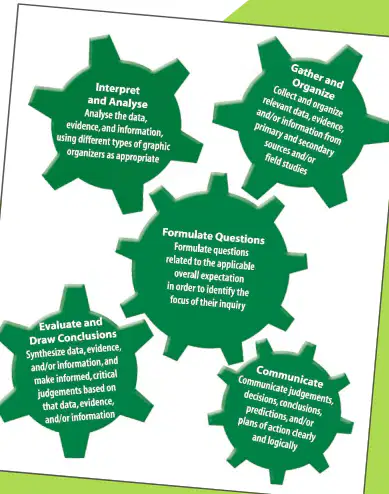
What is the third step of the Geographic Inquiry Process?
Interpret and Analyze
Ask Geographic Questions
Collect Geographic Data
Act on Geographic Knowledge
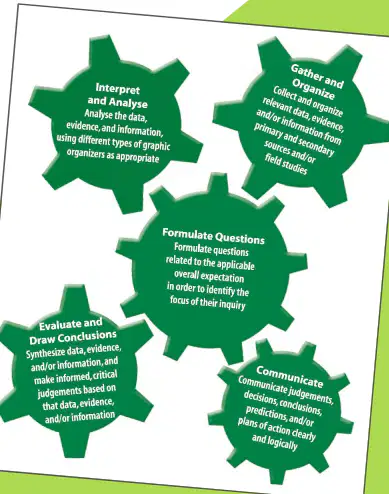
What is the fourth step of the Geographic Inquiry Process?
Evaluate and Draw Conclusions
Collect and Analyze Data
Ask Geographic Questions
Communicate Findings
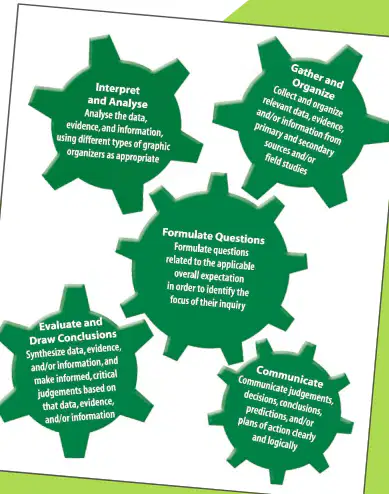
What is the fifth step of the Geographic Inquiry Process?
Communicate
Collect Data
Analyze Data
Formulate Questions

