
Font size
 Worksheets
2025 EOY Examinations Music Form 2
Total questions: 34
Worksheet time: 53mins
Which of the following BEST defines the term timbre?
The unique quality or tone of a sound that makes instruments sound different to one another.
The speed at which a piece of music is played.
The loudness or softness of a sound.
The rhythm or pattern of beats in a song.
Instruments that are small, short and light are usually _________.
High-pitched
Loud
Low-pitched
Members of the string family
Which of the following BEST describes the percussion family of instruments? (Select all that apply.)
Instruments that produce sound when struck, shaken or scraped.
Instruments that produce sound by blowing air into a tube.
Instruments that often keep the beat in music.
Instruments that are played by pressing keys or plucking strings
Which of these statements about timbre are TRUE? (Select all that apply.)
Timbre is what makes a sound unique to a particular instrument or voice.
Timbre helps us distinguish between different musical instruments playing the same note.
Timbre determines how loud or soft a sound is.
An instrument’s timbre is partly determined by the material it is made from and how it produces sound.
Timbre is only related to the pitch of a sound.
The instruments heard in this excerpt belong to which orchestral family?
String
Percussion
Woodwind
Brass
Keyboard
Which orchestral families are heard in this excerpt? (Select all that apply.)
String
Woodwind
Percussion
Brass
Keyboard
The instrument heard in this excerpt belongs to which orchestral family?
Strings
Woodwinds
Percussion
Brass
Keyboards
Which of the following instruments is heard in this excerpt?
Piano
Snare drum
Trumpet
Violin
Which of the following statements is FALSE regarding time signatures?
Time signatures are written near the beginning of a piece of music.
Time signatures tell you how many beats are in each measure.
The bottom number of a time signature tells you how fast the music should be played.
Time signatures govern how beats are grouped in a piece of music.

Select the correct answer to this music math problem.
2
4
5
6

Select the correct answer to this music math problem.
4
5
7
9
Which of the following rhythms matches what you hear?


Which of the following rhythms matches what you hear?

Select the correct time signature for the rhythm shown.


Select the correct time signature for the rhythm shown.
Which of the following statements is/are TRUE about Calypso? (Select all that apply.)
Calypso originated in Trinidad and Tobago in the early 18th century.
Calypso developed from West African and European musical influences brought to the Caribbean during the Trans-Atlantic Slave Trade.
Calypso music speaks about many topics to include social commentary, humor and partying.
Lord Kitchener is a famous calypsonian from Antigua and Barbuda.
Which of the following individuals is NOT a Calypsonian?
Tian Winter
King Short Shirt
Queen Sammie C
Empress
All of the following instruments are typically used in Reggae music EXCEPT
Synthesizers
Electric Guitar
Steelpan
Drumkit
Which of the following statements is/are FALSE about Reggae music? (Select all that apply.)
Reggae originated in the Lesser Antilles.
The main beats in Reggae music are found on the 1st and 3rd beats.
Reggae music often speaks about poverty, injustice and oppression.
Bob Marley and the Wailers is one of the bands responsible for spreading Reggae music throughout the world.
This style of music developed from Reggae in the late 1970s – early 1980s and focused on partying and street life.
Soca
Bouyon
Trinibad
Dancehall
What literary device can be heard in this excerpt?
Metaphor
Simile
Alliteration
Onomatopoeia
Which style of Calypso is heard in this excerpt?
Jumpy/Party
Social Commentary
Humor
Love
Which style of Calypso is heard in this excerpt?
Jumpy/Party
Social Commentary
Humor
Love
What instruments are heard in this excerpt? (Select all that apply.)
Horns
Electric Guitar
Drums
Steelpan

This pitch is
C
E
A
D

This pitch is
D
A
B
C
Which of the following BEST describes ledger lines?
Short, horizontal lines added above or below the staff.
The five lines and four spaces that music is written on.
Lines that divide music into measures.
The two lines at the end of a piece of music.
Which of the following instruments uses the grand staff?
Piano
Recorder
Snare drum
Bass guitar
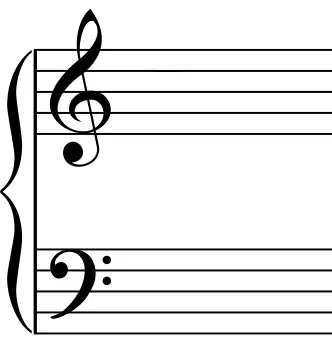
Which of the following BEST describes this image?
Treble Staff
Bass Staff
Alto Staff
Grand Staff
The word vivace means to play
Fast and lively
Slow with expression
A little fast
At a walking pace
Dynamics indicate the __________ at which music should be played.
Speed
Volume
Pitch
Rhythm
What is the Italian word for "getting slower over time"?
Crescendo
Accelerando
Ritenuto
Diminuendo
Courtney’s little sister was making terrible squeaking sounds all over the house with her recorder. She should encourage her to
Blow harder so that all the air comes out.
Blow more gently, saying "too" on each breath.
Throw the recorder away because it is broken.
Clean the recorder so that the notes can sound pretty.

The recorder finger position shown is
B
A
D
E

