
 Worksheets
Hand Tools and Power Tools: Uses, Maintenance, and Safety
Total questions: 42
Worksheet time: 27mins
What are the common faults and maintenance requirements of a Junior hacksaw?
Teeth missing on the blade. Replace the blade as required.
Handle needs to be oiled regularly to prevent rust.
Blade should be painted after every use.
Use only water to clean the blade after cutting.
What is the use of a Claw hammer?
Inserting nails on clips, removing unwanted nails, general fabrication methods
Cutting wood and timber to size
Measuring distances and marking lines
Mixing cement and sand
What are the common faults and maintenance requirements of a Claw hammer?
Loose hammer head, damaged handle/hammer shaft. Repair or replace them as required.
Sharpen the hammer head regularly to maintain its edge.
Oil the hammer head to prevent rust every week.
Store the hammer in water to keep the handle moist.
Tool: Tape measure What is the use of a Tape measure?
Measuring components and areas for installation
Cutting wood and metal
Mixing concrete
Tightening bolts and nuts
What are the common faults and maintenance requirements of a Tape measure?
Loose clasp, damaged or broken tape. Replace them.
Tape measure should be stored in water for accuracy.
Use oil to lubricate the tape for better measurement.
Tape measure should be bent frequently to check flexibility.
What is the use of a Steel chisel?
Chopping out holes and chases in bricks and blocks
Measuring angles accurately
Mixing cement and sand
Cutting wooden planks
What are the common faults and maintenance requirements of a Steel chisel?
Mushroom head. Grind it away and repair or replace it as required.
Rust formation. Leave it untreated for a vintage look.
Bent handle. Paint over it to hide the defect.
Loose blade. Tighten with glue only.
Name of Power Tool: Battery Drill - What is it used for?
Drilling, fixing screws
Cutting tiles
Sanding wood surfaces
Measuring distances
What are the safety checks for a Battery Drill?
no damages, it is clean, it is the correct battery
It should be stored in water
The drill should be used without any safety gear
The battery should be overcharged regularly
Name of Power Tool: Corded Drill What is it used for?
Drilling holes in wood and brickwork
Cutting metal sheets
Sanding wooden surfaces
Measuring electrical current
Name of Power Tool: Corded Drill What is it used for?
Drilling holes in wood and brickwork
Cutting metal sheets
Sanding wooden surfaces
Measuring electrical current
Name of Power Tool: Corded Drill What is it used for?
Drilling holes in wood and brickwork
Cutting metal sheets
Sanding wooden surfaces
Measuring electrical current
What are the safety checks for a Corded Drill?
There is no damage to casing, no damage to flexible cord or plug top and it is PAT tested
The drill should be used only in wet conditions
The drill should be stored with the cord tightly wrapped around it
It is safe to use the drill if the plug is slightly damaged
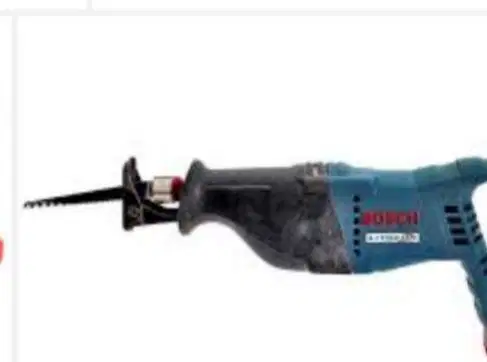
Name of Power Tool: Reciprocating Saw What is it used for?
Cutting through pipes and timber and sheet metal and conduit
Mixing paint and adhesives
Sanding and polishing surfaces
Driving screws into wood
What are the safety checks for a Reciprocating Saw?
No damage to casing, no damage to flexible cord or plug top, PAT tested, it is the correct saw blade
Ensure the saw is always stored in a wet area
Operate the saw without any safety gear
Use any blade regardless of its condition
Name of Power Tool: Angle Grinder / Disc Cutter What is it used for?
Chasing walls and cutting through metals and masonry
Mixing paint and plaster
Drilling holes in wood and metal
Sanding wooden surfaces
What are the safety checks for an Angle Grinder / Disc Cutter?
No damage to casing, flexible cord or plug top, it is PAT tested and the correct saw blade
Ensure the tool is always plugged in when not in use
Check if the disc cutter is painted red
Only use the tool outdoors during rain
Identify three faults on the power tool supplied by your assessor.
1. an out of date P.A.T label 2. a damaged lead 3. a damaged plug
1. a clean and undamaged case 2. a new P.A.T label 3. a working switch
1. a properly wound cord 2. a secure handle 3. a functioning light
1. a recently serviced tool 2. a new power cord 3. a safe plug
1. a working safety guard 2. a clean plug 3. a new fuse
Which of the following is a correct procedure for using a 110 V or 230 V power tool safely?
Wear appropriate PPE, check the tool for damage, and follow manufacturer instructions.
Use the tool with wet hands and ignore manufacturer instructions.
Operate the tool without checking for damage or using safety equipment.
Share electrical tools with others while in use.
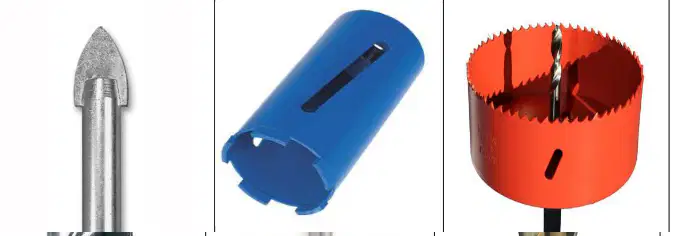
Match the type of materials each drill bit pictured would be used for in order.
Ceramic tiles and glass
1
Concrete and masonry
2
Metal and plastic
3
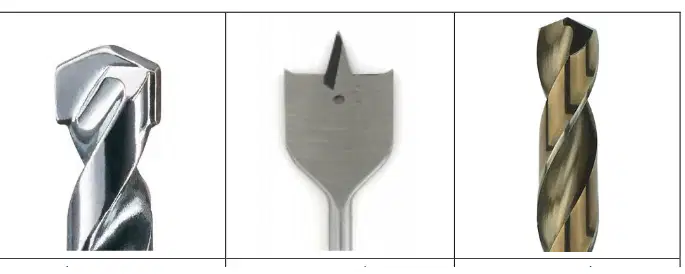
Match the type of materials each drill bit pictured would be used for in order.
Brick or masonry
Wood
Metal
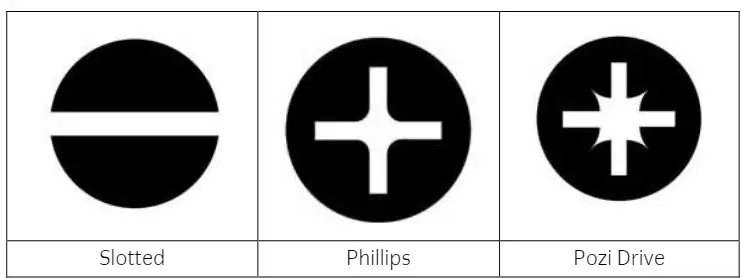
Name the three types of screw heads pictured below.
Slotted, Phillips, Pozi Drive
Torx, Hex, Robertson
Allen, Tri-Wing, Spanner
Square, Star, Clutch

Match the following types of screw to the pictures below.
Counter sunk wood screw
Top left image
Round headed wood screw
Bottom left image
Self tapping screw
Bottom right image
Plasterboard fixing
Top right image
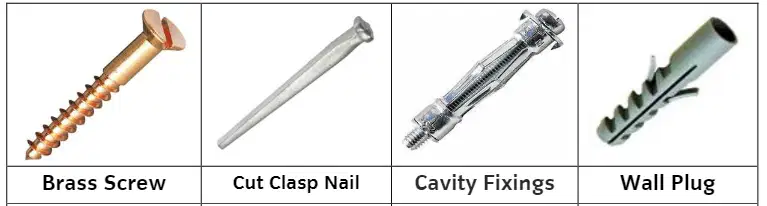
Match the fixings pictured below to the following locations where they would be used.
Brass Screw
Outdoors/external fixings
Cut Clasp Nail
Wooden floor boards
Cavity fixings
Plasterboard
Wall Plug
Brick walls
Masonry bits are used to penetrate which of the following materials?
Wood
Plastic
Masonry, concrete, and stone
Glass
When using a masonry bit, the drill should be on ______ action.
hammer
drill
screw
chisel
What is another name for wood drill bits?
Spur point or dowel bit
Masonry bit
Twist bit
Forstner bit
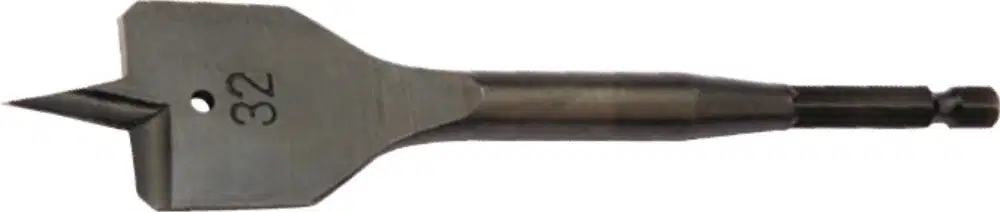
What is another name for a spade bit?
Flat bit
Twist bit
Forstner bit
Hole saw
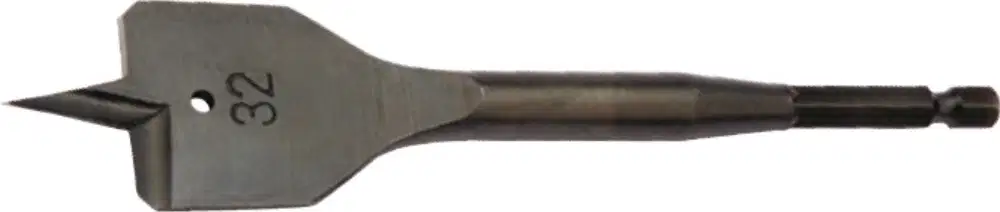
What material is a spade bit typically used on?
Metal
Wood
Plastic
Glass
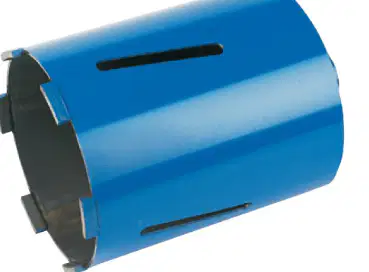
Core drills are used to produce large clean holes through which of the following materials?
Wood
Plastic
Masonry, stone, or concrete
Metal
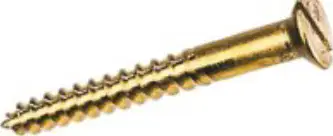
What is the main use of brass wood screws?
For electrical wiring
For general-purpose work
For painting
For gardening
Why are brass wood screws suitable for use in bathrooms and kitchens?
They are very cheap
They are corrosion resistant
They are made of plastic
They are very large
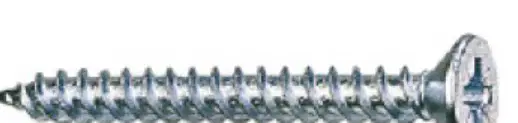
What is the most commonly used general-purpose screw on site according to the passage?
Flathead screws
Crosshead countersunk screws
Hex bolts
Wood screws
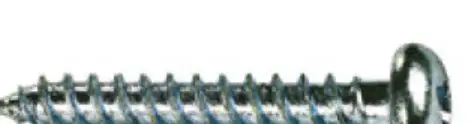
What is the main use of a roundhead screw?
To fix clips in place for pipework or conduit
To cut wood
To paint surfaces
To measure length
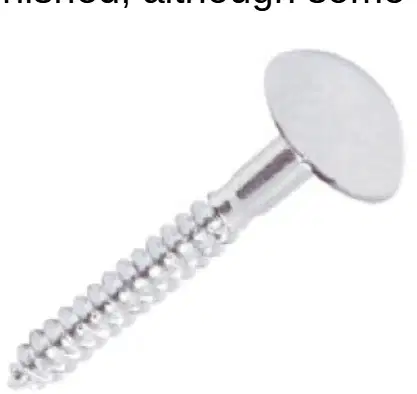
What are mirror screws used for?
Fixing mirrors and bathroom panels
Hanging pictures
Securing doors
Attaching shelves


Select a 110 V or 230 V power tool and describe the procedure for using the tool safely - Dangers. Choose 3.
Trip hazards (trailing cables)
Preliminary safety checks
Electric shock
Moving parts disks, drills, blades etc.
Select a 110 V or 230 V power tool and describe the procedure for using the tool safely in order.
Selection of PPE
Preliminary safety checks
Checking manufacturer’s instructions
Match the following power tools
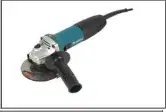
Angle Grinder
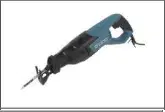
Reciprocating Saw
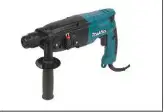
Coded Drill
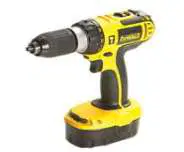
Battery Drill
Match the use of the following power tools
Chasing walls and cutting through metals
Cutting through pipes, timber and metal
Drill holes in wood and bricks
Drilling, fixing screws

