
 Worksheets
G8 Integrated Science: Year in Review Quiz - Coordi-Regula 2
Total questions: 193
Worksheet time: 3hrs 58mins
Hemophilia is a sex-linked, recessive trait. Which of the following describes the probability of hemophilia in the offspring of a man who does not have hemophilia and a woman whose father is a hemophiliac?
Each of their sons will have hemophilia.
None of their daughters will have hemophilia.
Their sons have a 25% chance of having hemophilia.
There is a 50% chance that their daughters will have hemophilia
Hitchhiker's thumb (H) is dominant to no hitchhiker's thumb (h). A woman who does not have hitchhiker's thumb marries a man who is heterozygous for hitchhiker's thumb. What is the probable genotypic ratio of their children?
0% Hh: 100% hh
50% Hh: 50% hh
75% Hh: 25% hh
100% Hh: 0% hh
A human baby boy inherits a recessive allele from his mother. In which circumstance would he most likely show the trait coded for by the recessive allele?
The baby inherits the dominant allele from his father.
The allele is on an autosomal chromosome and the baby is a twin.
The allele is on the X chromosome.
The allele is on the Y chromosome.
A female is homozygous for a recessive for green eyes (g), while the male is homozygous dominant for blue eyes (G) What percentage of their offspring would be expected to exhibit blue eyes?
0%
50%
75%
100%
Why are males more likely to exhibit sex-linked disorders than females?
Males have two X chromosomes that amplify all sex-linked disorders
Males have one X chromosome on which most sex-linked disorders are located.
Males have only one functional sex chromosome on which all gender traits are located.
Males have multiple sex chromosomes that mutate causing sex-linked disorders to become visible.
Sex chromosomes are different in male and female. Which statement is correct?
Males are XX and Females are XY.
Males are ii and Females are XX.
Males are XY and Females are XX.
Males are XY and Females are ii.
Polygenic traits are controlled by more than 1 pair of genes. Give an example.
Freckles
Eye Color
Dimples
Widows Peak
Which type of allele is masked or hidden in this example: Hh
The dominant one
The homozygous one
The heterozygous one
The recessive one
True or False: Recessive traits can skip generations and show up in a later cross.
True
False
Umm.. sometimes?
Hemophilia is considered a sex-linked disorder. Why?
It only affects one sex.
It is recessive and carried on a sex chromosome: X.
It is recessive and carried on a sex chromosome: Y.
It impacts the sex of the baby that you'll have.
Why do sex-linked disorders carried on the X chromosome impact males more than females?
Because males only get one X and if it's affected, they automatically get the disorder.
Because males have a weaker immune system.
Because males have 2 X chromosomes.
Because males are more likely to get bad X chromosomes from their Dad.
Why do we use Punnett squares?
They show how many traits are passed on
They show the probability of passing one trait to offspring
They show how many offspring can be created.
They show disorders through many generations.
Monohybrid means...
the trait has one dominant and one recessive allele
the trait has many dominant and recessive alleles
the trait will always be homozygous
the trait is going to cause a disorder
If two parents show a dominant trait but their baby shows a recessive trait, what does this mean?
The baby cannot be theirs.
The baby has a mutation.
Both parents must've been heterozygous.
Both parents were homozygous dominant.

A= Dimples
a= No dimples
What is true about both parents?
Both parents are homozygous and have dimples.
Both parents are homozygous and don't have dimples.
Both parents are heterozygous and don't have dimples.
Both parents are heterozygous and have dimples.
A= Dimples
a= No dimples
What is true about the offspring?
There are 3 different genotypes possible.
There are 3 different phenotypes possible.
50% will not have dimples.
25% will have dimples.
T= Widows Peak
t= Normal hair line
If a heterozygous female mated with a homozygous recessive male, what percentage of their offspring would have a widows peak?
25%
50%
75%
100%

Which parents will give a 25% chance of having offspring with curly hair?

Two straight hair individuals are crossed. What will be the phenotypes of the offspring?
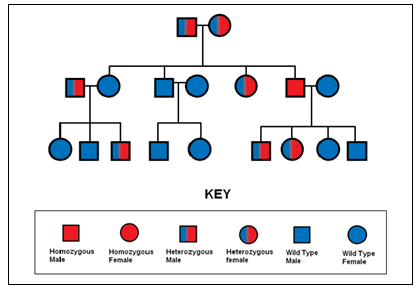
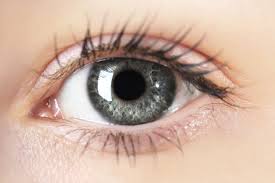
The genotype for a yellow plant is...

Spider-Man has two alternate versions of the web gene, W and w. These alternate versions of the same gene are called
alleles.
traits.
characters.

Thor has a widow's peak (V-shaped hairline) because he has the allele combination WW. This makes Thor
homozygous dominant.
homozygous recessive.
heterozygous.

Ironically, Black Widow has no widow's peak because she is homozygous recessive for the gene. In other words, her genotype would be
straight hairline.
WW.
Ww.
ww.

Black Panther is has the genotype Pp, where P = panther and p = non-panther. However, he shows the panther phenotype. This is an example of Mendel's Law of
Dominance.
Segregation.
Independent Assortment.

Captain Marvel is heterozygous for the flamefist gene (Ff). When she produces gametes, 50% get the F allele, and 50% get the f allele. This is an example of Mendel's Law of
Dominance.
Segregation.
Independent Assortment.

Hulk's father was true-breeding for the green skin and Hulk's mother was true-breeding for non-green skin. This makes Hulk
true-breeding.
a hybrid.

Hulk and She-Hulk are both heterozygous for the green skin gene. What percentage of their children will have the green skin phenotype?
0%
25%
50%
75%
100%

Spider-Man has a genotype Ww and Mary Jane Watson has a genotype ww, what would be the genotypic ratio of their children?
1:3
1:2:1
1:1
9:3:3:1

If Captain America's genotype is SsRR, what types of gametes will he produce?
SR, Sr, sR, sr
SR, SR, sR, sR
SR, SR, SR, SR
sr, sr, sr, sr


How many pairs of chromosomes does each person have?
46
23
2
1,046,023
Brown eye color is dominant. Blue eye color is recessive. Select the combination of letters below that would represent a person being a purebred for brown eyes. In other words, which option represents a person having both alleles for brown eyes? (hint: think of capitalization of letters and what is used for dominant vs. recessive).
AA
Aa
aa
aA
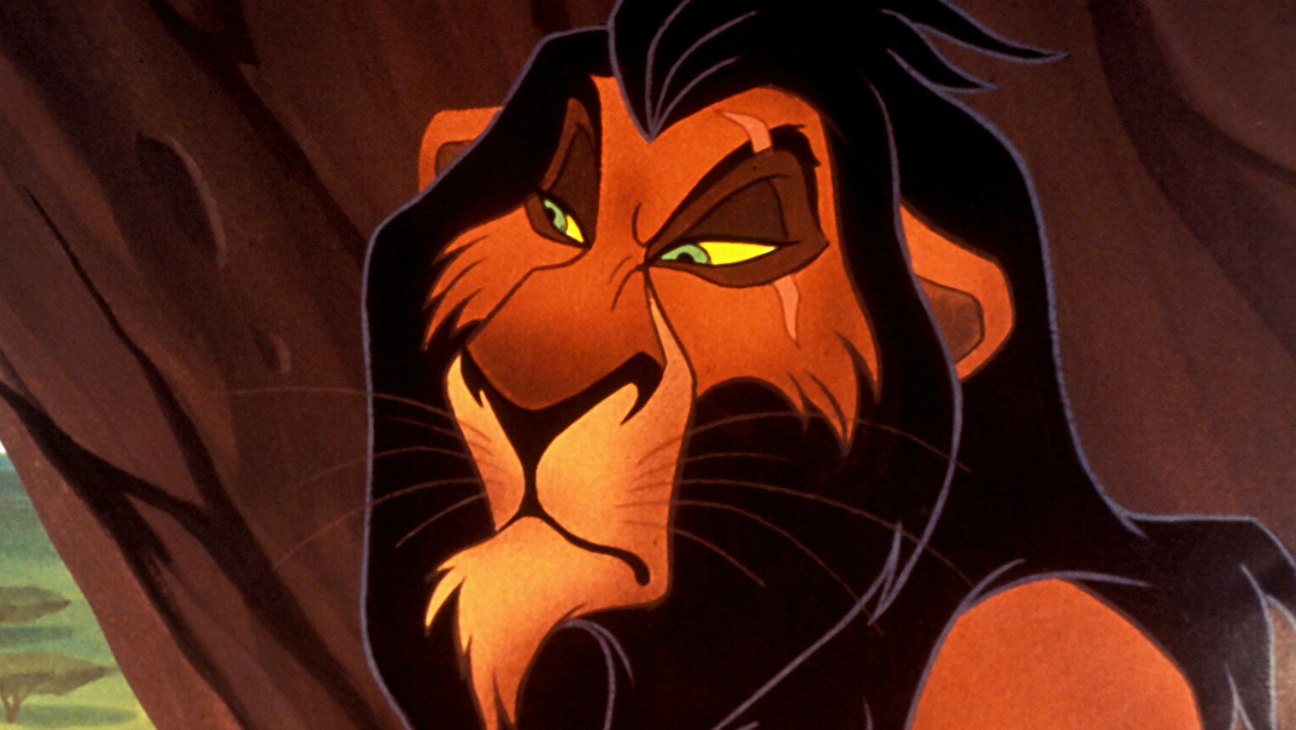
Why does Scar have a scar but his brother Mufasa does not?
Mufasa did not inherit it
The scar gene skipped a generation
The scar is an environmental trait
Mufasa is not his brother
Why do you have homologous pairs of chromosomes in all your somatic cells?

The structure labeled B is a(n)
The section of a chromosome that codes for a trait
allele
gene
dominant
recessive
What is the different and distinct forms of genes? Ex B or b
dominant
recessive
allele
genotype
This is a sperm or egg cell
chromosome
Meiosis
trait
gamete
How many traits does a monohybrid cross have?
1
2
3
4
How many traits does a dihybrid cross have?
1
2
3
4
Which is an environmental factor influencing the expression of a genetic trait?
John’s parents both have brown eyes. John has blue eyes.
Two short-eared brown rabbits produce long-eared offspring.
A red-flowered snapdragon and a white-flowered snapdragon produce offspring with pink flowers.
Neither of Sally’s parents has lung cancer. Sally develops lung cancer after smoking for many years.
Which disease would a commercial fisherman in North Carolina, who is outside 90% of the day, be most likely to develop?
diabetes
skin cancer
lung cancer
stomach cancer
Which is the most likely reason why X-linked traits show up more in males than females?
Males have one X chromosome.
Males have two X chromosomes.
Females have two Y chromosomes.
Females have two X chromosomes.

Cross 2 Homozygous Dominant pea plants. What are the Phenotypes of the offspring?
100% Short
100% Tall
25% Tall, 75% Short
50% Tall, 50% Short
75% Tall, 25% Short
Cross 2 Homozygous Dominant pea plants. What are the Genotypes of the offspring?
100% HD
100% Het
25% HD, 75% Het
100% HR
100% Tall

Cross 2 Homozygous Recessive pea plants. What are the Phenotypes of the offspring?
100% Short
100% Tall
25% Tall, 75% Short
50% Tall, 50% Short
100% HR

Cross 2 Homozygous Recessive pea plants. What are the Genotypes of the offspring?
100% HD
100% Het
25% HD, 75% Het
100% HR
100% Short

Cross 2 Heterozygous pea plants. What are the Phenotypes of the offspring?
100% Short
100% Tall
75% Tall, 25% Short
50% Tall, 50% Short

Cross 2 Heterozygous pea plants. What are the Genotypes of the offspring?
100% HD
25% HD, 50% Het, 25% HR
25% HD, 25% Het, 50% HR
50% HD, 25% Het, 25% HR

Cross a Homozygous Recessive x Heterozygous pea plant. What are the Phenotypes of the offspring?
100% Short
100% Tall
25% Tall, 75% Short
50% Tall, 50% Short

Cross a Homozygous Recessive x Heterozygous pea plant. What are the Genotypes of the offspring?
100% Het
50% Het, 50% HR
50% HD, 50% Het,
100% HD

Cross a Heterozygous x Homozygous Dominant pea plant. What are the Phenotypes of the offspring?
100% Short
100% Tall
25% Tall, 75% Short
50% Tall, 50% Short

Cross a Heterozygous x Homozygous Dominant pea plant. What are the Genotypes of the offspring?
100% HD
50% HD, 50% Het
75% Het, 25% HR
100% HR

Cross a Homozygous Dominant x Homozygous Recessive pea plant. What are the Phenotypes of the offspring?
100% Short
100% Tall
25% Tall, 75% Short
50% Tall, 50% Short

Cross between a Homozygous Dominant pea plant and a Homozygous Recessive pea plant. What are the Genotypes of the offspring?
100% HD
50% HD, 50% Het
75% Het, 25% HR
100% Het

Cross a Red flower x Red flower. What are the offspring?
100% Red
50% Red, 50% White
75% Red, 25% White
100% Pink

Cross a White flower x White flower. What are the offspring?
100% Red
50% Red, 50% White
75% Red, 25% White
100% White

Cross a Red flower x White flower. What are the offspring?
100% Red
50% Red, 50% White
75% Red, 25% White
100% Pink

Cross a Red flower x Pink flower. What are the offspring?
50% Red, 50% Pink
50% Red, 50% White
25% Red, 25% White, 50% Pink
100% Pink

Cross a Pink flower x Pink flower. What are the offspring?
100% Pink
25% Red, 50 % Pink, 25% White
75% Pink, 25% White
25% Red, 25% Pink, 50% Red

Cross a Red flower x White flower. What are the offspring?
100% Red
50% Red, 50% White
75% Red, 25% White
100% Pink

A husband & wife with IAIA & type O blood will have kids with what Phenotypes?
100% O
100% A
50% A, 50% O
25% A, 25% B, 50% O
Genetics problem that crosses 1 trait, 1 is dominant, 1 is recessive, (either/or):
Monohybrid Cross
Dihybrid Cross
Multiple Alleles
Incomplete Dominance
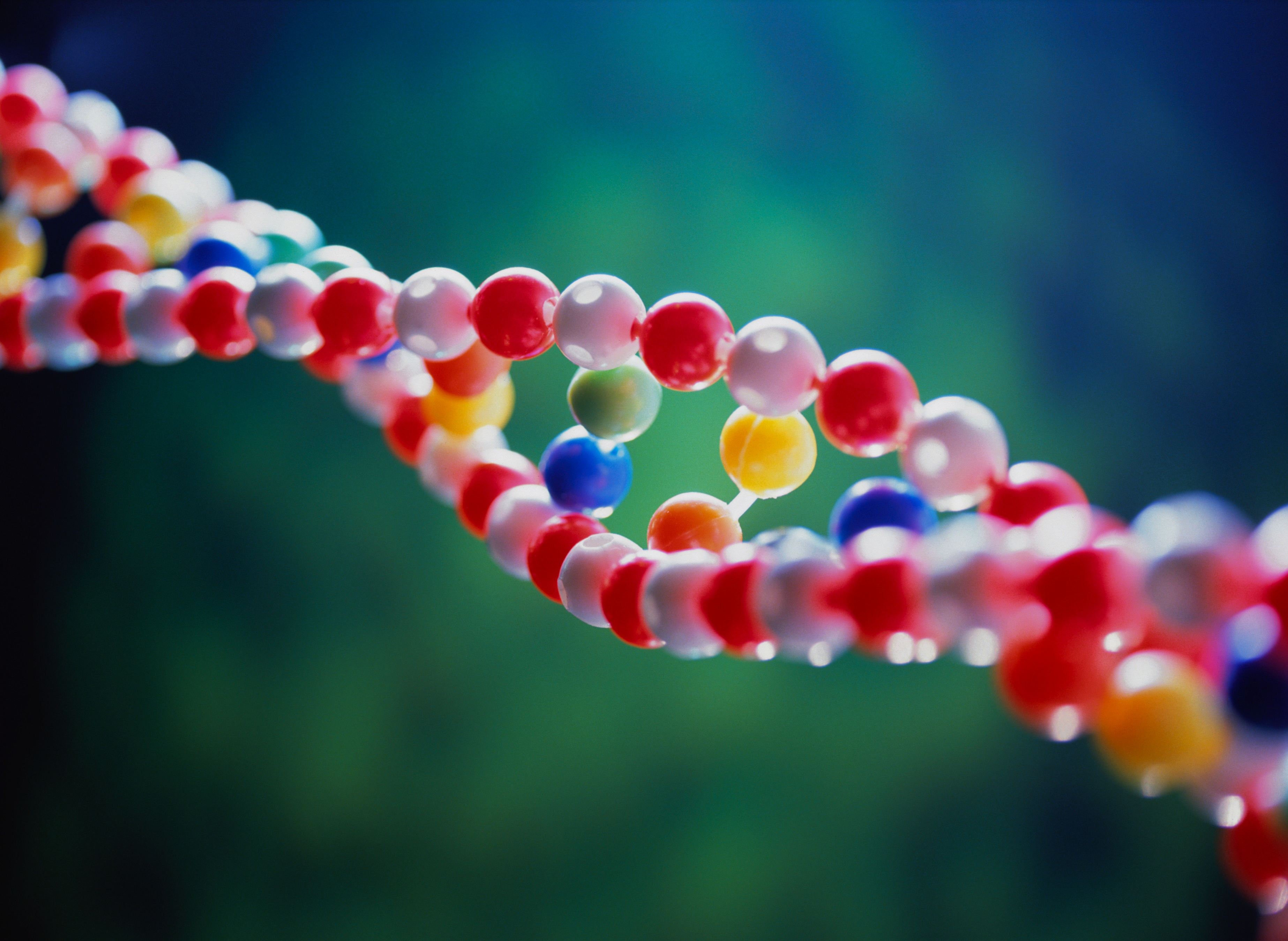
In eukaryotes, which organelle is DNA usually found in?
cell membrane
vacuole
chloroplast
nucleus


ATG TGA CAG

What makes up the SIDES of a DNA ladder?
nitrogen bases
sugars & phosphates
genes & chromosomes
RNA
If there is 22% Cytosine, how much of all the other bases are there?
22% C, 22% G, 28% A, and 28%T
22% C, 28% G, 22% A, and 28%T
28% C, 28% G, 28% A, and 28%T
22% C, 22% G, 22% A, and 22%T
T A G G A C T
The complementary strand is...
T A G G A C T
A T G G T G A
A T C C T G A
T T C C A G T
What are the proper complementary base-pairs?
A--T and G--C
A--G and C--T
G--T and A--C
A--C and T--G
If there is combined 60% for Cytosine and Guanine, what is the combined % for Adenine and Thymine?
60%
40%
20%
10%
What is the largest use of corn in the United States?
Human consumption
Feed for livestock
Corn-based biofuel
Export
What is the native region of the wild grass teosinte?
Europe
Asia
Southern Mexico and parts of Central America
Australia
What is one key difference between teosinte and modern corn?
Teosinte produces few seeds with hard outer covering
Modern corn has a hard outer coating on its seeds.
Teosinte kernels are softer and sweeter than modern corn kernels.
Modern corn produces ears with a few seeds.
Why did people start farming teosinte?
To use it as a type of baby powder.
To produce new plants with desirable traits.
To make chewing gum.
To create a new type of fruit.
What is one reason farmers selected certain plants over the centuries?
To make the plants grow shorter.
To produce plants that could withstand drought.
To create plants with fewer kernels.
To make the plants grow slower.
What is a genome?
A type of corn plant
A map of an organism's genetic material
A method of pollination
A type of fertilizer
What is one purpose for breeding new corn varieties?
To make corn taste sweeter
To grow corn in colder climates
To increase corn's tolerance to drought
To change the color of corn
What is the primary reason for developing genetically modified corn?
To reduce its size
To increase resistance to pests
To make it taste like apples
To change its color
Think about major types of Corn and explain how they were developed.
Through selective breeding and genetic modification
By natural selection and spontaneous mutation
Through cross-pollination and hybridization
By importing and exporting different corn varieties
What is one key difference between teosinte and modern corn?
Teosinte produces few seeds with hard outer covering
Modern corn has a hard outer coating on its seeds.
Teosinte kernels are softer and sweeter than modern corn kernels.
Modern corn produces ears with a few seeds.
This is the earliest ancestor of corn
(a)
Crossing dissimilar individuals (different species) to bring out the best characteristics of each species.
inbreeding
hybridization
selective breeding
cloning
Allowing only those animal/plants with specific characteristics to breed is ___
inbreeding
hybridization
selective breeding
cloning
What is a good argument for genetically modifying animals?
Produce more meat
Figure out how to make Spiderman
Modifying your kids to make them more awesome
New genes are needed to create new species
GMOs can be
plants only
animals only
plant, animal, and bacteria
plant and animal only


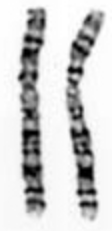



The structure in the image is called a:
Chromosome
Karyotype
Gene
Protein

What is D?
homologous chromosomes
sister chromatids
What is c?
sister chromatids
centromeres
What is B?
tetrad
centromere
What is A?
Duplicated chromosome
sister chromatid
What mutation has occurred here?
T-G-A-C-C-A
T-G-A-G-C-A
Substitution
Deletion
Insertion
Frameshift
DNA molecule segment is : TTACGCAAG
The mutated DNA segment is TTCGCAAG. This is an example of ___ mutation.
Substitution
Deletion
Insertion
Inversion
What mutation has occurred here?
T-G-A-C-C-A
T-G-A-G-C-A
Substitution
Deletion
Insertion
Frameshift

Which type of mutation does the model demonstrate?
Deletion
Substitution
Insertion
Translocation
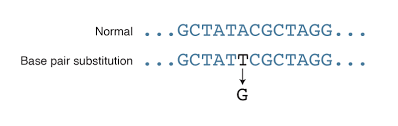
Mutations that change a single base pair, usually involving a substitution of one base for another:
chromosomal mutation
polyploidy
translocation
point mutation
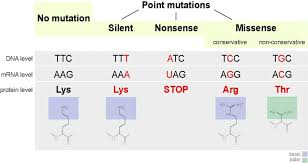
If a point mutation does not change the order of the amino acid sequence, this is called a:
nonsense mutation
silent mutation
missense mutation
frameshift mutation
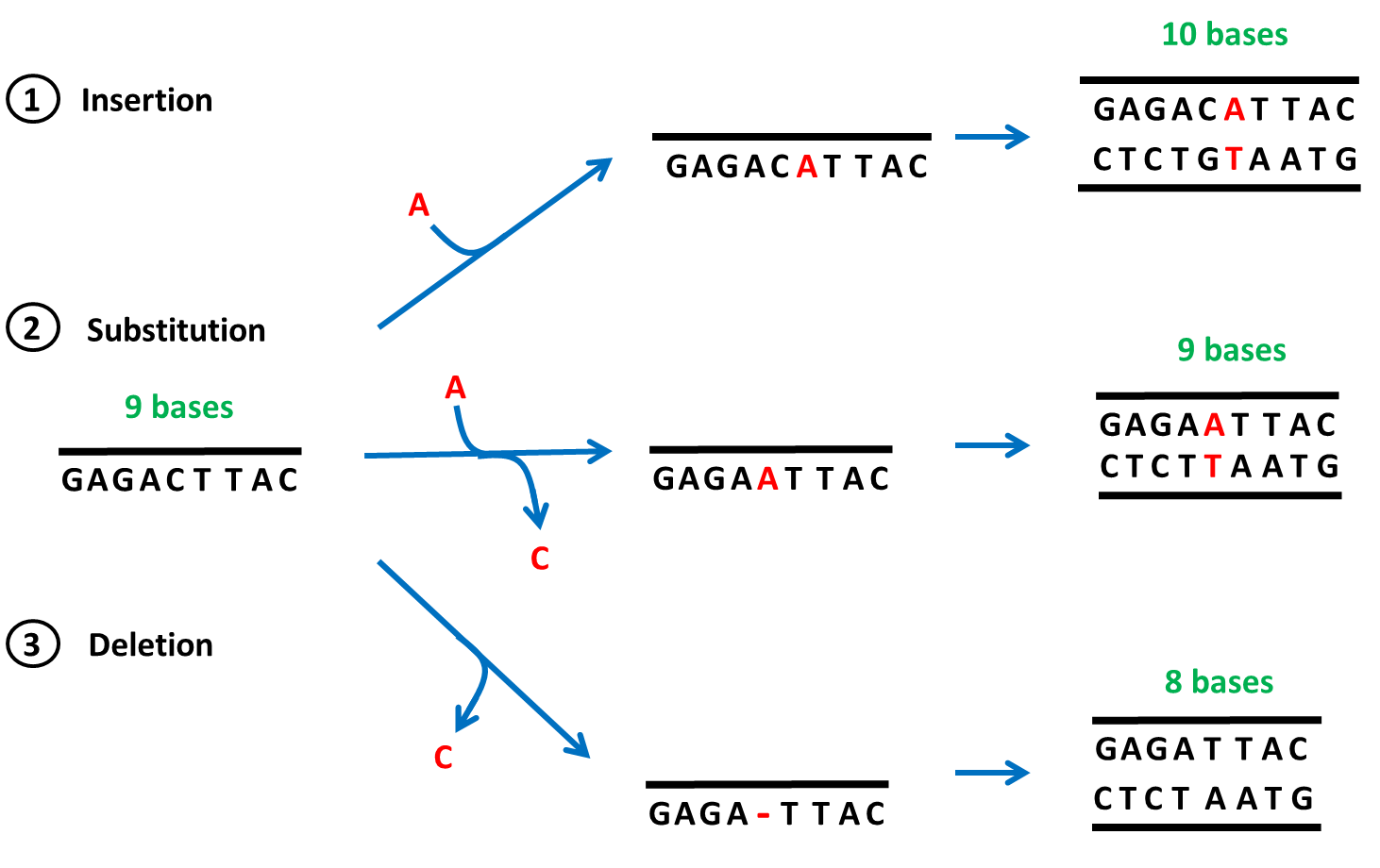
Insertions and deletions are also known as:
frameshift mutations
chromosomal mutations
silent mutations
polyploidy
GAG-CTC-GAC-AGA
Mutant
GAG CTC-CAC-AGA

DNA molecule segment is : TTA-CGC-AAG
The mutated DNA segment is TTC-GCA-AG. This is an example of ___ mutation.
Substitution
Deletion
Insertion
Inversion
Original: ATC CAT
Mutation: ATC GCAT
What mutation occurred?
deletion
insertion
silent
transverse

Which mutation?
Deletion
Insertion
Substitution
upside down

Which mutation?
Deletion
Insertion
Substitution
upside down

Which mutation?
Deletion
Insertion
Substitution
upside down

What describes a change in the DNA sequence?
Transcription
Translation
DNA replication
Mutation
Apoptosis

What type of mutation involves substituting a DNA base with a different base but still forms the same protein?
point mutation
frameshift mutation
silent mutation
chromosomal mutation

What are considered "positive" mutations?
mutations in the DNA sequence that changes the resulting protein and harms the organism
mutations in the DNA sequence that changes the resulting protein and benefits the organism
mutations in the DNA sequence that produces the same protein
all mutations are considered bad and harm the organisms
What are considered "negative" mutations?
mutations in the DNA sequence that changes the resulting protein and harms the organism
mutations in the DNA sequence that changes the resulting protein and benefits the organism
mutations in the DNA sequence that produces the same protein
all mutations are considered bad and harm the organisms

What are considered neutral mutations?
mutations in the DNA sequence that changes the resulting protein and harms the organism
mutations in the DNA sequence that changes the resulting protein and benefits the organism
mutations in the DNA sequence that produces the same protein
all mutations are considered bad and harm the organisms
Mutation
a change in the DNA sequence
Point mutation
a type of mutation where one to few bases are substituted with different bases
Frameshift mutation
a type of mutation caused by adding or deleting bases, affecting all the codons after the change
Silent mutation
a type of mutation that doesn't result in a change in the amino acid sequence (same protein)
Chromosomal mutation
a type of mutation where large sections of the chromosome are affected
What best describes a karyotype?
It shows how traits are passed down from parents to offspring
It shows the potential outcomes of a genetic cross
It shows how parents can carry/hide recessive traits
It shows a picture of chromosomes organized by size
What information can you see using a karyotype?
An individual's traits
The base sequences of DNA (A's, T's, C's and G's).
A chromosome mutation
A gene mutation
In humans, sex-linked trait of color blindness is recessive to normal vision. Click on the parent that is a carrier for color blindness.
The order of ATCG (a) is (b) for every organism.
What type of genotype does each flower have?
Purple (P) is dominant to white (p).
Move label to bottom of square.
homozygous recessive
homozygous dominant
heterozygous dominant

In hamsters, short fur is dominant (F) and long fur is recessive (f). Match genotypes and phenotypes below.

FF

Ff

ff
Complete the following monohybrid punnett by labeling the each box with the correct genotype.
TT
Tt (top)
Tt (bottom)
tt

The picture shows a pair of homologous chromosomes. Three genes are labeled.
Match the genotype with the correct description.
Heterozygous
Two different alleles
Homozygous DOMINANT
Two identical DOMINANT alleles
Homozygous recessive
Two identical recessive alleles
In guinea pigs, short hair, S, is dominant to long hair, s. Complete the following Punnett squares according to the directions given. Then, fill in the blanks beside each Punnett square with the correct numbers.
A) Father guinea pig is Ss and mother is ss. Expected percentage of offspring: ____ Short hair (SS or Ss) ____ Long hair (ss)
Label the Punnett Square

