
 Worksheets
Chapter 3: Fire Behavior
Total questions: 95
Worksheet time: 48mins
________ fires must have an extinguishing agent that uses saponification.
Class D
Class A
Class K
Class C
________ fires consist of flammable liquids and gases such as gasoline, oil, and methane.
Class C
Class B
Class D
Class A
Which method of extinguishment interrupts the combustion reaction and stops flame production?
Cooling with water
Oxygen Exclusion
Fuel Removal
Chemical Flame Inhibition
An inspector's responsibilities include checking the installation and maintenance of standpipes and hose systems which:
helps limit fire load and reduce the potential for fire growth
allows the extinguishing system to interrupt a chemical chain reaction and exclude oxygen
enables building occupants the opportunity to extinguish incipient fires
provides emergency fire crews with the ability to disrupt combustion on elevated stories.
________ fires consist of combustible metals such as aluminum and magnesium.
Class K
Class C
Class D
Class B
Which of the following tasks that an inspector is responsible for enables a system to cool a fire and interrupt its chemical chain reaction?
Verifying proper placement and maintenance of fire extinguishers
Verifying that extinguishing systems are installed and functioning correctly
Monitoring and regulating hazardous conditions
Checking the installation and maintenance of standpipes and hose systems
During what stage is the fire releasing the maximum amount of heat possible for the available fuel and oxygen?
Growth
Fully Developed
Incipient
Decay
Which stage occurs when the oxygen concentration falls to the point that flaming combustion is diminished?
Decay
Fully developed
Growth
Incipient
The most common source of heat in combustion reactions is:
light energy
electrical
chemical
mechanical
Which of the following is one of the most common methods of fire control and extinguishment and works by reducing temperature?
Chemical flame inhibition
Oxygen exclusion
Fuel removal
Cooling with water
Materials that absorb heat, but do not contribute fuel in the combustible reaction are known as:
inactive agents
nonreactive agents
passive agents
conductive agent
Which type of heat transfer travels through vacuums and air spaces?
Radiation
Conduction
Convection
Penetration
What occurs as solid fuels are heated and begin to decompose and give off combustible vapors?
Pyrolysis
Vaporization
Autoignition
Sustained chemical reaction
Which process usually involves the transfer of heat through the movement of hot smoke and fire gases?
Penetration
Conduction
Radiation
Convection
Vapor density is defined as the weight of ________ as compared to the weights of an equal volume of ________.
liquid, air
air, liquid
gas, air
air, gas
Electricity generated when two conductors are separated from one another creating a gap best defines:
arcing
induction heating
dielectric heating
frictional heat
Which of the following exists in many forms including chemical, mechanical, and electrical?
Temperature
Heat
Energy
Compression
Which type of heat transfer occurs when a material is heated as a result of direct contact with a heat source?
Convection
Radiation
Penetration
Conduction
Fire point is the temperature required to:
cause a fuel to give off vapors in sufficient quantities to form an ignitable mixture with air
change a liquid to a gas without introducing an outside source of heat
heat a fuel which will produce vapors sufficient to support combustion once ignited
ignite a liquid fuel in order to begin self-sustained combustion independent of the heating source.
Which of the following occurs when burning is localized on or near the fuel's surface, where it is in contact with oxygen?
Example: charcoal
Secondary combustion
Flaming combustion
Nonflaming Combustion
Primary combustion
A fire in the presence of a higher than normal concentration of oxygen will:
burn slower than normal
not burn if oxygen is too rich
burn faster than normal
not be effected by the oxygen
When water is converted to steam at 212°F (100°C), it expands approximately:
870 times
100 times
3,200 times
1,700 times
Which of the following thermal properties of a compartment maintains temperature by absorbing and releasing large amounts of heat slowly?
Insulation
Fuel load
Heat reflectivity
Retention
Which type of fire would not be easily extinguished by chemical flame inhibition?
Mixed fuels
Flaming combustion
Nonflaming combustion
Stacked materials
The oldest and simplest model used to describe fire behavior is known as the:
combustion pathway
ignition line
fire tetrahedron
fire triangle
Which type of ignition occurs without any external flame or spark?
Secondary ignition
Piloted ignition
Autoignition
Kinetic ignition
The ratio of the weight of a liquid to an equal volume of water is:
specific density
vapor pressure
specific gravity
vapor density
________ fires consist of ordinary combustibles such as wood, cloth, and paper.
Class A
Class D
Class C
Class B
When a fuel gives off enough vapors so that is can be ignited and burn momentarily, it has reached its:
vapor density
fire point
flash point
upper flammable limit
All other factors being equal, a fire in a large compartment will develop:
more quickly than one in a small compartment
more slowly than one in a small compartment
at the same rate as one in a small compartment
at approximately twice the rate of one in a small compartment.
All other factors being equal, a fire in a small compartment will develop:
more quickly than one in a large compartment
more slowly than one in a large compartment
at the same rate as one in a large compartment
at approximately twice the rate of one in a small compartment.
Which method of extinguishment may separate fuels from oxygen by blanketing them with foam?
Oxygen exclusion
Cooling with water
Chemical flame inhibition
Fuel removal
What physical state must fuel be in for flaming combustion to occur?
Liquid
Gas
Solid
Either gas or liquid
The principle which most closely describes how water extinguishes fire is:
exclusion of oxygen
Interruption of the chemical chain reaction
Removal of fuel
Reduction of temperature
When fire influences the environment and it begins to be influenced by the ventilation, it is in the ________ fire stage.
Incipient
Growth
Fully developed
Decay
What is a substance that oxidizes another substance and it can cause other materials to combust more readily or make fires burn stronger?
Potential energy
Pilot ignition
Autoignition
Oxidizing agent
What kind of change occurs when a substance remains chemically the same but changes in size, shape, or appearance?
Chemical change
Physical change
Electrical change
Mechanical change
What is an example of a slow form of oxidation?
Rust
Smoldering Fire
Methane
Bleve
What is an example of a rapid form of oxidation?
Rust
Smoldering fire
Methane
Bleve
What is stored energy possessed by an object that can be released in the future to perform work once released?
Potential energy
Kinetic energy
Mechanical energy
Chemical energy
Fire is an ________ chemical reaction involving combustion.
endothermic
exothermic
kinetic
potential
The only difference between the fire triangle and the fire tetrahedron is the ________ reaction.
chemical chain
kinetic
mechanical
potential
What is a visible, luminous body of a burning gas emitting radiant energy, including light of various colors produced by burning gases or vapors during combustion process?
Flaming combustion
Nonflaming combustion
Exothermic reaction
Endothermic reaction
Which one is NOT an energy form?
Nuclear
Electrical
Sound
Oxidizer
What is the transferring of energy from a high-temperature substance to a low-temperature substance?
Thermal energy
Kinetic energy
Potential energy
Mechanical energy
True or false:
Pyrolysis happens to a liquid or gas.
True
False
What is a mix of fuel and oxygen encounter an external heat source with sufficient heat or thermal energy to start combustion?
Piloted ignition
Autoignition
Vaporization
Oxidation
The autoignition temperature of a substance is always ______ than its piloted ignition temperature.
higher
lower
bigger
smaller
What is a form of oxidation and exothermic chemical reaction that increases without the production of thermal heat?
Self-heating
Resistance heating
Overcrowding
Arcing
What type of energy is generated by friction (rubbing) or compression (squeezing)?
Chemical energy
Mechanical energy
Chemical
Sound energy
What is it called when a current flowing through a conductor exceeds its design limits and it may overheat and present an ignition hazard?
Resistance heating
Overcurrent
Arcing
Sparking
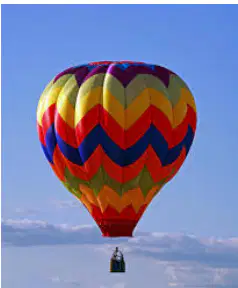
What is a hot air balloon an example of?
Radiation
Convection
Conduction
Friction
Which fire stage has the fastest change in temperature?
Growth
Decay
Incipient
Fully Developed
How do you extinguish a Class C fire?
Saponification
Deenergizing
Shut off gas supply
Unplugging
Which is NOT a passive agent?
Drywall
Gypsum board
Sheetrock
Plywood
If the specific gravity of a flammable liquid is less than one, it will ________.
Example: gasoline
Sink
Float
Ignite
Heat
If the specific gravity of a flammable liquid is more than one, it will ________.
Example: saltwater
Sink
Float
Ignite
Heat
Flooding an area with an inert gas or blanketing it with foam is an example of:
Fuel removal
Oxygen exclusion
Chemical inhibition
Temperature reduction
True or false:
The use of water is the most effective method available for extinguishing smoldering fires.
True
False
Firefighters influence fire behavior in the following ways:
(select all that apply)
Temperature reduction
Fuel removal
Oxygen exclusion
Chemical flame inhibition
Fuel consumption
What is the minimum at which a liquid gives off sufficient vapors to ignite but not sustain combustion?
Flash point
Fire Point
Autoignition
Pilot ignition
Which class of fire has aluminum and magnesium and cannot be extinguished with water?
Class A
Class B
Class C
Class D
The type of fuel involved in combustion affects the _______________.
Heat Release Rate (HRR)
Availability of Fuels
Ventilation
Fuel load
While the heat from a fire is a danger, anyone directly exposed to _______ causes the largest percentage of fire deaths.
toxic smoke
piloted ignition
chemical inhibition
vapor density
Oxygen in the air is the primary agent in most fires. Air has _____% oxygen.
17%
21%
25%
5%
As the surface-to-mass ratio increases, the _____ energy is required for ignition.
Example: sawdust
least
most
too little
some
As the surface-to-mass ratio decreases, the _____ energy is required for ignition.
Example: fire log
more
less
What is the measure of the average kinetic energy is motion, expressed in terms of units or degrees?
temperature
surface-to-mass ratio
electrical energy
potential energy
What is a chemical reaction that absorbs thermal energy or heat?
Example: having a popsicle in the middle of summer
exothermic reaction
endothermic reaction
chemical chain reaction
allergic reaction
Which type of electrical energy happens when electric current flows through a conductor, heat is produced?
Example: a lightbulb
resistance heating
overcurrent / overload
arcing
sparking
What type of electrical energy happens when the the current flowing through a conductor exceeds its design limits, it may overheat and present an ignition hazard?
It also has unintended resistance heating.
Resistance heating
Overload or overcurrent
Arcing
Sparking
Insulating materials delay the transfer of heat primarily by _______ conduction.
Example: Drywall or gypsum
slowing
speeding
rising
lowering
Which is NOT a hydrocarbon reducing agent?
Gasoline
Fuel oil
Plastics
Paper
What are examples of cellulose-based fuels?
Select all that apply.
Wood
Paper
Fuel oil
Plastic
The fuel in a combustion reaction is known as as the ___________.
Reducing agent
Passive agent
Upper layer
Lower layer
The heat release rate (HRR) is the energy per unit of time as fuel burns is expressed in _______ or _______.
kilograms, megagrams
kiloliters, megaliters
kilometers, megameters
kilowatts, megawatts
Place the Heat Release Rate units in order of smallest to greatest:
kilowatts, watts, megawatts
megawatts, kilowatts, watts
watts, kilowatts, megawatts
________ describes the extent to which a substance will mix with water.
Flash point
Flammable liquid
Solubility
Pyrolysis
Select the hydrocarbon fuels that are lighter than water and do not mix with water.
Select all that apply.
Gasoline
Diesel fuel
Fuel oil
Alcohols
Select the polar solvent that will readily mix with water.
Alcohols
Diesel fuel
Gasoline
Fuel oil
True or false:
Combustible materials with high surface-to-mass ratios are much more easily ignited and will burn more quickly than the same substance with less surface area.
True
False
When the fire is located low in the building, such as as in the basement or on the first flor, convected currents when cause ________ extension through stairways.
vertical
horizontal
lateral
perpendicular
When fires originate on upper levels, they generally extend ________ much more slowly by following the fuel path or as a result of structural collapse.
downward
upward
outward
inward
The rapid transition from the growth stage to the fully developed stage is known as the __________.
Flashover
Ventilation control
Physical change
Isolated flame
The interface of the hot and cooler gas layers in a fire is known as the __________.
Neutral plane
Lower plane
Upper plane
High plane
Which thermal layer has the coldest temperatures?
Neutral plane
Upper
Lower
Middle
Which thermal layer has the hottest gases?
Neutral plane
Upper layer
Lower layer
Middle layer
Which kind of fire involve household appliances, computers, transformers, electric motors, and overhead transmission lines and must be de-energized before extinguishing efforts begin?
Class C
Class D
Class A
Class K
What is it called when agents turn fats and oils into a soapy foam that extinguishes fire?
Hint: Used in Class K fires
Soapification
Saponification
Aluminification
Combustion
The __________ is the concentration above which a combustion cannot take place.
It is too rich to burn.
Upper flammable limit
Lower flammable limit
Neutral plane
Upper layer
The ___________ is the minimum concentration of fuel vapor and air that supports combustion. It is too lean to burn.
Lower flammable limit
Upper flammable limit
Vapor Density
Carbon Dioxide
In a fully developed stage, what does the fire look like?
Some materials are burning
All combustible materials are burning
No combustible materials are burning
One combustible material is burning
The total quantity of combustible contents of a building, space, or fire area is known as the ______.
fire load
incipient stage
plume
ventilation area
_______________ increases fire spread through the transfer of radiant heat from wall surfaces to adjacent fuel sources.
Insulation
Heat reflectivity
Retention
Fuel load
The fuel in a combustion reaction is known as the ______. They help fires burn.
These fuels can be divided into hydrocarbon-based and cellulose-based.
Reducing agent
Passive agent
Heat Release Rate
Oxygen exclusion

