
 Worksheets
Static Electricity
Total questions: 27
Worksheet time: 18mins

Walking across a carpet is an example of charge being transferred by
friction.
induction.
contact.
What charge does an electron have?
negative (-)
positive (+)
neutral or no charge (0)
Electric charges that are alike _______ each other.
Attract
Repel (move away)
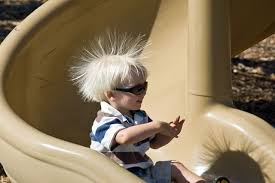

If an object has more positive than negative charges, its electrical charge is...
positive
negative
neutral or no charge
opposite

Static electricity occurs because...
of thunder
of humid air
of neutral particles adding up
of a buildup of charges on an object.
The loss of static electricity as electric charges transfer from one object to another.
Static Discharge
Negative Charge
Positive Charge
Neutral Charge
What charge does a proton have?
negative (-)
positive (+)
neutral or no charge (0)
What happens when you rub one neutral, electrically insulating object against another?
The objects become magnetic
The objects become warmer
Some of the electrons are transferred across
The objects start to glow
What is the charge of an object that has gained electrons?
Negatively charged
Neutrally charged
Magnetically charged
Positively charged
What is the result of rubbing a balloon on a jumper?
The balloon becomes positively charged
The jumper becomes negatively charged
The balloon becomes negatively charged
The jumper becomes magnetized
What happens to electrons when a charged object is brought near a neutral object?
They escape into the air
They move further into the neutral object
They are attracted to the charged object
They become positively charged
What is the charge of an object that has lost electrons?
Magnetically charged
Neutrally charged
Negatively charged
Positively charged
What happens when a charged balloon is brought close to a wall?
The balloon loses its charge
The wall repels the balloon
The balloon sticks to the wall
The wall becomes charged
What is the charge of an atom with more protons than electrons?
Neutrally charged
Positively charged
Magnetically charged
Negatively charged
What is the role of a Van de Graaff generator?
To generate heat
To build up electrical charge
To conduct electricity
To create magnetic fields
What is static electricity caused by?
A balance of power
A balance of positive and negative charges
An imbalance of positive and negative charges
An imbalance of protons and neutrons
An object will become POSITIVELY charged when it:
loses electrons
gains electrons
loses protons
gains neutrons

What is the negatively charged particle in an atom, that moves freely, can be released, shared, or “stolen” from an atom?
proton
neutron
electron
What does the word ‘static’ mean in static electricity?
stuck
stationary
harmless
What is the major difference between static electricity and current electricity?
Current electricity involves a continuous flow of elecrons; static electricity is a sudden transfer of protons
Current electricity can be deadly; static electricity is almost always safe
In current electricity, there's a single transfer of electrons; in static electricity, there's a steady flow of electrons
Current electricity involves a flow of electrons; static electricity involves a single transfer of electrons
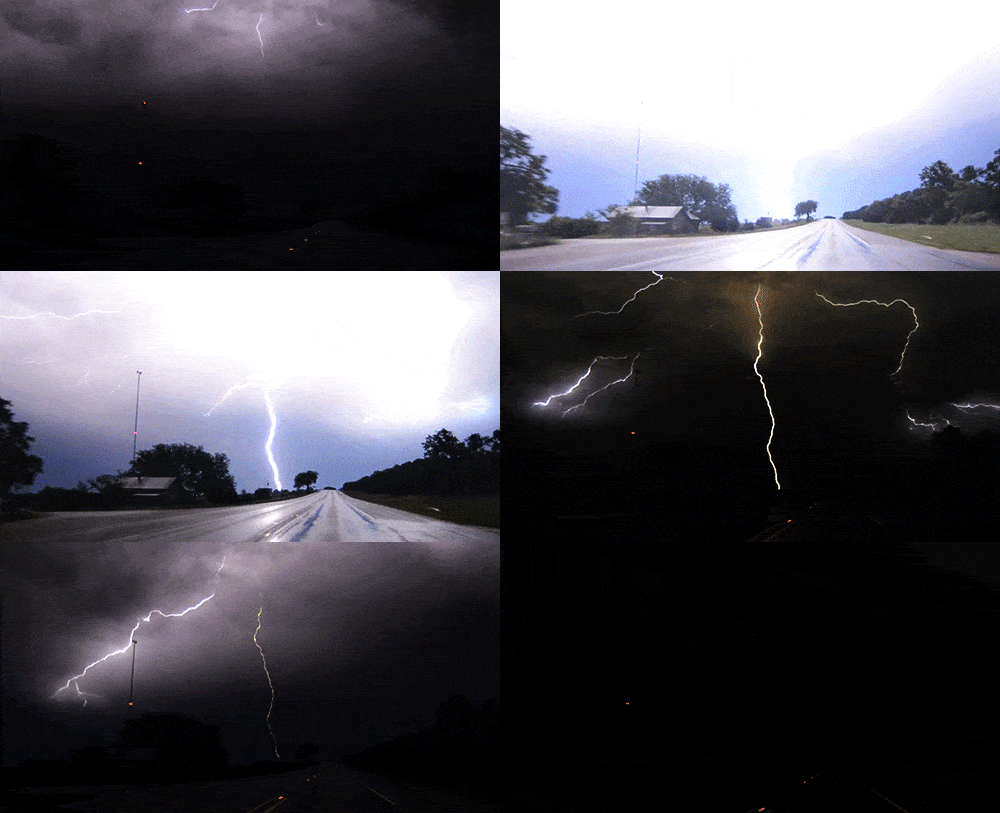
Lightning occurs because ___.
the negative charges at the bottom of clouds are attracted to the positive charges on the ground.
the positive charges at the bottom of clouds are attracted to the negative charges on the ground.
the positive and negative charges inside clouds are attracted to each other
All of these reasons are correct.

