
 Worksheets
Homogeneous Separation in Oil Refining Processes
Total questions: 10
Worksheet time: 5mins
Crude oil is a complex mixture primarily composed of which type of organic compounds?
Alcohols
Hydrocarbons
Carbohydrates
Hydrocarbons mixture are multicomponent .
True
False
A typical production capacity of crude oil refinery is ....
34,000 tonnes/day
340 tonnes/day
34 tonnes/day
What is the primary purpose of oil refining?
To extract crude oil from the ground
To separate crude oil into fractions with different boiling ranges
To convert crude oil into solid fuels
What is the initial process used to separate crude oil into different fractions based on their boiling points?
Catalytic cracking
Polymerization
Fractional distillation
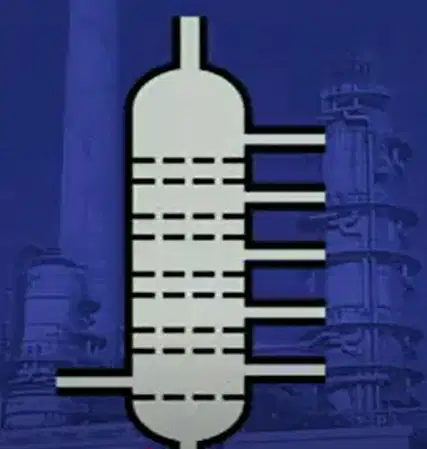
The higher up the tower, the higher the boiling points.
True
False
What types of trays used in the distillation column shown in the video?
Bubble cap
Packed columns
Perforated trays
What is the approximate temperature at the top and bottom of a typical fractionating column during crude oil distillation?
Top 360°C, Bottom 100°C
Top 100°C, Bottom 360°C
Top 200°C, Bottom 50°C
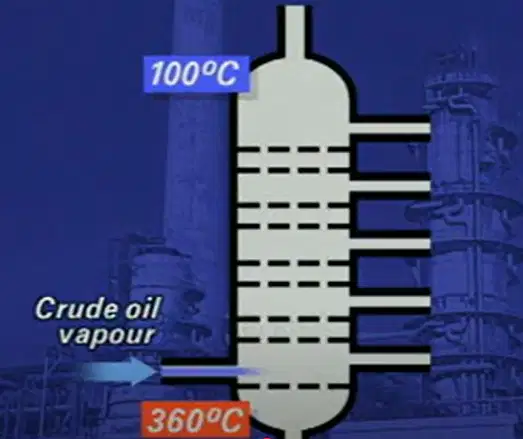
In a fractionating column, how do hydrocarbon vapors and liquids move relative to the trays?
Vapors rise and liquids drip down
Vapors drip down and liquids rise
Both vapors and liquids rise
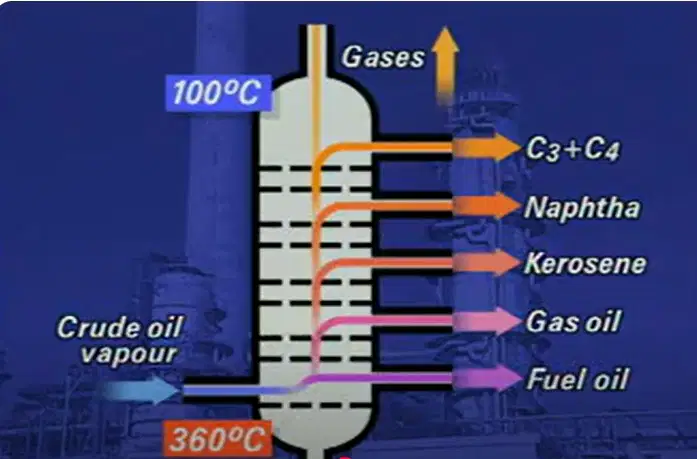
What type of hydrocarbons are typically found at lower levels (higher temperatures) in a fractionating column?
Longer carbon chains and lower boiling points
Shorter carbon chains and lower boiling points
Longer carbon chains and higher boiling points

