
 Worksheets
Machine Learning Origins
Total questions: 20
Worksheet time: 7mins
Name
Class
Date
1.

What did internal IBM documents reveal about Watson for Oncology’s cancer treatment recommendations?
a)
They were always aligned with national guidelines.
b)
They included multiple examples of unsafe and incorrect advice.
c)
They were based solely on real patient data.
d)
They were universally praised by physicians.
e)
They were never tested before deployment.
2.
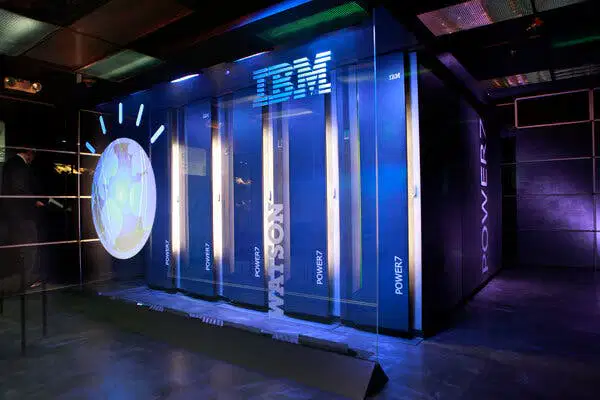
Who was primarily blamed for the problems with Watson for Oncology’s training?
a)
IBM’s marketing team.
b)
IBM engineers and doctors at Memorial Sloan Kettering Cancer Center.
c)
External hospital administrators.
d)
National Comprehensive Cancer Network.
e)
Independent AI consultants.
3.

What type of data was used to train Watson for Oncology, according to the internal documents?
a)
Real patient data from thousands of cases.
b)
Synthetic cancer cases or hypothetical patients.
c)
Publicly available cancer research papers.
d)
Data from international clinical trials.
e)
Data from social media feedback.
4.

How did IBM executives publicly describe Watson for Oncology’s training data?
a)
As synthetic and hypothetical.
b)
As based on real patient data.
c)
As limited to a few cancer types.
d)
As outdated and incomplete.
e)
As entirely guideline-based.
5.

What was a specific example of an unsafe recommendation by Watson for Oncology?
a)
Recommending surgery for a non-surgical condition.
b)
Suggesting bevacizumab for a lung cancer patient with severe bleeding.
c)
Advising against chemotherapy for all cancer types.
d)
Recommending placebo treatments.
e)
Suggesting untested experimental drugs.
6.

What is the significance of a “black box” warning for the drug bevacizumab?
a)
It indicates the drug is safe for all patients.
b)
It warns of severe or fatal hemorrhage risks.
c)
It suggests the drug is experimental.
d)
It means the drug is only for lung cancer.
e)
It indicates the drug is cost-effective.
7.
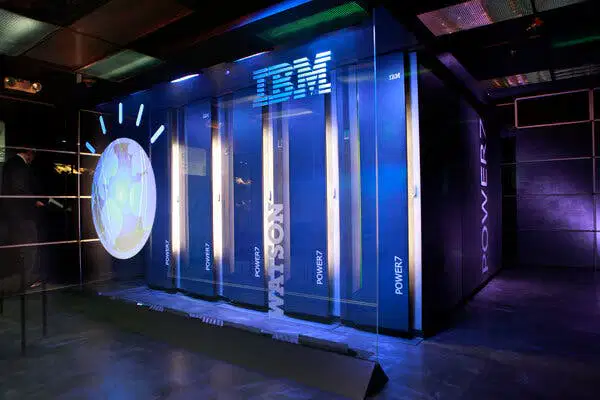
What did a physician at Jupiter Hospital in Florida say about Watson for Oncology?
a)
It was a revolutionary tool for cancer care.
b)
It was purchased for marketing and deemed unusable for most cases.
c)
It was perfectly aligned with treatment guidelines.
d)
It was easy to integrate into clinical workflows.
e)
It reduced treatment costs significantly.
8.

How did Memorial Sloan Kettering respond to criticisms of Watson for Oncology’s training?
a)
They denied any involvement in the training process.
b)
They said synthetic cases were better suited for dynamic standards of care.
c)
They claimed all recommendations were safe.
d)
They stopped their partnership with IBM.
e)
They admitted to using outdated patient data.
9.

What was one flaw in Watson for Oncology’s training methods noted in the July 2017 presentation?
a)
Using too many real patient cases.
b)
Small number of cases determined without statistical input.
c)
Exclusively using international guidelines.
d)
Over-reliance on automated algorithms.
e)
Lack of any physician input.
10.

How many cancers was Watson for Oncology trained to help treat, according to IBM’s statement?
a)
5
b)
13
c)
20
d)
8
e)
25
11.

How did IBM claim about Watson for Oncology’s usage worldwide?
a)
It was used by 50 hospitals.
b)
It was used by 230 hospitals.
c)
It was only used in the United States.
d)
It was not adopted by any hospitals.
e)
It was used by 500 hospitals.
12.

What did Dr. Andrew Norden’s presentation caution about conducting rigorous studies on Watson?
a)
They would prove Watson’s superiority.
b)
They could have serious adverse business consequences.
c)
They were unnecessary due to existing evidence.
d)
They would delay the product’s launch.
e)
They would increase development costs only.
13.

What was a criticism of IBM’s concordance studies for Watson for Oncology?
a)
They were based on real patient outcomes.
b)
They were designed to make negative findings unlikely.
c)
They were conducted without physician input.
d)
They were never published.
e)
They focused only on cost savings.
14.

Who was the IBM Watson Health deputy chief health officer who presented the critical slide decks?
a)
Deborah DiSanzo
b)
John Kelly
c)
Andrew Norden
d)
Kyu Rhee
e)
Ginni Rometty
15.

What did Memorial Sloan Kettering emphasize about treatment decisions using Watson?
a)
Watson’s recommendations should replace physician judgment.
b)
Treatment decisions require the physician’s clinical judgment.
c)
Watson’s recommendations are always final.
d)
Physicians should ignore Watson’s advice.
e)
Watson eliminates the need for guidelines.
16.

How many cases were used to train Watson for lung cancer, as per the July 2017 presentation?
a)
106
b)
635
c)
1000
d)
200
e)
50
17.

What did IBM’s product information in February 2017 imply about Watson’s training?
a)
It used synthetic cases exclusively.
b)
It analyzed thousands of historical patient cases.
c)
It relied on a single physician’s expertise.
d)
It was not trained on any data.
e)
It used only public domain data.
18.

What did experts like Dr. Nigam Shah criticize about IBM’s portrayal of Watson’s training?
a)
It was too transparent.
b)
It misled users into believing it reflected the entire Sloan Kettering expertise.
c)
It was based on too many patient cases.
d)
It avoided using any synthetic data.
e)
It was unrelated to cancer treatment.
19.

What was a suggested solution in Norden’s presentation to improve Watson for Oncology?
a)
Discontinue the product immediately.
b)
Increase patient cases to reflect MSK practice patterns with statistical input.
c)
Reduce the number of cancers covered.
d)
Eliminate all physician involvement.
e)
Focus only on marketing improvements.
20.

What did IBM do after Norden’s presentations to address Watson’s issues?
a)
They stopped selling Watson for Oncology.
b)
They released 11 software updates in the past year.
c)
They ended their partnership with MSK.
d)
They conducted a public apology campaign.
e)
They ignored all customer feedback.
100 %

