
Font size
 Worksheets
Cover Page Analysis Quiz
Total questions: 100
Worksheet time: 2hrs 40mins
What is the main theme presented on the cover page of the learning material?
A journey of transformation in the spirit of the risen Christ
The history of Holy Cross College
The importance of academic excellence
The role of sports in education
Which institution is featured on the cover page of the document?
Holy Cross College
St. Peter’s University
Sacred Heart School
Trinity College
What phrase is used as a motto or guiding principle on the cover page?
Life to the Full
Knowledge is Power
Faith and Wisdom
Learning for Life
According to Pope Francis in Evangelii Gaudium, what do vast and rapid cultural changes demand?
We must abandon old traditions.
We must seek ways of expressing unchanging truths in a language which brings out their abiding newness.
We must ignore spiritual gifts.
We must focus only on academic achievements.
What is the central symbol of Christianity mentioned as the inspiration for Holy Cross College?
The Bible
The Holy Cross
The Rosary
The Church Bell
Which of the following best describes the unique character of a Catholic school, according to the text?
It is shaped by its academic achievements only.
It is shaped by its culture, stories, and traditions.
It is shaped by its sports teams.
It is shaped by its location.
How does Holy Cross College communicate its distinctive identity?
Through its sports achievements
Through its Catholic ethos and charism
Through its financial success
Through its architectural design
Why is the character of many well-established Catholic schools often derived from the charisms of founding religious orders?
Because it is required by law
Because it is developed over many years
Because it is the only way to attract students
Because it is a government mandate
In what way does the vision of Holy Cross College reflect its understanding of community?
By focusing only on academic excellence
By promoting a community of transformation in the spirit of the Risen Christ and calling all to live life to the full
By encouraging competition among students
By limiting religious practices
How do Catholic schools use their heritage of spiritual gifts, according to the text?
To formulate unique ways of being and giving service to all
To increase tuition fees
To compete with other schools
To focus only on religious studies
Analyze how the foundation of Christ in a Catholic or ecumenical school influences the school community’s identity.
It makes the school focus only on religious rituals.
It provides the school community with a shared vision and motivation, making the school 'Catholic' and guiding its principles and actions.
It discourages diversity in the school.
It limits the school’s engagement with the wider community.
Evaluate the role of charisms in shaping the pathway for a Catholic school community.
Charisms are irrelevant to the school’s mission.
Charisms provide a pathway through which the school community might interpret and give voice to the centrality of Jesus Christ, shaping its direction and vision.
Charisms only affect the school’s financial decisions.
Charisms are only important for the school’s sports teams.
Which year marks the establishment of the first convent school associated with Catholic education in Western Australia?
1846
1834
1920
2008
What is the main purpose of the document described in the text?
To articulate the vision, values, rituals, symbols, and stories that give Holy Cross College its spiritual energy
To provide a list of alumni from Holy Cross College
To describe the academic curriculum of Holy Cross College
To announce new sports programs at Holy Cross College
Who announced the name "Holy Cross College" for the new college in March 2008?
Archbishop Barry Hickey
Archbishop Timothy Costelloe
Mother Ursula Frayne
Blessed Frédéric Ozanam
Which of the following is NOT listed as a source of inspiration for Holy Cross College?
Saint Oscar Romero
Mother Ursula Frayne
Saint Helena of the Holy Cross
Blessed Frédéric Ozanam
What was the focus of the masterplan for Holy Cross College?
Creating an integrated concept of parish and school as a symbol of one Catholic community
Expanding the sports facilities
Introducing new technology in classrooms
Building a new library
How did the College Board select the name for the new college?
By consulting with the community and presenting a short-list of names for feedback
By choosing the name of the local parish priest
By voting among the students only
By selecting a name from a historical list
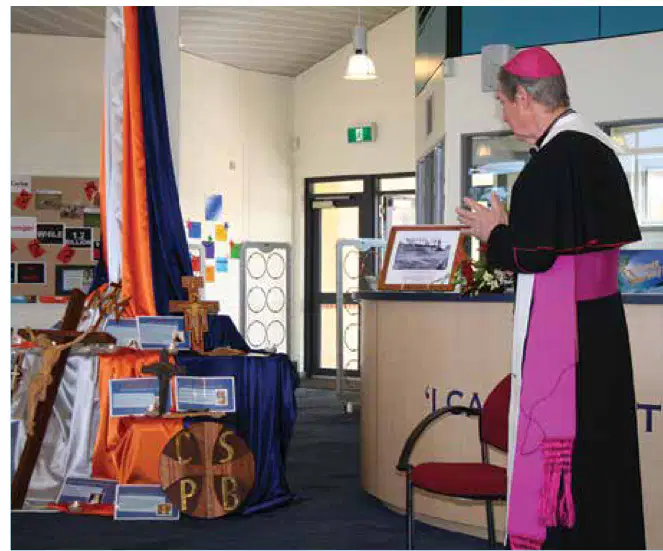
What does the photograph most likely depict?
The announcement of the new college name by the Archbishop
A sports event at the college
A science fair at the college
A graduation ceremony
Why are Masses at Holy Cross College often combined with the parish daily Mass?
To enhance the relationship with the parish
To reduce the number of school days
To introduce new sports activities
To celebrate national holidays
What is the vision of Holy Cross College?
A place of transformation in the spirit of the Risen Christ.
A center for scientific research and innovation.
A leader in sports and athletics.
A hub for international business.
According to the mission statement, what does Holy Cross College aim to empower its students to have?
Life to the Full
Financial independence
Global citizenship
Technological expertise
Which of the following is NOT one of the LIFE Pillars at Holy Cross College?
Innovation and Technology
Learning: Dignity and Personal Best
Faith: Justice and Service
Enrichment: Gratitude and Stewardship
Who provides guidance for the pillar of Inter-relationships: Compassion and Connection?
House Patron Frédéric Ozanam
House Patron Ursula Frayne
House Patron Irene McCormack
House Patron Rosendo Salvado
What is the meaning behind the four flames in the Holy Cross College logo?
They represent the four central pillars of the College.
They symbolize the four seasons.
They stand for the four elements: earth, water, fire, and air.
They represent four founding members.
What does the cross-bar in the Holy Cross College logo represent?
A coolamon, an Aboriginal vessel used to carry water, fruit, and nuts.
A bridge connecting two lands.
A book symbolizing knowledge.
A torch representing the Olympic Games.
Which Gospel is the College motto 'Life to the Full' derived from?
The Gospel of John
The Gospel of Matthew
The Gospel of Luke
The Gospel of Mark
How does Holy Cross College describe its approach to education?
A holistic education in which students are challenged to be ‘the best that they can be’ for both the present and the future.
A focus solely on academic achievement.
An emphasis on sports and extracurricular activities.
A traditional approach with no modern influences.
Which House Patron is associated with the pillar of Faith: Justice and Service?
Irene McCormack
Ursula Frayne
Frédéric Ozanam
Rosendo Salvado
What is the main purpose of the LIFE Pillars at Holy Cross College?
To underpin the College’s commitment to its mission.
To provide extracurricular activities.
To organize sports events.
To manage financial resources.
Which of the following was a key criterion for selecting House patrons at Holy Cross College?
Ability to teach mathematics
Be linked to the Catholic Faith story
Experience in sports coaching
Knowledge of foreign languages
What was the main purpose of the Living Library event held on 29 July 2010?
To teach students how to use a library catalog
To assist students in learning about people who showed the face of Jesus to others through their lives of service
To organize a book donation drive
To train students in library management
Which of the following is NOT mentioned as a pillar of the College in the selection criteria for House patrons?
Learning
Inter-relationships
Sportsmanship
Faith and Enrichment
Why did the College community involve students in the process of selecting House patrons?
To ensure students could vote for their favorite teacher
To represent the College’s Vision and Mission through role models for the community
To increase student enrollment
To promote extracurricular activities
After attending the Living Library, what skill did students have the opportunity to develop?
Cooking
Listening and note-taking
Painting
Programming
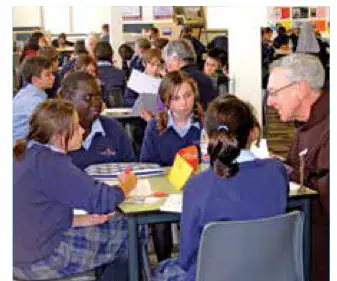
Which activity is most likely being depicted in the image described above?
Students participating in a Living Library event
Students playing a sports match
Students performing a science experiment
Students attending a music concert
How did the Living Library contribute to the selection of House patrons?
By providing a list of books about Catholic saints
By helping students learn about significant people and the historical context in which they lived
By organizing a sports competition
By teaching students how to write essays
Which of the following best describes the final step in the process of selecting House patrons?
Only teachers made the final decision
The final selection panel included students, staff, the College Board, and parish representatives
The principal chose the patrons alone
The decision was made by a public vote
Who was selected as the College patron at the time of selecting House patrons?
Archbishop Oscar Romero
Pope Francis
Saint Peter
Archbishop Desmond Tutu
What title did Archbishop Oscar Romero earn for his work in El Salvador?
Bishop of the poor
Defender of the faith
Saint of Rome
Protector of the weak
According to Oscar Romero, what would have the last word in history?
Life, not death
Death, not life
Justice, not injustice
Faith, not doubt
When was Oscar Romero assassinated?
24 March 1980
14 October 2018
May 2017
February 2015
What did Oscar Romero say about resurrection before his death?
"I do not believe in death without resurrection."
"Resurrection is only for the saints."
"Death is the end of all things."
"Only the righteous will rise again."
Who decreed that Oscar Romero had died for the Catholic faith?
Pope Francis
Pope John Paul II
Pope Benedict XVI
Archbishop of Canterbury
When was Oscar Romero canonised?
14 October 2018
24 March 1980
May 2017
February 2015
Why did a group from Holy Cross College travel to Rome in October 2018?
To attend the Canonisation Mass of Oscar Romero in Saint Peter’s Square
To visit the Vatican Museums
To meet Pope Francis
To participate in a pilgrimage

What event is depicted in the image described above?
Canonisation Mass of Oscar Romero
Easter Mass at the Vatican
A graduation ceremony
A peace rally in Rome
Who is the college patron mentioned in the College Prayer?
Saint Oscar Romero
Mother Ursula Frayne
Saint Mary MacKillop
Saint Teresa of Calcutta
What is one of the core values of Frayne House?
Dignity and Personal Best
Justice and Peace
Faith and Hope
Charity and Service
Who led a group of Mercy sisters to Australia in 1845?
Mother Ursula Frayne
Saint Oscar Romero
Saint Mary MacKillop
Mother Teresa
According to the College Prayer, what did Saint Oscar Romero become for the voiceless?
A voice
A teacher
A healer
A leader
What was the purpose of the first convent school established by Mother Ursula Frayne in Western Australia?
To cater for girls of any religious creed
To train teachers
To provide medical care
To teach only Catholic girls
How does the College Prayer suggest we should face our challenges?
With the same conviction as Saint Oscar Romero, knowing that strength comes from God
By ignoring them
By asking others to solve them
With fear and hesitation
Why was the establishment of the first convent school in Western Australia significant?
It marked the beginning of Mercy education in Western Australia
It was the first school for boys in Australia
It was the largest school in Australia
It was the first school to teach science
What does the College Prayer remind us about every act of justice?
It is a sign of God's love in the world
It is always rewarded immediately
It is not important
It is only for the strong
What does the Learning Pillar named after Mother Ursula Frayne encourage each person to do?
Achieve their personal best in an environment that values respect and dignity
Become a teacher
Travel to Australia
Ignore injustices
What is the main focus of the Sisters of Mercy's work today, as described in the text?
Serving people who suffer from injustices related to poverty, sickness, or lack of education
Building new schools
Teaching only religious subjects
Traveling the world
Who is recognized as a pioneer educator in the Frayne House Prayer?
Mother Ursula Frayne
Frédéric Ozanam
Saint Vincent De Paul
Mother Teresa
According to the Frayne House Prayer, what qualities are students encouraged to see in Mother Ursula Frayne?
Determination and commitment to learning
Wealth and power
Artistic talent and creativity
Physical strength and endurance
What is the main hope expressed in Frédéric Ozanam’s life, as described in the text?
To become better and do a little good
To become famous and wealthy
To travel the world
To write many books
Which organization did Frédéric Ozanam found to address the needs of the poor?
Society of Saint Vincent De Paul
Red Cross
Doctors Without Borders
Salvation Army
What are the core values of Ozanam House?
Compassion and connection
Justice and peace
Honesty and loyalty
Wisdom and courage
How does the legacy of Frédéric Ozanam continue to impact communities today?
By supporting the needy and fostering caring, compassionate, and connected communities
By building large monuments
By focusing on technological advancements
By promoting competitive sports
Why is the House named after Frédéric Ozanam, according to the text?
To acknowledge the link to the parish and the work with the Saint Vincent de Paul Society
Because he was a famous artist
Because he was a political leader
Because he was a scientist
Who inspired the establishment of the Society of Saint Vincent de Paul, as mentioned in the Ozanam House Prayer?
Blessed Frédéric Ozanam
Irene McCormack RSJ
Mary MacKillop
The Shining Path
What are the core values of McCormack House?
Justice and Service
Faith and Hope
Charity and Love
Peace and Kindness
According to the text, what significant decision did Irene McCormack make in her life?
To go to Peru to work with the very poor
To become a politician in Australia
To write a book about faith
To join the Society of Saint Vincent de Paul
What was Irene McCormack’s profession before she went to Peru?
Educator in Western Australia
Medical doctor in Peru
Social worker in Sydney
Lawyer in Melbourne
Why was Irene McCormack murdered, according to the text?
For caring for, working with, and handing out Caritas food parcels to impoverished villagers
For writing against the government
For refusing to leave Peru
For teaching children to read
How does the McCormack House Prayer encourage individuals to approach life, based on Irene McCormack’s inspiration?
To face life without fear and live wholeheartedly in every present moment
To avoid challenges and seek comfort
To focus only on personal achievements
To ignore the needs of others
What legacy does Irene McCormack represent, as described in the text?
The enduring legacy of Mary MacKillop
The foundation of the Society of Saint Vincent de Paul
The creation of a new school in Peru
The writing of a famous prayer
What is the main request in the Ozanam House Prayer?
To help follow the dream of embracing the world in a network of love and to work for a more just and caring society
To become wealthy and successful
To travel the world
To avoid helping others
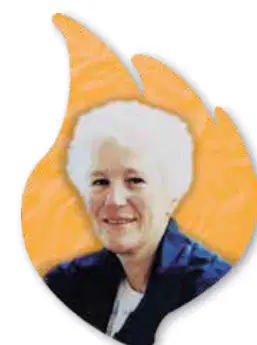
Who is the patron of McCormack House?
Irene McCormack RSJ
Blessed Frédéric Ozanam
Mary MacKillop
The Shining Path
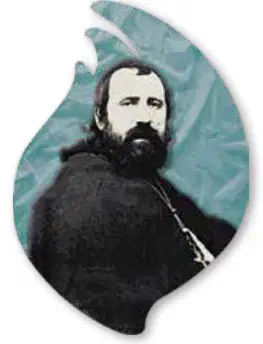
Who was selected to represent the Enrichment Pillar in the naming of Salvado House?
Dom Rosendo Salvado OSB
Bishop Brady
Ellenbrook
Benedictine monks
What core values are associated with Salvado House?
Gratitude and Stewardship
Honesty and Courage
Faith and Hope
Justice and Peace
What was one way Dom Salvado raised money for the New Norcia mission after being turned down for funds?
By selling land
By performing a piano recital
By writing a book
By teaching at a school
Which of the following best describes Dom Salvado’s approach to the Aboriginal children at New Norcia?
He provided them with a practical education.
He ignored their needs.
He only taught them religious studies.
He sent them to other communities.
Why is Dom Salvado considered significant in the context of Indigenous culture?
He demonstrated a rare sympathy for Indigenous culture in his day.
He opposed Indigenous traditions.
He only worked with European settlers.
He never interacted with Indigenous people.
How does the Salvado House community interpret the act of receiving gifts from God?
By developing them responsibly and sharing them lovingly with others
By keeping them for personal use
By selling them for profit
By ignoring them
According to the Salvado House Prayer, what is one of the requests made to God?
For patience to wait for God and perseverance to look for God
For wealth and power
For immediate answers to prayers
For fame and recognition
How does the Salvado House Prayer reflect the values of gratitude and stewardship?
By asking for respect for all cultures and care for land and resources
By requesting more material possessions
By focusing only on personal achievements
By ignoring the needs of others
Analyze how Dom Salvado’s actions in raising funds for the New Norcia mission demonstrate the core values of Salvado House.
He used his talents selflessly to benefit the community, showing gratitude for his gifts and stewardship in their use.
He kept his talents to himself, showing no interest in helping others.
He relied solely on external funding, not using his own abilities.
He discouraged others from contributing to the mission.
Which symbol in the Frayne House logo represents Irish heritage?
A four-leaf clover
A ship
A book
A cross
What do the hands in the Ozanam House logo symbolize?
Saint Vincent de Paul Society
The Mercy cross
The Benedictine cross
The Southern Cross
Which House logo includes the stars of the Southern Cross to represent Australian heritage?
McCormack House
Frayne House
Salvado House
Ozanam House
What is the significance of the olives in the Salvado House logo?
They represent trees brought from Europe and planted in New Norcia.
They symbolize Irish heritage.
They represent the Sisters of Mercy.
They symbolize learning and education.
Why was a coolamon included in the Ozanam House logo?
It symbolizes being a caring and connected community.
It represents the Abbey Church in New Norcia.
It is a symbol of Irish heritage.
It represents the Andes Mountains.
Which House logo features a ship, and what does it symbolize?
Frayne House; it symbolizes the vessel that brought the Sisters of Mercy from Ireland to Perth.
Ozanam House; it symbolizes the journey of Saint Vincent de Paul.
McCormack House; it symbolizes the Andes Mountains.
Salvado House; it symbolizes the journey to New Norcia.
How do the dots in the Salvado House logo reflect the influence of Aboriginal people?
They are in the form of traditional Aboriginal art, representing the important influence on Dom Salvado’s life.
They represent seeds that can grow.
They symbolize the stars of the Southern Cross.
They represent the Mercy cross.
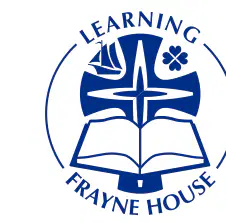
Which of the following is NOT a symbol found in the Frayne House logo?
The Benedictine cross
A ship
A four-leaf clover
A book

What does the oak tree in the Ozanam House logo symbolize?
France, where Frédéric Ozanam lived, and the idea that great things can grow from small seeds
The Abbey Church in New Norcia
The Andes Mountains in Peru
The vessel that brought the Sisters of Mercy to Perth
What do the Andes Mountains in the McCormack House logo represent?
The place where Sister Irene McCormack worked and lost her life
The location of the first school in Western Australia
The site of the Abbey Church in New Norcia
The origin of the olive trees in New Norcia
What is the main purpose of the College's annual focus on one of its patrons?
To provide an opportunity for staff and students to learn about and reflect on College and House patrons.
To increase the number of patrons at the College.
To organize more sports events.
To raise funds for the College.
What is the theme of the staff formation days at the College linked to each year?
The patron the College has as its focus for the year.
The academic achievements of students.
The sports achievements of the College.
The history of the College buildings.
What does the Holy Cross symbolize in Catholic tradition?
The cross on which Christ died and a constant reminder of Jesus' sacrifice and presence.
A symbol of academic excellence.
A sign of peace and prosperity.
A representation of the College's sports teams.
Why did the Principal request the donation of crosses from various religious orders before the College opened?
To symbolize the special charism of each order and their vocation of service.
To decorate the College buildings.
To use them as awards for students.
To sell them for fundraising.
How have the donated crosses been used around the College?
They have been strategically placed to add a pilgrim trail and tell the stories of each cross.
They have been stored in the College vault.
They are used only during special ceremonies.
They are given as gifts to visitors.

What does the image most likely depict in the context of the College's traditions?
A pilgrimage or retreat event related to the College's religious practices.
A sports competition at the College.
A graduation ceremony.
A science fair.
What is the main reason for naming the buildings at the college after places associated with college patrons?
To make an important statement about who we are and what we value.
To follow government regulations.
To honor local celebrities.
To attract more students.
Who is the patron associated with the buildings Santiago de Maria and San Salvador?
Saint Oscar Romero
Saint Francis of Assisi
Saint Teresa of Calcutta
Saint John Paul II

