
 Worksheets
Electrical Fire Safety Quiz
Total questions: 35
Worksheet time: 18mins
How hot is is an electric arc in degrees Celsius?
1000
2000
3000
100
Which is not a Fire-caused arc?
L-shape
Cratered
Pointed
Round bead
A discolored/oxidized conductor is a result of?
Flash-over fire
Fire-cause
Fireman
Short-circuit Fault
A device that can help prevent arc-induced fires?
GFCI
FCIA
MCB
AFCI
Which is not a common cause of arc?
Loose connection
Aging conductors
Damaged insulation
Oxidation
What is the unit of electric current?
Volt
Ohm
Ampere
Watt
Ohm's Law is represented by which equation?
P = IV
V = IR
I = VR
R = VI
What is the function of a resistor in a circuit?
To store energy
To resist current flow
To amplify voltage
To open/close the circuit
Which subatomic particle is primarily responsible for electrical current?
Proton
Neutron
Electron
Nucleus
The PEC is enforced primarily to:
Increase electricity bills
Ensure electrical safety and proper installation
Promote electrical sales
Standardize construction materials
Which is the minimum size of lighting conductor for a residential building as per PEC?
1.0 mm²
2.0 mm²
3.5 mm²
8.0 mm²
What color is commonly used for grounding wires according to PEC standards?
Black
White
Green
Red
In PEC, the standard supply voltage for residential installations is:
110V
220V
440V
12V
Circuit breakers must be rated in:
Ohms
Amperes
Volts
Farads
What is the unit for electrical power?
Ampere
Volt
Ohm
Watt
To calculate power in watts for a single-phase system, which formula is used?
P = V + I
P = V / I
P = V × I
P = I / R
The total connected load of a building determines the size of the:
Light bulbs
Wire insulation
Service entrance conductor
Wall outlets
What is the recommended demand factor for lighting loads according to PEC?
50%
100%
70%
30%
Which system is typically used in industrial applications?
Single-phase
Three-phase
Parallel system
Series system
Which has more constant power delivery?
Single-phase
Three-phase
Neither
All types
Which testing tool is used to check continuity?
Clamp meter
Megger
Multimeter
Oscilloscope
Which device automatically cuts off power during overcurrent?
Transformer
Resistor
Circuit breaker
Capacitor
One common cause of electrical fire is:
Low voltage
Proper wiring
Overloading circuits
LED lighting
Ground Fault Circuit Interrupter (GFCI) is designed to:
Increase power
Protect against electric shock
Balance circuits
Decrease resistance
One major lesson from real electrical fire incidents is to:
Increase wire size
Ignore signs of overheating
Regularly inspect and maintain wiring
Avoid grounding
What usually contributes to fire spread in old buildings?
Fireproof walls
Modern wires
Flammable insulation and outdated wiring
Concrete ceilings
Post-incident investigations often reveal:
Strong safety compliance
Proper documentation
Neglected maintenance and code violations
Overstaffing
Electrical fire prevention training can reduce risks by:
Creating fear
Increasing productivity only
Promoting safety awareness and proper action
Making workers replace all equipment
Below is the list of Hierarchy of Hazard Controls, which is NOT?
Elimination
Personal Protective Equipment
Administrative Controls
Risk Assessment
Which of the following is a common electrical fault in residential buildings?
Proper grounding
Circuit overload
Use of circuit breakers
Standard wiring practices
What often causes short circuits in electrical systems?
Proper insulation
Correct wire sizing
Exposed or damaged wires
Grounded outlets
Which fault occurs when the current flows outside the intended path?
Open circuit
Ground fault
Circuit overload
Normal operation
A flickering light bulb may indicate:
High voltage supply
Faulty light switch or loose wiring
Proper functioning
Stable power
What is the result of an open circuit fault?
Excess current flows
No current flows
Sparks and fire
Loud noise
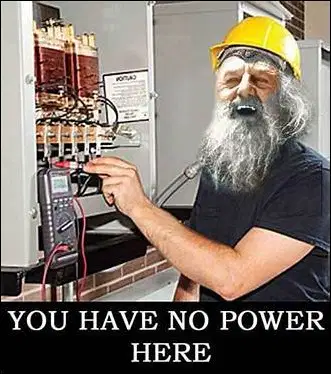
Hazard: Conducting testing activity without proper PPE
Unsafe Act
Unsafe Condition
Safe Act
Safe Condition

