
 Worksheets
X-ray Imaging System Power and Voltage Ripple
Total questions: 51
Worksheet time: 26mins
Identify the main differences among single-phase, three-phase, and high-frequency power.
Single-phase has one waveform, three-phase has three waveforms, and high-frequency power operates at higher frequencies than standard power systems.
Single-phase and three-phase both have three waveforms, but high-frequency power has only one.
Single-phase and high-frequency power are the same, while three-phase is different.
Three-phase power operates at lower frequencies than single-phase and high-frequency power.
The importance of voltage ripple to x-ray quantity and quality is:
It affects both the amount and the energy consistency of x-rays produced.
It only affects the color of the x-rays.
It has no impact on x-ray production.
It only affects the size of the x-ray machine.
The power rating of an x-ray imaging system is defined as:
the product of tube voltage and tube current
the amount of radiation produced per second
the maximum exposure time allowed
the efficiency of image processing
What is the frequency of AC current?
50 cycles/sec
60 cycles/sec
100 cycles/sec
120 cycles/sec
One complete cycle of AC current takes ________ seconds.
1/60th second
1/100th second
1/50th second
1/10th second
In one second, AC goes through how many cycles?
30 cycles
60 cycles
90 cycles
120 cycles
In one second, AC changes direction how many times?
120 times
60 times
100 times
240 times
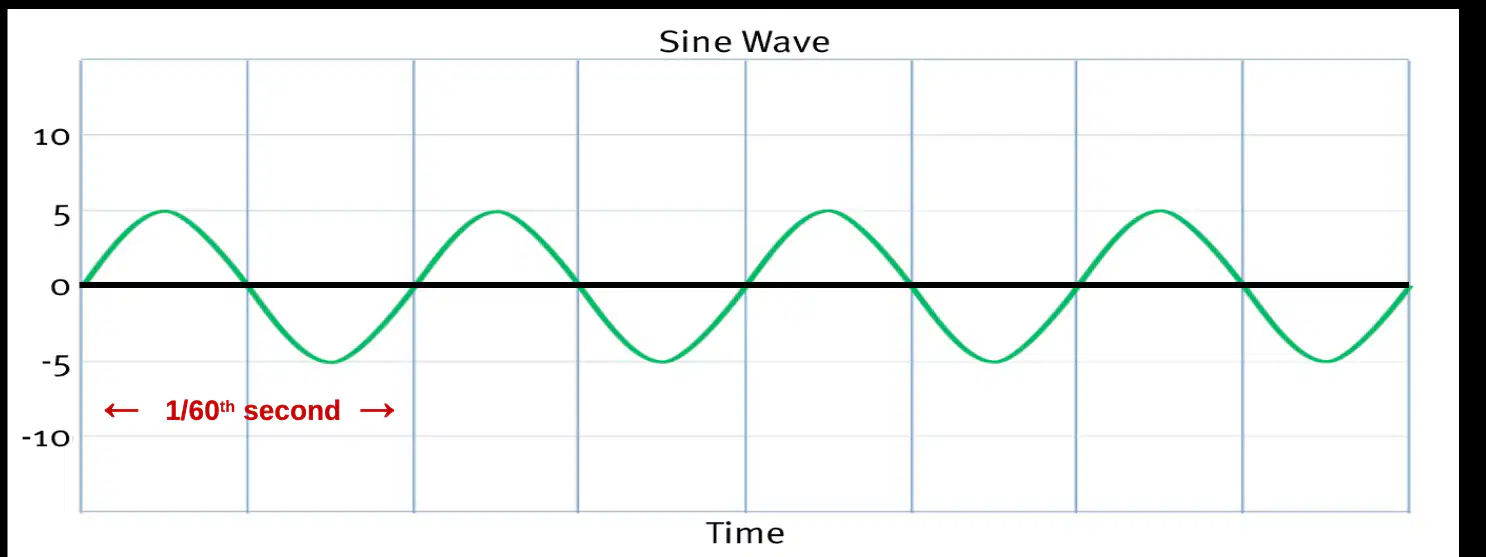
How long does one complete cycle of the sine wave take?
1/60th second
1/100th second
1/120th second
1/30th second

What do diodes allow electricity (current) to do?
Flow in both directions
Flow in only one direction
Block electricity completely
Convert DC to AC
What is the process called when a diode converts AC to DC?
Amplification
Rectification
Filtration
Modulation
What do diodes do when working together in pairs in an AC to DC conversion circuit?
Amplify the signal
Convert AC to DC
Increase resistance
Store energy
After converting AC to DC, this waveform is now called: _________.
Full Wave DC Rectification
Half Wave AC
Sine Wave Output
Pulse Width Modulation
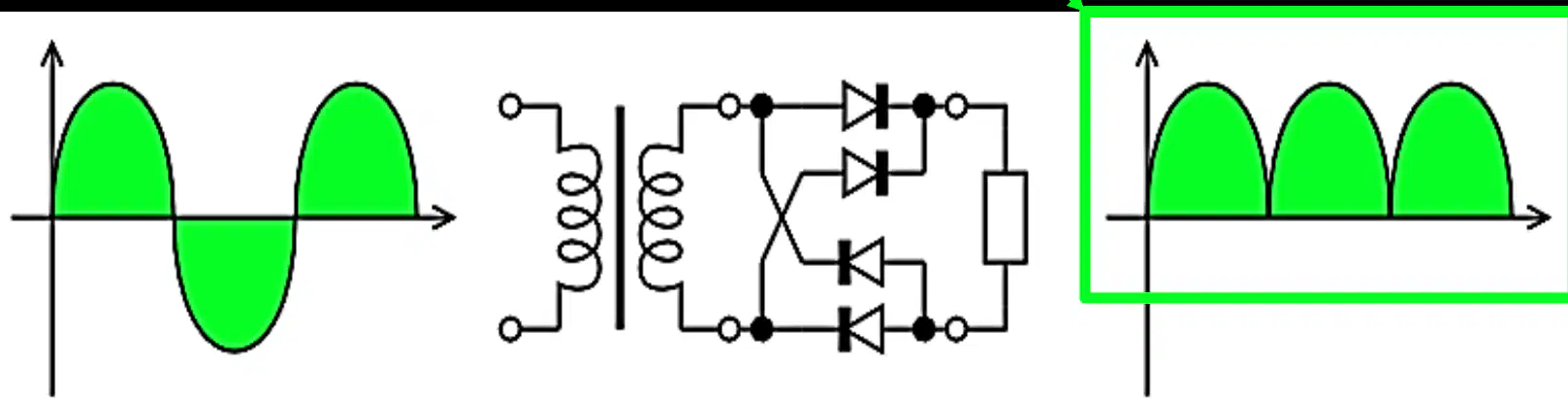
What is the name of the process that converts the input AC waveform to the output DC waveform shown?
Full Wave DC Rectification
Half Wave Rectification
AC Amplification
DC Filtering

What type of rectification is shown in the circuit?
Half Wave Rectification
Full Wave Rectification
Bridge Rectification
No Rectification

The input to the rectifier circuit is from the output of a high voltage transformer and is a(n) _________
AC SINEWAVE
DC VOLTAGE
PULSED DC
SQUARE WAVE

After passing through the diodes in the rectifier circuit, the output is converted into _________?
DC
AC
Pulsating current
Noise

In the full wave rectifier circuit, what is the main function of the diodes?
To increase voltage
To convert AC to DC
To filter noise
To store energy
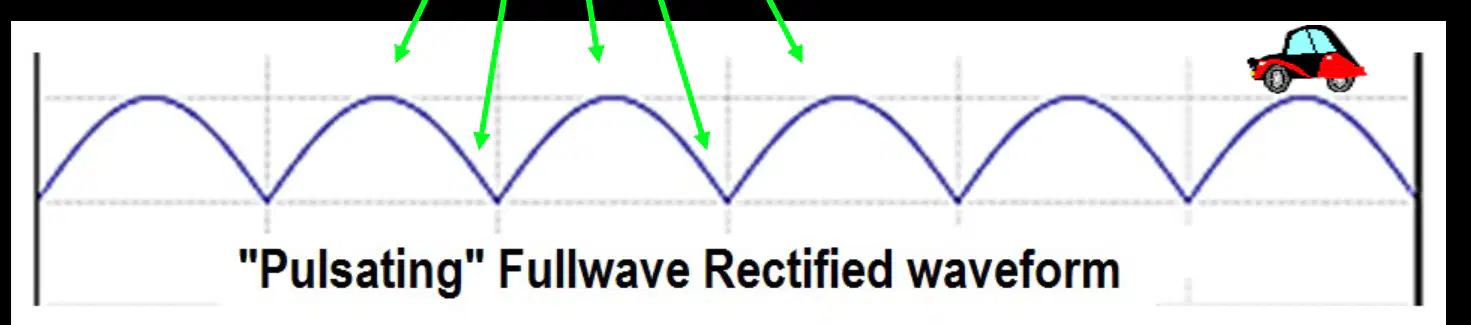
The image shows a 'Pulsating' Fullwave Rectified waveform with ripples, and compares it to a bumpy road. What do the 'ripples' in the waveform represent in the context of electrical signals?
Smooth DC output
Fluctuations or variations in the output voltage
Constant AC supply
No current flow

A bumpy road is similar to a fullwave rectified waveform because:
both have repeated ups and downs without going below a certain level
both are completely smooth and flat
both have only downward slopes
both are perfectly symmetrical and flat
What is the definition of ripples in X-ray production?
Increase in X-ray energy
Deviation of the voltage waveform across the x-ray tube from constant voltage
Constant voltage supply
None of the above
What are unwanted pulses in X-ray production called?
Ripples
Beams
Waves
Bursts
What is one effect of ripples in X-ray production?
Shortening of exposure time
Lengthening of exposure time and higher variations in X-ray output
Decrease in X-ray output
No effect
How can ripples in the waveforms (the 'up and down motion') be reduced in X-ray production?
By increasing voltage
By using diodes
By decreasing current
By using resistors

Observe the diagrams: What is the result of adding diodes to the waveform?
Full wave rectified = 100% ripple
No change
Decreased ripple to 0%
Increased frequency only

Fill in the blank: To solve the issue, you need to ________.
Change the In-Coming Line Voltage, i.e. Change the wiring for power!!
Replace the circuit breaker with a higher rating
Reset the device to factory settings
Increase the load on the circuit
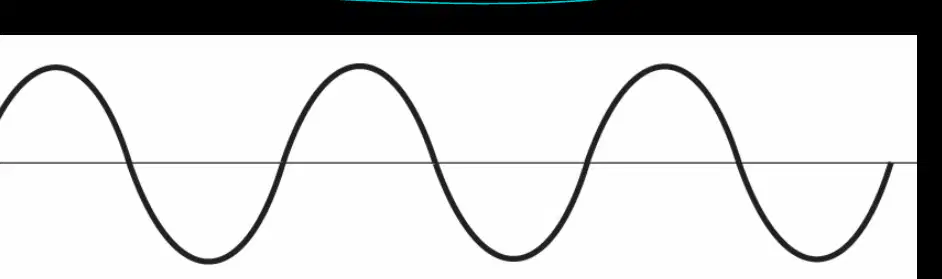
Look at the first diagram. What type of power system does it represent?
Single Phase
Three Phase
Direct Current
None of the above
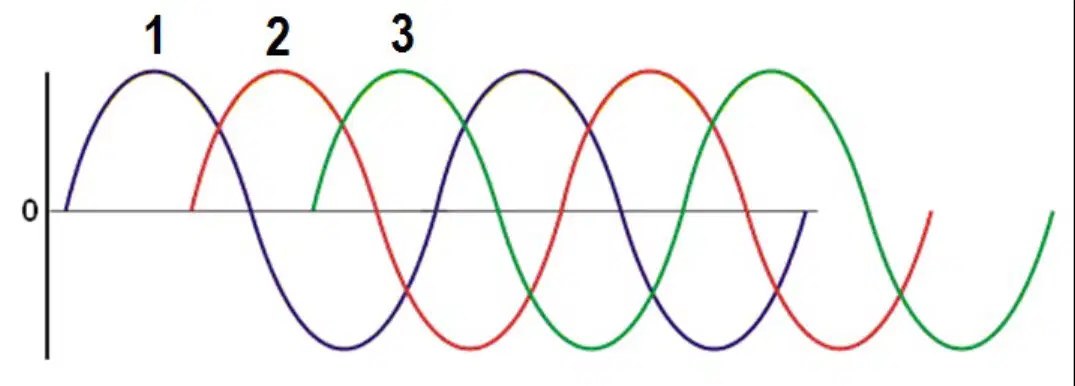
Look at the second diagram. What type of power system does it represent?
Single Phase
Three Phase
Direct Current
None of the above

What happens when you combine 3 waveforms that are slightly out of step with one another?
They cancel each other out completely
They form a new, more complex waveform
They remain unchanged
They disappear
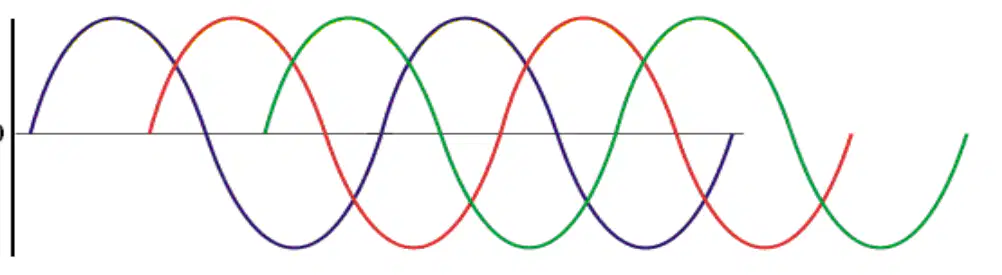
According to the diagram and explanation, what happens to the power when 3 AC wires are used without diodes?
Power dips down to zero and ripples are large
Power never dips down to zero but ripples are still large
Power never dips down to zero and ripples are smaller
Power dips down to zero and ripples are smaller
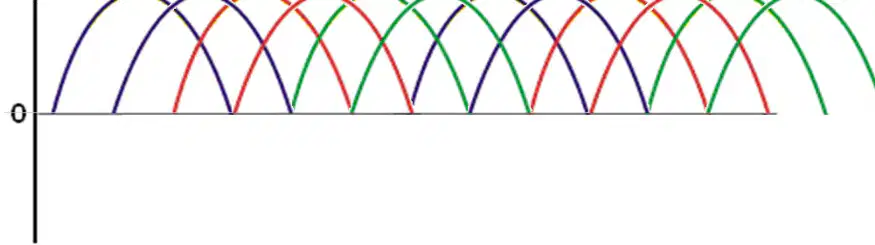
What is the effect of adding diodes to 3 AC wires, as shown in the diagram?
Power dips down to zero and ripples are larger
Power never dips down to zero but ripples are still large
Power never dips down to zero and ripples are smaller
Power dips down to zero and ripples are smaller
Fill in the blank: With diodes, power will never dip down to zero PLUS ripples are _______.
smaller
larger
constant
random

This is called _______.
THREE-PHASE POWER
SINGLE-PHASE CURRENT
DIRECT CURRENT
ALTERNATING VOLTAGE
What is the main function of three-phase power generators across an x-ray tube?
Produce fluctuating potential difference
Produce almost constant potential difference
Produce zero potential difference
Produce alternating current only
What is the result of the sum of phasing in three-phase power generators?
It drops to zero
It never drops to zero
It fluctuates randomly
It increases continuously

Fill in the blank: In three-phase power generators, the power ______ drops to zero, as shown in the diagram.
never
sometimes
always
frequently
How many pulses per Hz are produced in a three phase 6 pulse system?
3 pulses per Hz
6 pulses per Hz
12 pulses per Hz
360 pulses per Hz

What is the ripple factor range for a three phase 6 pulse system?
5-10%
13-25%
30-50%
50-75%
X-ray production is more efficient in a three phase 6 pulse system than in a single phase system.
True
False
How many pulses per second does a three phase 12 pulse system generate?
60 pulses per second
120 pulses per second
720 pulses per second
1440 pulses per second
What is the ripple factor range for a three phase 12 pulse system?
1-3%
4-10%
10-20%
20-30%
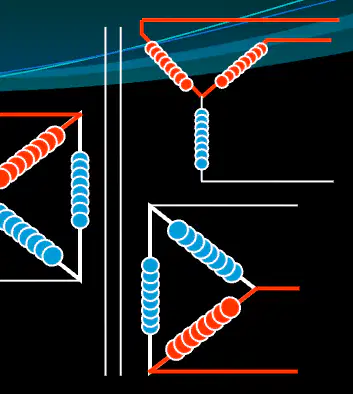
Refer to the diagram of the 3 Phase, 12-Pulse generator. What is the percentage ripple shown in the diagram?
4 - 10% ripple
0.5 - 2% ripple
15 - 20% ripple
25 - 30% ripple
Fill in the blank: The ripple factor for a Medium/High Frequency Generator is ________.
< 1%
10%
5%
20%
Fill in the blank: A Medium/High Frequency Generator is smaller and produces ________ potential voltage waveform.
nearly constant
highly fluctuating
sinusoidal
irregular
Fill in the blank: A Medium/High Frequency Generator costs ________ to operate.
less
more
the same
nothing
Fill in the blank: A Medium/High Frequency Generator provides ________ image quality.
better
worse
unclear
lower
Fill in the blank: A Medium/High Frequency Generator results in ________ patient dose.
lower
higher
unchanged
maximum
What is the ripple percentage shown in the High Frequency generator diagram?
< 1%
5%
10%
20%
What is the ripple percentage for a Full wave pulsating generator?
13 - 25% ripple
4 - 10% ripple
100% ripple
< 1% ripple

What is the ripple percentage for a 3 Phase, 6-Pulse generator?
100% ripple
13 - 25% ripple
4 - 10% ripple
< 1% ripple

What is the ripple percentage for a 3 Phase, 12-Pulse generator?
100% ripple
13 - 25% ripple
4 - 10% ripple
< 1% ripple

What is the ripple percentage for a High Frequency generator?
100% ripple
13 - 25% ripple
4 - 10% ripple
< 1% ripple

