
Font size
 Worksheets
1.10 Key principles and methodologies in engineering and manufac
Total questions: 100
Worksheet time: 50mins
By the end of this session, learners should be able to: Explain what constitutes a manufacturing process.
A manufacturing process involves the transformation of raw materials into finished products.
A manufacturing process is only about selling products to customers.
A manufacturing process is the study of market trends.
A manufacturing process refers to the transportation of goods only.
By the end of this session, learners should be able to: Describe the key types of manufacturing process.
Describe the key types of manufacturing process.
List the advantages of manufacturing process.
Explain the history of manufacturing process.
Identify the tools used in manufacturing process.
What is the fundamental goal of a manufacturing process?
To produce a product that has a useful form.
To increase the cost of production.
To reduce the quality of the product.
To delay the delivery of the product.
How many stages are there in the manufacturing process?
Three stages
Two stages
Four stages
Five stages
Which of the following is NOT one of the three stages in the manufacturing process?
To change the physical properties of the raw material
To change the shape and size of the workpiece
To achieve the required dimensional accuracy (tolerances) and surface finish
To market the finished product
List the three stages in the manufacturing process.
1. To change the physical properties of the raw material 2. To change the shape and size of the workpiece 3. To achieve the required dimensional accuracy (tolerances) and surface finish.
1. To increase the cost of production 2. To reduce the number of workers 3. To maximize the use of electricity.
1. To automate all processes 2. To eliminate manual labor 3. To use only advanced robotics.
1. To outsource all components 2. To focus only on packaging 3. To ignore quality control.
Why must an engineer have a good understanding of the range of manufacturing processes?
To understand the advantages and limitations of each process.
To increase the cost of production.
To avoid using modern technology.
To focus only on one manufacturing process.
Which type of manufacturing process is described as: 'A mechanical process used in manufacturing industries.'?
Forming
Casting
Machining
Joining
Which type of manufacturing process is used to change the size and shape of a workpiece?
Shaping
Joining
Finishing
Casting
Which type of manufacturing process alters the surface of a manufactured part?
Finishing
Casting
Forming
Assembly
Which type of manufacturing process involves molten material (e.g., metal) being poured into a mould that contains a hollow cavity of the exact required shape?
Casting
Forging
Machining
Extrusion
Fill in the blank: ________ is the manufacturing process of creating an object by building it one layer at a time.
Additive
Subtractive
Casting
Molding
Fill in the blank: ________ is the manufacturing process where fusing or joining two or more components creates a different object.
Joining
Casting
Milling
Forging
Fill in the blank: ________ is the manufacturing process where material is either cut away or drilled out/removed.
Wasting
Casting
Forging
Molding
What is the forming process in manufacturing? (Fill in the blank: The forming process is a large part of the manufacturing process where a raw material is converted into a ____.)
product
liquid
waste
tool
Which of the following is NOT a type of forming process?
Bulk forming
Sheet metal forming
Powder metal forming
Plastic molding
Which process is categorized under Bulk forming?
Bending
Powder forging
Rolling process
Powder injection
Which process is categorized under Sheet metal forming?
Deep drawing
Squeezing
Powder extrusion moulding
Wire drawing
Which process is categorized under Powder metal forming?
Forging process
Powder injection
Shearing
Wire drawing
Fill in the blank: ________ is a process under Bulk forming where metal is shaped by compressive forces using a die.
Forging process
Casting process
Machining process
Extrusion process
Fill in the blank: ________ is a process under Sheet metal forming that involves cutting material without forming chips or using burning or melting.
Shearing
Casting
Forging
Extrusion
Fill in the blank: ________ is a process under Powder metal forming where metal powder is forced into a mold under pressure.
Powder forging
Hot rolling
Extrusion
Casting
Aluminum extrusions are made by which of the following processes, as shown in the diagram of the extrusion process?
Forcing heated aluminum through a shaped die
Pouring molten aluminum into molds
Cutting aluminum sheets into shapes
Welding aluminum rods together
Which process involves passing metal through rolls at a high temperature, resulting in elongated grains?
Hot Rolling
Cold Rolling
In the Cold Rolling process, what type of metal is fed into the rolls?
Hot Rolled Metal
Cold Forged Metal
Cast Metal
Annealed Metal
Fill in the blank: In Hot Rolling, the direction of feed is ______ to the rolls.
perpendicular
parallel
diagonal
tangential
Which rolling process is likely to produce elongated grains in the metal?
Hot Rolling
Cold Rolling
Both
Neither
What manufacturing process is depicted in the images above?
Casting
Forging
Welding
Machining
Fill in the blank: The images above show the process of ________, where metal is shaped by applying compressive forces, usually after heating.
forging
casting
extrusion
welding
The images above show which process related to forging?
Heating and shaping metal using compressive forces
Cooling metal rapidly to harden it
Joining two metal pieces by melting them together
Cutting metal into thin sheets
What is the process shown in the images called?
Wire Drawing
Forging
Casting
Welding
In the wire drawing process, the function of the die as shown in the diagram is to:
Reduce the diameter of the wire
Heat the wire
Coat the wire with lubricant
Cut the wire into pieces
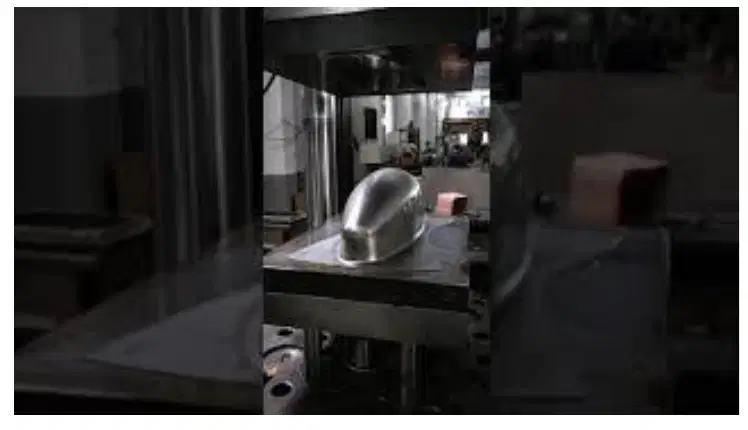
What manufacturing process is shown in the left image under the title 'Sheet metal deep drawing'?
Casting
Deep drawing
Welding
Forging
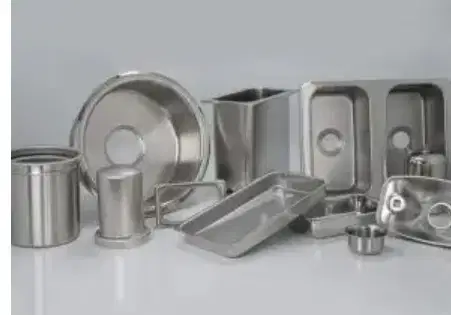
The products shown in the right image are most likely made by which process?
Sheet metal deep drawing
Injection molding
Machining
3D printing
Refer to the diagram of sheet metal shearing. What is the function of the punch in the shearing process?
To hold the sheet metal in place
To apply the shearing force and cut the sheet metal
To provide clearance
To support the die
In the sheet metal shearing process, the component that provides support to the sheet metal and defines the shape of the cut is called the _________.
die
punch
ram
blank
The role of clearance in the sheet metal shearing process is to:
Allow proper separation of the sheet by providing space between the punch and die.
Increase the thickness of the sheet metal during shearing.
Prevent the formation of burrs by eliminating all gaps.
Reduce the force required by making the punch and die fit tightly.
What process is shown in the images under the title 'Sheet metal bending'?
Welding
Sheet metal bending
Casting
Drilling
Fill in the blank: The images above show the process of ________, where a sheet of metal is deformed to an angle using a machine.
bending
casting
welding
extrusion
Which of the following is the correct order of the stages in the Powder Metallurgy Process?
Mixing, Compacting, Sintering, Tooling, Powders
Powders, Mixing, Tooling, Compacting, Sintering
Tooling, Powders, Mixing, Sintering, Compacting
Sintering, Compacting, Mixing, Powders, Tooling
Fill in the blank: The first stage in the Powder Metallurgy Process is ________.
Powders
Compaction
Sintering
Finishing
Match the following stages of the Powder Metallurgy Process with their correct sequence:
First
1
Second
2
Third
3
Fourth
4
Fifth
5
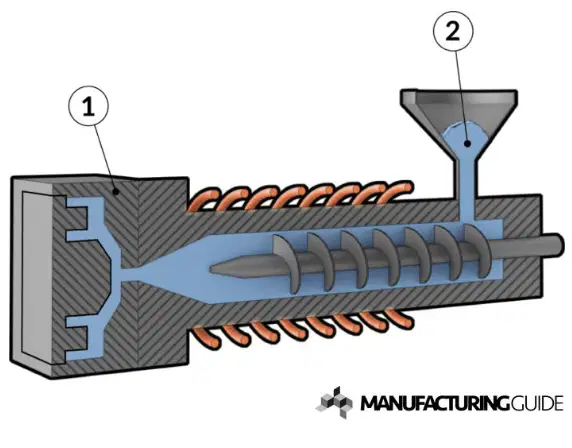
Refer to the diagram of the powder injection process. What does label 1 represent?
Mold cavity
Hopper
Screw
Heater
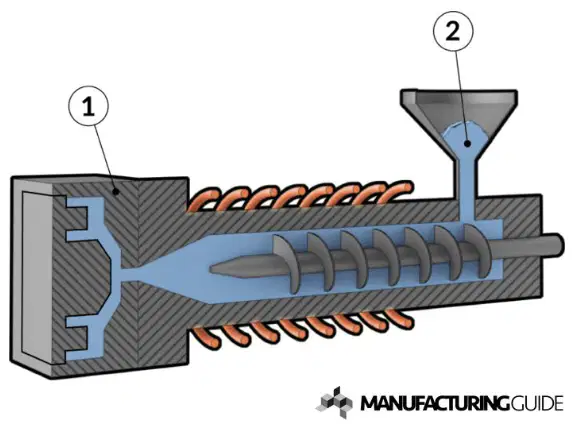
Refer to the diagram of the powder injection process. What is the function of the part labeled 2?
Heats the material
Mixes the powder
Feeds powder into the machine
Forms the final product
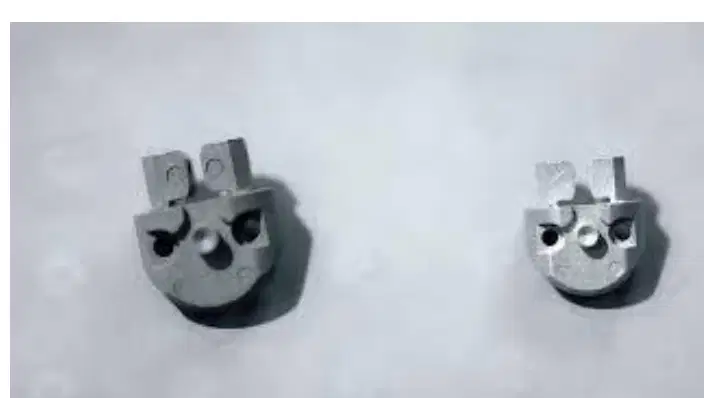
Look at the two manufactured parts shown in the image. These parts are produced using which manufacturing process? Fill in the blank: These parts are produced using _________?
powder injection
die casting
injection molding
forging
Powder extrusion moulding works similar to which of the following processes?
A) Injection moulding
B) Plastic extrusion
C) Die casting
D) Forging
In the diagram of powder extrusion moulding, what does label 1 represent?
Feed hopper (where powder is fed into the machine)
Heater (to increase the temperature of the powder)
Die (to shape the extruded product)
Extruded product outlet
In the diagram of powder extrusion moulding, what does label 2 represent?
Barrel (where powder is transported and compacted)
Die (where the final shape is formed)
Hopper (where powder is initially loaded)
Heater (used to increase temperature)
In the diagram of powder extrusion moulding, what does label 3 represent?
Die (where the compacted powder is extruded into shape)
Powder feed hopper
Heater coil
Ram (applies pressure to the powder)
Which of the following are examples of forming processes as shown in the images?
A) Sheet metal forming and copper wire drawing on large rollers
B) Plastic molding and glass blowing
C) Wood carving and stone cutting
D) Injection molding and die casting
Fill in the blank: The images show examples of ________ and copper wire drawing on large rollers.
sheet metal forming
plastic molding
wood carving
glass blowing

Go to classroom and find the worksheet 1.1 forming processes. What should you do after finding the worksheet?
Fill in the table.
Leave the worksheet on the desk.
Ignore the worksheet.
Return the worksheet to the teacher.
Materials must be processed into a wide variety of shapes in order to make ________ parts of every type.
component
liquid
colorful
useless
The shapes required vary enormously, both in size and complexity, ranging from ________ components to large castings and forgings of several hundred tons.
micro-electronic
mechanical
plastic
wooden
The properties of the material in the finished component are influenced to a considerable extent by the type of ________ process employed.
shaping
cooling
painting
measuring
Fill in the blank: ________ is the removal of material from a workpiece to produce a component of the required size and shape.
Wasting
Joining
Coating
Assembling
Fill in the blank: ________ is the application of force to change the shape of a material.
Forming
Cutting
Welding
Casting
Fill in the blank: ________ is pouring or injecting liquid material into a mould where it solidifies into the required shape.
Shaping
Welding
Forging
Machining
Fill in the blank: ________ is a shaping process which involves heating a material above its melting point and pouring the resulting liquid into a mould, where it then cools and solidifies into the required shape.
Casting
Forging
Extrusion
Machining
Which shaping process involves pouring or injecting liquid into prepared moulds?
Manipulative processes
Injecting
Powder techniques
Cutting and grinding
Which shaping process involves plastic deformation of the material?
Manipulative processes
Powder techniques
Cutting and grinding
Injecting
Which shaping process produces a shape by compacting a powder?
Cutting and grinding
Manipulative processes
Powder techniques
Injecting
Which shaping process involves cutting to shape and size and grinding surfaces down to a precise finish?
Powder techniques
Cutting and grinding
Manipulative processes
Injecting
What process is being used to engrave a design into wood in the image?
Painting
Laser engraving
Sanding
Polishing
What finishing process is shown in the image with yellow surroundings in a manufacturing process?
Powder coating
Electroplating
Anodizing
Painting
Look at the image of a metal component being pressed into shape. What process is being shown in this image?
Casting
Pressing
Welding
Cutting
Look at the image of compacting powder being used to produce small components. What is the main purpose of this process?
To melt metal
To compact powder into a solid shape
To cut metal
To weld parts together
What does the casting process involve?
The use of molten liquid poured into a mould
The use of solid metal shaped by hand
The use of plastic injection
The use of cold pressing
Fill in the blank: The liquid in the casting process cools, with heat generally being extracted via the ______, until it solidifies into the desired shape.
mould
furnace
crucible
core
Casting is always a simple process and does not require much skill.
True
False
In particular, which type of casting is mentioned as being highly skilled due to complex metallurgy?
Plastic casting
Metal casting
Sand casting
Wax casting
What is a pattern in the context of casting?
A tool used to cut metal
A replica of the object to be cast, made from wood, metal, plastic or another material, used to prepare the cavity into which molten material will be poured during the casting process
A type of metal used in casting
A machine for melting metal
Fill in the blank: Cast objects are highly dependent on _______.
pattern
temperature
color
weight
Which of the following is NOT a type of casting pattern?
Single piece
Loose piece
Match plate
Welding torch
Types of pattern include single piece, loose piece, match plate, split, skeleton, multi-piece, sweep and follow board. Which of these is used to prepare the cavity into which molten material will be poured during the casting process?
Pattern
Mould
Core
Die
What is an expendable mould process in casting?
The moulds are destroyed in order to remove the casting (e.g., sand moulds).
The moulds are reused multiple times without any damage.
The moulds are made of metal and last for many cycles.
The process uses only permanent ceramic moulds.
What is a permanent mould process in casting?
The mould is reused and must be designed to allow easy removal of the casting (e.g., metal moulds).
The mould is destroyed after each use and cannot be reused.
The process uses only sand as the mould material.
The casting is done without using any mould at all.
Fill in the blank: One of the commonly desired characteristics of finishing processes is improved _________
aesthetics
density
magnetism
conductivity
Fill in the blank: One of the commonly desired characteristics of finishing processes is ________ (the ability of a material to stick to another material).
adhesion
cohesion
abrasion
corrosion
Fill in the blank: One of the commonly desired characteristics of finishing processes is ________ (the ability to be joined by soldering).
solderability
ductility
hardness
malleability
Fill in the blank: One of the commonly desired characteristics of finishing processes is chemical, corrosion, tarnish or ________-resistance.
wear
heat
color
weight
Fill in the blank: One of the commonly desired characteristics of finishing processes is increased ________ (resistance to deformation).
hardness
ductility
elasticity
conductivity
Fill in the blank: One of the commonly desired characteristics of finishing processes is electrical ________.
conductivity
insulation
resistance
magnetism
Fill in the blank: One of the commonly desired characteristics of finishing processes is ________ removal (elimination of defects).
flaw
color
weight
odor
Fill in the blank: One of the commonly desired characteristics of finishing processes is surface ________ control.
friction
temperature
color
density
Which category does 'Abrasive and sand blasting' belong to?
Removing and reshaping
Adding and altering
Which category does 'Laser ablation' belong to?
Removing and reshaping
Adding and altering
Which category does 'Engraving' belong to?
Removing and reshaping
Adding and altering
Which category does 'Polishing' belong to?
Removing and reshaping
Adding and altering
Which category does 'Superfinishing' belong to?
Removing and reshaping
Adding and altering
Which category does 'Anodising' belong to?
Removing and reshaping
Adding and altering
Which category does 'Dyeing' belong to?
Removing and reshaping
Adding and altering
Which category does 'Electroplating' belong to?
Removing and reshaping
Adding and altering
Which category does 'Electroless plating' belong to?
Removing and reshaping
Adding and altering
Which category does 'Plating' belong to?
Removing and reshaping
Adding and altering
Which category does 'Powder coating' belong to?
Removing and reshaping
Adding and altering
Which category does 'Spraying' belong to?
Removing and reshaping
Adding and altering
What is additive manufacturing?
A form of industrial 3D printing that uses a computer-controlled process to generate 3D objects by adding materials layer by layer.
A process of removing material from a solid block to create an object.
A traditional method of assembling products using manual labor.
A technique for painting objects using automated spray machines.
Additive manufacturing uses a computer-controlled process to generate 3D objects by adding materials ________.
layer by layer
all at once
from the inside out
in random order
Multiple materials can be used during the additive manufacturing process, making it easy to create new products with minimal waste and lower material costs.
True
False

