
 Worksheets
What is Business Model Innovation? MAY 25D TERM 1 WEEK 8
Total questions: 91
Worksheet time: 46mins
What is the definition of Business Model Innovation?
A fundamental change in how a company delivers value to customers (Chesbrough, 2010).
A minor adjustment to marketing strategies.
A focus solely on increasing production efficiency.
A temporary change in leadership structure.
What are the key components of Business Model Innovation?
Value proposition, revenue model, and cost structure form the core elements.
Marketing strategy, employee benefits, and office location are the main factors.
Customer service, product packaging, and delivery speed are the primary components.
Brand logo, website design, and social media presence are the essential elements.
What is the strategic advantage of Business Model Innovation?
Enables companies to create unique competitive positions that are hard to replicate.
Reduces the need for any market research.
Guarantees immediate financial success.
Eliminates the need for product development.
In the Business Model Canvas, the question 'Who are we creating value for?' refers to which component?
Customer Segments
Revenue Streams
Key Resources
Channels
In the Business Model Canvas, the question 'What value do we deliver to customers?' refers to which component?
Value Proposition
Customer Segments
Channels
Revenue Streams
In the Business Model Canvas, the question 'How do we reach our customers?' refers to which component?
Channels
Revenue Streams
Key Partners
Customer Segments
In the Business Model Canvas, the question 'How does the business earn money?' refers to which component?
Revenue Streams
Key Activities
Customer Segments
Channels
In the Business Model Canvas, the question 'What assets are indispensable?' refers to which component?
Key Resources
Customer Segments
Revenue Streams
Channels
Fill in the blank: In the Add-on Model, Ryanair charges separately for priority boarding, luggage, and _____
food
entertainment
wifi
seat selection
Which company is given as an example of the Freemium Model, offering free service with ads and premium paid subscriptions without ads?
Ryanair
Spotify
Gillette
Dollar Shave Club
Fill in the blank: In the Razor and Blade model, Gillette sells razors cheaply but makes profit on _____
replacement blades
shaving cream
advertisements
packaging
Which business model does Dollar Shave Club use, delivering razors monthly for a recurring fee?
Add-on Model
Freemium Model
Razor and Blade
Subscription Model
Class Activity: Business Model Innovation Which of the following is a traditional business that could benefit from innovation?
Local bookstore
Tech startup
Online streaming service
Mobile app development company
The current business model of your selected business can be mapped using which tool?
Business Model Canvas
SWOT Analysis
PESTLE Analysis
Porter's Five Forces
Opportunities for innovation identified in the business model canvas include:
New revenue streams and unique value propositions.
Repeating existing business processes without change.
Focusing only on cost reduction without innovation.
Ignoring customer feedback and market trends.

Presenting your innovation to the class in a 3-minute pitch involves:
Summarizing your idea clearly and engagingly within the time limit.
Reading the entire research paper word for word.
Ignoring the time limit and speaking as long as needed.
Focusing only on technical jargon without explanation.
What is a 'Red Ocean' in the context of market strategy?
Uncontested market space where competition is irrelevant
Existing market space where boundaries are defined and accepted, and competition is fierce and bloody
A new market created by innovative products
Market with no competition
What is a 'Blue Ocean' in the context of market strategy?
Existing market space where competition is fierce
Uncontested market space where competition is irrelevant and demand is created rather than fought over
Market with declining demand
Market with only one competitor
Fill in the blank: An example of a Red Ocean is _____________.
Traditional taxi services before Uber (Kim and Mauborgne, 2005)
A new market with no competition
A tech startup creating a unique product
A blue ocean strategy implemented successfully
Fill in the blank: An example of a Blue Ocean is _____________
Cirque du Soleil creating a new circus experience.
McDonald's offering traditional fast food.
A local grocery store selling common products.
A taxi company operating in a crowded city.
What is the first key principle of Blue Ocean Strategy? Fill in the blank: Create ________ Market Space.
Uncontested
Competitive
Crowded
Limited
What does the second key principle of Blue Ocean Strategy emphasize? Fill in the blank: Make Competition ________.
Irrelevant
Stronger
Visible
Dominant
What is the third key principle of Blue Ocean Strategy? Fill in the blank: Create and Capture New ________.
Demand
Markets
Products
Customers
What does the fourth key principle of Blue Ocean Strategy suggest? Fill in the blank: Break Value-Cost ________.
Trade-off
Barrier
Limit
Cycle
According to the Blue Ocean Strategy: Four Actions Framework, which factors should be eliminated completely?
Factors the industry has long competed on but provide little value should be eliminated completely.
Factors that are new and innovative should be eliminated completely.
Factors that customers highly value should be eliminated completely.
Factors that competitors have just introduced should be eliminated completely.
According to the Blue Ocean Strategy: Four Actions Framework, which factors should be reduced well below the industry's standard?
Factors that over-serve customers without adding value should be reduced well below the industry's standard.
Factors that are essential for customer satisfaction should be reduced well below the industry's standard.
Factors that are unique selling points of the industry should be reduced well below the industry's standard.
Factors that are not currently offered by the industry should be reduced well below the industry's standard.
According to the Blue Ocean Strategy: Four Actions Framework, which factors should be raised well above the industry's standard?
Features that truly matter to customers should be raised well above the industry's standard.
All factors should be raised regardless of customer value.
Only cost-related factors should be raised above the industry standard.
Factors that competitors focus on should be raised above the industry standard.
According to the Blue Ocean Strategy: Four Actions Framework, which factors should be created that the industry has never offered?
New sources of value should be created that the industry has never offered.
Existing industry standards should be maintained without change.
Only cost-cutting measures should be implemented.
Focus should be on imitating competitors' offerings.
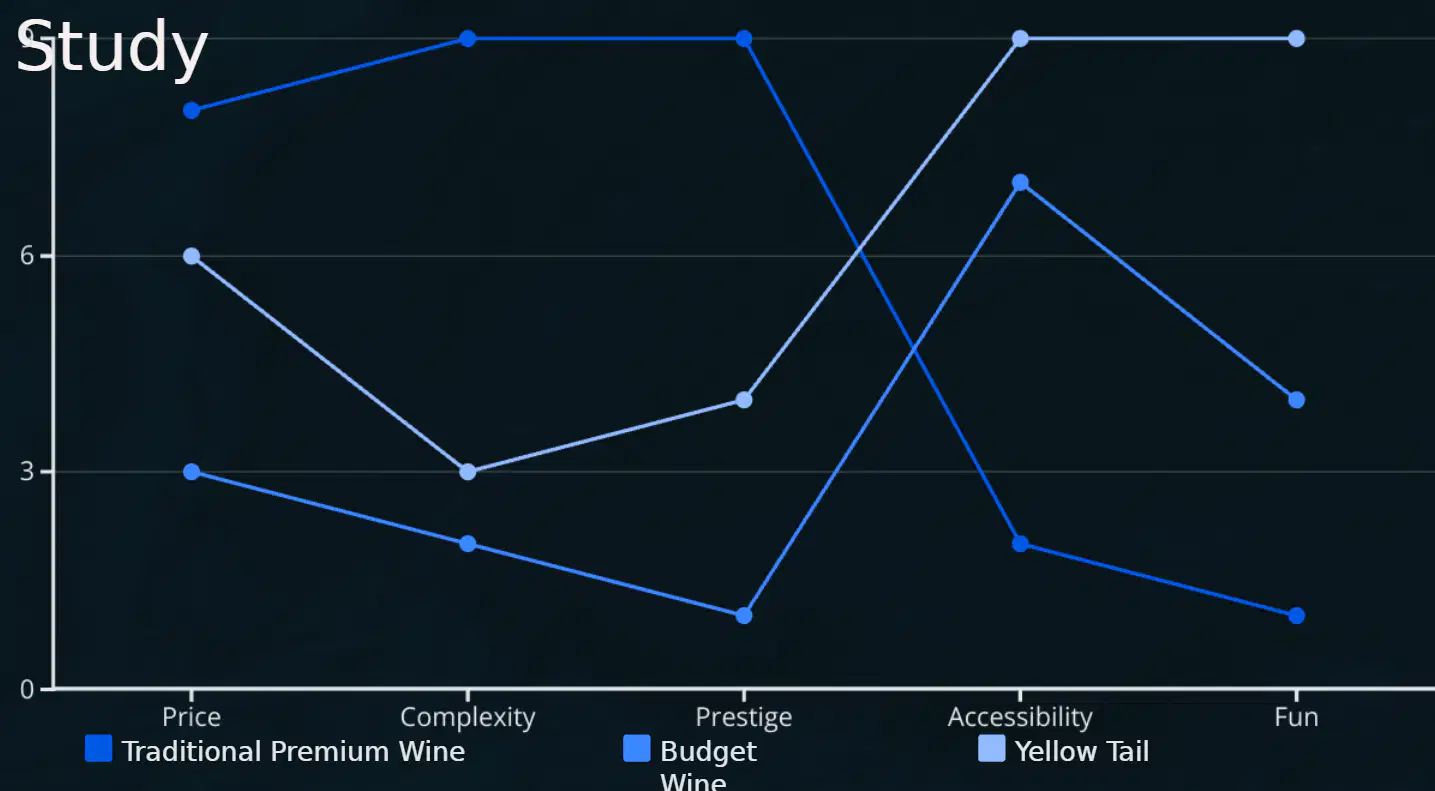
According to the graph in the Blue Ocean Strategy: Case Study, which wine type has the highest score for 'Fun'?
Traditional Premium Wine
Budget Wine
Yellow Tail

Based on the Blue Ocean Strategy: Case Study graph, which wine type has the lowest 'Complexity' score?
Traditional Premium Wine
Budget Wine
Yellow Tail
Fill in the blank: According to the explanatory text, Yellow Tail created a blue ocean by eliminating wine ________, reducing prestige factors, raising ease of selection, and creating a fun, approachable experience.
complexity
flavors
prices
labels
According to the Blue Ocean Strategy: Case Study, which factor did Yellow Tail raise to create a blue ocean?
Ease of selection
Price of premium wines
Complexity of wine terminology
Number of wine varieties
According to the Blue Ocean Strategy: Case Study, Yellow Tail reduced the prestige factors compared to other wines.
True
False
Select a product or service category and identify blue ocean opportunities within it.
Choose a category and find untapped market opportunities.
List the most popular products in a category.
Describe the history of a product category.
Identify competitors in a crowded market.
Applying the Four Actions Framework (ERRC Grid) to your selected industry involves which of the following steps?
Eliminate, Reduce, Raise, Create
Plan, Organize, Lead, Control
Design, Develop, Deploy, Deliver
Analyze, Synthesize, Evaluate, Implement
A simple value curve compares your new offering to existing competitors by visually displaying differences in key factors. What does a value curve show compared to competitors?
It visually displays differences in key factors between offerings.
It lists the prices of all competitors.
It shows only the weaknesses of competitors.
It provides a timeline of product launches.
The way I used my 20 minutes to complete the activity and prepare my findings was:
By organizing my time to complete the activity and prepare my findings efficiently.
By spending all the time on unrelated tasks.
By not preparing any findings at all.
By ignoring the activity and only reading instructions.

Fill in the blank: The first step in the Lean Startup Methodology is ________, which involves learning what customers want through testing.
Validated Learning
Product Launch
Market Expansion
Customer Acquisition

Fill in the blank: The second step in the Lean Startup Methodology is ________, which involves testing hypotheses about the business.
Experimentation
Ideation
Scaling
Funding

Fill in the blank: The third step in the Lean Startup Methodology is ________, which involves engaging with customers continuously.
Customer Feedback
Product Launch
Market Analysis
Financial Planning

Fill in the blank: The fourth step in the Lean Startup Methodology is ________, which involves refining products based on feedback.
Iterative Design
Market Analysis
Customer Acquisition
Financial Planning

Fill in the blank: The fifth step in the Lean Startup Methodology is ________, which involves minimizing wasted resources.
Capital Efficiency
Product Market Fit
Customer Validation
Pivoting
Who developed the Lean Startup methodology to help entrepreneurs increase their chances of building successful ventures by focusing on what customers actually want?
Steve Blank
Eric Ries
Peter Drucker
Clayton Christensen
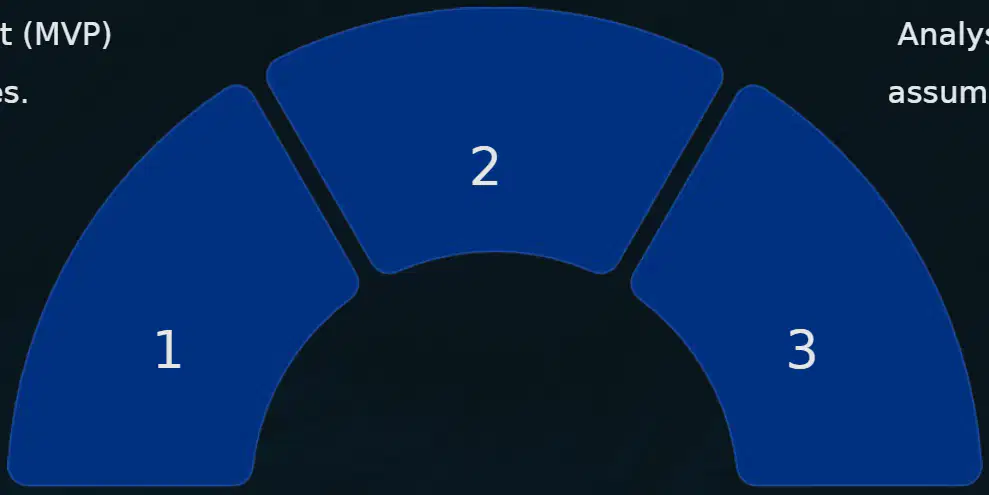
Which step in the Lean Startup Methodology involves creating a minimum viable product (MVP) to test your core hypotheses?
Build
Measure
Learn
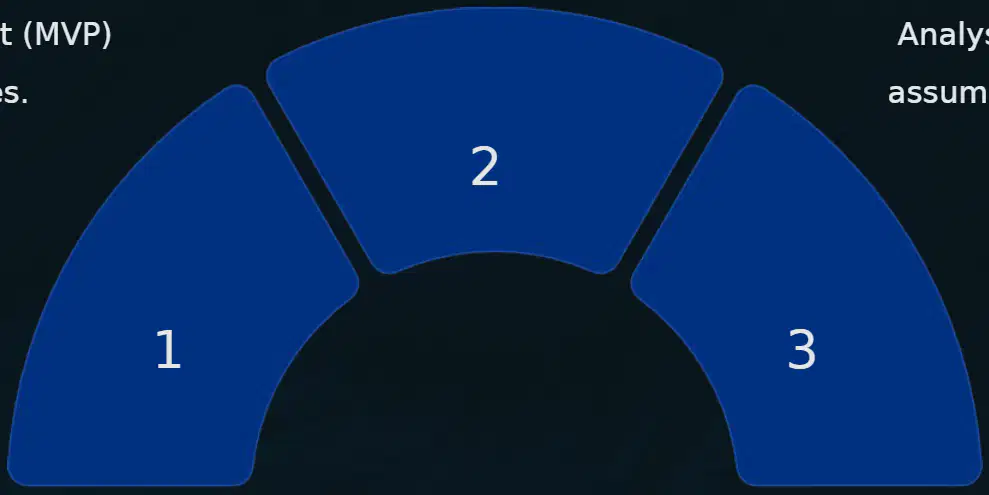
Which step in the Lean Startup Methodology involves collecting quantitative and qualitative data about customer interactions?
Build
Measure
Learn
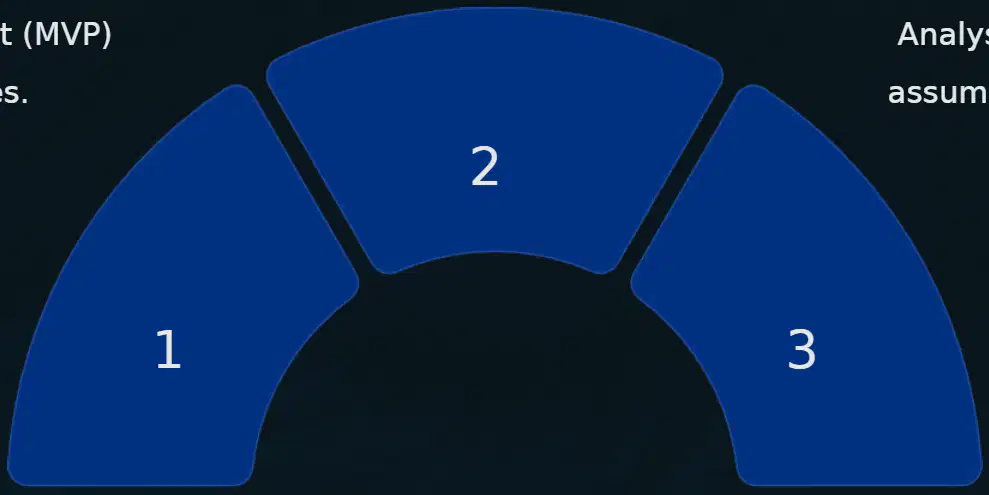
Which step in the Lean Startup Methodology involves analyzing data to validate or invalidate assumptions and improve the product?
Build
Measure
Learn
Fill in the blank: Dropbox demonstrated the Build-Measure-Learn loop by creating a simple ______ to test demand before building the actual product.
video
website
survey
app
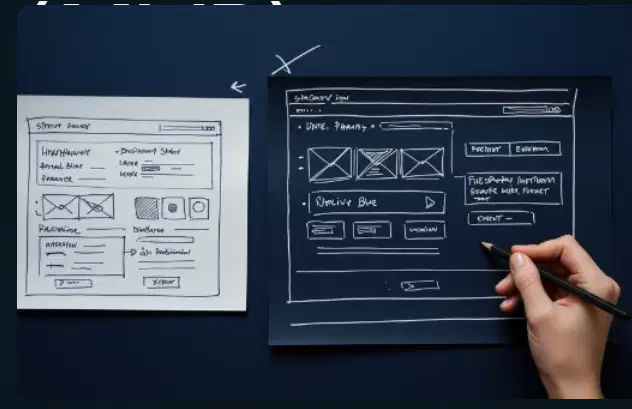
Fill in the blank: Zappos founder Nick Swinmurn took photos of shoes in stores and put them online to test demand. This is an example of a _________
Paper Prototype
Focus Group
Customer Interview
Business Plan
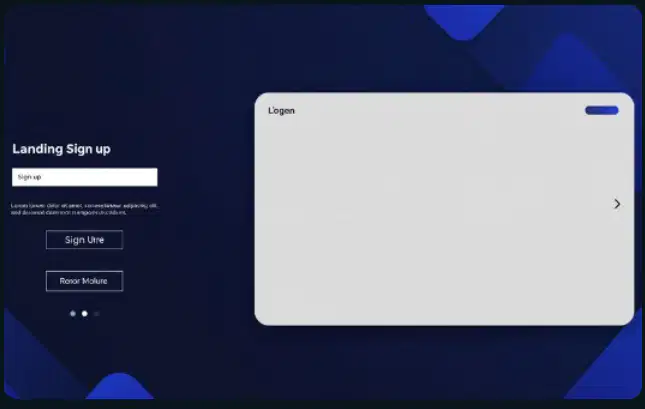
Fill in the blank: Buffer tested market interest with a simple page describing their product before building it. This is an example of a _________.
Landing Page
Business Model Canvas
Elevator Pitch
Customer Interview
Fill in the blank: Food on the Table manually created meal plans before developing their algorithm. This is an example of a _________.
Concierge MVP
Pivot Strategy
Growth Hacking
Product-Market Fit
Fill in the blank: The first step in the 'Pivot or Persevere' process is to collect customer feedback and market data about your MVP to assess performance. This step is called _________.
Market Feedback
Product Launch
Revenue Analysis
Team Alignment
Fill in the blank: The second step in the 'Pivot or Persevere' process is to determine if your business hypotheses are validated or invalidated by the data. This step is called _________.
Analysis
Execution
Brainstorming
Implementation
Fill in the blank: The third step in the 'Pivot or Persevere' process is to decide whether to pivot (change direction) or persevere (continue current path). This step is called _________.
Decision Point
Action Review
Milestone Meeting
Strategy Session
Fill in the blank: The fourth step in the 'Pivot or Persevere' process is to implement your pivot or continue refining your current approach. This step is called _________.
Execution
Ideation
Validation
Assessment
According to the image, what did Slack pivot from and to?
From a messaging app to a gaming company
From a gaming company to a team communication tool
From a social network to a file sharing service
From a team communication tool to a gaming company
Step 1: Problem Identify a real customer problem worth _______.
solving
ignoring
delaying
forgetting
Step 2: Solution Develop a minimal viable _______.
solution
problem
error
design
Step 3: Testing Design how you'll test key _______.
assumptions
outcomes
resources
tools
Step 4: Metrics Determine what data will guide _______.
decisions
colors
locations
weather
Key elements to include in your pitch are:
Clear value proposition, target audience, business model, and call to action.
Detailed technical specifications, lengthy background story, unrelated personal achievements, and vague goals.
Only financial projections, no mention of the product or service, and no target audience.
A list of competitors, personal hobbies, and irrelevant statistics.
What is the main focus of Blue Ocean Strategy?
Process and methodology
Market creation and positioning
Customer problem
Minimum viable product
What is the starting point for Lean Startup?
Industry analysis
Customer problem
Value innovation
Strategic moves framework
Which key tool is associated with Blue Ocean Strategy?
Build-Measure-Learn loop
Value innovation
Minimum viable product
Process and methodology
What is the risk reduction method used in Lean Startup?
Strategic moves framework
Minimum viable product
Value innovation
Industry analysis
The time frame for Blue Ocean Strategy is _________?
Medium to long term
Short term
Immediate
Daily
How did Airbnb combine both Blue Ocean Strategy and Lean Startup approaches according to the example provided?
By creating a blue ocean (alternative to hotels) while using lean methods to test and refine their service offerings.
By focusing only on traditional hotel partnerships and ignoring customer feedback.
By copying existing hotel business models without any innovation.
By expanding rapidly without testing their service or considering market needs.
Which of the following is described as a challenge in business model innovation?
Organisational Resistance
Market Expansion
Customer Loyalty
Product Pricing
What does 'Resource Allocation' refer to in the context of business model innovation?
Distributing limited resources between existing business and new models creates tension.
Increasing marketing budget
Hiring new employees
Reducing product prices
Fill in the blank: Fear that new business models might ________ existing revenue streams is known as Cannibalization Concerns.
cannibalize
expand
diversify
support
Which challenge in business model innovation involves managing transitions between models while maintaining operations?
Organisational Resistance
Resource Allocation
Cannibalization Concerns
Implementation Complexity
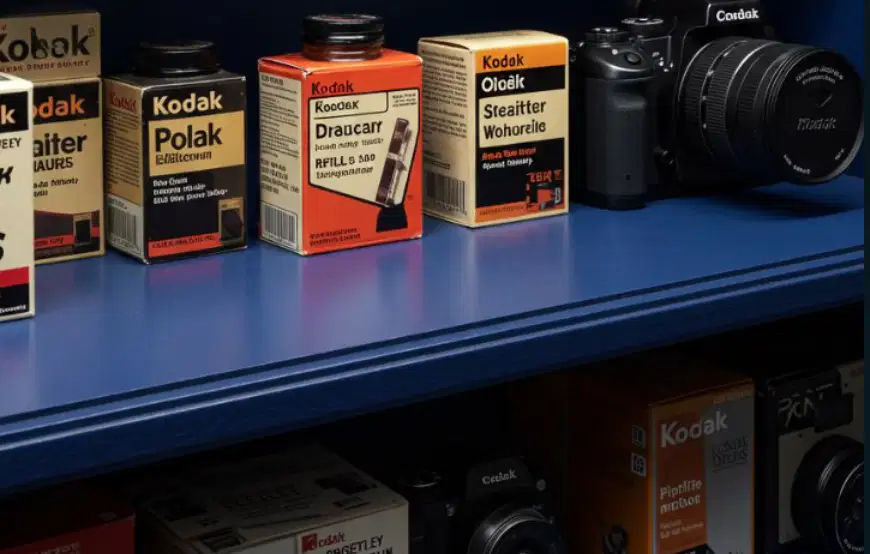
Kodak's failure to transition to digital photography demonstrates which of the following challenges in business model innovation?
Implementation Complexity
Market Expansion
Customer Loyalty
Product Pricing
According to the slide 'Success Factors in Business Model Innovation', Amazon's success stems from leadership support, customer-centricity, experimentation culture, and continuous ________ (Bezos, 2016).
adaptation
expansion
competition
reduction
Which of the following is NOT mentioned as a success factor for Amazon in the slide 'Success Factors in Business Model Innovation'?
Leadership support
Customer-centricity
High pricing
Experimentation culture
Fill in the blank from the quote on the slide 'Success Factors in Business Model Innovation': "It's not an ________ if you know it's going to work." - Jeff Bezos
experiment
investment
guarantee
plan
According to the slide 'Success Factors in Business Model Innovation', who is credited with the quote: "It's not an experiment if you know it's going to work."?
Bill Gates
Jeff Bezos
Elon Musk
Steve Jobs
Which of the following is a success factor for Amazon mentioned in the slide 'Success Factors in Business Model Innovation'?
Continuous adaptation
Aggressive marketing
High employee turnover
Limited experimentation
What percentage of the world's most valuable companies now operate platform business models?
35%
70%
10%
4.5%
What is the potential economic output of circular business models by 2030 in USD?
10x
4.5T
35%
70%

Expected productivity increases from AI-augmented business models by 2035 is _______.
35%
10%
50%
70%

Potential efficiency improvement in certain supply chains through blockchain technology is ______ times.
10x
2x
5x
20x
Fill in the blank: The article 'Kodak's Downfall Wasn't About Technology' was written by ________ in 2016.
Anthony, S.D.
Christensen, C.M.
Gans, J.S.
Tripsas, M.
Fill in the blank: The '2016 Letter to Shareholders' was authored by ________.
Bezos, J.
Cook, T.
Nadella, S.
Pichai, S.
Fill in the blank: The work 'Business model innovation: opportunities and barriers' was published in the year ________.
2010
2005
2015
2000
Fill in the blank: The 'Growth Within: A Circular Economy Vision for a Competitive Europe' report was published by the ________ in 2015.
Ellen MacArthur Foundation
World Economic Forum
European Commission
United Nations Environment Programme
Fill in the blank: The article 'Reinventing your business model' was published in the Harvard Business Review, volume ________, issue 12.
86
92
78
65
Fill in the blank: The book 'Blue ocean strategy' was authored by ________ and Mauborgne, R.
Kim, W.C.
Porter, M.E.
Kotler, P.
Drucker, P.F.
Fill in the blank: The book 'Value proposition design' was published by John Wiley & Sons in the year ________.
2014
2010
2017
2012
Fill in the blank: The book 'Platform Revolution' was co-authored by Parker, G.G., Van Alstyne, M.W., and ________.
Choudary, S.P.
Katz, M.L.
Evans, D.S.
Osterwalder, A.
Fill in the blank: The article 'Why artificial intelligence is the future of growth' was published by ________ in 2016.
Accenture
McKinsey
IBM
Fill in the blank: The book 'The lean startup' was written by ________ in 2011.
Ries, E.
Peter Thiel
Clayton Christensen
Jim Collins
Fill in the blank: The report 'Building Block(chain)s for a Better Planet' was published by the ________ in 2018.
World Economic Forum
United Nations Environment Programme
World Bank
International Monetary Fund

