
 Worksheets
Scan converter
Total questions: 133
Worksheet time: 2hrs 56mins
The acoustic power of a sound beam emitted from a transducer is determined by the __ of the pulsars signal
PRF
Frequency
Voltage
Rectification
All of the following are functions of the receiver EXCEPT
Demodulation
Amplification
Attenuation
Suppression
True or false: Amplification processes reflected signals in a similar manner
True
False
True or false: Compensation processes all reflected signals in a similar manner
True
False
What does bi stable images compose of ?
Black and white
Black and gray
Black and blue
Black
(a) determines the range of brilliancies within the displayed image. Bistable images, in which only black and white appear, are high contrast
(a) determines the brilliance of the displayed image
The (a) changes the format data
The (a) translates the information from the spoke format into the video format
(a) can have a unlimited, continuous range of values
Infinite non-discrete numbers.
Continuous spectrum
(a)
Proportionate (anywhere between maximum and minimum handled by the system)
(a)
(a) are associated with computer devices. Only have discrete value
Real world
Unlimited # of choices
Continuous values
(a)
Computer world
Limited choices
Discrete values
(a)
Discrete numbers.
Computerized.
Limited options
(a)
In the digital format, resolution (a) to bit-memory depth
Some accuracy is sacrificed in the digital format
True
False
A funnel shaped vacuum tube with an electron gun located within its smaller end
(a)
The larger end of the tube contains a dielectric matrix or silicon wafer
(a)
Why is the spatial resolution in analog converter excellent
Large number of storage elements within the matrix
Small number of storage elements within the matrix
Which of the following are limitations of the analog format?
Image fade, stability, deterioration, image flickering
Image fade, image flickering, instability, deterioration
Image fade, image flickering, durability, speed, instability
Uniformity, stability, instability, deterioration, image fade
Stored charges on the silicon wafer dissipate over time
(a)
Caused by switching between read and write modes
(a)
Picture quality depends on many factors including length of use, room temperature, and humidify
(a)
Image degrades as the device ages
(a)
Funnel-shaped vacuum tube electrons dielectric matrix (silicon wafer) or picture formed of millions of tiny dots (electron buckets)
(a)
(a) scan converters use computer technology to convert images into numbers, a process called digitizing
Which of the following are advantages of the digital format?
Uniformity, stability, durability, speed, accuracy, fast update, more efficient
Uniformity, instability, durability, speed, accuracy, fast update, more efficient
Uniformity, stability, durability, slow, accuracy, fast update, more efficient
Uniformity, stability, durability, speed, accuracy, slow update, more efficient
Consistent gray scale quality throughout the image
(a)
Does not fade or drift
(a)
Not affected by age or heavy use
(a)
Nearly instant processing
(a)
Error-fee
(a)
Which of the following are two important elements of digital scan converters?
Pixel, bit
Clock, bit
Pixel, stability
Speed, bit
Computerized
Digitalizing (0,1)
Processed image on screen
(a)
What happens with the echo signals received after being amplified, compensated, compressed, demodulated, and some echoes rejected?
The Scan Converter will transform the signal from an digital form into a convert one
The Scan Converter will transform the signal from an analog form into a digital one
The Scan Converter will transform the signal from an digital form into a analog one
The Scan Converter will transform the signal from an digital form into a digital one
Scan converters are also called:
(a)
Keep in mind that scan converters DO NOT DISPLAY the information; instead, they (a) it and allow future processing in order to display the information
From the term picture element, the (a) is the smallest building block of a digital picture
(a) stores data as numbers.
uses zero “0” and one “1”
(a)
Echoes from receiver are assigned a number.
(a)
The digital memory contains a (a) divided into squares called “pixels
The digital memory contains a “matrix” divided into squares called (a)
A (a) is a picture element.
Smallest element of a digital picture
(a)
A (a) is a single shade of gray.
True or false: Each pixel in the matrix can be turned “on” or “off”.
True
False
Can pixels be divided?
yes
no
The __ pixels in the memory, the __ the memory spatial resolution
(a)
The number of picture elements per inch
(a)
Higher pixel density is achieved with (a) pixels
Larger pixels = (a) pixel density, worse quality image
A (a) is a bistable having a value of either 0 or 1
A (a) is a group of eight bits of computer memory such as 10011111
A (a) of computer memory consists of two bytes or 16 bits
Which of the following correctly describes what the squared matrix is usually made of?
128 x 128 = 16,384
256 x 256 = 65,536 pixels
512 x 512 = 262,144 pixels
True or false: In each and every one of the pixels, echo amplitudes can be assigned only one of two possible numbers
true
false
More bits per pixel = more shades of gray and improved (a)
Single (a) is able to store only one of two numbers per echo:
What can be done to obtain a better image with more shades of gray and not just a “black and white” one?
Decrease the number of matrix's
Decrease the number of bits
Increase the number of matrix's
Increase the number of frames
The system must have (a) than one matrix.
Each matrix of squared pixels can be imagined as being layered (a)
Each matrix contains pixels which in time contains (a) (1, 0).
Each single number is called a binary digit or a (a)
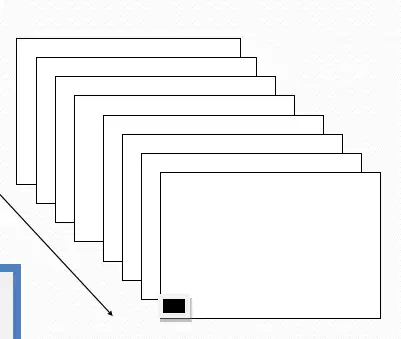
How many bytes are present in this image?
1
2
3
4
1 byte = (a) bits of data
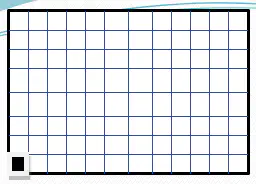
Each little square represents __ pixel. Each pixel contains __ binary number.
2
3
1
5
Eight matrixes allow _-bit storage units.
(a)
512 x 512 pixels
8-bits storage unit
(a)
TWO BYTES (16 BITS) = A (a) of Computer Memory
More bits per pixel --> More shades of gray on the image --->Better CONTRAST RESOLUTION
True
False
8-bits memory unit which allows:
more shades of gray
Less shades of gray
Smoother image
Better contrast resolution
The memory-bit depth (number of matrixes) determines the (a) resolution and how many shades of gray in the image.
Memory bit depth determines the __ __
(a)
The more bits in the memory, the (a) the contrast resolution.
How many number of shades are present with ONE bit?
4
8
2
32
How many number of shades are present with TWO bits?
2
4
8
16
How many number of shades are present with THREE bits?
2
4
8
16
How many number of shades are present with FOUR bits?
4
16
8
32
How many number of shades are present with FIVE bits?
16
64
32
128
How many number of shades are present with SIX bits?
64
128
256
32
How many number of shades are present with SEVEN bits?
256
8
512
128
How many number of shades are present with EIGHT bits?
128
256
512
1064
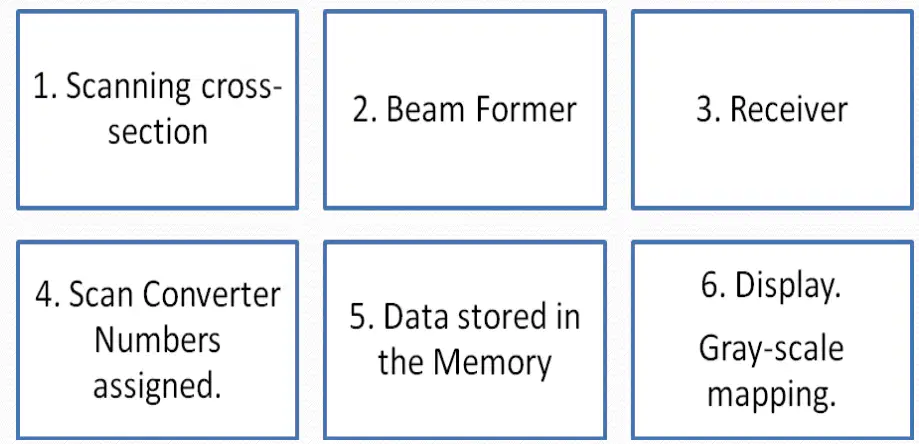
TRUE OR FALSE
TRUE
FALSE
Echo amplitude comes from the (a)
Position measurements are performed (a)
Are stored in the memory as numbers
(a)
(a) signals are converted to binary numbers in analog-to-digital converters and stored in a bit-memory.
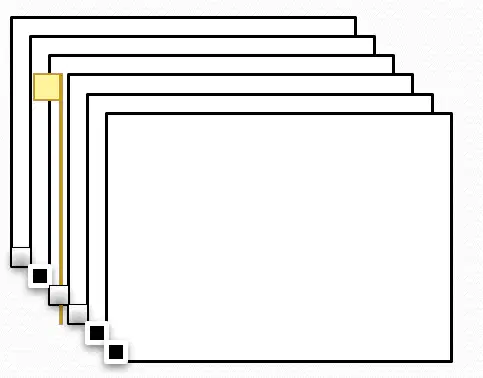
What is the bit depth binary memory in this image?
8
6
9
4
Decimal numbers are based on 10n, while (a) have a base of 2n
Each analog signal is converted from a continuously variable voltage to a binary number by mean of the analog-to-digital scan converter (ADC)
(a)
Number of bits used as a group.
(a)
Several bits used to increase configurations
(a)
True or false: The total number of bytes determine the total number of characters that can be placed in the memory.
True
False
Most modern memory systems cast (a) shades of gray (8-bit memory).
Which steps are considered pre-processing
Memory
Digital
Analog
Video signal
Which steps are considered post-processing
Memory
Digital
Analog
Video signal
Any manipulation before storage
(a)
Any manipulation after storage
(a)
Can post-processing be reversed?
Yes
No
BEFORE MEMORY
TGC, compression, write magnification, persistence, spatial compounding, edge enhancement, fill-in interpolation
(a)
AFTER MEMORY
Changes after freezing image, B/W inversion, read magnification, contrast variation, 3D rendering
(a)
With (a) , the sonographer can improve anatomic detail by enlarging a portion of an image to fill the entire screen
(a) magnification occurs AFTER the image data is stored in the scan converter
Which of the following is NOT one of the three steps related to read magnification?
The ultrasound system scans the anatomy
The ultrasound system zooms in
The songrapher identifies the ROI, and the system reads only the original data that pertains to the area of interest
The image is converted from analog to digital
(a) magnification is characterized by the number of pixels or scan lines in the magnified image, is the same as in the original image
With (a) magnification, spatial resolution does not change because the number of pixels in the ROI is unchanged
(a) magnification is applied during data acquisition, before storage in the scan converter
(a) magnification is characterized by:
the image used to identify the ROI is discarded and all new image information is acquired.
The number of pixels or scan lines in the ROI images is greater than the original
Read magnification is considered (a)
Write magnification is considered (a)
Write magnification __ spatial resolution and may __ temporal resolution
(a)
(a) is a sophisticated method of improving image quality
Coded excitation occurs (a) the epulser
Higher signal to noise ratio
Improved axial resolution
Improved spatial resolution
Improved contrast resolution
Deeper penetration
(a)
(a) is a method of using sonographic information from several different imaging angles to produce a single image
Without spatial compounding, (a) appears in the image
(a) is an advanced technique that reduces speckle artifact and noise in ultrasound images
•Reflected signal is subdivided into bands of frequencies which are then combined.
(a)
(a) is an image processing method that makes pictures look sharper
•Emphasizes sharp edge boundaries
•Increases image contrast around the edge
(a)
(a) is an image processing technique that continues to display information from older images
Persistence or Temporal Avg
(a)
•Current frames are superimposed to old ones Smoother image, higher image-to-noise
(a)
Improves image quality, but reduces frame rate, which in turn reduces (a)
(a) a method of constructing new simulated data points to fill in the gaps. Increases line density (improves spatial resolution) and improves ability to precisely visualize the borders of round structures
Picture archiving and communications system
(a)
Describes the digital ultrasound laboratory in which images and additional medical information are digitized and stored in the computer
(a)
PACS has three major advantages:
Virtually instant access to archived studies
No degradation of data, which often happens over extended time periods with analog archiving
Develops future systems
"Store and forward" telemedicine, the ability to electronically transmit images and report to remote sites
Digital imaging and computers in medicine
(a)
A set of rules, or protocols, that allows imaging systems to share information on a network
(a)

