
NEW
Font size
 Worksheets
Quiz on Atoms and Chemical Compounds
Total questions: 40
Worksheet time: 20mins
When atoms combine, what do they form?
Ions
Elements
Molecules
Mixtures
Molecules can be classified as:
Cations or Anions
Diatomic or Polyatomic
Simple or Complex
Neutral or Charged
An electron located in the outermost shell of an atom is called a/an:
Core electron
Valence electron
Inner electron
Orbital electron
What is the net charge of a neutral atom?
Positive
Negative
Zero
Depends on the element
An atom or group of atoms with a net positive or negative charge is called a/an:
Molecule
Isotope
Ion
Element
A positively-charged ion is known as a:
Anion
Cation
Neutral atom
Radical
If a potassium atom (K) loses one electron, what is the formula for the resulting ion?
K−
K2+
K+
K
A negatively-charged ion is known as a/an:
Cation
Anion
Isotope
Neutral atom
When a fluorine atom (F) gains an electron, it becomes a fluoride ion. What is its net charge?
+1
+2
-1
-2
Which type of formula shows the simplest whole number ratio of atoms in a compound?
Molecular Formula
Structural Formula
Empirical Formula
Condensed Formula
The formula C4H10 represents the:
Empirical Formula
Structural Formula
Condensed Formula
Molecular Formula
Which formula provides a graphic representation of the structure of a molecule, showing how atoms are linked?
Chemical Formula
Empirical Formula
Molecular Formula
Structural Formula
A chemical formula consists of chemical symbols of the elements present in a substance along with their:
Atomic numbers
Respective quantities
Electron configurations
Isotopic masses
What is the key difference between an Empirical Formula and a Molecular Formula?
Empirical shows functional groups, Molecular shows overall structure.
Empirical is always simpler, Molecular shows actual number of atoms.
Empirical is for ionic compounds, Molecular is for covalent compounds.
Empirical shows bonds, Molecular shows quantities.
What is the systematic naming of chemical compounds called?
Chemical balancing
Stoichiometry
Chemical nomenclature
Chemical synthesis
Compounds composed only of carbon and hydrogen are known as:
Alcohols
Acids
Hydrocarbons
Ionic compounds
In naming binary covalent compounds, what does the prefix "di-" indicate?
One atom
Two atoms
Three atoms
Four atoms
What is the name for the covalent compound N2O5?
Dinitrogen pentoxide
Nitrogen oxide
Dinitrogen trioxide
Pentanitrogen dioxide
When naming an ionic compound, which part is typically named first?
The anion
The cation
The polyatomic ion
The nonmetal
What is the correct name for the ionic compound FeCl2?
Iron chloride
Iron(II) chloride
Iron(III) chloride
Iron dichloride
What is the correct name for the compound N2O4?
Nitrogen oxide
Dinitrogen tetroxide
Nitrogen tetroxide
Dinitrogen quadoxide
What is the correct name for the compound K2SO4?
Potassium sulfide
Dipotassium sulfate
Potassium sulfate
Potassium sulfur oxide
What type of compound is formed between a metal and a nonmetal, typically involving the transfer of electrons?
Covalent compound
Organic compound
Ionic compound
Acid
In naming acids, if the anion ends in "-ide", the acid name typically starts with "hydro-" and ends with:
"-ous acid"
"-ic acid"
"-ate acid"
"-ite acid"
What is the name of the acid HCl?
Chloric acid
Chlorous acid
Hydrochloric acid
Perchloric acid
What is the name of the acid HNO3?
Hydronitric acid
Nitrous acid
Nitric acid
Hydrogen nitrate
Which functional group characterizes an alcohol?
Carbonyl group (-CO)
Carboxyl group (-COOH)
Hydroxyl group (-OH)
Amino group (-NH2)
When naming an alcohol, the final "-e" of the corresponding hydrocarbon name is dropped and replaced with:
"-al"
"-one"
"-yl"
"-ol"
What is the correct name for CH3OH?
Ethane
Methanol
Ethanol
Propanol
What hydrocarbon is this C7H12?
alkane
alkene
alkyne
alkaline
What type of compound if two non-metals bonded by sharing electrons?
chemical compound
metallic compound
covalent compound
organic compounds
In ionic compound, one element transfer electron to other element. What type of element transfer its electron to another element?
metal
sodium
non-metals
semi-metals
The outermost electron is known as:
electrodes
valence shell
valance electron
outermost electron
What is the name of this polyatomic ion: IO3-?
iodite
iodate
hypoiodate
periodate
What type of compound is water?
ionic compound
organic compound
polar-covalent compound
non polar covalent compound
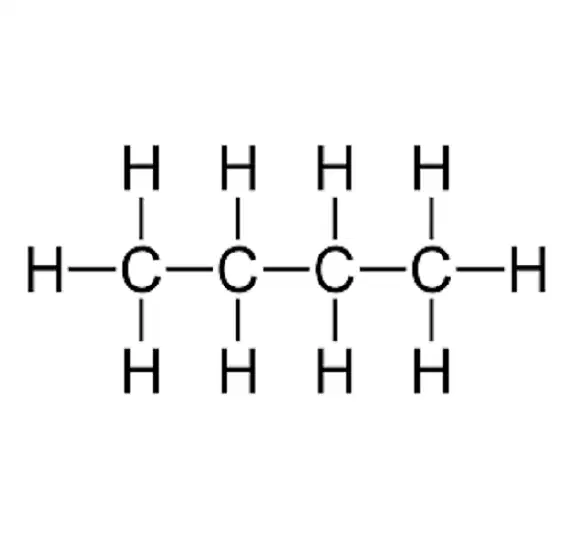
What is the chemical name of the give structural formula?
methane
butane
ethane
propane

What is the name of this hydrocarbon?
Octene
Nonyne
Nonane
Nonene
What hydrocarbon is this chemical (molecular) formula, C10H20?
alkane
alkene
alkyne
alkaline

What is the chemical name of the given structural form?
heptene
hexene
3-hexene
3-heptene

What is the chemical formula of the given structural formula?
methane
methene
methionine
methanol

