
 Worksheets
Pre - Electrochemistry
Total questions: 10
Worksheet time: 5mins
"Electric current is flows through an electrolyte to produce a chemical reaction." // "Arus elektrik mengalir melalui elektrolit untuk menghasilkan tindak balas kimia."
The statement above best refers to what definition? // Pernyataan di atas merujuk kepada definisi?
Chemical cell // Sel kimia
Electrolyte // Elektrolit
Electrode // Elektrod
Electrolytic cell // Sel elektrolitik
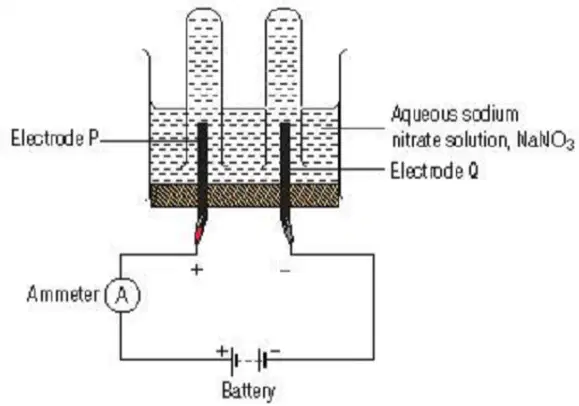
Which electrode will act as the anode? // Elektrod manakah bertindak sebagai anod?
Electrode P // Elektrod P
Electrode Q // Elektrod Q
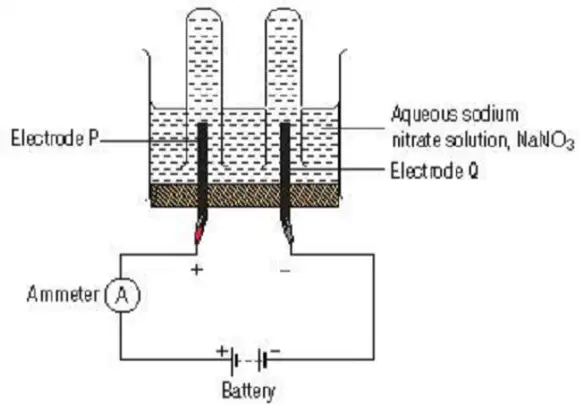
In your opinion, why must the electrolysis of molten lead (II) bromide be carried out in a fume cupboard? // Pada pendapat anda, mengapakah elektrolisis bagi leburan plumbum (II) bromida dilakukan di dalam kebuk wasap?
To prevent the molten salt from solidifying // Untuk mencegah leburan garam daripada menjadi pepejal
To avoid contamination of the electrodes // Untuk mengelakkan kontaminasi elektrod
To prevent toxic bromine gas from spreads // Untuk mencegah gas bromin yang beracun daripada tersebar
To increase the rate of electrolysis // Untuk meningkatkan kadar elektrolisis
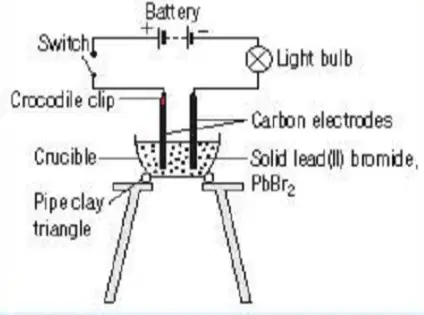
Figure shows the electrolysis of ionic compound in solid state.
In your opinion, why the bulb does not light up? // Rajah menunjukkan elektrolisis sebatian ion dalam keadaan pepejal. Pada pandangan anda, mengapakah mentol tidak menyala?
Electrons are blocked by the beaker // Elektron dihalang oleh bikar
Electrolysis only occur for ionic compound in molten and aqueous state // Elektrolisis hanya berlaku pada sebatian ion dalam keadaan leburan dan akueus
The electrodes are not connected properly // Elektrod tidak disambung dengan baik
The electrodes are made of non-conductive material // Elektrod diperbuat daripada bahan tidak konduktif
_____ energy is converted into _____ energy through electrolysis process.
Complete the statement. //
Tenaga _____ berubah menjadi tenaga _____ melalui proses elektrolisis.
Lengkapkan pernyataan itu.
Electrical, chemical // Elektrik, kimia
Chemical, electrical // Kimia, elektrik
Chemical, chemical // Kimia, kimia
Electrical, electrical // Elektrik, elektrik
Which of the following is an electrolyte? // Di antara berikut, yang manakah elektrolit?
Naphthalene // Naftalena
Solid lead (II) bromide // Pepejal plumbum (II) bromida
Ethanol // Etanol
Molten lead (II) bromide // Leburan plumbum (II) bromida
Which of the following is the most electropositive? // Di antara berikut, yang manakah paling elektropositif?
Zinc ion, Zn2+ // Ion zink, Zn2+
Silver ion, Ag+ // Ion argentum, Ag+
Magnesium ion, Mg2+ // Ion magnesium, Mg2+
Aluminium ion, Al3+ // Ion aluminium, Al3+
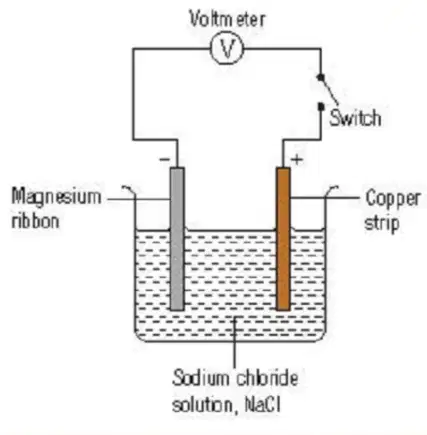
Figure shows a simple chemical cell.
In your opinion, what gonna happened when magnesium ribbon is change to copper strip? //
Rajah menunjukkan sel kimia ringkas.
Pada pandangan anda, apakah yang akan berlaku apabila pita magnesium digantikan dengan kepingan kuprum?
There is no change on the voltmeter // Tiada perubahan pada voltmeter
More voltage is shown on the voltmeter // Peningkatan voltan ditunjukkan di voltmeter
Less voltage is shown on the voltmeter // Penurunan voltan ditunjukkan di voltmeter
In chemical cell, electrons flow from the positive terminal to the negative terminal. // Dalam sel kimia, elektron mengalir dari terminal positif ke terminal negatif.
True // Benar
False // Palsu
The following are the differences of electrolytic cells and chemical cells, except //
Berikut merupakan perbezaan sel elektrolitik dan sel kimia, kecuali
Electrolytic cells require an external power source, while chemical cells produce electrical energy on their own // Sel elektrolitik memerlukan sumber tenaga luar, manakala sel kimia menghasilkan tenaga elektrik secara sendiri
Electrolytic cells involve the conversion of electrical energy into chemical energy, while chemical cells do the opposite // Sel elektrolitik melibatkan perubahan tenaga elektrik kepada tenaga kimia, manakala sel kimia melakukan sebaliknya
In electrolytic cells, electrons flow from the cathode to the anode, while in chemical cells, electrons flow from the positive terminal to the negative terminal // Sel elektrolitik, elektron mengalir dari katod ke anod, manakala sel kimia, elektron mengalir dari terminal positif ke terminal negatif
Electrolytic cells are usually used for processes like electroplating, while chemical cells are used in batteries // Sel elektrolitik sering digunakan dalam proses penyalutan elektro, manakala sel kimia digunakan dalam bateri

