
 Worksheets
Regular Unit 1 Mid-Unit Review
Total questions: 132
Worksheet time: 6hrs 41mins

Select all triangles that have an area of 8 square units.
A, B, and C
A
B
C

Find the area of the shaded triangle.
36 in2
288 in2
12 in2
18 in2

Name a corresponding base for the height labeled g.
side d
side e
side f
side e and side f

Select all drawings in which a corresponding height for a given base is correctly identified.
B, D and F
A, B, D and F
A, B, C and F
A, B, D and E

Find the area of Triangle A.
6 in2
4 in2
24 in2
12 in2

Find the area of the triangle.
6 sq units
34 sq units
4 sq units
3 sq units

What is the Area formula for this shape?
A=r²
A=2l+2w
A= bh
A=π

What formula would you use to find the area?
A = bh
A = 1/2 bh
A = 1/2 h (b1+b2)
A = lw
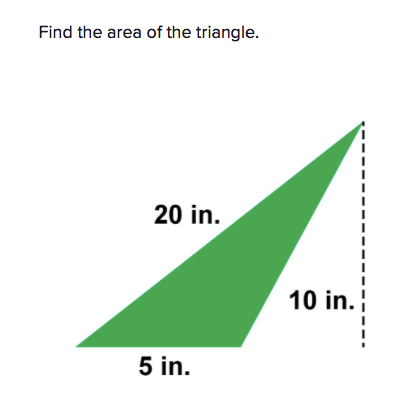
50 square inches
100 square inches
200 square inches
25 square inches

Find the area of the shaded figure.
150m2
120m2
126m2
200m2

Find the area of the parallelogram.
15.6 cm2
30.6 cm2
13.26 cm2
79.56 cm2

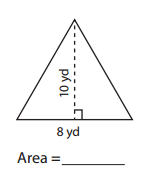
Find the area:
40 yd
40 yd2
80 yd2
18 yd2
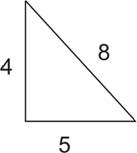
Area of triangle?
17 units2
20 units2
10 units2
16 units2
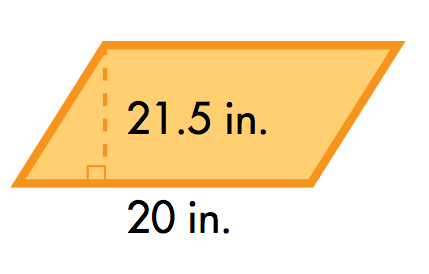
Find the area
430 in2
215 in2
41.5 in2
1.5 in2

Find the area of the figure
4.5 m2
5 m2
3.6 m2
5.4 m2
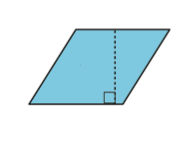
The base and height of a parallelogram must be...
opposite
perpendicular
inside the shape
a dashed line

What is the area of the figure?
14 units2
20 units2
24 units2
40 units2
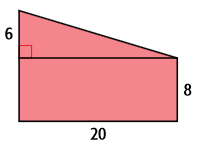
Find the area of the figure shown.
34 units2
960 units2
220 units2
480 units2

Decompose the parallelogram into a rectangle. Which quadrilateral is the correct shape?


Decompose the trapezoid into a rectangle and two right triangles. What is the area of this trapezoid?
45 ft2
72 ft2
57 ft2
40 ft2
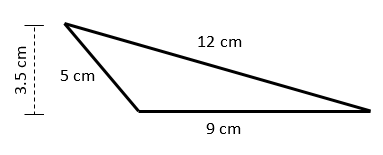

Calculate the area of the figure.
276 in2
138 in2
621 in2
324 in2
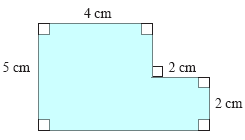


Determine the property being used to solve the problem.
Opposite SIDES are congruent
Opposite ANGLES are congruent
Consecutive angles are supplementary
Diagonals bisect each other

Determine the property being used to solve the problem.
Opposite SIDES are congruent
Opposite ANGLES are congruent
Consecutive angles are supplementary
Diagonals bisect each other

Determine the property being used to solve the problem.
Opposite SIDES are congruent
Opposite ANGLES are congruent
Consecutive angles are supplementary
Diagonals bisect each other

Determine the property being used to solve the problem.
Opposite SIDES are congruent
Opposite ANGLES are congruent
Consecutive angles are supplementary
Diagonals bisect each other

Which theorem shows that the quadrilateral is a parallelogram?
Not Parallelogram
Opposite Sides are congruent
Opposite Angles are congruent
1 set of Opposite Sides is Parallel and Congruent

Which theorem shows that the quadrilateral is a parallelogram?
Diagonals Bisect eachother
Opposite Sides Congruent
Opposite Angles congruent
1 set of Opposite Sides is Parallel and Congruent

Which theorem shows that the quadrilateral is a parallelogram?
Diagonals bisect eachother
Opposite Sides Congruent
Opposite Angles Congruent
1 set of Opposite Sides is Parallel and Congruent


Is there enough information to determine that this quadrilateral is a parallelogram?
yes, all opposite sides are congruent
yes, opposite angles are congruent
yes, opposite sides are parallel
yes, consecutive interior angles are supplementary

Is there enough information to determine that this quadrilateral is a parallelogram?
yes, opposite sides are congruent
yes, opposite sides are parallel
no, not all pairs of opposite sides are congruent
no, it is not a quadrilateral

State which method we can use to show that the quadrilateral is a parallelogram.
Both pairs of opposite angles are congruent.
Both pairs of opposite sides are congruent.
The diagonals bisect each other.
Both pairs of opposite sides are parallel.

Polygon ABCD is a Quadrilateral which of the following pieces of information would prove that ABCD is a parallelogram?
DB=AC
DA=BC
DA||BC
DA||BC, DA=BC

Is the quadrilateral a parallelogram?
Yes; one pair of opposite sides are parallel
Yes; one pair of opposite sides are congruent
Yes; one pair of opposite sides are parallel and congruent
No; only one pair of sides are parallel
No; only one pair of sides are congruent

Determine if the quadrilateral is a parallelogram and justify.
Is a parallelogram because, opposite sides parallel
Is a parallelogram because, opposite sides congruent
Is a parallelogram because, opposite angles congruent
Is a parallelogram because, one set of sides is parallel and congruent
Not a parallelogram.

Determine if the quadrilateral is a parallelogram and justify.
Is a parallelogram because, opposite sides parallel
Is a parallelogram because, opposite sides congruent
Is a parallelogram because, opposite angles congruent
Is a parallelogram because, one set of sides is parallel and congruent
Not a parallelogram.

Determine if the quadrilateral is a parallelogram and justify.
Is a parallelogram because, opposite sides parallel
Is a parallelogram because, opposite sides congruent
Is a parallelogram because, opposite angles congruent
Is a parallelogram because, one set of sides is parallel and congruent
Not a parallelogram.
The base and height of a parallelogram must be...
opposite
perpendicular (at a right angle)
parallel (at a wrong angle)
a dashed line
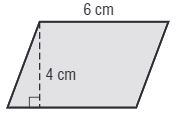

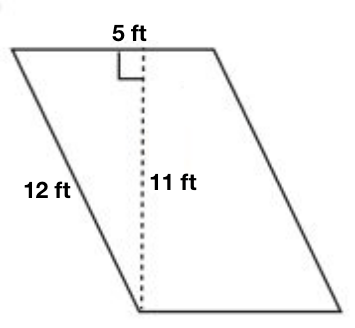
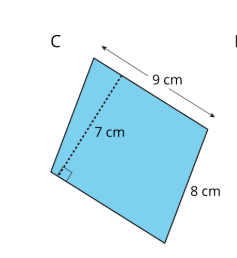
What is the area of the parallelogram?
63 cm2
72 cm2
56 cm2


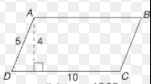

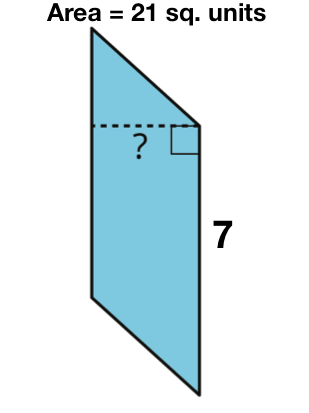
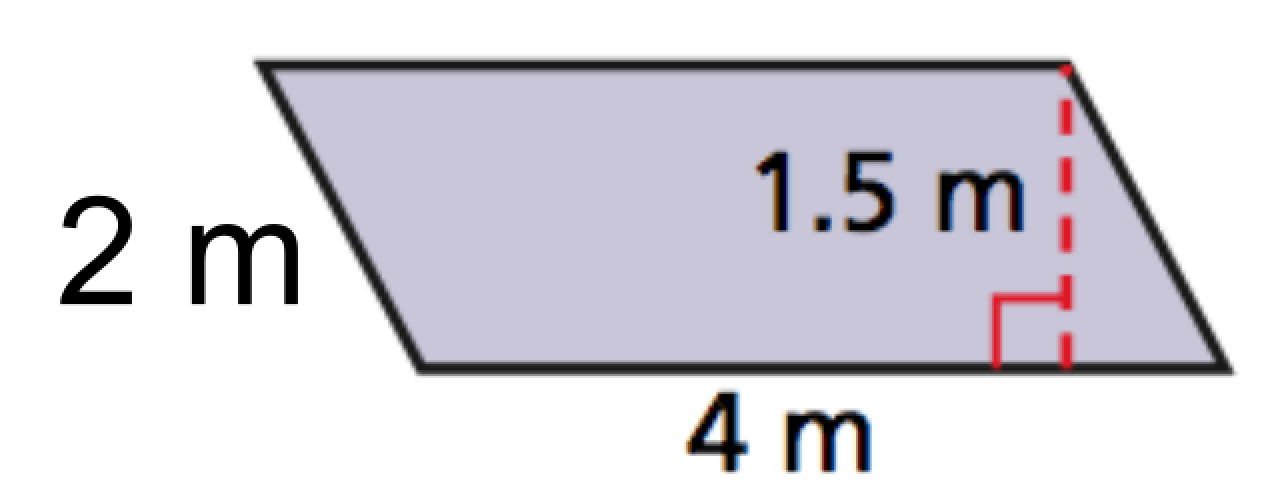

What is the area of the parallelogram above?
13 cm2
28.5 cm2
45.6 cm2
40 cm2
What is the area of the parallelogram?
63 cm2
72 cm2
56 cm2

What is the area of the parallelogram?
150 square units
120 square units
180 square units
Identify the height.
7 cm
9 cm
8 cm
The base and the height have to be perpendicular
True
False

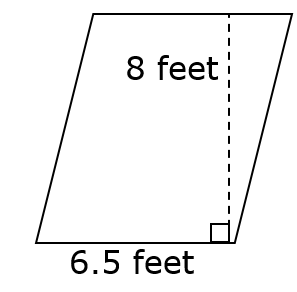
Find the area of the parallelogram above
14.5 ft2
48.5 ft2
52 ft2
7.3 ft2

Find the area of the parallelogram.
46 in2
60 in2
56 in2
120 in2
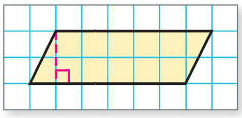



38.5 units2
63 units2
77 units2
31.5 units2

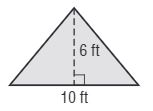
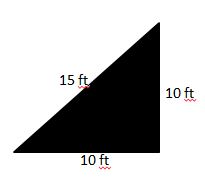
Find the area of the triangle.
36 cm 2
60 cm 2
72 cm2
30 cm 2

Find the area of the triangle.
42 cm2
18 cm2
9 cm2
21 cm2

Find the area of a triangle.
2.75 yd2
3.3yd2
5.5 yd2
1.65 yd2

Find the area of the triangle.
72 ft2
48 ft2
36 ft2
24 ft2

Find the area of the triangle.
18.75 in2
15 in2
37.5 in2
30 in2

Find the area of the triangle.
12 in2
40 in2
24 in2
20 in2

28 ft2
48 ft2
56 ft2
24 ft2

Find the missing height.
3 cm
6 cm
2.5 cm
4 cm

Find the missing height.
2 cm
4 cm
5 cm
3 cm

Find the missing height.
3 cm
4 cm
5 cm
6 cm


What is the area?
228 ft2
288 ft2
114 ft2
123.5 ft2

Select the figure that shows the height that goes with the base of the triangle shown here.


Select the figure that shows the height that goes with the base of the triangle shown here.

Select the figure that shows the height that goes with the base of the triangle shown here.

Select the triangle that shows the height that goes with the base shown here.


Select the triangle that shows the height that goes with the base shown here.

Select the triangle that shows the height that goes with the base shown here.

Which segment is the height for the base shown here?
A
B
C
Neither

Select the triangle that shows the height for the base shown here.


Select the triangle that shows the height for the base shown here.

Select the triangle that shows the height for the base shown here.

Select the triangle that shows the height that goes with the base shown here.


Select the triangle that shows the height that goes with the base shown here.

Which segment shows the base for the height shown here?
A
B
C
NONE

Look at the triangle's base. Which letter indicates the height?
C only
D only
Both C and D
Neither C or D
Which of the following is NOT a polygon's characteristic?
Angles
Close Shape
Vertex
Open Shape
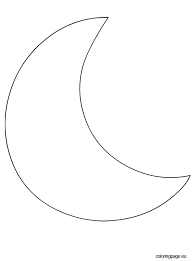
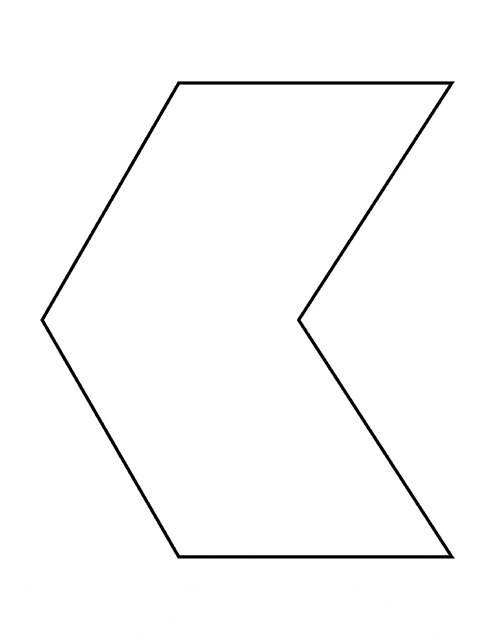
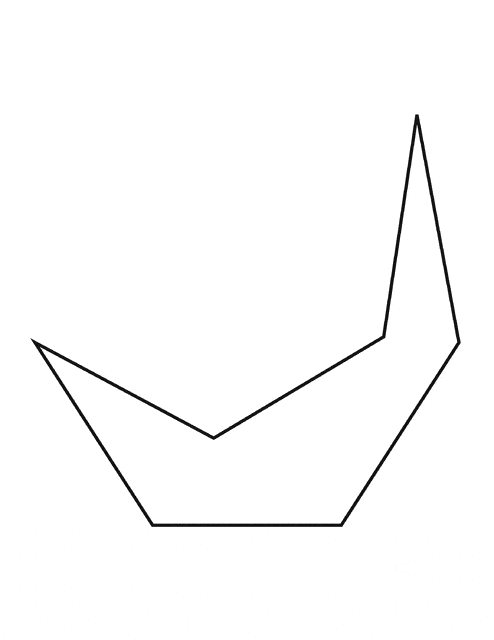
Which shape is not a polygon?
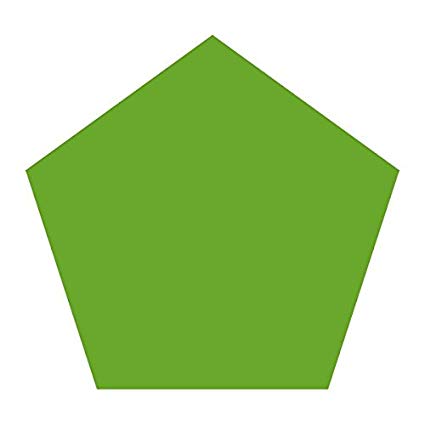

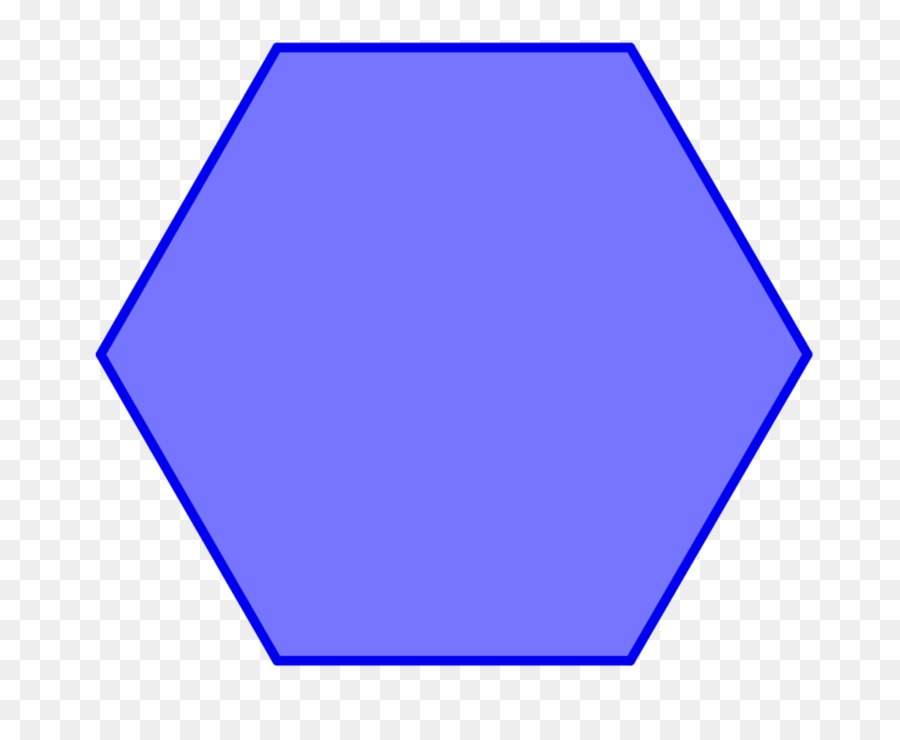
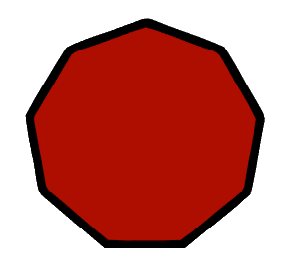
Which of the following shapes are not polygons?
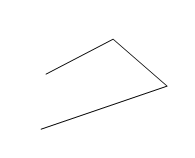
A polygon is:
An open shape with the same sides and angles
Polygons are 2-dimensional shapes. They are made of straight lines, and the shape is "closed" (all the lines connect up).
A 3d shape that is not joined by lines.
An irregular polygon is:
A polygon with different sides and different angles.
A polygon with congruent Vertex
A polygon with congruent sides and congruent angles
Is not a Polygon

Are these shapes regular or irregular polygons?
regular
irregular

Are these shapes regular or irregular polygons?
regular
irregular
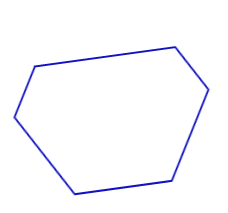
The polygon is
Regular
Irregular
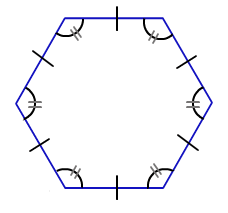
Classify this polygon
Regular
Irregular

Which figure is not a polygon?


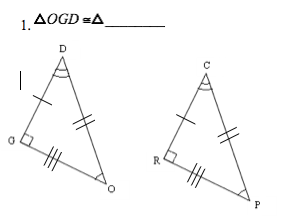


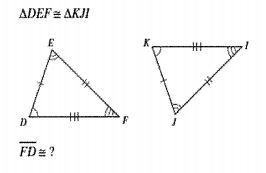
Complete the statement: FD ≅ _____
IK
KJ
JI
EF

A
B
C
D

This polygon is -
Irregular
Regular
Neither

The shape shown is a square. Why could it also be considered a rhombus?
It has 4 right angles.
It has 4 congruent sides.
There are no parallel sides.
There are no perpendicular lines.

The displayed shape is a square. Why could it also be called a rectangle?
It has two long sides and two short sides.
There are no parallel lines.
It has four right angles.
It has four equal sides.

The square could also be called a parallelogram because...
It has two sets of parallel lines.
It has four congruent sides.
It has four right angles.
It is not a quadrilateral.
A triangle with one right angle and two congruent sides would be?
Right Obtuse Triangle
Right Scalene Triangle
Right Isosceles Triangle
Right Equilateral Triangle

Is the hexagon shown, a regular hexagon?
Regular Hexagon
Irregular Hexagon

Select the two correct ways to classify the triangle in the picture.
isosceles
right
scalene
acute
obtuse
Which of the following is not a quadrilateral?


Which triangle could not exist?
Right Scalene
Acute Scalene
Acute Equilateral
Right Equilateral
Why is an oval not a polygon? Select all that apply.
It does not have straight sides.
It is a closed shape.
It has 4 angles.
A square is a rectangle.
always
sometimes
never
A rectangle is a square
always
sometimes
never
A rectangle is a parallelogram.
always
sometimes
never
A circle is a polygon.
always
sometimes
never
A trapezoid is a parallelogram.
always
sometimes
never
A square is the regular quadrilateral.
always
sometimes
never

