
 Worksheets
1G6 MUSARTS Philippine Revolution P1
Total questions: 73
Worksheet time: 37mins
Which of the following was a musical style during the Philippine Revolution?
Jazz
Marcha
Rock
Blues
What was the desire of many Filipinos toward the end of the 1800s?
To remain under Spanish rule
To establish a free and independent nation
To explore new continents
To form alliances with other countries
How were the dreams and desires of Filipinos reflected during the Philippine Revolution?
Through paintings
Through music
Through architecture
Through literature
What type of band usually performs a march?
Jazz band
Brass band
Rock band
String quartet
What is a key characteristic of a march?
Soft melody
Strongly marked rhythm
Irregular phrases
Slow tempo
For what purpose were marches originally designed?
To accompany dance performances
To accompany marching groups
To be played at weddings
To be used in movies
Which type of march is played very slowly?
Paso Doble
Funebre
Allegro
Vivace
What is the tempo of a Paso Doble march?
Very slow
Moderate
Quickly
Very fast
What was the primary purpose of composing Marcha?
To entertain the public
To stir patriotic feelings and support political aims
To celebrate festivals
To teach music
Who composed the examples of Marcha mentioned in the text?
Jose Rizal
Julian Felipe
Andres Bonifacio
Emilio Aguinaldo
Which of the following became the Philippine National Anthem?
Alerta, Katipunan
Marcha Filipina-Magdalo
Lupang Hinirang
Bayan Ko
What is the name of the national anthem of the Philippines that was played during the proclamation of Philippine Independence?
Lupang Hinirang
MarchaFilipino-Magdalo
Bayang Magiliw
Pilipinas Kong Mahal
On what date was the MarchaFilipino-Magdalo first played?
July 4, 1946
August 21, 1983
June 12, 1898
September 21, 1972
What was missing from the MarchaFilipino-Magdalo when it was first played?
Music
Lyrics
Instruments
Audience
What is the main theme of a Kundiman song?
Joyful celebration
Faithful and sacrificial love for a beloved person
Historical events
Nature and wildlife
What does the word "Kundiman" contract from?
"KUNG HINDI MAN" (Would it not be so)
"KUNG HINDI NA" (If not now)
"KUNG HINDI PA" (If not yet)
"KUNG HINDI MO" (If not you)
What atmosphere does the Kundiman reflect?
Celebration of independence
Spanish inhibition of Filipinos' freedom
Joyful reunions
Peaceful coexistence
Why were some Kundiman lyrics replaced with humorous words?
To make the song more popular
To mask the true sadness of the message
To entertain children
To modernize the song
What is the title of the famous Kundiman song mentioned in the text?
Sa Dalampasigan
Doon Po Sa Amin
Pobreng Pilipino
Luneta
According to the text, where were the hapless individuals shot?
On the shores of Manila Bay
In the mountains
In the city square
In a church
Who are mentioned as the defenders in the text?
The Spanish soldiers
The local farmers
Burgos and Rizal
The American allies
What emotions are attributed to the friars in the text?
Happiness and joy
Envy and fear
Sadness and regret
Anger and frustration
What is the Kumintang?
A type of dance
A warrior's song
A traditional dish
A form of art
Where did the Kumintang originate?
Manila
Cebu
Batangas
Davao
What is the usual theme of the Kumintang?
Friendship
Unrequited love
Nature
Victory
What was the Kumintang believed to encourage?
Peace
Dance
Combatants to fight
Trade
What is another term for "timbre"?
Pitch
Tone color
Volume
Rhythm
What does "timbre" refer to in music?
The speed of the music
The quality of sound
The loudness of the sound
The melody of the music
What is a musical ensemble?
A single performer
A group of performers
A type of instrument
A music genre
What types of music can a musical ensemble perform?
Only instrumental music
Only vocal music
Both instrumental and vocal music
Only electronic music
What is an instrumental ensemble?
A solo performer playing an instrument
A group of performers playing one or several types of musical instruments
A choir singing without instruments
A single person conducting an orchestra
What is a duo or duet in the context of instrumental ensembles?
A group made up of three performers
A solo performance
A group made up of two performers
A large orchestra
Which of the following is an example of a duo or duet?
A violinist accompanied by a pianist
A choir singing in harmony
A solo guitarist
A full symphony orchestra

What is a musical group made up of three performers called?
Quartet
Trio
Duo
Quintet
Which of the following is an example of a quartet?
Solo Voice, Violin, and Piano
Two Violins, One Viola, and Cello
Violin and Piano
Violin, Viola, and Cello
What is an orchestra?
A small group of singers
A large instrumental ensemble made up of different sections of instruments
A solo musical performance
A type of dance group
Which section of the orchestra includes the violin and cello?
Woodwind Section
Brass Section
Bowed String Section
Percussion Section
Which instrument is part of the Woodwind Section?
Trumpet
Flute
Violin
Drums
What role does the conductor play in an orchestra?
Sings the main melody
Plays the piano
Leads and guides the ensemble using gestures
Writes the music
What is the main focus of the image?
A rock band concert
An orchestra ensemble
A solo piano performance
A dance recital
What is a Rondalla?
A type of dance
A stringed instrument ensemble
A vocal choir
A percussion group
Which instrument is NOT part of a Rondalla?
Bandurria Octavina
Laud Twelve-stringed
Guitar Double bass
Flute
What is a rock band or pop band?
An ensemble that plays classical music
An ensemble that plays popular music, rock music, and other similar genres
A group that performs only instrumental music
A choir that sings acapella
Which of the following instruments is usually part of a rock band?
Violin
Flute
Lead Guitar
Harp
Identify one instrument that is not typically found in a rock band.
Bass Guitar
Keyboard Set
Drums
Saxophone
What is a characteristic of bowed string instruments?
They are made of metal.
They produce sound by bowing or plucking the strings.
They have no strings.
They are played by blowing air.
Which instrument has the highest range among the stringed instruments mentioned?
Cello
Guitar
Violin
Viola
How does a viola differ from a violin?
It has more strings.
It is made of metal.
It has a slightly lower range.
It is played with a bow.
Which instrument is also made of wood and has a lower range?
Violin
Viola
Cello
Harp
Which of the following is a bowed string instrument?
Flute
Violin
Trumpet
Piano
What is the largest instrument shown in the image?
Violin
Viola
Cello
Guitar
Which instrument is typically smaller than a cello but larger than a violin?
Viola
Flute
Trumpet
Harp
How is sound produced in woodwind instruments?
By striking a string
By blowing air through a hole in a tube
By hitting a drum surface
By plucking a string
Which woodwind instrument is a side-blown instrument made of wood or metal?
Clarinet
Oboe
Flute
Bassoon
What type of reed does an oboe use?
Single-reed
Double-reed
No reed
Triple-reed
Which woodwind instrument has the widest range of sound?
Flute
Oboe
Clarinet
Bassoon
Which is the lowest sounding member of the woodwind family?
Flute
Oboe
Clarinet
Bassoon

Which of the following is a woodwind instrument?
Violin
Flute
Trumpet
Piano

Which instrument is known for having a double reed?
Clarinet
Oboe
Flute
Bassoon

Which woodwind instrument is the largest in size?
Flute
Clarinet
Oboe
Bassoon
What are brass instruments also called?
String instruments
Lip-vibrated instruments
Percussion instruments
Woodwind instruments
Which brass instrument has a conical tube wrapped into a coil and ends in a flared or bell-shaped end?
Trumpet
Trombone
French Horn
Tuba
Which brass instrument produces a clear and bright tone and has 3 valves that are pressed by the fingers?
Tuba
Trombone
Trumpet
French Horn
Which brass instrument is similar to the trumpet but has a lower range of sound?
Tuba
Trombone
French Horn
Trumpet
Which is the lowest sounding instrument in the brass section?
Trumpet
French Horn
Trombone
Tuba
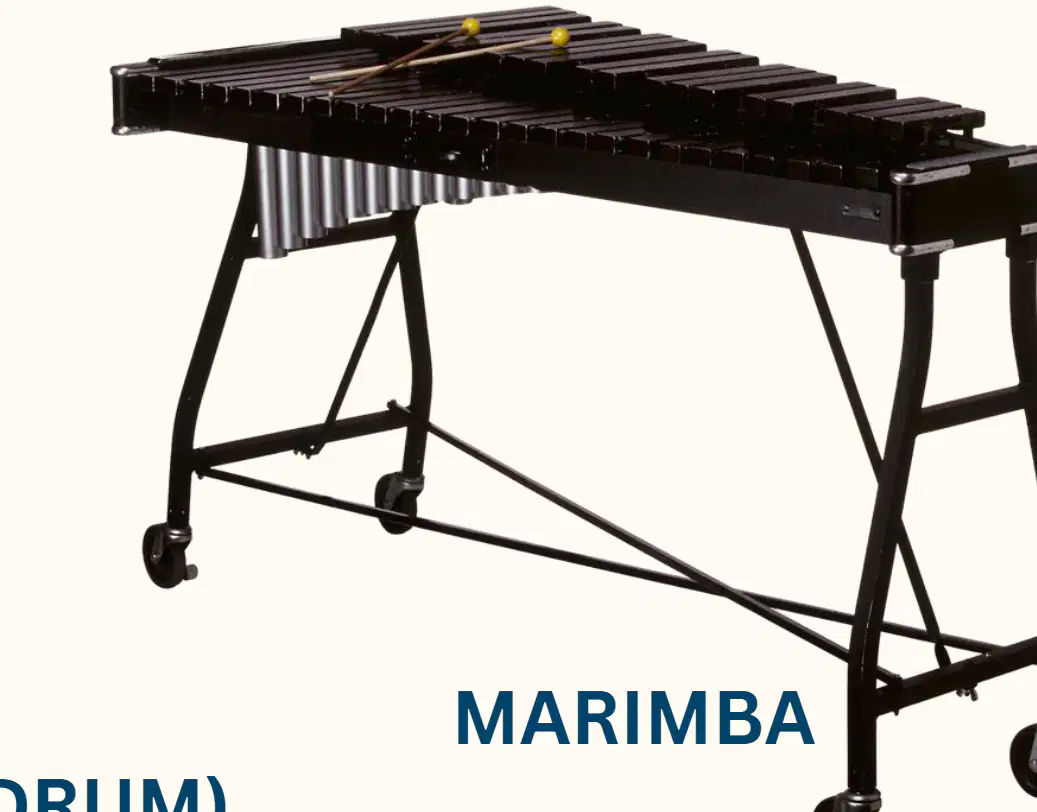
Which of the following is a percussion instrument that is played with mallets and has a keyboard layout?
Bass Drum
Timpani
Marimba
Cymbals
What is the name of the percussion instrument that is shaped like a triangle and is played by striking it with a metal beater?
Bass Drum
Triangle
Timpani
Cymbals
Which percussion instrument is also known as a kettle drum?
Bass Drum
Timpani
Marimba
Cymbals
What does the term "dynamics" refer to in music?
Rhythm and tempo
Loudness and softness of sounds
Melody and harmony
Pitch and tone
Which symbol represents "very very soft" in musical dynamics?
pp
ppp
mp
mf
What is the meaning of the symbol "f" in musical dynamics?
Very soft
Moderately loud
Loud
Very loud
Which dynamic term means "gradually getting louder"?
Decrescendo
Crescendo
Forte
Piano
What does the symbol "mf" stand for in musical dynamics?
Moderately soft
Moderately loud
Very loud
Very soft

