
NEW
Font size
 Worksheets
H Chemistry - Trends in the Periodic Table
Total questions: 24
Worksheet time: 23mins
The atomic radius across period
decrease from left to right
Increase from left to right
decrease from right to left
stay the same
The valence electron of element in group 1 =
11
3
5
1
As you move down a Group on the periodic table, what happens to the size of the atoms?
they stay the same
they get larger
they get smaller
As you move across a row on the periodic table, what generally happens to the atomic radius?
it decreases
it increases
it stays the same
Metals are found on the ______________ side of the periodic table.
nonmetals
left
right
metals
This group of elements have properties that are opposite those of metals. ______________________
luster
nonmetals
metalloids
metals
The Modern Periodic Table of Elements is arranged by
atomic mass
atomic number
valence electrons
number of isotopes
The vertical (up and down) columns in the Periodic Table are called
groups
towers
periods
atomic numbers
Which group of the periodic table is composed of inert (not reactive) gases?
answer choices
alkali metals
alkaline earth metals
halogens
noble gases
Elements in a .................. have similar chemical properties.
period
group
row
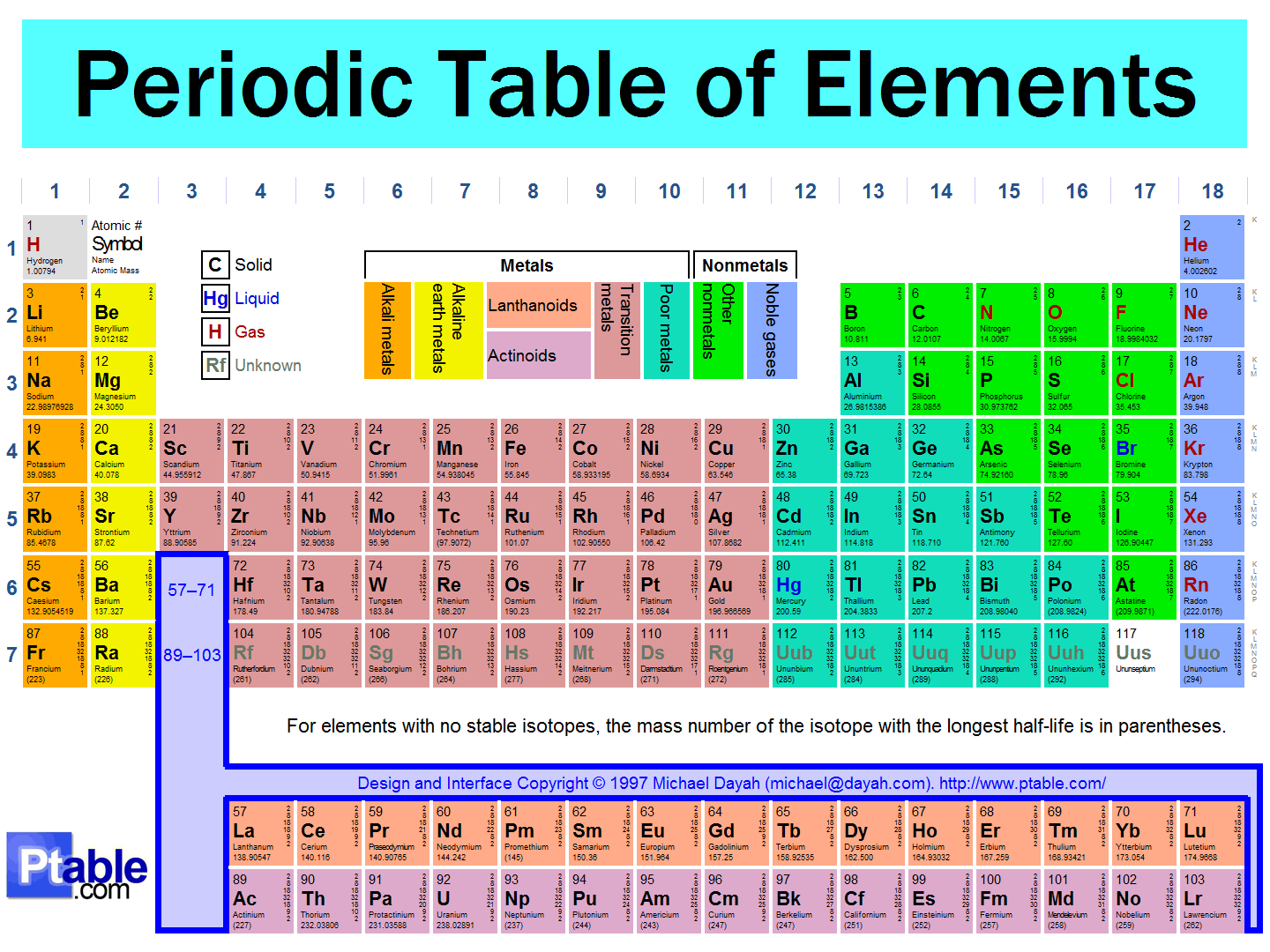
Which group of the periodic table is composed of inert (not reactive) gases?
answer choices
alkali metals
alkaline earth metals
halogens
noble gases
Which is a halogen?
Helium
Oxygen
Chlorine
Neptune
Which is an alkali metal?
Magnesium
Iron
Sodium
Europium
Which is a halogen?
Helium
Chlorine
Oxygen
Neptune

Which element has the highest electronegativity?

Using the following table as a guide, which set of elements are organized from the lowest ionization energy to the highest?
H, Na, Rb, Cs
Cs, Rb, Na, H
F, C, Be, Li
O, S, Te, Po
Put these in increasing order of electronegativity:
F, N, B
Put these in increasing order of electronegativity:
C, H, and O
a measure of an atom’s attraction for the shared pair of bonding electrons

