
 Worksheets
Understanding Research Techniques
Total questions: 31
Worksheet time: 16mins
What is the main objective of the lesson mentioned in the document?
To learn about historical events
To identify characteristics of a quantitative approach from a case study
To practice drawing skills
To understand the importance of physical exercise

Why is it important to understand research techniques according to the document?
To improve cooking skills
To gather data about the local community
To learn a new language
To build a house
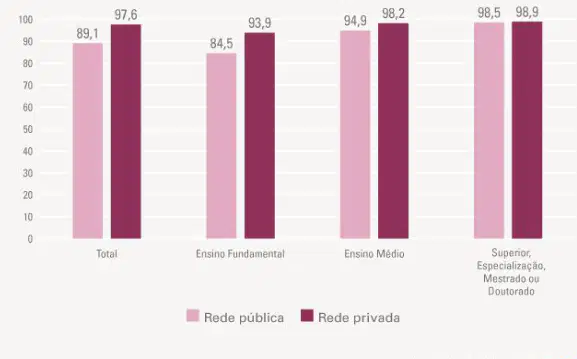
What is one way to obtain the data represented in the graph?
By guessing
By using a map
Through surveys like PNAD and the Census
By reading a book
What type of research does the Census conduct?
Weather patterns
Population data
Animal behavior
Space exploration
What is an example of research that uses a quantitative approach?
A census
A diary entry
A personal interview
A storybook
What is the purpose of applying a quantitative approach in a hypothetical case?
To understand better
To confuse the topic
To make it more difficult
To avoid analysis
What is the main focus of a quantitative approach?
Emotions and feelings
Numbers and statistics
Colors and shapes
Sounds and music
What does a researcher do with numerical data in a quantitative approach?
Paints pictures
Writes stories
Analyzes and draws conclusions
Sings songs
Which of the following is used to present statistics in a quantitative approach?
Poems
Graphs and tables
Songs
Dances
What age group is mentioned as being affected by internet addiction in the study?
5 to 9 years
10 to 19 years
20 to 29 years
30 to 39 years
According to the study, what can internet addiction lead to in adolescents?
Improved memory
Brain changes
Better physical health
Increased social skills
What activities have many adolescents stopped doing due to internet use?
Watching TV
Reading books
School and physical activities
Playing video games
What is the focus of "pesquisa aplicada"?
Solving problems
Collecting data
Writing reports
Conducting interviews
What should teams do according to the activity?
Write a report
Identify the problem situation
Conduct interviews
Create a presentation
Which of the following is NOT a part of the project plan mentioned?
Theme
Justification of the study
Objective
Budget
What is the main theme of the research mentioned in the document?
The impact of the internet on young people's behavior and development.
The history of the internet.
The benefits of social media for adults.
The role of technology in education.
What is the objective of the research?
To evaluate the impact of the internet and social networks on young people's behavior and development.
To study the history of the internet.
To analyze the benefits of social media for businesses.
To explore the role of technology in sports.
Why is it important to understand the impacts of the internet and social networks according to the document?
To propose interventions directed at young people.
To create new social media platforms.
To improve internet speed.
To develop new educational games.

What is the most suitable method for gathering numerical data about internet usage?
Qualitative
Quantitative
Descriptive
Theoretical
What type of questions can be used in a questionnaire to gather data for analysis?
Open-ended questions
Closed questions
Essay questions
Multiple-choice questions
How many minutes per day do you usually spend on social media?
10 minutes
30 minutes
60 minutes
120 minutes
How often do you check your social media during the day?
Once a day
Twice a day
Every hour
Never
On which social media platforms are you most active?
How often do you interact with friends' or followers' posts on social media?
Rarely
Sometimes
Often
Always
How often do you share your own posts or content on social media?
Never
Occasionally
Frequently
Daily
Do you engage in discussions or debates on social media?
Never
Rarely
Sometimes
Often
What is one strategy to reduce excessive internet use and improve offline relationships?
Spend more time on social media
Create campaigns in schools and communities
Avoid all social interactions
Play video games alone
How can participating in social and creative activities benefit young people?
It increases time spent online
It promotes personal fulfillment
It makes them dislike school
It reduces physical activity
What is the main task for the student teams in the activity?
Solve math problems
Propose solutions for excessive internet use
Write a story
Create a science project
How many students should be in each team for the activity?
Up to 3 students
Up to 5 students
Up to 10 students
Up to 2 students

What should the students do with their ideas after discussing them?
Throw them away
Keep them secret
Register them on a panel
Present them to another class

