
 Worksheets
12 Principles of Animation
Total questions: 15
Worksheet time: 6mins
Who invented the 12 Principles of Animation?
Chuck Jones and Tex Avery
Ollie Johnston & Frank Thomas
Walt Disney
Glen Keane and Andreas Deja
Through which book were the 12 Principles of Animation introduced?
The Animator’s Survival Kit
Animation Mentor: The Art of Movement
Cartoon Animation by Preston Blair
Disney Animation: The Illusion of Life
Which of the following statements is FALSE regarding the 12 Principles of Animation?
They form the foundation of all believable and engaging animation, regardless of style, medium or technology.
Create characters that feel alive by adapting the laws of physics and human behavior.
The 12 Principles of Animation were introduced solely to teach how to draw characters realistically in 2D.
Act as a guide to understanding how motion, emotion, and storytelling work in animation
Which principle is used to make characters more interesting and likeable?
Appeal
Timing
Squash and Stretch
Anticipation
What is the purpose of “Slow In and Slow Out”?
Add drama
Show gravity
Make a character appear stronger
Make movement look more natural
Enhances the clarity and readability of a scene refers to..?
Arcs
Exaggeration
Staging
Straight ahead and Pose to Pose
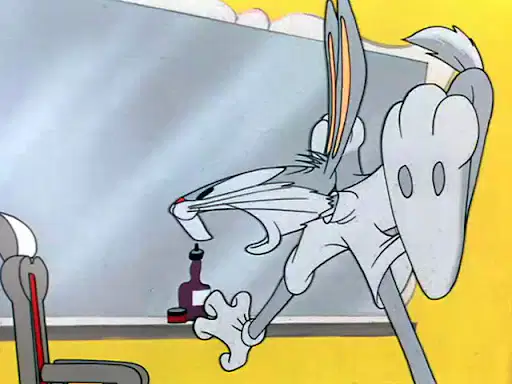
Which animation principle is applied to this character?
Exaggeration
Squash and Stretch
Anticipation
Follow Through and Overlapping Action
What is the functionality of Pose to Pose?
One drawing after the other on a continuous flow
Mostly used for spontaneous, unpredictable motion.
Requires animators to finish the entire scene before deciding on the main poses.
Planned and structured approach by adding keyframes and fill in the in-betweens later.
Starting and stopping parts of a body at different times refers to?
Overlapping Action
Timing
Anticipation
Follow Through
Below are the principles of animation that compliment each other EXCEPT..
Straight Ahead & Pose to Pose
Squash and Stretch & Timing
Follow Through & Overlapping Action
Arcs & Staging
Supporting movement or action that enhances the main action, adding detail, personality, and realism to the scene. Best refers to?
(a)
“More frames, action becomes slower and smoother, less frames, action is faster and snappier”
(a)
Giving a sense of flexibility, weight, speed and mass to animated objects and characters while keeping the volume of the object consistent
(a)
Making your drawings look like they have depth, weight, and balance using correct proportions and perspectives
(a)
This principle prepares the audience for an action that’s about to happen
(a)

