
 Worksheets
5th STAAR science 25
Total questions: 170
Worksheet time: 6hrs 45mins
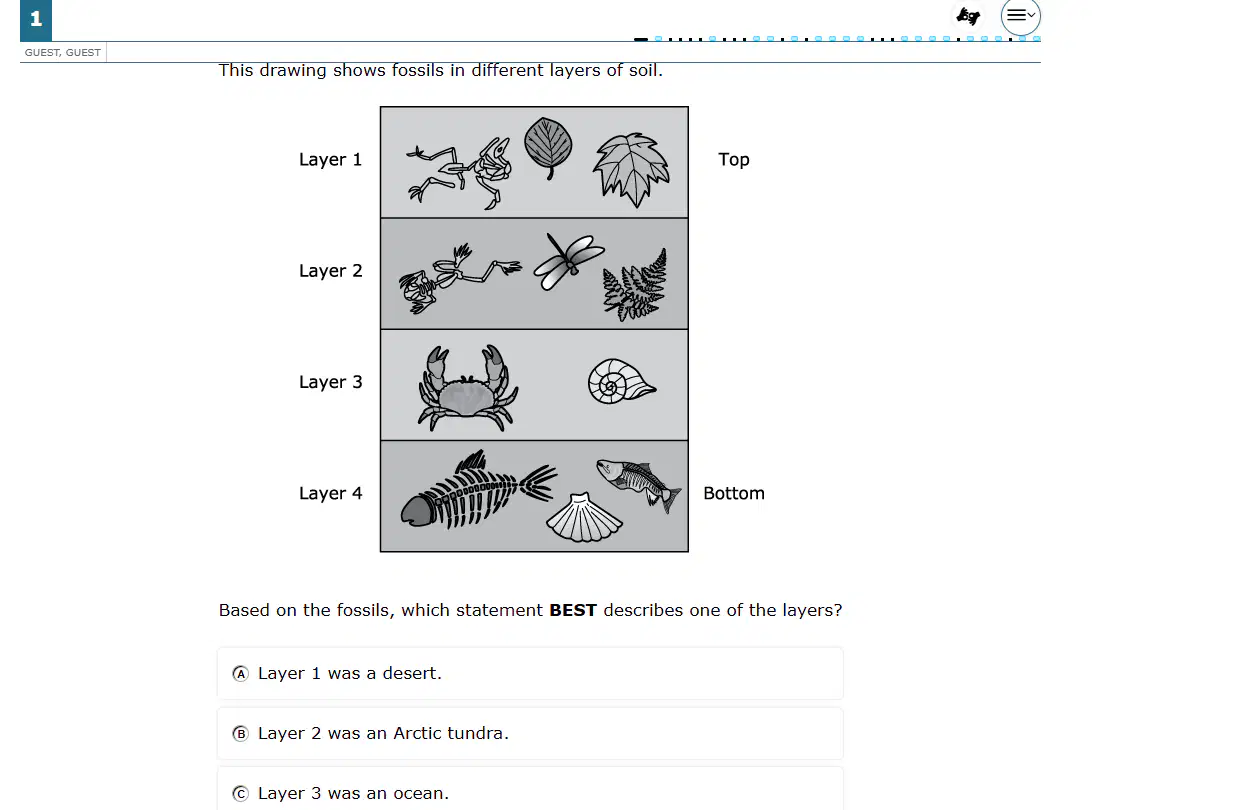
This drawing shows fossils in different layers of soil. Based on the fossils, which statement BEST describes one of the layers?
Layer 1 was a desert.
Layer 2 was an Arctic tundra.
Layer 3 was an ocean.


A
B
C
D

Students place a toy elephant on the floor in a room without windows. The students turn the room’s light on and off and record their observations in the table. | Light | Observation | |-------|---------------------| | On | Can see the toy | | Off | Cannot see the toy | Which statement describes the conditions that allow the students to see the toy?
Light rays reflect off the toy and travel to the lightbulb.
Light rays reflect off the toy and travel to the students’ eyes.
Light rays refract off the toy and travel to the lightbulb.
Light rays refract off the toy and travel to the students’ eyes.
Click on the correct letter for the correct angle of reflection?

When light BOUNCES BACK, it is known as
an echo
reflection
refraction

What adaptation helps the Fennec Fox stay cool in its environment?
Thick fur
Sharp claws
Large ears
Small body
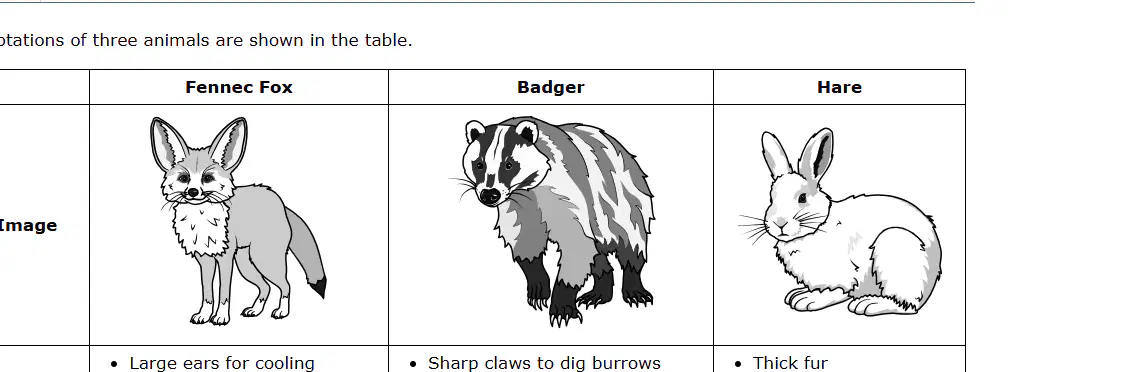
Which animal is adapted to dig burrows with sharp claws?
Fennec Fox
Badger
Hare
Rabbit

What is the primary adaptation of the Hare to save heat?
Large ears
Thick fur
Sharp claws
Light color fur
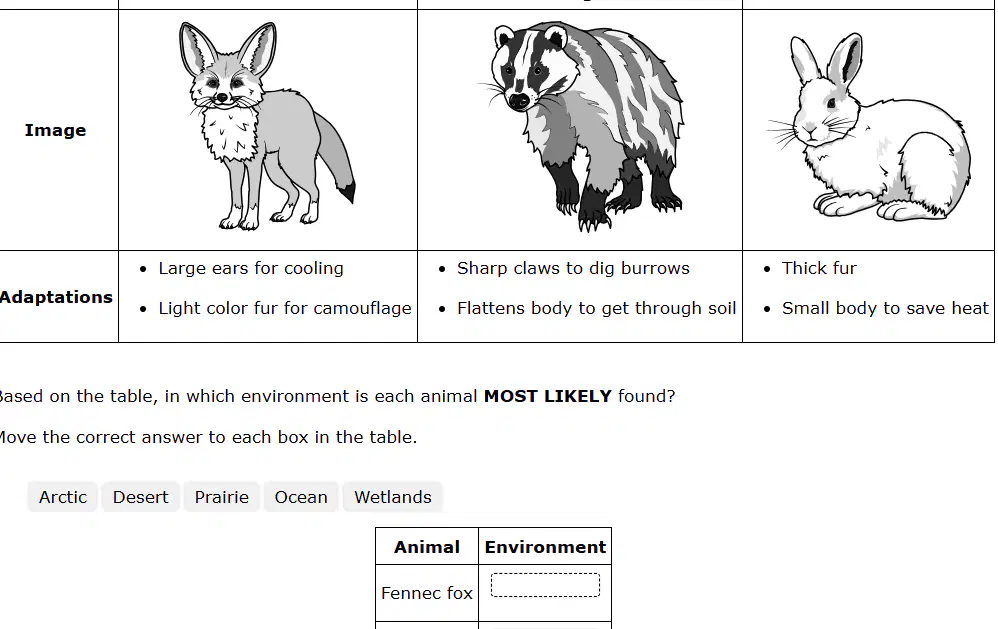
In which environment is the Fennec Fox most likely found?
Arctic
Desert
Ocean
Wetlands
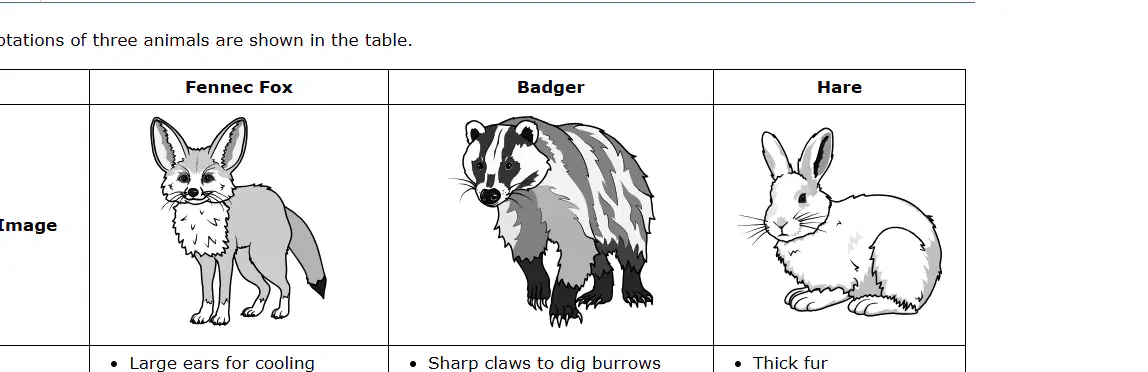
Which adaptation helps the Badger get through soil?
Large ears
Thick fur
Flattened body
Light color fur
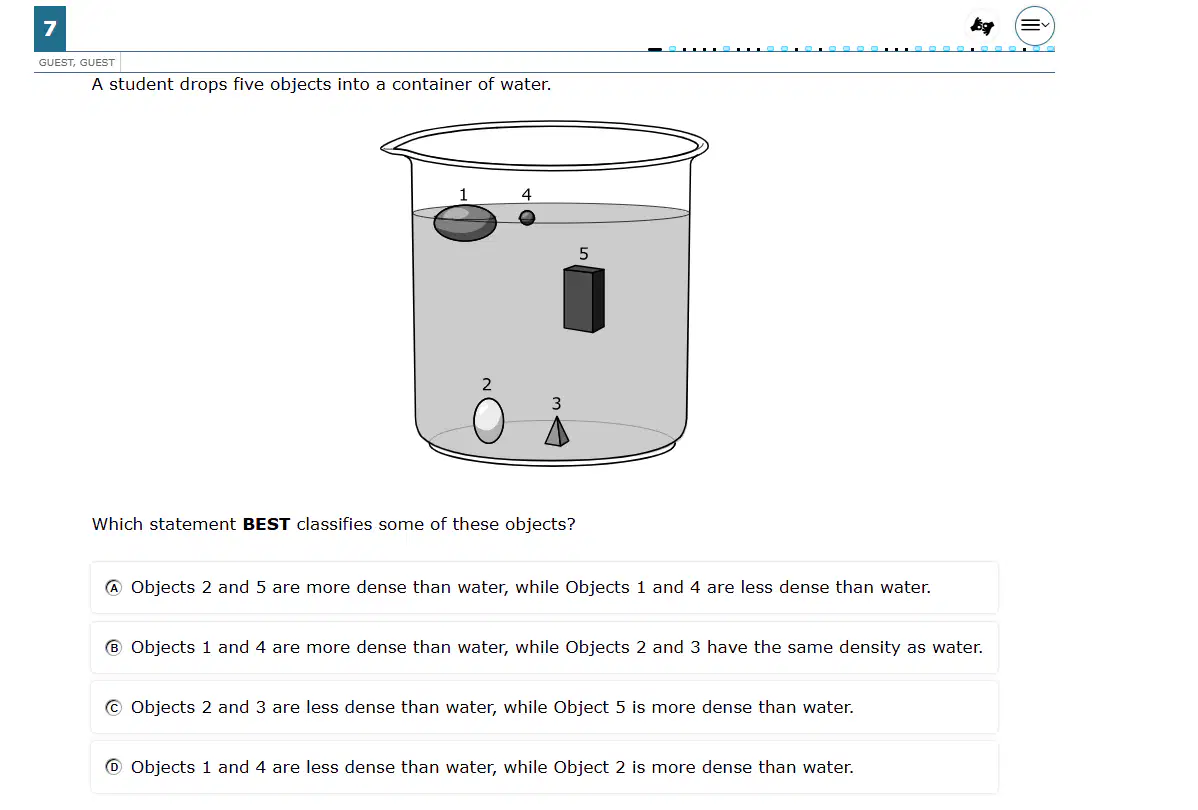
A student drops five objects into a container of water. Refer to the diagram showing objects 1, 2, 3, 4, and 5 in the beaker. Which statement BEST classifies some of these objects?
Objects 2 and 5 are more dense than water, while Objects 1 and 4 are less dense than water.
Objects 1 and 4 are more dense than water, while Objects 2 and 3 have the same density as water.
Objects 2 and 3 are less dense than water, while Object 5 is more dense than water.
Objects 1 and 4 are less dense than water, while Object 2 is more dense than water.
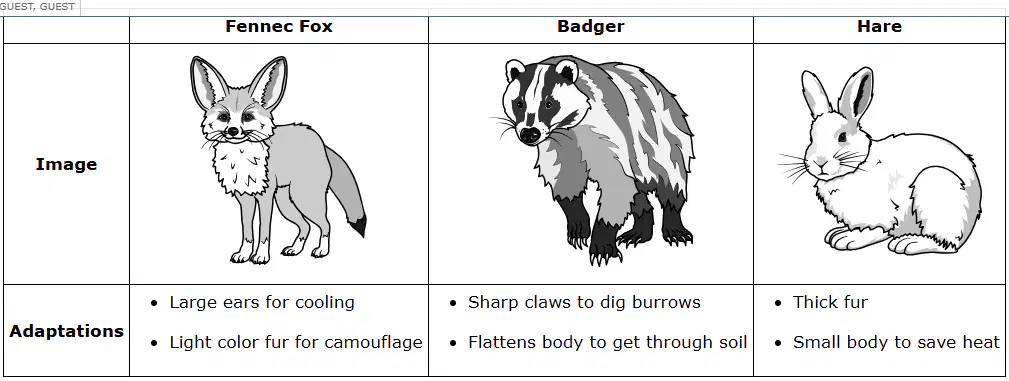
Based on the table, in which environment is each animal MOST LIKELY found? Move the correct answer to each box in the table. (Use the adaptations listed in the table to help you choose the correct environment for each animal.)
Fennec Fox: Desert Badger: Prairie Hare: Arctic
Fennec Fox: Arctic Badger: Desert Hare: Prairie
Fennec Fox: Prairie Badger: Arctic Hare: Desert
Fennec Fox: Prairie Badger: Desert Hare: Arctic

A venus fly trap responds to
sight
touch
gravity
light

Animals that hunt other animals for food are called....
predators
prey
hibernation
speed
Animals that predators hunt are called....
prey
predators
camouflage
adaptation
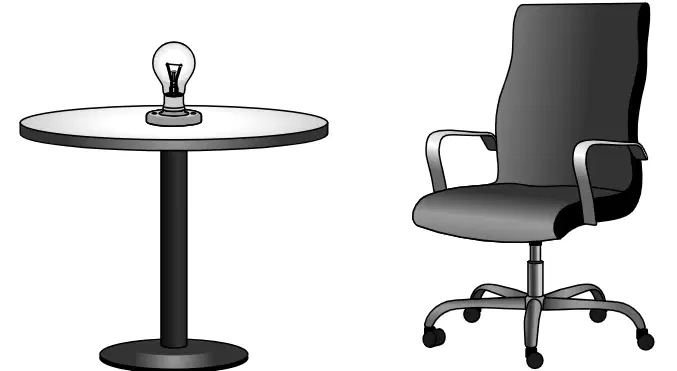
A teacher places a lamp on a small table. After the lamp is turned on, an office chair is moved near the table. The diagram shows the setup. How could a student help the teacher demonstrate the day-night cycle of Earth?
The student could sit in the chair and make the chair move around the table.
The student could sit in the chair and cause the chair to make one complete spin.
The student could sit in the chair and then the teacher could move the lamp around the chair.
The student could sit in the chair and then the teacher could walk between the student and the table.

This is an example of (a)

This is an example of a (a)
What cause the day and night cycle?
The earth revolving around the sun.
The Earth's Rotation
The Wind
The Sun goes out
Match the following Vocab words
Make a complete spin on axis
Rotation
Star that earth moves around
Sun
Third planet from the sun. Orbits or travels around the sun.
Earth
Pattern of day and night occurring in a certain location due to earth's rotation
Day/night cycle

Which statement about day and night on Earth is true?
Underline what helped you choose that answer.
It is night for the parts of Earth facing the Sun and the Sun will appear to rise in the east
It is night for the parts of Earth facing the Sun and Sun will appear to rise in the west.
It is day for the parts of Earth facing the Sun and the Sun will appear to rise in the
east.
It is day for the parts of Earth facing the Sun and the Sun will appear to rise in the
west
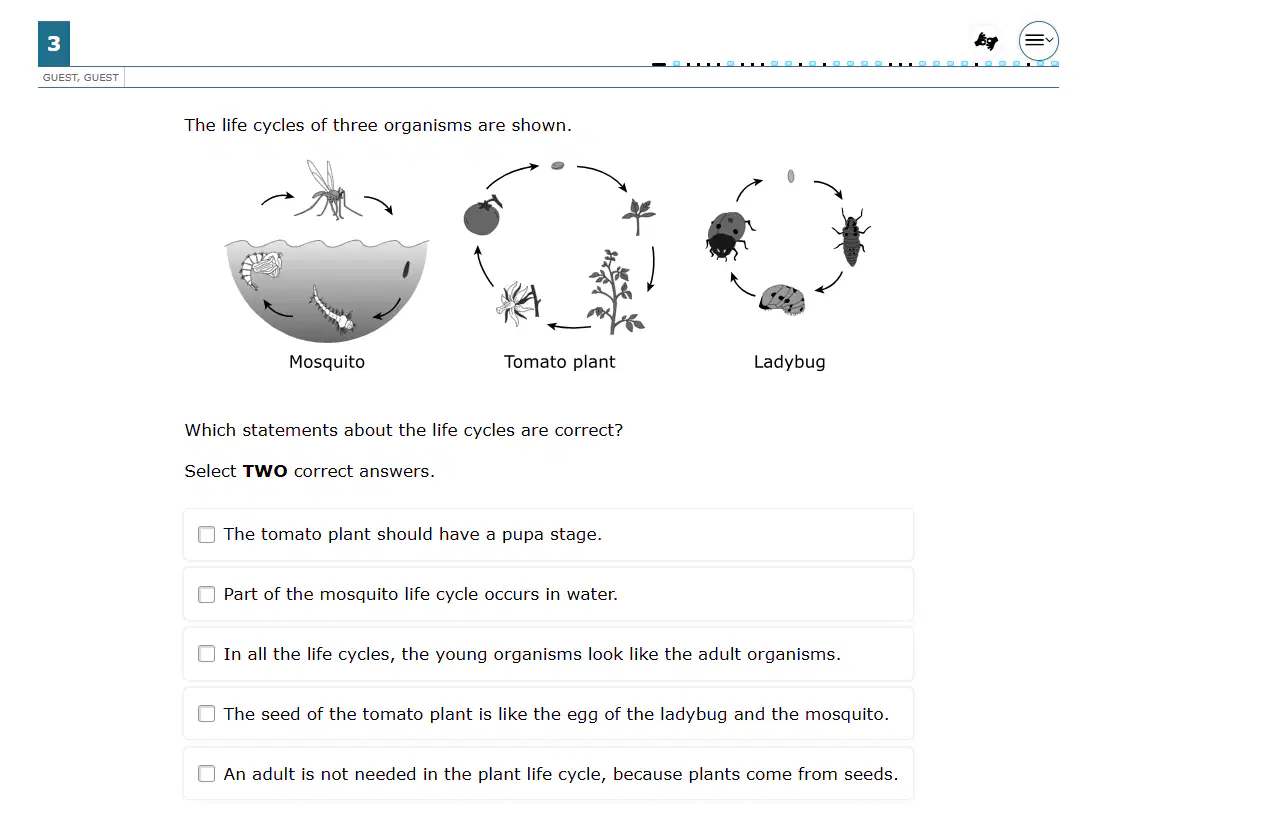
Which statements about the life cycles are correct?
The tomato plant should have a pupa stage.
Part of the mosquito life cycle occurs in water.
In all the life cycles, the young organisms look like the adult organisms.
The seed of the tomato plant is like the egg of the ladybug and the mosquito.
An adult is not needed in the plant life cycle, because plants come from seeds.

Which statement BEST explains a difference between the formation of sedimentary rock and the formation of fossil fuels?
A. Heat is needed for the formation of fossil fuels but not for the formation of sedimentary rock.
B. Cementation occurs in the formation of fossil fuels but not in the formation of sedimentary rock.
C. Decaying organisms must be present for the formation of sedimentary rock but not for the formation of fossil fuels.
D. Time is needed for the formation of sedimentary rock but not for the formation of fossil fuels.


cementation
deposition
weathering
compaction
Which order do most sedimentary rocks form in?
weathering, cementation, compaction, deposition, erosion
erosion, compaction, cementation, deposition, weathering
weathering, erosion, deposition, compaction, cementation
cementation, compaction, deposition, erosion, weathering
Weathering
Erosion
Deposition
Compaction

Sedimentary
Igneous
Metamorphic

A
B
C
D

F
G
H
J

The diagram above shows the sequence of the process that turn solid rock into sandstone. Which two processes best complete this diagram? (5.7A) (a)
Which diagram models the process of compaction leading to the formation of sedimentary rock? (5.7A)


The diagram shows layers deposited under a body of water. This layering continued for millions of years. What most likely happened to the dead plants and animals? (5.7A) (a)

Students conduct an investigation to determine how water changes state when it is heated and cooled. They complete the steps shown in the table. Step 1: Place the beaker of ice cubes outside on a 25°C, sunny day for 2 hours. Observation: The ice cubes disappear, and only liquid water is present in the beaker. Step 2: Bring the beaker of water into an air-conditioned room for 10 minutes. Observation: Water droplets form on the outside of the beaker. Step 3: Heat the beaker of water on a hot plate at 100°C for 10 minutes. Observation: ? Which observation will the students MOST LIKELY make in Step 3?
A. Water vapor forms from outside of the beaker, and the amount of water in the beaker decreases.
B. The water in the beaker begins to form a layer of ice on top.
C. The water in the beaker begins bubbling, and the amount of water decreases.
D. Water droplets begin to form on the inside of the beaker.
You want to observe a change in state. What could you do to change liquid water to water vapor?


What happens when you boil water?
The water evaporates and changes to a gas?
The water freezes and changes to a solid?
The water condenses and changes to a liquid?
The water does not change state?


Find the missing values in the ratio table.
35, 12
14, 100
15, 30
cannot be determined

In the electric circuit shown, which lightbulbs will shine when Switch 1 is open and Switches 2 and 3 are closed? Select THREE correct answers. (Refer to the diagram for the positions of the lightbulbs and switches.)
Bottom left lightbulb
Middle left lightbulb
Middle right lightbulb
Top
Top left lightbulb

The circuits below are an example of ...
Series circuits
Simple circuits
Parallel circuits
Insulated circuits
Which circuit shown will produce light when the switch is closed?


Students constructed a circuit using different-colored light bulbs. What will happen if Switch 3 is closed and the other switches are left open?
Only the white bulb will operate.
None of the bulbs will operate
Only the red and blue bulbs will operate.
Only the white and yellow bulbs will operate.

To complete the circuit, a wire should be placed from —

What type of circuit is shown?
Parallel
Series
Open

Which statement describes one way trees are dependent on nonliving parts of the environment?
Many birds build nests in trees.
Different organisms rely on trees to provide food.
Some trees need fire to release their seeds.
Trees provide shade for plants that grow near them.
Which of these describes one or more living organisms that depends on another living element to survive?
Bacteria living on the surface of plants
Tomato plants growing up a stake to obtain more sunlight
A turtle sitting on a hard, rocky surface
A cow releasing carbon dioxide into the atmosphere

Frogs can be kept in terrariums to study their behavior and how they interact with their environment. Which observation describes this frog interacting with the living elements in its environment?
The frog sat on one of the rocks and lifted its head toward the light.
The frog climbed the plant and then ate a cricket off one of the leaves.
The frog drank some water and then jumped across the sand.
The frog jumped from the rock and spilled the water in the water dish.
Which statement describes a living organism interacting with a nonliving element in a desert ecosystem?
Sunlight warms the sandy soil
A snake hides under a rock
A coyote chases a jack rabbit
Desert birds eat the fruit of a cactus

Fifth grade science students have a goldfish tank in their classroom. Which observation below is an example of a living organisms interacting with another living organism in this environment?
A fish swims in the water.
A fish hides among the plants.
A fish swims though the sand castle.
A fish opens its mouth to draw in water to breathe.

Some facts about the Canada Lynx are below. Which fact describes how the Canada Lynx depends on another living organism for survival?
Fact 1
Fact 2
Fact 3
Fact 4
Which of the following is an example of a living organism interacting with a nonliving part of its environment?
An earthworm burrows into the dirt.
A robin makes a nest in a tree.
A fox catches a mouse for dinner.
An angelfish feeds on soft coral.


The diagram below illustrates a decomposer. How does the role of the decomposer benefit the environment?
Returns nutrients to the soil
Increase predators in the environment
Decrease transfer of energy
Decrease food supply
Which observation in a forest involves an interaction between two groups of living organisms?
Termites live in a decaying log
Plants provide food for wildlife
A snake suns itself on a rock
Trees grow next to a creek

A student observes the position of the sun in the sky while outside at noon and again later in the afternoon. Which table correctly identifies the MOST LIKELY positions at which the student observes the sun?
Noon: Position 3, Afternoon: Position 2
Noon: Position 2, Afternoon: Position 4
Noon: Position 1, Afternoon: Position 5
Noon: Position 5, Afternoon: Position 3

A student observes the position of the sun in the sky while outside at noon and again later in the afternoon. Which statement BEST explains the answer to Part A?
The sun is visible in the sky during the day and not visible in the sky during the night.
The sun is low in the sky when it is far from Earth and high in the sky when it is close to Earth.
The sun’s rotation causes its position to change from east to west throughout the day.
Earth’s rotation causes the apparent movement of the sun from east to west.
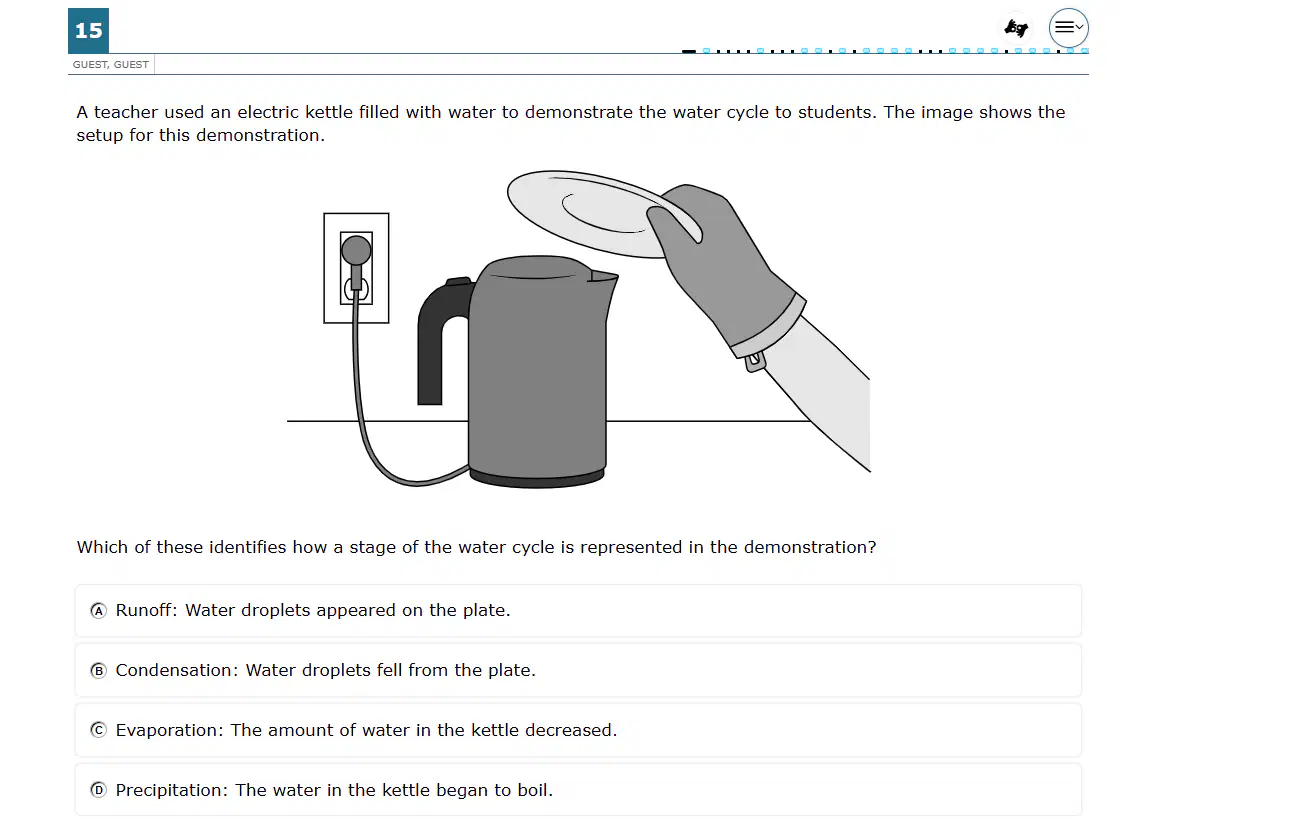
A teacher used an electric kettle filled with water to demonstrate the water cycle to students. The image shows the setup for this demonstration. Which of these identifies how a stage of the water cycle is represented in the demonstration?
Runoff: Water droplets appeared on the plate.
Condensation: Water droplets fell from the plate.
Evaporation: The amount of water in the kettle decreased.
Precipitation: The water in the kettle began to boil.

Examine the diagram of the water cycle.
What process is represented by the letter Y?
condensation
evaporation
percolation
precipitation

What process of the water cycle can explain this phenomenon?
condensation
evaporation
precipitation
transpiration

The student finds that condensation did not significantly collect on the glass lid. What change should the student make in the design process to make her results more accurate?
A
Remove the lid and leave the beaker open to the light from lamp.
Remove the lid and cover the beaker with a dark cloth.
Turn the lid over and place some ice cubes on it.
Turn the lid over and pour some warm water on it.

Which processes in the water cycle can be studied using the setup?
evaporation, condensation, and precipitation
evaporation, transpiration, and condensation
precipitation, condensation, and transpiration
precipitation, evaporation, and transpiration

What part of the water cycle is responsible for the change?
condensation
evaporation
precipitation
transpiration

After three hours, Tim observes the formation of water droplets on the inner side of the plastic wrap. What process in the water cycle explains this phenomenon?
condensation
evaporation
precipitation
transpiration

What are the next two stages in the water cycle that would immediately follow the stage marked X?
condensation and precipitation
transpiration and precipitation
condensation and runoff
precipitation and runoff

Which process in the water cycle is best observed using this setup?
evaporation
precipitation
runoff
transpiration

A student added 10 grams of sugar to 500 milliliters of water while stirring the water. Which statement BEST describes the sugar and water after they were mixed?
The sugar melted in the water, and the water stayed clear.
The sugar melted in the water, and the water turned white.
The sugar dissolved in the water, and the water stayed clear.
The sugar dissolved in the water, and the water turned white.

Does this picture show a heterogeneous or homogeneous mixture?
Heterogeneous
Homogeneous
Neither, it is a compound
Two types of mixtures include:
compounds and elements
compounds and solutions
heterogeneous and homogeneous
inorganic and organic




If I pour sand and water onto a filter, what will happen?
water and sand will go through the filter
sand will get caught in the filter, water will pass through
both sand and water will get caught in the filter

A solution of salt and water was put over heat. What will happen next?
The salt will evaporate
the salt and water evaporate
the water will evaporate

This type of paper allows liquid to pass through it. What tool is it?
sieve
filter
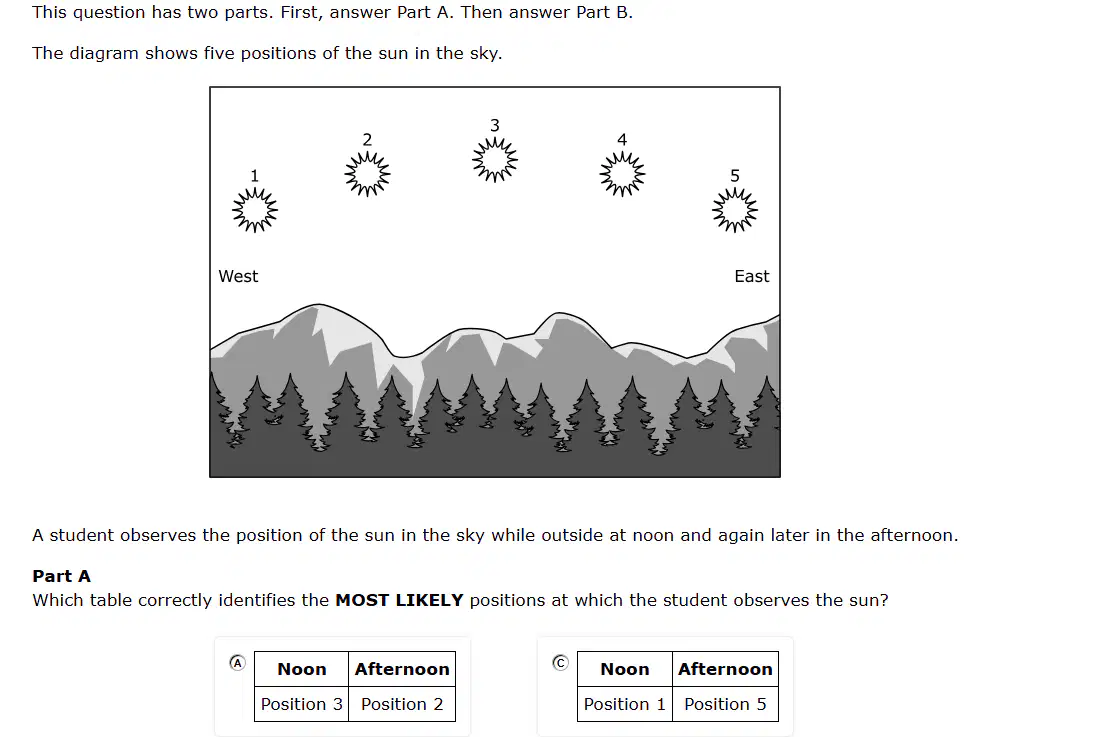
The diagram shows five positions of the sun in the sky. A student observes the position of the sun in the sky while outside at noon and again later in the afternoon. Which table correctly identifies the MOST LIKELY positions at which the student observes the sun?
A. Noon: Position 3, Afternoon: Position 2
C. Noon: Position 1, Afternoon: Position 5

Shadows are LONGER when the sun is _____________ in the sky'
Las sombras son MÁS LARGAS cuando el sol está ___________ en el cielo
Lower
Mas bajo
Higher
Mas alto

Shadows are SHORTER when the sun is ______________ in the sky
¿Las sombras son MÁS CORTAS cuando el sol está _______________ en el cielo?
Lower
Mas bajo
Higher
Mas alto

At what time of day is the sun highest in the sky?
¿A qué hora del día está el sol más alto en el cielo?
9:00 a.m.
11:00 a.m.
12:00 p.m. (noon)
4:00 p.m.
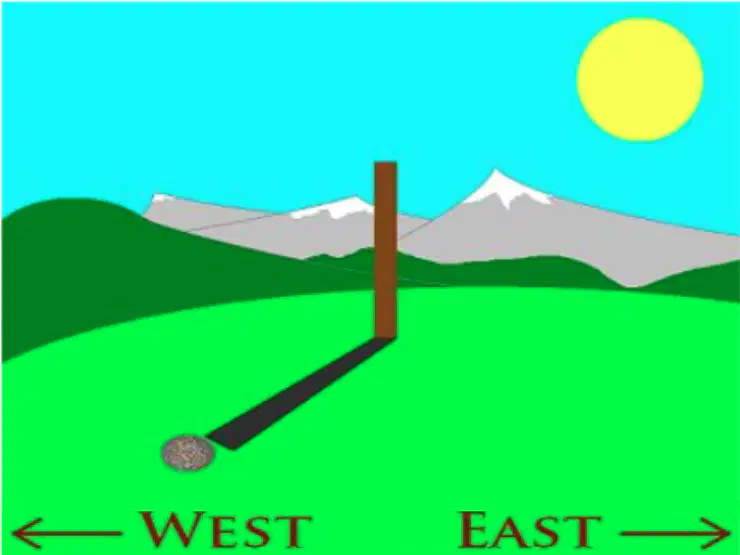
It is is 8:00 a.m. on Saturday morning and the sun is rising in the East. In which direction is the shadow going to appear?
Son las 8 de la mañana del sábado y el sol está saliendo por el Este. ¿En qué dirección aparecerá la sombra?
East
Este
West
Oeste
North
Norte
South
Sur
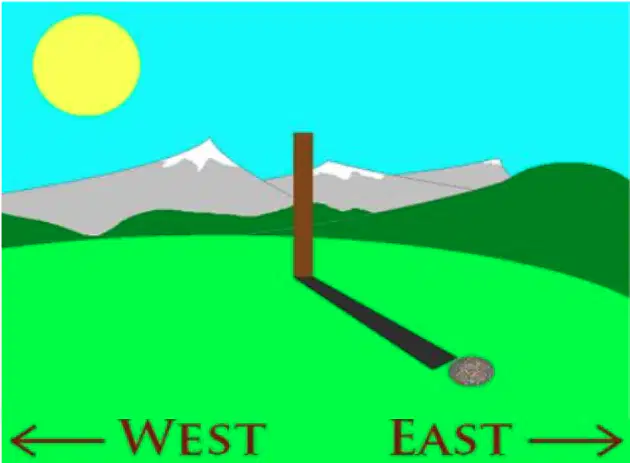
It is is 4:00 p.m. Saturday evening and the sun is setting in the West. In which direction is the shadow going to appear?
Son las 4 de la tarde del sábado y el sol se está poniendo por el Oeste. ¿En qué dirección aparecerá la sombra?
North
Norte
South
Sur
East
Este
West
Oeste
Shadows appear in the opposite direction of where the sun is
Las sombras aparecen en la dirección opuesta a la del sol.
True
Verdadero
False
Falso
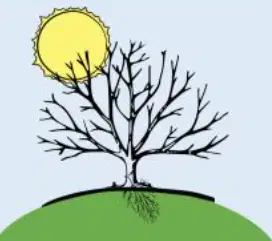
Based on the shadow, what time of day is it?
Según la sombra, ¿qué hora del día es?
12:00 p.m (noon)
2:00 p.m.
5:00 p.m.
8:00 a.m.
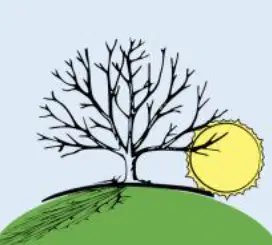
Based on the shadow, what time of day is it?
Según la sombra, ¿qué hora del día es?
12:00 p.m (noon)
2:00 p.m.
1:00 p.m.
7:00 a.m.
When the sun gets higher in the sky, shadows get ______.
Cuando el sol está más alto en el cielo, las sombras aparecen más ______.
longer
largo
shorter
corto
darker
oscuro
When the sun gets lower in the sky, shadows get______.
Cuando el sol baja en el cielo, las sombras se hacen______.
longer
mas largos
shorter
mas cortos
darker
mas oscuros
97-106.
Answer the questions below after watching the video
What creates a shadow?
The Sun moving around the Earth
An object blocking sunlight
The Earth moving around the Sun
Lights in the night sky
Why do shadows change position during the day?
Because the Sun moves across the sky
Because the Earth rotates
Because shadows move on their own
Because the Sun gets brighter and dimmer
How did ancient civilizations use the Sun?
As a giant clock
For cooking food
To navigate the seas
To create calendars
What direction did the lamp post's shadow point to in the morning?
North
South
East
West
At noon, where is the Sun positioned in relation to the shadow?
To the East
To the West
To the North
Directly overhead
Why are shadows shorter at noon?
Because the Sun is further away
Because the Sun is directly overhead
Because it is the hottest part of the day
Because shadows take a break
What happens to shadows as the Sun sets?
They disappear
They get shorter
They stay the same
They get longer
What pattern do shadows follow throughout the day?
They move randomly
They stay still
They get longer, shorter, then longer again
They only get longer
What determines the direction of a shadow?
The time of day
The Sun's position in the sky
Both B and C
The object's shape
Who is the 'boss' of your shadow?
The Sun
The Earth
Clouds
The Moon

According to the table, what is the habitat of the Atlantic puffin?
Cities, parks, open fields
Rocky coasts, open water of the North Atlantic Ocean
Insects, spiders, seeds, berries, fruit
Long, pointed beak; strong legs and toes; long, triangular wings

According to the table, what are the main food sources for the European starling?
Small fish, small shellfish
Insects, spiders, seeds, berries, fruit
Wide, triangular beak; spiny tongue for holding prey; webbed feet; short wings
Rocky coasts, open water of the North Atlantic Ocean

According to the table, which feature is unique to the Atlantic puffin?
Long, pointed beak; strong legs and toes; long, triangular wings
Wide, triangular beak; spiny tongue for holding prey; webbed feet; short wings
Four to six eggs laid twice per year
Cities, parks, open fields

According to the table, how many eggs does the European starling lay per year?
One egg laid per year
Four to six eggs laid twice per year
Small fish, small shellfish
Rocky coasts, open water of the North Atlantic Ocean
Which TWO are likely reasons why the European starling has a greater population size than the Atlantic puffin?
The European starling has a broader diet and higher reproductive rate.
The Atlantic puffin migrates longer distances and faces more predators.
The European starling is less affected by habitat loss and adapts to urban environments.
The Atlantic puffin has a larger body size and slower growth rate.

A student adds 100 milliliters of water to a beaker and records the mass. The student then adds 12 grams of salt to the water and uses a hot plate to heat the mixture. The student stirs the warm water until the salt can no longer be seen in the water. The student claims that even though the salt has disappeared, some of the properties of the salt have not changed. What can the student do to support this claim?
Pour the water through a paper filter to separate out the salt
Add food coloring to the beaker so that the salt can be seen
Use a magnet to separate the salt from the water
Measure the mass of the water and the salt
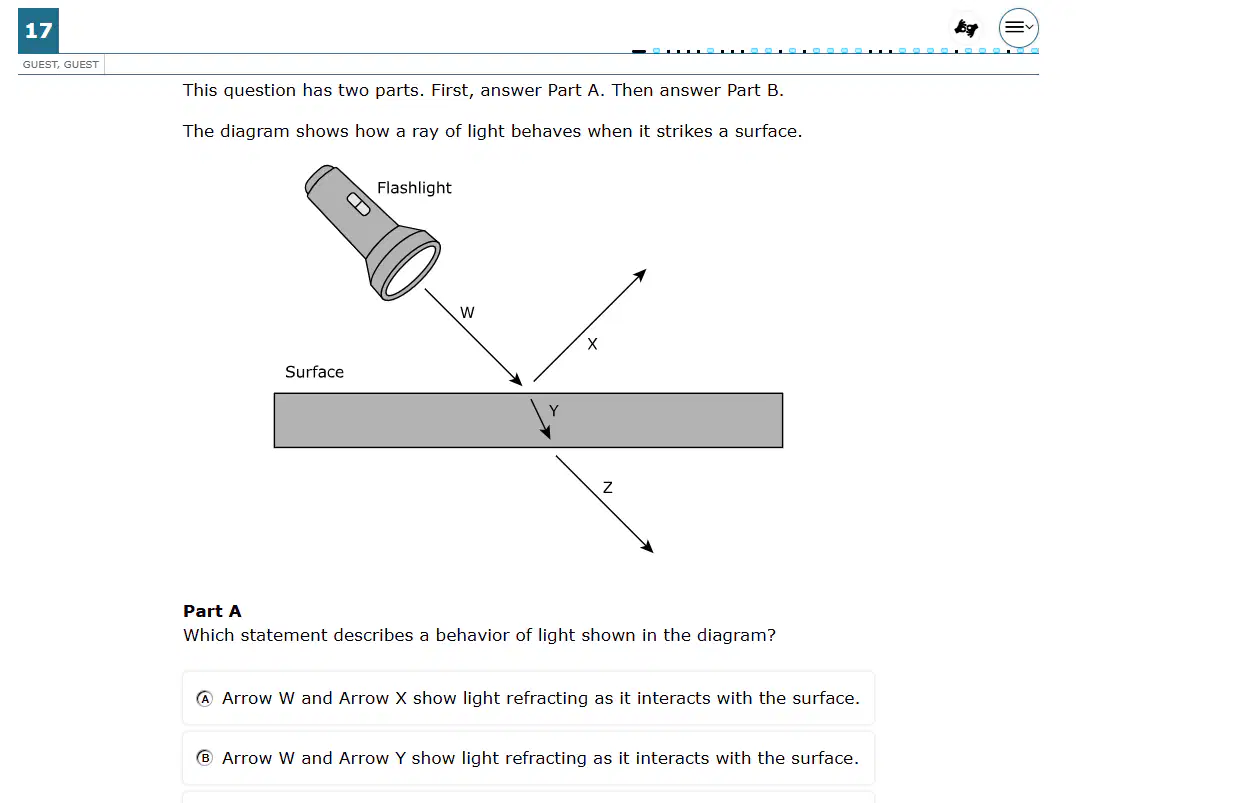
Which statement describes a behavior of light shown in the diagram?
Arrow W and Arrow z show light reflecting as it interacts with the surface.
Arrow W and Arrow Y show light refracting as it interacts with the surface.
Arrow Y and Arrow Z show light reflecting as it interacts with the surface.
Arrow W and Arrow Z show light reflecting as it interacts with the surface.
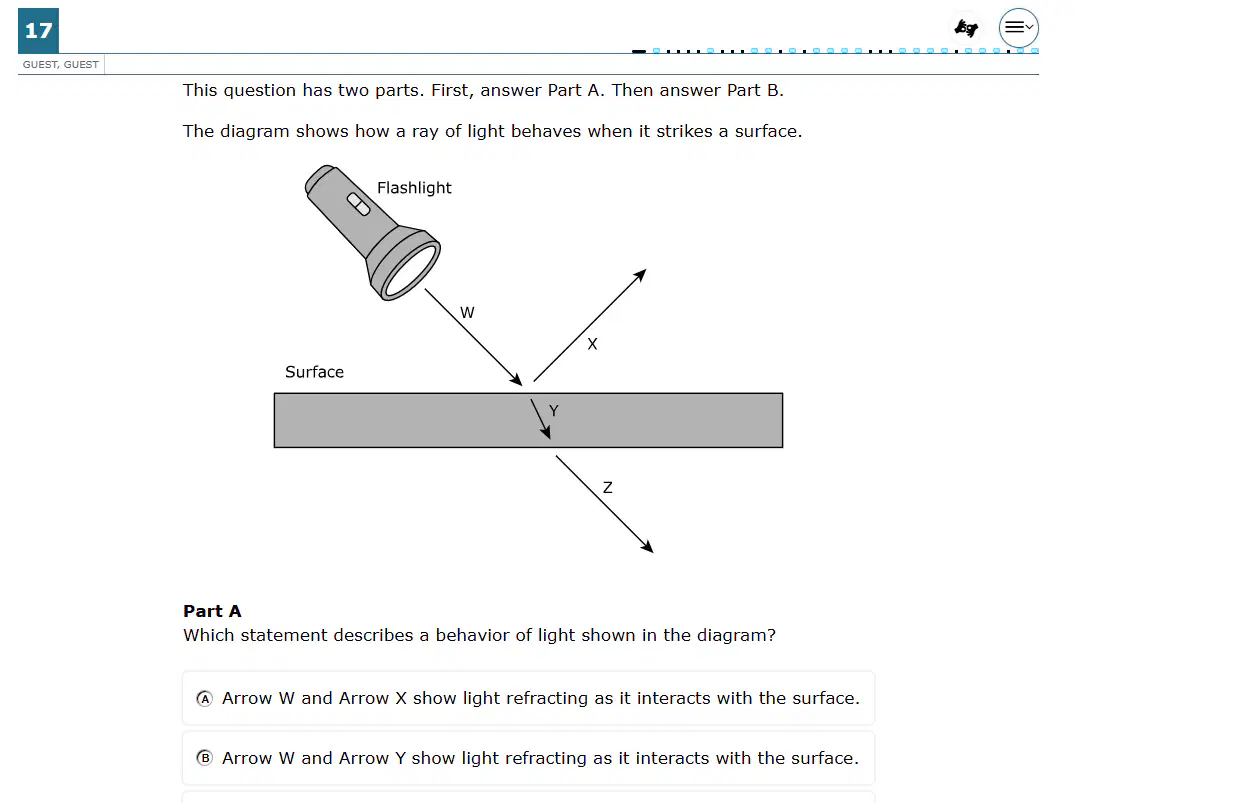
Which description of the surface BEST supports the answer to Part A?
The surface is a shiny piece of metal.
The surface is a dull piece of metal.
The surface is a clear piece of glass.
The surface is a hard piece of wood.

This question has two parts. First, answer Part A. Then answer Part B. The diagram shows how a ray of light behaves when it strikes a surface. Part A Which statement describes a behavior of light shown in the diagram?
A. Arrow W and Arrow X show light refracting as it interacts with the surface.
B. Arrow W and Arrow Y show light refracting as it interacts with the surface.

Which explains why the fork looks different under water?
light can't pass through the glass
sound waves cannot penetrate water
the fork is actually in two pieces
light bends when it moves to different mediums

A
B
C
D

A
B
C
D

A
B
C
D

A
B
C
D

A
B
C
D

A
B
C
D

A
B
C
D

A
B
C
D

A
B
C
D

A
B
C
D

A
B
C
D

A
B
C
D

A
B
C
D

(a) is the bouncing of energy waves off the surface of an object.

(a) is he bending or redirection of energy waves as they pass from one substance to another.
Think about what reflection and refraction mean and match each image with the term that best represents what is shown.

Reflection

Refraction

Reflection

Refraction

A (a) is a clear piece of curved glass or plastic that bends passing light to focus or spread the light rays

A (a) is a very smooth surface able to clearly reflect light to form a virtual image.

This image a good representation of what?
Reflection
Coils
Refraction
Diagram

Light travels
around corners
in straight lines
in zig zags
only when its warm

Light bounces off and object when it is
reflected
absorbed
refracted
transmitted

Light bends when passing through a new substance is called:
refraction
reflection
absorption

When light continues to pass through an object without changing its path
reflect
transmit
absorb
refract

Which of the following is a synonym for the phrase "soak up"?
absorb
reflect
refract
transmit

When light strikes this wood, what happens to it?
The light transmits
The light reflects
The light absorbs
The light refracts

opaque
translucent
transparent

transparent
opaque
translucent

transparent
translucent
opaque

transparent
opaque
translucent

transparent
translucent
opaque

opaque
transparent
translucent

The diagram shows a cooler being viewed from above the water. Why does the cooler appear closer to the surface than it actually is?
Light is a form of energy.
Light is magnified.
Light is reflected.
Light is refracted.
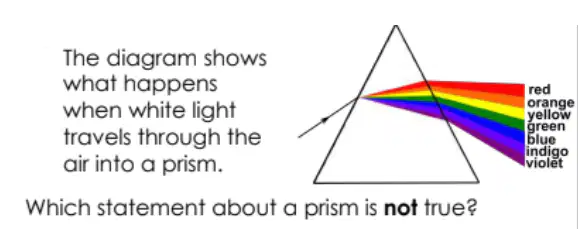
The diagram shows what happens when white light travels through the air into a prism. What statement about a prism is NOT true?
White light bends and separates into many colors.
Light refracts.
Light travels from one medium to another.
Light reflects into many different colors.
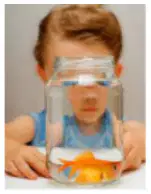
The photograph shows a child with a jar of water holding a gold fish. Why does the child's face appear to be smaller behind the jar of water?
Light travels in a straight line until it is reflected off the water.
Light travels in a straight line until it passes through a new medium and is refracted.
Light travels in a curve until it bends.
Light travels in a straight line until it passes through a new medium and is reflected.
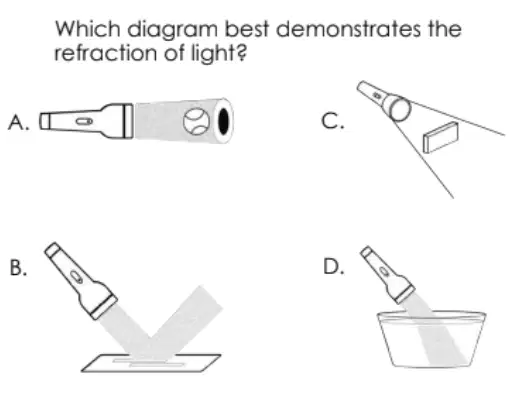
Which diagram best demonstrates the refraction of light?
A
B
C
D

Which image best demonstrates the reflection of light?
A
B
C
D

Why do we feel warm when we stand under the light?
Because light reflects off our clothes.
Because light refracts when it goes from the air to our clothes.
Because light is absorbed by our clothes and turns into heat.
None of the above.
Dark color absorbs more light than light colors.
True. (Black absorbs all colors. White reflects all colors.)
False (Black reflects all colors. White absorbs all colors.)
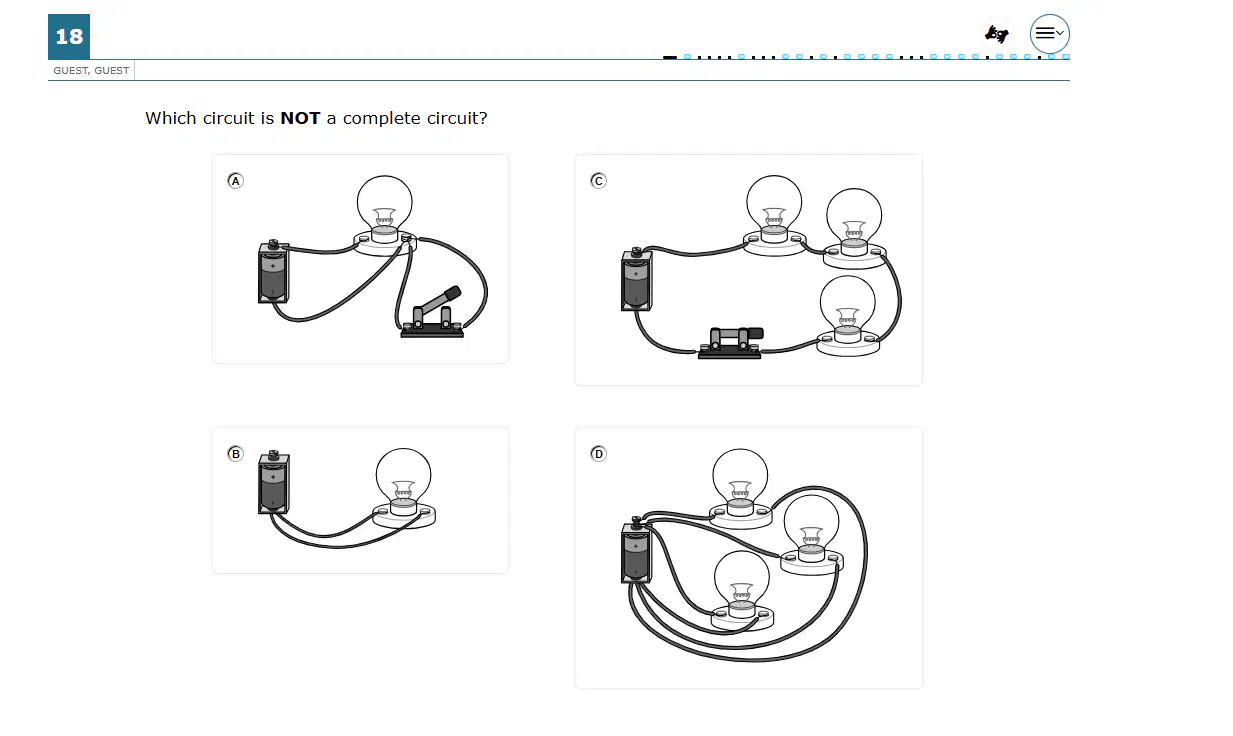
Which circuit is NOT a complete circuit?
A. [Image of circuit A]
B. [Image of circuit B]
C. [Image of circuit C]
D. [Image of circuit D]
To complete the circuit, a wire should be placed from —
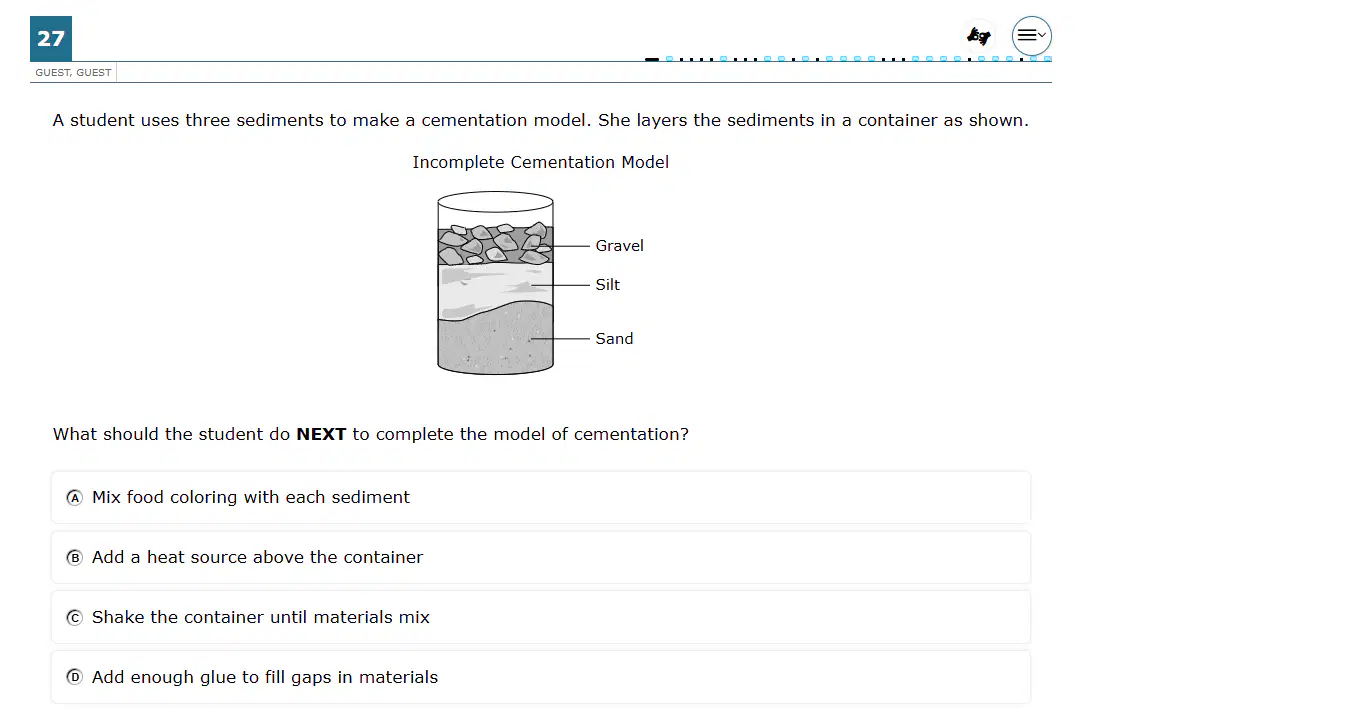
A student uses three sediments to make a cementation model. She layers the sediments in a container as shown. What should the student do NEXT to complete the model of cementation?
Mix food coloring with each sediment
Add a heat source above the container
Shake the container until materials mix
Add enough glue to fill gaps in materials

The scientists believe that a sudden change in the environment at one point led to the disappearance of all the animals in the area. Which statements are supported by the information in the diagram?
Large trees most likely grew in Layers 4 and 5.
At one time the entire area was covered by an ocean.
The formation of Layer 4 occurred before the formation of Layer 5.
Layer 1 supported only large populations of aquatic plants.
The disappearance of the animals occurred before the formation of Layer 1.

Scientist study the ____________________ to learn about the history of life, past environments on Earth, and how different groups of organisms have changed over time.
fossil record
historical record
animal record
Earth record
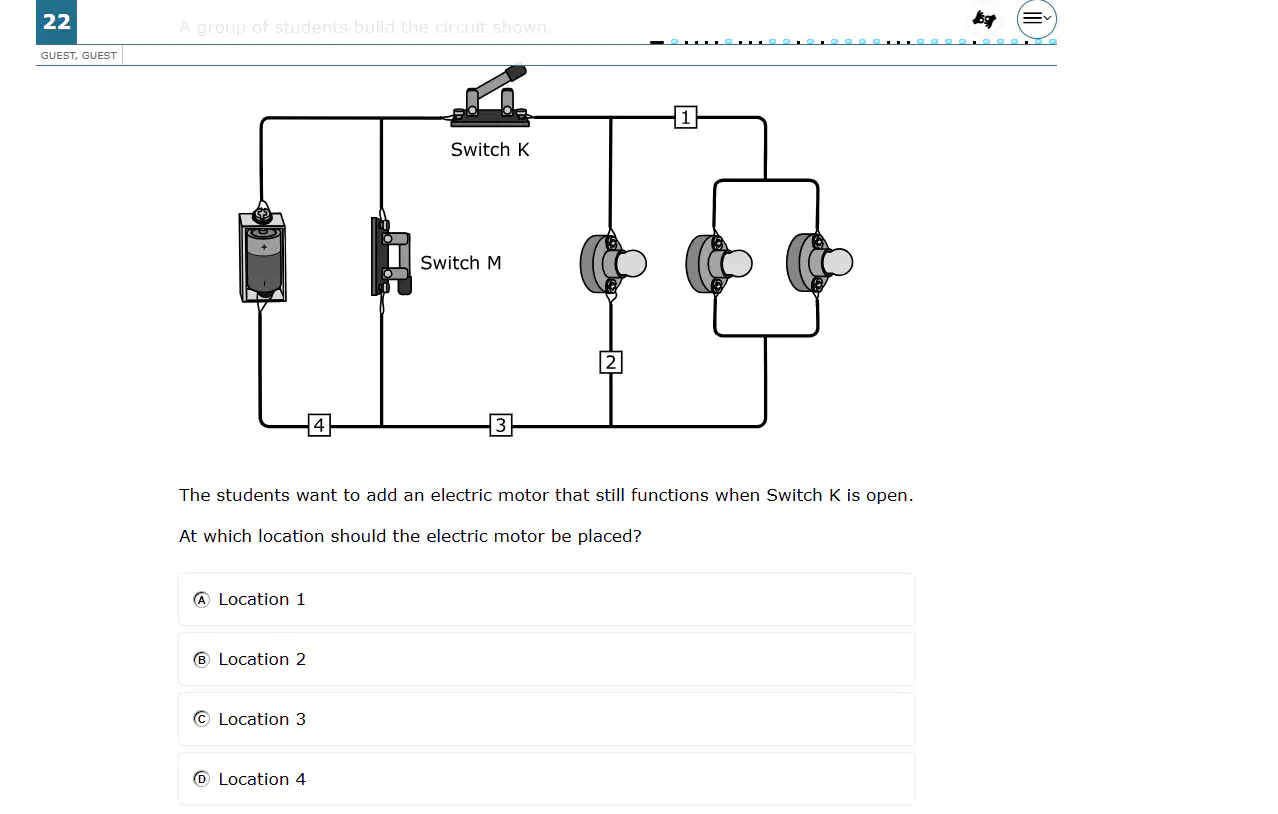
The students want to add an electric motor that still functions when Switch K is open. At which location should the electric motor be placed?
Location 1
Location 2
Location 3
Location 4

wire

light bulb

battery

switch

electric circuit

Scientists examine the diagram shown, which has information about the fossils found in different layers of rock. The scientists believe that a sudden change in the environment at one point led to the disappearance of all the animals in the area. Which statements are supported by the information in the diagram? Select TWO correct answers.
A. Large trees most likely grew in Layers 4 and 5.
B. At one time the entire area was covered by an ocean.
C. Plants lived in the area before land animals appeared.
D. The types of fossils found in the layers changed over time.
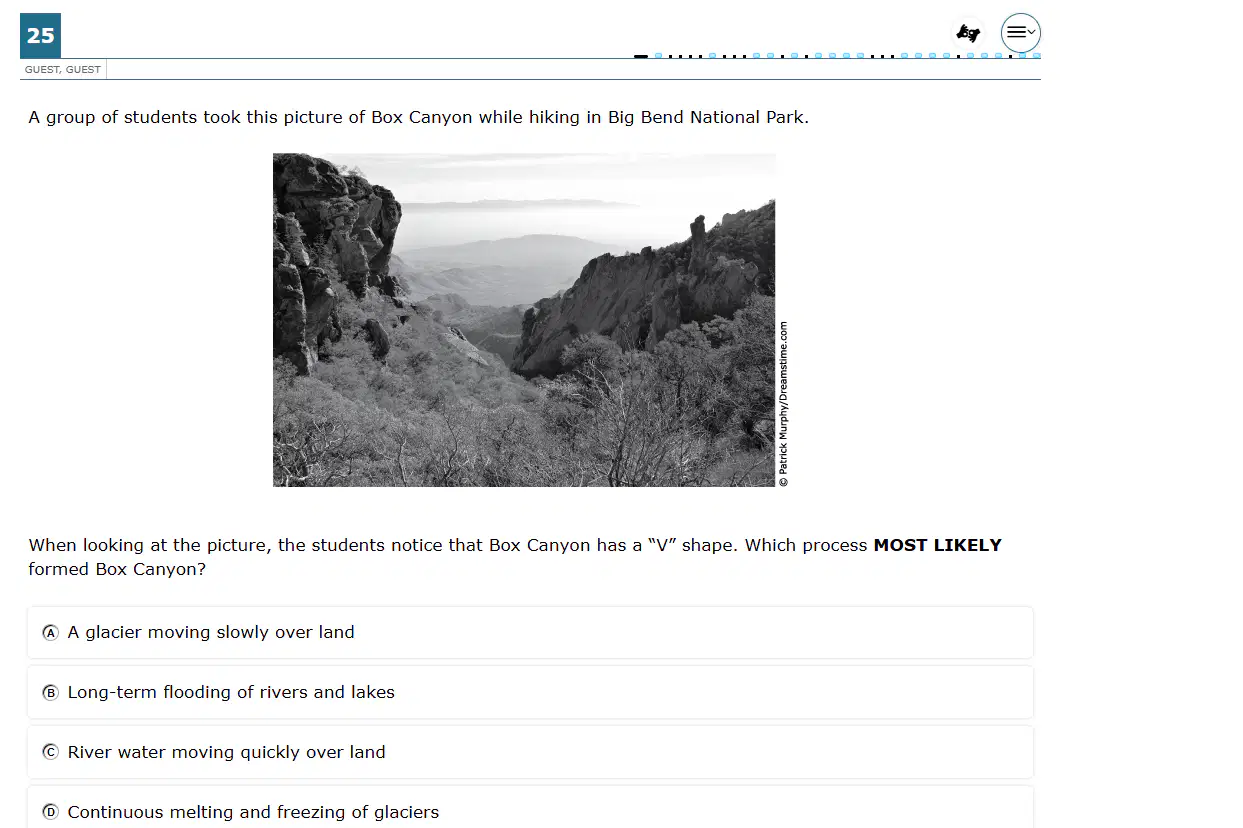
A group of students took this picture of Box Canyon while hiking in Big Bend National Park. (See image.) When looking at the picture, the students notice that Box Canyon has a 'V' shape. Which process MOST LIKELY formed Box Canyon?
A. A glacier moving slowly over land
B. Long-term flooding of rivers and lakes
C. River water moving quickly over land
D. Continuous melting and freezing of glaciers

Students design an investigation to test the strength of different magnets. They use three magnets and steel paper clips. Each magnet is placed at a different distance from the steel paper clips. The table they will use to record their data is shown. Magnet | Distance from Steel Paper Clips (centimeters) | Number of Steel Paper Clips Attracted 1 | 15 | 2 | 30 | 3 | 45 | What should the students do to improve the investigation?
Use different steel objects for each magnet
Place the paper clips farther away from each magnet
Place each magnet at the same distance from the paper clips
Repeat the investigation using plastic paper clips

A student groups the following materials together: - copper wire - brick - wood - rubber Which property did the student MOST LIKELY use to group the materials?
Ability to float in water
Physical state
Flexibility
Electrical conductivity

A student mixed lemon juice and sugar with warm water. Which property of both the lemon juice and the sugar stayed the same when they were mixed with the water?
Density
Color
Shape
Mass

An area of land containing living organisms may rapidly or slowly change to a surface covered with a new rock layer that does not contain any living organisms. Which statement BEST explains why this change occurs?
A. A landslide removes all soil from the area.
B. A hurricane with high winds causes erosion in the area.
C. An earthquake changes the land structures of the area.
D. A volcanic eruption causes lava to flow into the area.
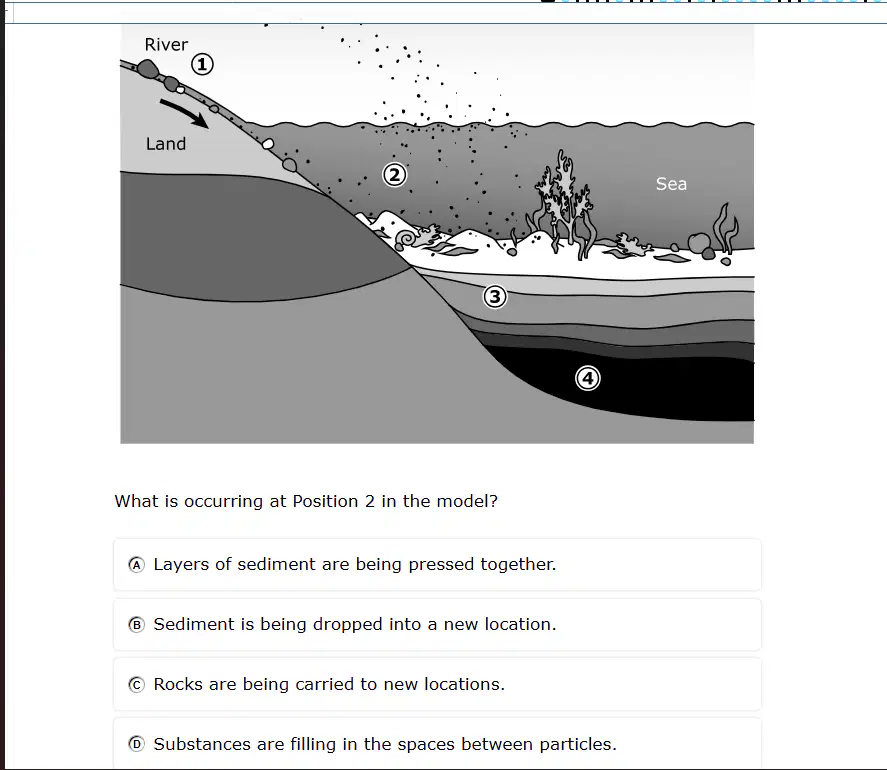
What is occurring at Position 2 in the model?
Layers of sediment are being pressed together.
Sediment is being dropped into a new location.
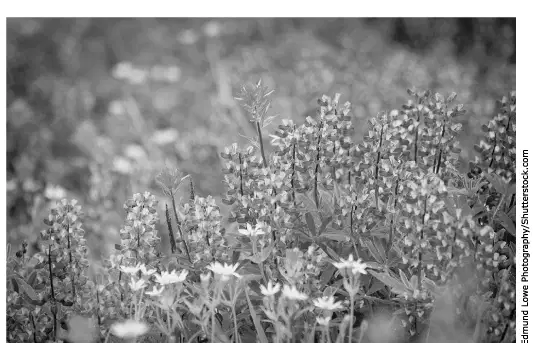
The roots of this plant can pull needed water and nutrients from the root systems of nearby plants. Which statement describes another way that this interaction between the Texas paintbrush and other plants helps the Texas paintbrush survive in its environment?
The Texas paintbrush is protected from animals that feed on plants.
The Texas paintbrush slows the growth of nearby plants so that it has plenty of room to grow.
The Texas paintbrush grows during different times of the year than nearby plants do.
The Texas paintbrush increases in its attractiveness to bees and other pollinators that help it reproduce.
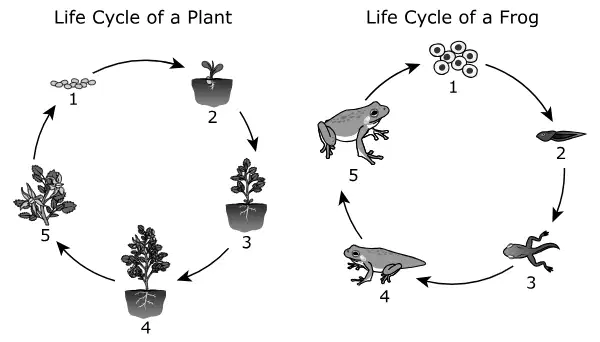
Which life-cycle stage is MOST similar in the two organisms, and why?
Stage 1, because a new living organism has formed
Stage 3, because growth has not started yet
Stage 4, because growth is complete
Stage 5, because more body parts form

A student is helping a teacher move a bookcase. The student pushes on the bookcase, but the bookcase does not move. Which action should the student take in order to move the bookcase?
Apply more force to one side of the bookcase
Apply more downward force to the bookcase
Apply less force to the bookcase
Apply equal force to all sides of the bookcase
What do we call a force that has a net force of zero Newtons and the object does not change its motion?
balanced force
unbalanced force
acceleration force
net force

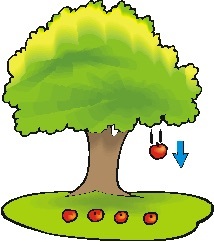
Which force will pull Wil E. Coyote down?
elastic
friction
air resistance
gravity
Label the forces acting in this image.

Match the following forces to how they are working on the cake.
gravity
keeping the cake on the table
normal force
the force the table is putting on the cake
air resistance
not affecting the cake
Label the forces acting in this picture.


Which statement describes a relationship between a living and a nonliving component of this scenario?
The Nile crocodile lives along the Nile River.
The Nile crocodile is a carnivore.
The Egyptian plover preys on the Nile crocodile.
The Egyptian plover lands on the Nile crocodile.

