
 Worksheets
Functions of the Skin Practice Quiz
Total questions: 20
Worksheet time: 10mins
What do wounded cells release to help protect the skin?
Defensins
Cathelicidins
Melanin
Sebum

Which substances have limited penetration of the skin?
Water-soluble substances
Lipid-soluble substances and heavy metals
Proteins and carbohydrates
Vitamins and minerals
How does the skin contribute to preventing wrinkles?
By synthesizing Vitamin D
By activating hormones
By making collagenase
By absorbing calcium
Which of the following is NOT a cell type found in the epidermis?
Keratinocytes
Melanocytes
Dendritic cells
Fibroblasts
What is the primary function of keratinocytes in the epidermis?
Produce pigment melanin
Act as sensory receptors
Produce fibrous keratin
Activate the immune system
What is the role of dendritic (Langerhans) cells in the epidermis?
Sense touch
Produce keratin
Activate the immune system
Produce melanin
What is the outermost layer of the epidermis called?
Stratum basale
Stratum spinosum
Stratum corneum
Stratum granulosum
How do keratinocytes appear in the stratum spinosum layer?
Flat
Round
Spikey
Smooth
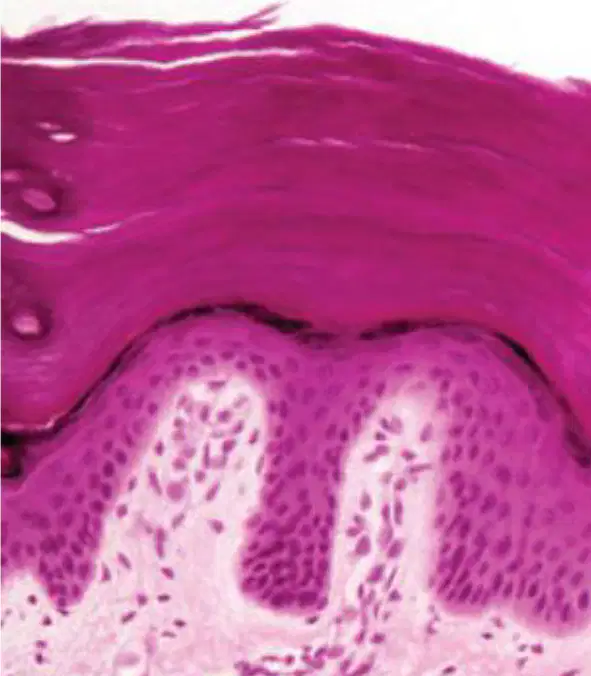
Which cells are abundant in the stratum spinosum?
Red blood cells
Melanosomes and dendritic cells
Neurons
Muscle cells
What happens to the cells in the Stratum granulosum?
They become more rounded and active.
They flatten, and nuclei and organelles disintegrate.
They start producing sweat.
They increase in size and multiply.
Where is the Stratum lucidum located in relation to the stratum granulosum?
Superficial to the stratum granulosum
Deep to the stratum granulosum
At the same level as the stratum granulosum
Not related to the stratum granulosum
Which of the following is NOT a function of the stratum corneum?
Prevent water loss
Barrier against biological assaults
Facilitate nutrient absorption
Protect against chemical assaults
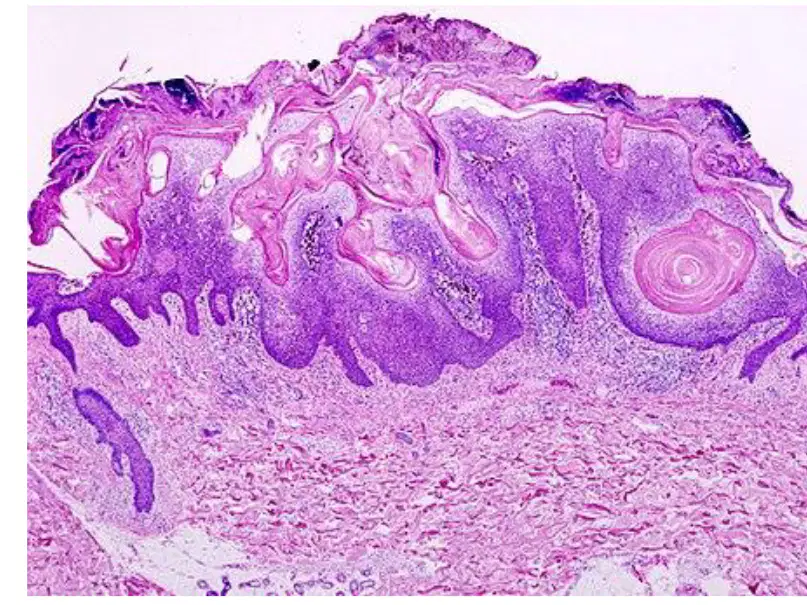
Hyperkeratosis can also derive from which of the following?
Acute inflammation
Chronic inflammation or a side-effect of different drugs
Bacterial infection
Viral infection
What is the primary function of sebaceous glands in the integumentary system?
Produce sweat
Produce oil
Produce hair
Produce nails
Which fibers are found in the papillary layer?
Reticular and elastic fibers
Collagen and elastic fibers
Muscle and nerve fibers
Keratin and collagen fibers
What are the fingerlike projections in the dermal papillae called?
Dermal ridges
Dermal papillae
Epidermal layers
Subcutaneous tissue
What lies on top of dermal ridges in thick skin?
Dermal papillae
Sweat glands
Hair follicles
Sebaceous glands
Why do surgical incisions parallel to cleavage lines heal better?
They align with muscle fibers
They reduce tension on the skin
They avoid major blood vessels
They follow nerve pathways
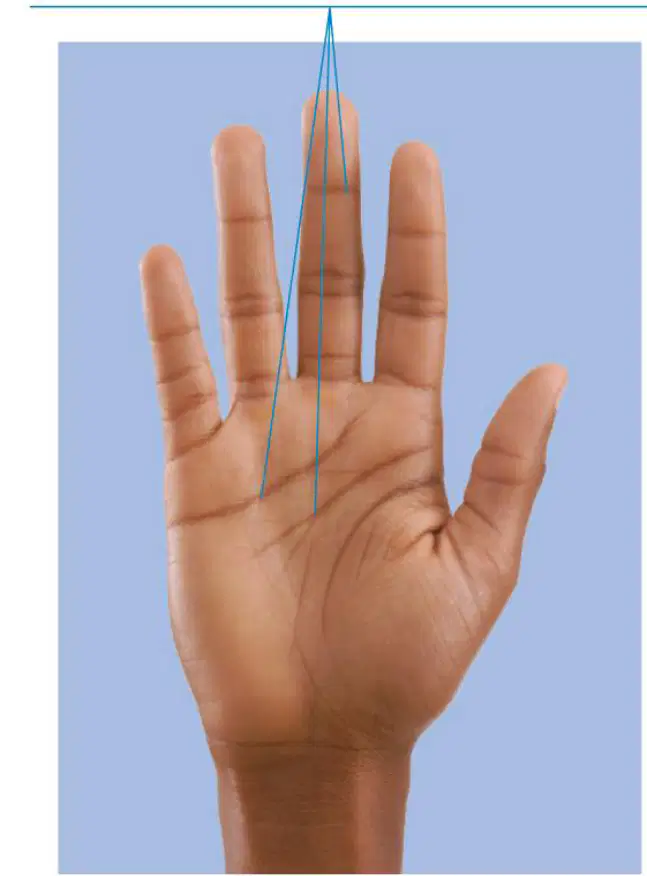
What are flexure lines of the reticular layer?
Dermal folds at or near joints
Lines on the surface of the skin
Folds in the epidermis
Creases in the subcutaneous layer
How does hair help protect the skin?
By absorbing sunlight
By shielding skin from sunlight
By increasing skin moisture
By reducing skin elasticity

