
 Worksheets
Materials Science Quiz
Total questions: 17
Worksheet time: 12mins
What do cooling curves help identify in phase diagrams?
The melting point of pure metals
Liquidus and solidus lines
The density of alloys
The electrical resistance of materials
What is the main difference between phases and components in alloys?
Phases are physical states, while components are chemical elements
Phases are chemical elements, while components are physical states
Phases are always solid, while components are always liquid
Phases are mixtures, while components are pure substances
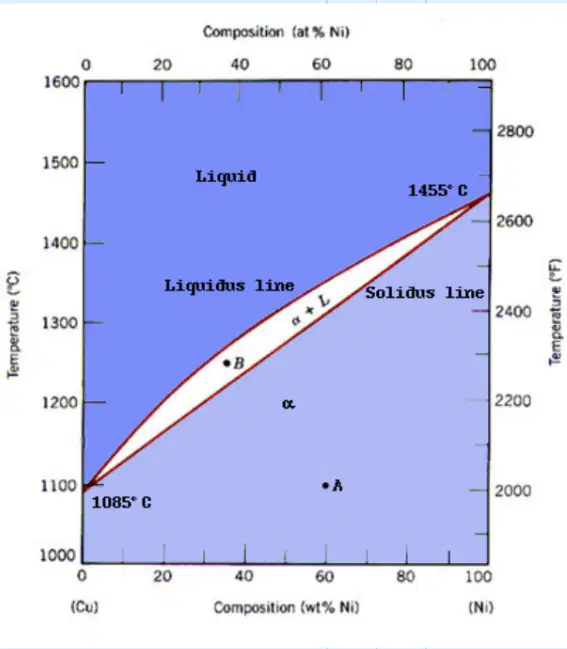
What does the X-axis represent in a phase diagram for alloys?
Temperature
Pressure
Composition (e.g., % copper, % nickel)
Time
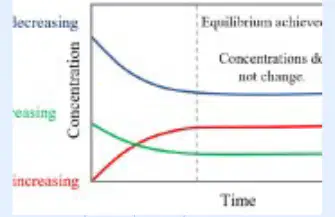
What does equilibrium refer to in material science?
A material that is uniform throughout.
A region with uniform properties and structure.
A stable state where the phases and their proportions do not change over time.
A material with visibly different parts or phases.
What is one of the main reasons alloys are created?
To reduce weight
To improve strength
To increase cost
To decrease conductivity
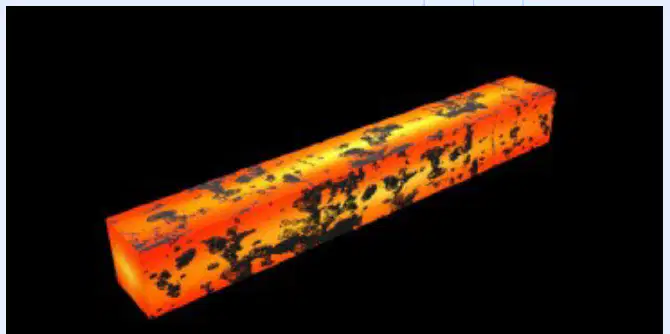
What is the state of an alloy below the solidus line?
Fully solid
Partially solid
Fully liquid
Partially liquid
What happens to a copper-nickel mixture when it solidifies?
It forms multiple phases.
It forms a single, homogeneous phase.
It separates into copper and nickel layers.
It becomes a gas.
How is "heterogeneous" best defined?
A material with visibly different parts or phases, like a mixture with separate regions.
A region within a material that has uniform physical and chemical properties.
A material uniform throughout, like a solution where all parts are the same.
A stable state where a system's properties, like phase proportions, do not change over time.
What does "homogeneous" mean?
A material with visibly different parts or phases, like a mixture with separate regions.
A region within a material that has uniform physical and chemical properties.
A material uniform throughout, like a solution where all parts are the same.
A stable state where a system's properties, like phase proportions, do not change over time.
Why might an engineer choose an alloy over a pure metal for a particular application?
Alloys are generally more expensive than pure metals.
Alloys often have enhanced properties like strength and corrosion resistance.
Pure metals are always stronger than alloys.
Alloys are more difficult to work with than pure metals.
What is one advantage of using alloys over pure metals in building construction?
Alloys are more expensive than pure metals.
Alloys can be made stronger and harder than pure metals.
Alloys are more prone to rust than pure metals.
Alloys are heavier than pure metals.
What is a 'phase' in materials science?
A stage in the manufacturing process
A region with uniform properties and structure
A type of chemical bond
A mixture of two elements
What does the Y-axis of a phase diagram represent?
Temperature
Time
Composition
Density
In a binary alloy system, how many components are present?
One
Three
Two
Four
What is the term for a stable state where phases and their proportions do not change over time?
Homogeneous
Liquidus
Solidus
Equilibrium
At what point on a phase diagram does an alloy begin to solidify?
At the solidus line
At the liquidus line
At the equilibrium point
At the melting point of the pure component
What is the primary purpose of a phase diagram in materials science?
To illustrate the relationship between temperature, composition, and phases present
To display the electrical properties of metals
To compare the densities of various materials
To show the cost of different alloys

