
 Worksheets
Grade 4
Total questions: 35
Worksheet time: 18mins
It is the flat representation of the world.
It is the closest representation of Earth.
It is the combination of the latitude and longitude lines.
Latitude
Grid
Longitude
Equator
What is an archipelago?
A collection, or group of closely scattered islands
A piece of land that is surrounded by water on three sides and still connected to a mainland
A pointed piece of land that sticks out into the sea
12 nautical miles within the Philippine waters
Territorial waters
Contiguous Zone
Exclusive Economic Zone
24 nautical miles after the Philippine borders
Territorial waters
Contiguous Zone
Exclusive Economic Zone
200 nautical miles after the border of the Philippines
Territorial waters
Contiguous Zone
Exclusive Economic Zone
Which of the following is included in the territory of the Philippines?
Land, waters, and airspace of the Philippines
Only the islands
Nothing is included in the territory
What is the difference between absolute and relative location?
Absolute location is described by coordinates, while relative location is described in relation to other places.
Absolute location is described by surrounding bodies of water, while relative location uses latitude and longitude.
Absolute location is always changing, while relative location is fixed.
Absolute location uses oceans, while relative location uses continents.
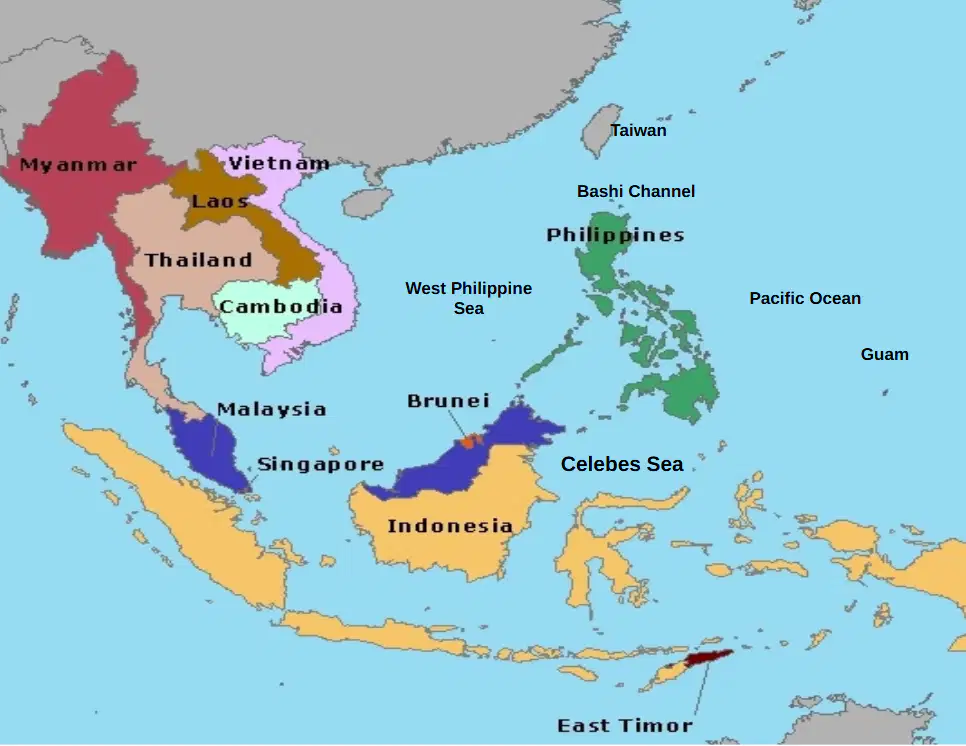
Identify the vicinal location of the Philippines. Click all that apply.
Taiwan - North
Indonesia - South
Cambodia - West
Thailand - East
Guam - East
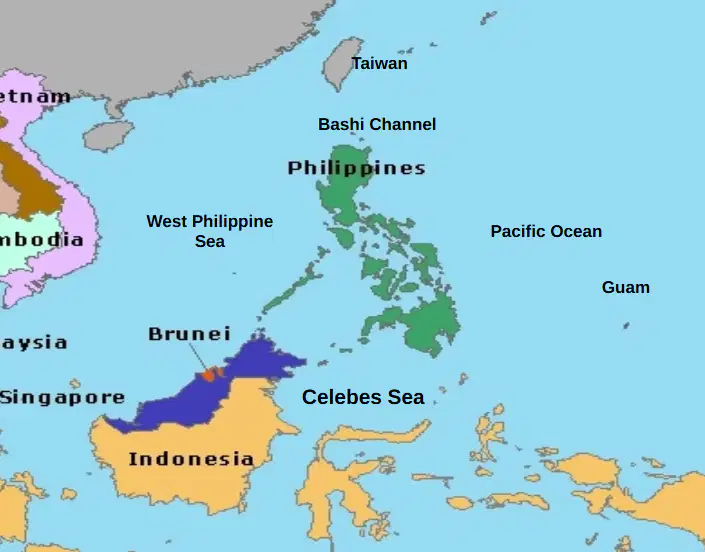
Identify the maritime location of the Philippines. Click all that apply.
PACIFIC OCEAN - EAST
BASHI CHANNEL - NORTH
CELEBES SEA - SOUTH
PACIFIC OCEAN - SOUTH
WEST PHILIPPINE SEA - WEST
The long term weather condition in a place.
Climate
Weather
Season
The temporary condition of the atmosphere that may change any time
Climate
Weather
Season
Which of the following is the climate of the Philippines?
Arctic Climate
Tropical Climate
Temperate Climate
What crop can we grow in the Philippines' climate?
Orange
Lemon
Rice
Which of the following are the two seasons experienced in the Philippines?
Spring and Summer
Rainy and Snowy
Dry and Wet
This monsoon is experienced during June to September and brings warm and humid air.
Amihan (Northeast Monsoon)
Habagat (Southwest Monsoon)
This monsoon brings cold and dry air.
Amihan (Northeast Monsoon)
Habagat (Southwest Monsoon)
During the Habagat season, farmers in the lowlands prepare for planting rice. Which factor makes this season ideal for rice farming?
Cold and dry air
Heavy rainfall and humid air
Strong volcanic activity
Proximity to the Pacific Ring of Fire
What is the effect of the Philippines location near the equator to its biodiversity (plants and animals)?
There are no plants and animals because the country is cold
There is a high level of biodiversity because of the tropical climate
The location has no effect on the biodiversity of the country
It is considered to be the largest flower in the world
Rafflesia Mira
Waling-waling
Sampaguita
It is considered to be the largest clam in the world.
Pisidium
Oyster
Tridacna Gigas
A marine biologist is studying the Gloriamaris. Why is it considered special?
It is the largest clam in the world.
It is the rarest and most expensive clam.
It is the largest fish in the ocean.
It is the smallest freshwater clam.
These are the main threats to the survival of the Philippine Eagle.
Reforestation and Proper Waste Management
Illegal Logging and Habitat Destruction
Dynamite fishing and Coral Bleaching
Known as the Queen of the Philippine Orchid
Waling waling
Sampaguita
Rafflesia Mira
A family plants malunggay in their backyard because it’s called the “Miracle Vegetable.” Which reason is most likely why?
It has a strong smell.
It is a national flower.
It has many health benefits and nutrients.
It is rare and expensive.
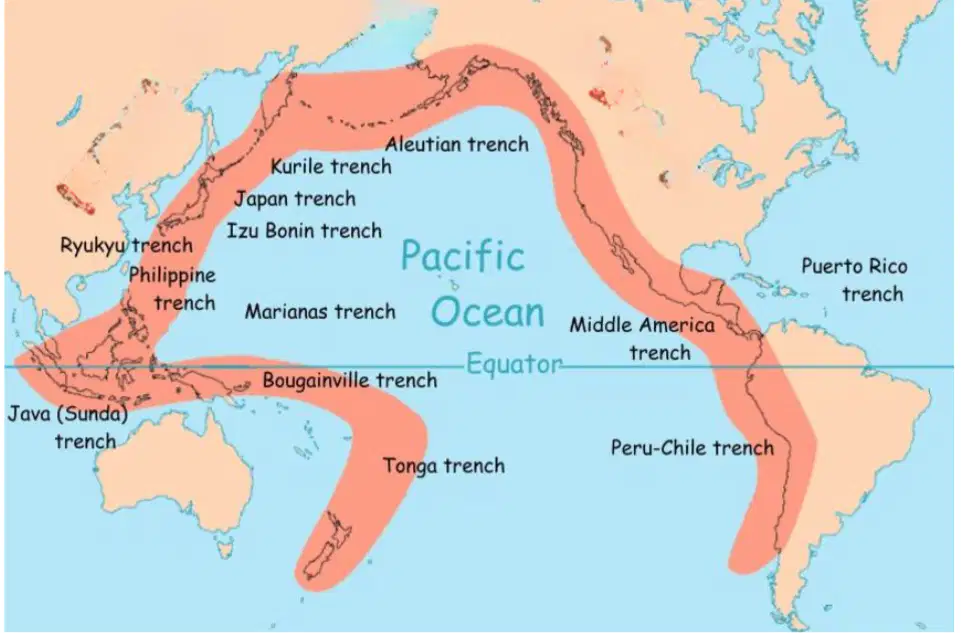
The Philippines is located in this area which makes it prone to earthquakes and volcanic eruptions.
Coral Triangle
Philippine Trench
Pacific Ring of Fire
Identify where each region belongs:
NATIONAL CAPITAL REGION
LUZON
VISAYAS
MINDANAO
ILOCOS REGION
LUZON
VISAYAS
MINDANAO
NEGROS ISLAND REGION
LUZON
VISAYAS
MINDANAO
ZAMBOANGA PENINSULA
LUZON
VISAYAS
MINDANAO
CENTRAL VISAYAS
LUZON
VISAYAS
MINDANAO
BARMM
Luzon
Visayas
Mindanao
Bicol Region
Luzon
Visayas
Mindanao
A traveler from Cebu is planning a tour of Mindanao’s regions. Which of the following is not located in Mindanao?
CARAGA
SOCCSKSARGEN
Zamboanga Peninsula
Central Visayas

