
 Worksheets
Welding Quiz
Total questions: 29
Worksheet time: 15mins

What is the primary advantage of laser welding over traditional welding?
Lower equipment cost
Higher precision with minimal heat-affected zone (HAZ)
Faster welding speed for all materials
No need for shielding gas

Which gas is commonly used as an assist gas in laser cutting?
Argon
Nitrogen
Hydrogen
Helium

What type of laser is most commonly used for industrial metal welding?
CO₂ laser
Fiber laser
Excimer laser
Dye laser

What is the main purpose of a shielding gas in laser welding?
To increase laser power
To prevent oxidation and contamination of the weld pool
To cool the workpiece faster
To reduce reflectivity
Which welding defect is most associated with excessive laser power?
Porosity
Undercut
Burn-through
Lack of fusion

What is a key advantage of pulsed laser welding over continuous-wave (CW) laser welding?
Higher overall energy efficiency
Better control over heat input, reducing distortion
Faster welding speeds for thick materials
No need for focusing optics
Which material property is most critical for successful laser welding?
Electrical conductivity
Thermal conductivity
Magnetic permeability
Hardness
What is the role of a beam delivery system in laser welding?
To generate the laser beam
To focus and direct the laser beam onto the workpiece
To cool the laser source
To measure weld penetration depth
Which of the following is NOT a common application of laser welding?
Automotive body assembly
Medical device manufacturing
Underwater pipeline welding
Electronics component joining
What is the primary challenge when welding highly reflective metals (e.g., aluminum, copper) with lasers?
High material cost
Low laser absorption leading to instability
Excessive spatter formation
Rapid cooling rates

What is the function of a collimating lens in a laser welding setup?
To diverge the laser beam
To convert the laser beam into parallel rays
To absorb excess laser energy
To measure beam intensity

Which parameter primarily determines weld penetration depth in laser welding?
Laser wavelength
Beam diameter
Power density (W/cm²)
Shielding gas flow rate

What is "keyhole welding" in laser processes?
A defect caused by insufficient power
A deep-penetration welding mode with vaporized material
A surface cleaning technique before welding
A type of spot welding

Which of the following is a disadvantage of CO₂ lasers compared to fiber lasers?
Lower efficiency and higher maintenance
Inability to weld metals
Excessive UV radiation emission
Limited to pulsed operation
Which type of joint is most suitable for laser welding thin sheets?
Butt joint
Lap joint
T-joint
Edge joint

What is the purpose of a beam integrator in laser welding?
To split the laser into multiple beams
To homogenize the beam intensity distribution
To reduce laser power
To filter out harmful wavelengths

Which welding process is most similar to laser welding in terms of precision?
Shielded Metal Arc Welding (SMAW)
Gas Tungsten Arc Welding (GTAW/TIG)
Electron Beam Welding (EBW)
Friction Stir Welding (FSW)

What is a common method to monitor weld quality in laser welding?
Visual inspection only
Pyrometry (temperature measurement)
Ultrasonic testing during welding
X-ray fluorescence

Which factor does NOT influence laser weld bead geometry?
Travel speed
Focal position
Electrode diameter
Laser power

What is the main advantage of using a fiber laser over a Nd:YAG laser?
Lower initial cost
Higher beam quality and efficiency
Ability to weld non-metals only
No need for cooling systems
Which shielding gas is best for stainless steel laser welding to prevent oxidation?
Oxygen
Argon
Carbon dioxide
Nitrogen
What is the primary limitation of laser welding very thick materials?
Excessive reflectivity
High equipment cost
Limited penetration depth without multiple passes
Inability to use shielding gases

Which laser welding technique is used for hermetic sealing of small components?
Percussion welding
Conduction-mode welding
Keyhole welding
Explosive welding

What is the effect of incorrect focal position in laser welding?
Increased weld width
Reduced penetration and weak welds
Excessive spatter
No significant effect

Which of the following materials is most difficult to weld with lasers due to high thermal conductivity?
Stainless steel
Titanium
Copper
Aluminum (though still challenging, copper is worse)

What is "hybrid laser-arc welding"?
Combining laser and plasma welding
Using a laser to preheat before arc welding
Simultaneous laser and arc welding for deeper penetration
A post-weld heat treatment method
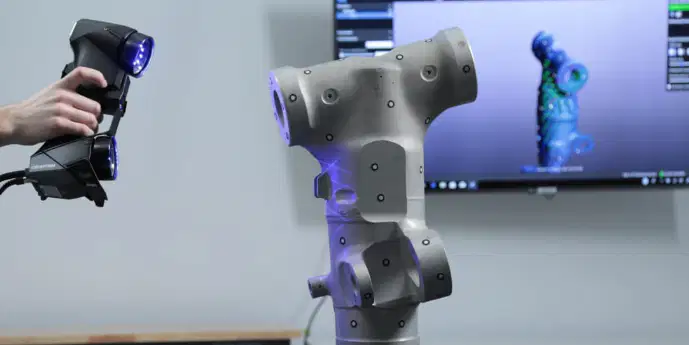
Which industry benefits most from laser welding's precision and automation?
Shipbuilding
Aerospace and medical devices
Heavy machinery construction
Civil infrastructure
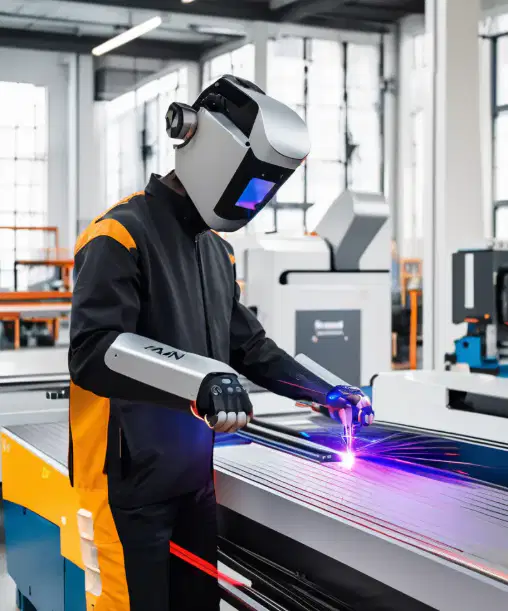
What is the primary benefit of using a scanning galvanometer in laser welding?
Higher laser power output
Faster beam positioning for complex patterns
Reduced need for shielding gas
Automatic weld inspection

What is the primary safety hazard associated with laser welding?
Toxic fumes from melted metal
High-voltage electric shock
Intense visible light exposure
Infrared radiation and eye damage

