
NEW
Font size
 Worksheets
The Evolution of Photography
Total questions: 56
Worksheet time: 42mins
Who was the first person to put optical pieces into motion with a camera obscura for artistic representation?
Leonardo da Vinci
Isaac Newton
Galileo Galilei
Johannes Kepler
What are the two vital elements of photography mentioned in the passage?
Optical and Chemical
Digital and Manual
Light and Sound
Mechanical and Electrical
Who first found that Silver Nitrate and Silver Chloride would turn black when struck by light?
Joseph Niepce
Isaac Newton
Louis Daguerre
John Herschel
Who produced the first paper negative in 1835?
William Henry Fox Talbot
Louis Daguerre
Nicéphore Niépce
John Herschel
Who is credited with the first positive image and the invention of the Daguerreotype process?
Louis Daguerre
Joseph Nicéphore Niépce
George Eastman
William Henry Fox Talbot
The Daguerreotype process allowed for multiple prints to be made from a single image.
True
False
Who was the most famous American daguerreotypist mentioned in the passage?
Samuel F. B. Morse
Mathew Brady
Louis Daguerre
Ansel Adams
What process became the standard for photography until roll film came in the late 1800's?
The wet plate process
The daguerreotype process
The dry plate process
The calotype process
Who published the first book of biographical sketches of leading personalities including Abraham Lincoln?
Matthew Brady
Doris Kearns Goodwin
Carl Sandburg
David McCullough
Who were some of the famous names associated with the development of photography that recorded history, as mentioned in the passage?
A) Timothy O'Sullivan and W. H. Jackson
B) Richard Maddox and Joseph Muybridge
C) Leyland Stanford and Gardner
D) Brady and Stanford
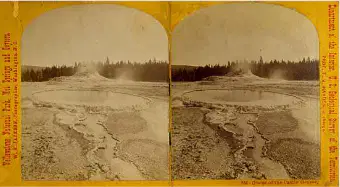
What was the main purpose of railroad company photographers traveling the rails during the frontier era?
To take portraits of people
To record history and spectacular landscapes
To sell cameras
To develop new photographic chemicals
A new process called Reportage began in photography. What was its main use?
To create artistic portraits
To record what was happening during a given period of history
To develop color photographs
To sell photographic equipment
By the end of the 19th Century, what type of photography had developed that used pictures to convince and persuade people based on evidence?
Documentary Photography
Portrait Photography
Abstract Photography
Fashion Photography
The Maddox process allowed cameras to be held by hand because the new process was much faster.
True
False
Who invented the dry process in 1871 that allowed photography to be taken out of the chemist's hands?
Richard Maddox
George Eastman
Louis Daguerre
William Henry Fox Talbot
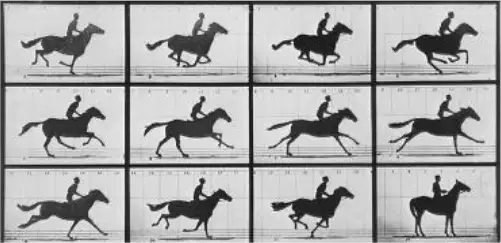
Photographer Joseph Muybridge worked with Leyland Stanford to prove what about horses in full stride?
All four feet are off the ground at once
Horses never have all feet off the ground
Horses fly
Horses run backwards
The invention of the ________ in 1871 made cameras more sophisticated and allowed for the creation of motion pictures.
moveable shutter
flashbulb
color film
telephoto lens
Who invented roll film and paper coated with light sensitive material for making prints from negatives in 1884?
George Eastman
Thomas Edison
Louis Daguerre
Joseph Nicéphore Niépce
What was the slogan used by the Eastman company for the Kodak camera?
You press the button, we do the rest.
Capture the moment, keep it forever.
Picture perfect memories.
Snap and save your story.
True or False: The Kodak No. 1 camera introduced in 1888 could take one hundred pictures with a roll of film.
True
False
Which camera did the Germans invent after 1927 that was sturdy and accurate?
Kodak No. 1
Leica camera
Single Lens Reflex camera
Brownie camera
What did the invention of the light meter in 1930 allow for?
Accurate study of contrast and lighting directions.
Instant color photography.
Wireless transmission of images.
Development of digital cameras.
During the late years of the 1890's, what printing process was invented that allowed photographs to be broken into small dots and printed in newspapers and books?
Halftone printing process
Lithography
Intaglio printing
Letterpress printing
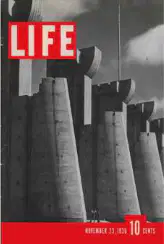
What magazine is credited as the birth of photojournalism as we know it today?
Life magazine
Time magazine
National Geographic
Vogue
Photojournalism was born as wood cut drawings were no longer used to report news events.
True
False
What is the main advantage of photojournalism over previous methods of reporting news events?
Photojournalism allows events to be viewed by millions and shapes public opinion with more believable photographs.
Photojournalism eliminates the need for written reports entirely.
Photojournalism ensures all news is unbiased and objective.
Photojournalism is only used for entertainment purposes.
As early as 1913, which magazine allowed fashion photography to be put into print?
Time
Vogue
Life
National Geographic
Who are mentioned as the top modern photographers in the passage?
Edward Weston and Ansel Adams
Henri Cartier-Bresson and Dorothea Lange
Annie Leibovitz and Steve McCurry
Richard Avedon and Diane Arbus
What was the primary theme for Ansel Adams' photography?
Nature
Portraits
Urban Life
Abstract Art
Diane Arbus is most noted for photographing people in which types of places?
Fashion studios
Mental hospitals and places others feared to go
Sports events
Nature reserves
According to the passage, feelings are well described with words and pictures add little to the depth of expression of feelings.
True
False
What does the passage say about the future of photography with digital imagery and computers?
Digital imagery and computers allow the medium to be used quickly and with great accuracy or to be modified and adapted to give many different expressions.
Digital imagery and computers will make traditional photography obsolete within a decade.
Digital imagery and computers limit the creative possibilities of photography.
Digital imagery and computers are only useful for professional photographers.
What is one of the most valuable forms of communication in the modern world, according to the passage?
Capturing life with the painting process of reflected light (photography)
Writing letters by hand
Sending messages via carrier pigeons
Communicating through smoke signals
Photography is the art or practice of what?
Taking and processing photographs
Cooking food
Writing stories
Building houses
2. This article about the history of photography will likely cover:
The development and evolution of photography over time
The history of painting techniques
Modern sculpture trends
Famous architects in history
What did you know before that the article discussed (see question 1)?
I knew some information before that the article discussed.
I did not know anything before the article discussed it.
I knew everything before the article discussed it.
I only knew unrelated facts before the article discussed it.
Which of the following is a task you are asked to do after reading the article?
List 5 things you didn’t know before you read the article.
Summarize the article in one sentence.
Write a review of the article.
Identify the author of the article.
Knowing about the history of photography is important because:
it helps us understand the development and impact of photography over time.
it allows us to take better photographs instantly.
it guarantees success as a professional photographer.
it eliminates the need for creativity in photography.
There were two vital elements to making a photograph. One was optical & the other ___________.
chemical
mechanical
digital
thermal
2. Leonardo da Vinci was credited with discovering the _________________________________.
camera obscura
printing press
steam engine
telescope
What Englishman was credited with first creating a paper image in 1835?
William Henry Fox Talbot
Louis Daguerre
Thomas Wedgwood
John Herschel
4. Daguerrotypes were made of ______________________________ coated with silver nitrate.
copper plates
glass sheets
wooden boards
plastic films
5. Early photography copied the work of the artist and consisted mostly of pictures of ___________________________________.
portraits
landscapes
animals
buildings
6. F.S. Archer of England discovered the Collodion process also called the __________ process.
wet plate
dry plate
silver gelatin
daguerreotype
Name one Civil War photographer.
Mathew Brady
Ansel Adams
Dorothea Lange
Henri Cartier-Bresson
What did Brady and Gardner use as a darkroom and why?
A wagon, so they could develop photos on site
A tent, to protect the chemicals from sunlight
A cave, to keep the temperature cool
A barn, because it was spacious
What subject did W H Jackson photograph that led to the establishment of National Parks?
Yellowstone
Grand Canyon
Yosemite
Mount Rushmore
Joseph Muybridge made photographs of what?
motion (or moving subjects, such as horses in motion)
landscapes and mountains
famous buildings
portraits of politicians
Who invented roll film and what date was it introduced?
George Eastman, 1888
Thomas Edison, 1891
Louis Daguerre, 1839
Joseph Nicéphore Niépce, 1826
What was the first box camera called in 1890?
Kodak
Polaroid
Leica
Canon
Around 1930 camera equipment became very sophisticated....eliminating the need for a tripod, the camera was hand held. Alfred Stieglitz used this technology to capture pictures of.
everyday life (or candid moments)
famous politicians
exotic wildlife
ancient ruins
What invention in the printing or publications world allowed pictures to be printed on the page leading to modern day photojournalism?
halftone process
rotary press
offset lithography
movable type
Name two early magazines that relied heavily on photography.
Life and National Geographic
Time and Reader's Digest
Forbes and The Economist
Vogue and Harper's Bazaar
What is one famous West Coast photographer who contributed to the advancement of photography in technical as well as creative ways?
Ansel Adams
Diane Arbus
Henri Cartier-Bresson
Richard Avedon
What was Diane Arbus most famous for?
photographing marginalized people or unusual subjects
painting abstract art
writing novels about New York City
composing classical music
In the late 70’s into current day photography technical details have been mastered leaving what as the focus today?
creativity or artistic expression
faster shutter speeds
cheaper equipment
larger file sizes

