
NEW
Font size
 Worksheets
Environmental Impact of Clothing Production
Total questions: 20
Worksheet time: 10mins

What is one of the main environmental issues caused by the increase in clothing production?
Increased water pollution
Deforestation
Air pollution from vehicles
Soil erosion
What happens to most of the textiles every year according to the text?
They are recycled
They are donated
They are sent to landfill or incinerated
They are reused
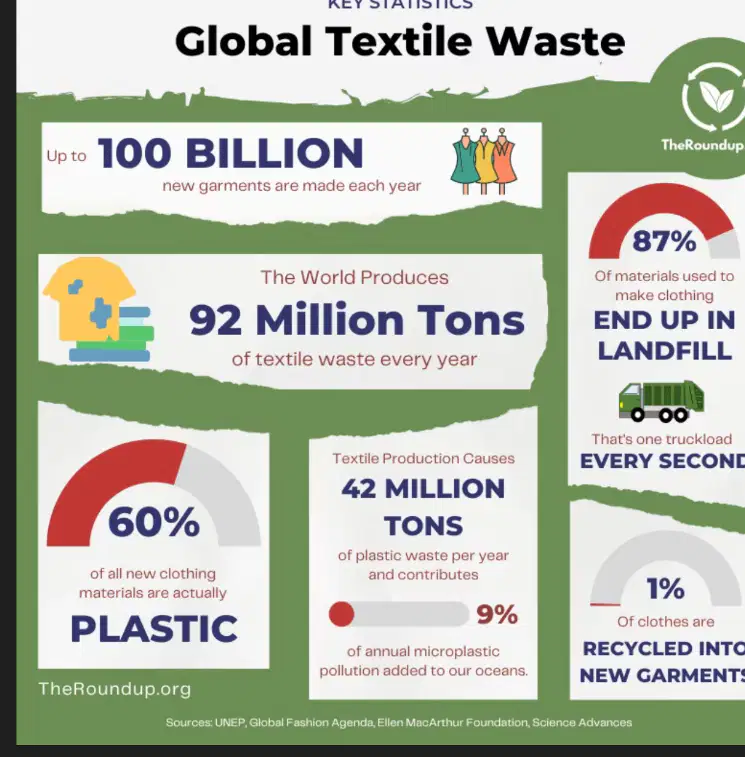
How many garments are made each year according to the infographic?
50 billion
75 billion
100 billion
150 billion

What percentage of clothing materials end up in landfill each year?
50%
87%
60%
30%
How much textile waste is produced globally each year?
50 million tonnes
70 million tonnes
92 million tonnes
120 million tonnes
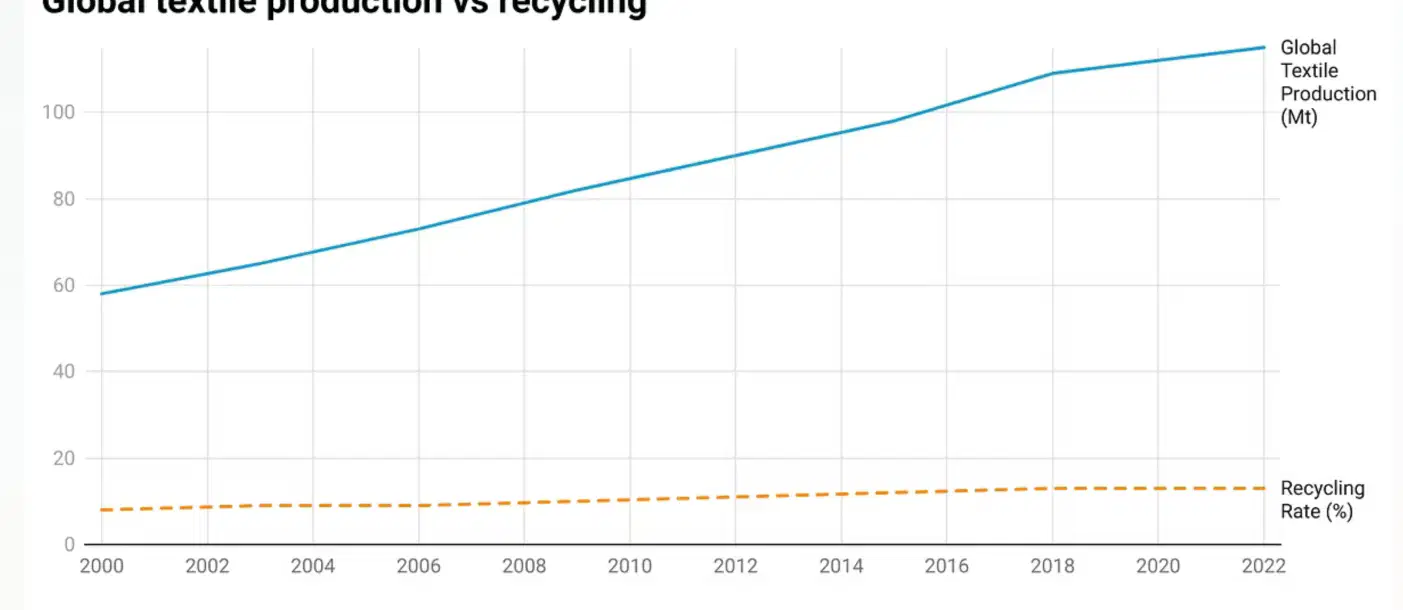
What has happened to the global production of textiles over the last two decades?
It has decreased significantly.
It has more than doubled.
It has remained the same.
It has slightly increased.

What percentage of textiles were recycled in 2022?
25%
50%
13%
5%
Which type of fiber is the biggest contributor to long-lasting textile waste in landfills?
Cotton
Polyester
Nylon
Silk
How long can synthetic fibers like polyester take to decompose?
A few months
A few years
Hundreds of years
Thousands of years
What percentage of discarded textiles are made from natural fibers?
35%
51%
65%
33%
How much clothing does the average Australian throw away per person every year?
10 kg
15 kg
23 kg
30 kg

What is the main topic discussed in the text?
Global warming
Textile production
Fashion waste
Recycling methods
What type of system does the text describe as being created by the current clothing lifecycle?
Circular system
Linear system
Sustainable system
Efficient system
What is a major issue with synthetic materials like polyester?
They are expensive to produce.
They break down quickly.
They contribute to microplastic pollution.
They are easy to recycle.
What is the main problem with the current clothing system according to the text?
Clothes are too expensive.
The system is linear: buy, wear, toss.
Clothes are worn for too long.
Recycling is too efficient.
Why are donation bins and charities overwhelmed?
They receive too few clothes.
They can sell all the clothes they receive.
They cannot sell all the clothes they receive.
They have too much storage space.

What harmful effects can clothes in landfills have on the environment?
They release harmful chemicals and gases.
They improve soil quality.
They reduce water pollution.
They increase biodiversity.
How much water is used to make one cotton T-shirt?
2,700 liters
500 liters
1,000 liters
3,500 liters
What is one benefit of designing clothes to be durable?
They are more fashionable.
They can be easily repaired or reused.
They are cheaper to produce.
They are made from synthetic materials.
What is one of the biggest design problems with the way the fashion industry currently works?
Lack of innovation
High production costs
Environmental impact
Limited market reach

