
 Worksheets
Intro to A&P, Cells and Tissues: Test 1 Study
Total questions: 73
Worksheet time: 1hrs 16mins


Which type of tissue allows the urinary organs to expand and stretch?
Simple squamous epithelium
Simple cuboidal epithelium
Transitional epithelium
Stratified columnar epithelium
Which type of tissue lines the bladder, urethra, and the ureters?
Simple squamous epithelium
Simple cuboidal epithelium
Transitional epithelium
Stratified columnar epithelium
Which type of tissue protects against abrasion?
Simple squamous epithelium
Pseudostratified columnar epithelium
Stratified squamous epithelium
Transitional epithelium
Where is simple cuboidal epithelium found?
In ducts and secretory portions of small glands and in kidney tubules
Air sacs of lungs and the lining of the heart
Ciliated tissues are in bronchi, uterine tubes, and uterus; smooth tissues are in digestive tract, bladder
Lines the bladder, urethra, and the ureters
Which type of muscle tissue is found in the digestive tract and bladder?
Smooth muscle
Skeletal muscle
Cardiac muscle
Nervous tissue
Which of the following is the study of the structures of the human body and their positional relationships to one another?
Anatomy
Pathology
Metabolism
Physiology
Which of the following is the study of how the body and its individual parts function in normal body processes?
Anatomy
Pathology
Metabolism
Physiology
What is the role of the effector in the control mechanism of homeostasis?
To respond to changes in the environment
To maintain the level or set point
To respond to the stimulus
To produce hormones
What is an example of a control mechanism in homeostasis?
Receptor
Control center
Effector
All of the above
What does the term "anterior" refer to in anatomical directional terms?
Behind
Above
In front of
Below
Which of the following statements is correct based on directional terms?
Your heart is superior to your brain
Your brain is superior to your heart
Your lungs are superior to your kidneys
Your kidneys are superior to your lungs
Which term is synonymous with "posterior"?
Ventral
Anterior
Dorsal
Lateral
What does the term "distal" refer to in anatomical terminology?
Closer to the trunk or attachment point
Farther from the trunk or attachment point
At the same level as the trunk or attachment point
Opposite to the trunk or attachment point
When a human body system fails to function properly what is thrown off?
Homeostasis
Metabolism
Phagocytosis
Meoisis
Cells form tissues form organs form systems form organism (CTOS)
True
False
The study of the functions of the organs and systems of the body is known as:
biology
anatomy
physiology
gross anatomy
Your dorsal cavity houses your
brain
lungs
heart
stomach
What is the main product of the endocrine system?
Bones
Blood
White blood cells
Hormones

Anterior (Ventral)
Toward the front / belly
Toward the back
Toward the head
Toward the tail
Lateral
Toward the midline
Toward the front / belly
Toward the sides
Toward the back
Superficial
Above some other body part
Below some other body part
Toward the center of the body or organ
Near the surface of the body or organ
Posterior (Dorsal)
Toward the tail
Toward the head
Toward the front / belly
Toward the back
The cranial cavity contains:
The brain
The heart
The lungs
The stomach
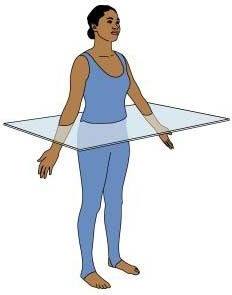
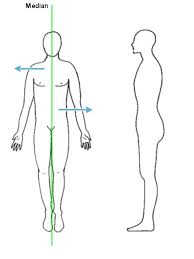
Closer to the midline
Medial
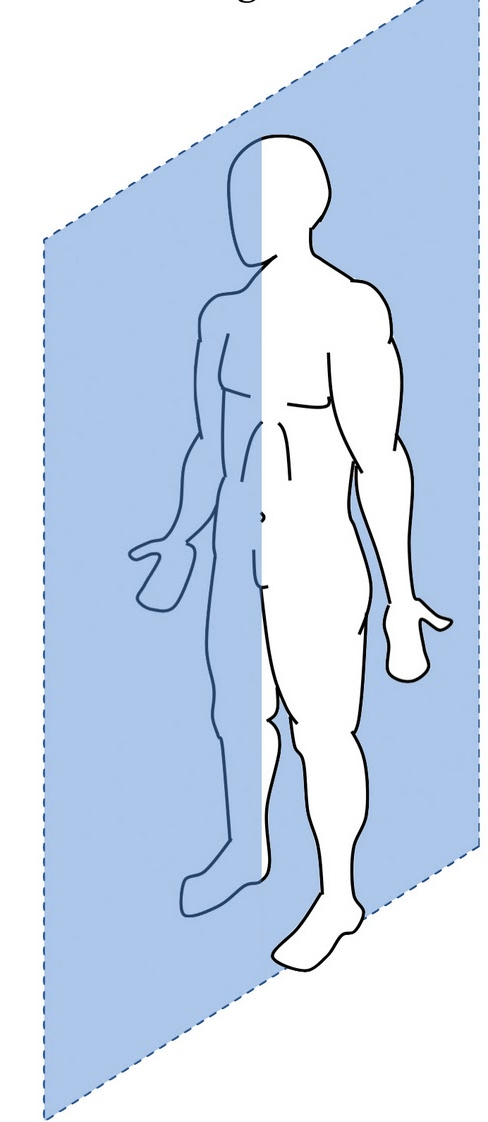
Protects the body, regulates body temperature
Integumentary
Nervous
Skeletal
Muscular
Carries oxygen and nutrients to all parts of the body.
Integumentary
Nervous
Circulatory
Respiratory
Supplies blood with oxygen and rids the body of carbon dioxide
Integumentary
Nervous
Circulatory
Respiratory
Which of the following shows the levels of organization of the human organism from the most SIMPLE to the most COMPLEX.
cells -> tissues -> organ systems -> organs
organs ->cells -> organ systems -> tissues
systems -> organs -> tissues -> cells
cells -> tissues -> organs -> organ systems
This system consists of the skin, hair, and nails.
Integumentary
Nervous
Skeletal
Muscular
The state of dynamic equilibrium of the internal environment of the body
positive feedback
negative feedback
homeostasis
controlled interaction
What is the role of the muscular system?
Support the body
Digest food and absorb nutrients
Movement
Transport oxygen
The __________ system is responsible for all these jobs:
Making blood cells, supporting your body, allowing movement, storing minerals, and protecting your organs
Muscular
Skeletal
Circulatory
Excretory
What does "function" mean?
How fast something moves
What something does
A measurement
What is the 1st level of organization in a body system?
Tissue
Organism
Organ System
Cell
Organ
What is the 2nd level of organization in a body system?
cell
organ
organ system
tissue
organism
What is the 3rd level of organization in a body system?
organism
organ system
organ
tissue
cell
What is the 4th level of organization in a body system?
cell
tissue
organ
organism
organ system
What is the 5th level of organization in a body system?
Cell
Tissue
Organ
Organ System
Organism
Which organelle is responsible for controlling what goes in and out of a cell?
Place the terms below in order from largest to smallest (just type the numbers below in the correct order)
1. Tissue
2. Organism
3. Cell
4. Organ System
5. Organ
(a)
What is meant by the phrase form dictates function?
The way something is looks can tell you a lot about what its job or function is
looks are not connected at all to function
the function of something can be different than its appearance
this is a law of anatomy
in _____ feedback loops the output of the system intensifies a response or amplifies it
In ____ feedback loops the output of a system causes a counter response to return to a set point or stabilize
What is a concentration gradient?
How particles naturally want to move from areas of high concentration to areas of low concentration
how particles naturally want to move from areas of low concentration to high
Body system that collects, processes and responds to sensory input
Includes: Brain, spinal cord, nerves
Lymphatic System
Immune System
Body system that aides in movement and stabilization
Includes: Skeletal, smooth and cardiac
Caridovasuclar System
Body system that regulates water balance, blood pressure, filters and eliminates waste
Includes: Kidneys, bladder
Muscular System
Endocrine System
Type of body tissue that supports, protects, insulates and transports. Also binds of other tissues together
Type of body tissue that contracts to allow movement
Type of body tissue that aides in control, communication and coordination
Which of the following are types of connective tissue
cartilage
blood
bone
skeletal
Which type of muscle is involuntary and involved in contracting to circulate blood
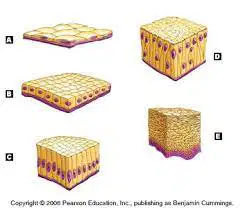
Which image shows squamous cells
A
B
C
D
Name a survival need of the body
(a)
Which cavities make up the dorsal cavity?
(a)
The pelvic cavity contains which organs?
thoracic
reproductive and bladder
kidneys and stomach
intestines and bladder
Epithelial tissue is vascular
True
False
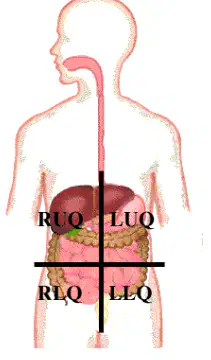
Which quadrant houses most of the liver, the gallbladder, and part of the pancreas?
Right Upper Quadrant
Left Upper Quadrant
Right Lower Quadrant
Left Lower Quadrant
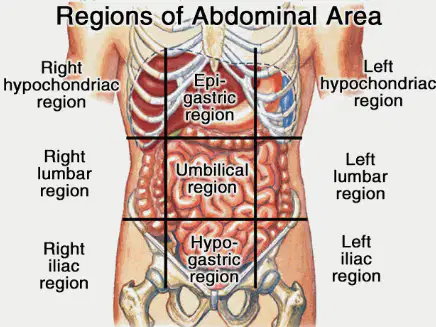
The left lumbar region is inferior to the umbilical region.
True
False

Which regions are superior and inferior to the umbilical region
right and left lumbar
right and left hypochondriac
left lumbar and left illiac
epigastric and hypogastric

