
 Worksheets
Learning Objectives & Key Vocabulary
Total questions: 68
Worksheet time: 34mins
What is a two-way radio?
A device that can only transmit voice signals
A device that can both transmit and receive voice signals
A device that can only receive voice signals
A device that transmits data only
What does half-duplex mean?
Both people can talk at the same time
Only one person can talk at a time
No one can talk
It is a type of antenna
Radio waves are:
Sound waves used to carry information through air
Electromagnetic waves used to carry information through air
Water waves used for communication
Light waves used for communication
What is a channel in walkie-talkie technology?
A device for transmitting signals
A specific frequency used for communication
A privacy code
A type of antenna
CTCSS/DCS are:
Types of antennas
Privacy codes that filter unwanted conversations
Communication devices
Transmission ranges
What does transmission range refer to?
The number of channels available
The maximum distance signals can travel effectively
The type of privacy code used
The type of antenna used
Fill in the blank: The button that must be pressed when speaking into a walkie-talkie is called the _________.
push-to-talk button
volume control
channel selector
power switch
Fill in the blank: The part of a walkie-talkie used for transmitting and receiving signals is the _________.
antenna
battery
speaker
microphone
Fill in the blank: The component that plays incoming messages in a walkie-talkie is the _________.
speaker
microphone
antenna
battery
Fill in the blank: The part of a walkie-talkie that captures your voice is the _________.
microphone
antenna
speaker
battery
Fill in the blank: The power source for a walkie-talkie is usually _________
batteries
solar panels
wind turbines
hand cranks
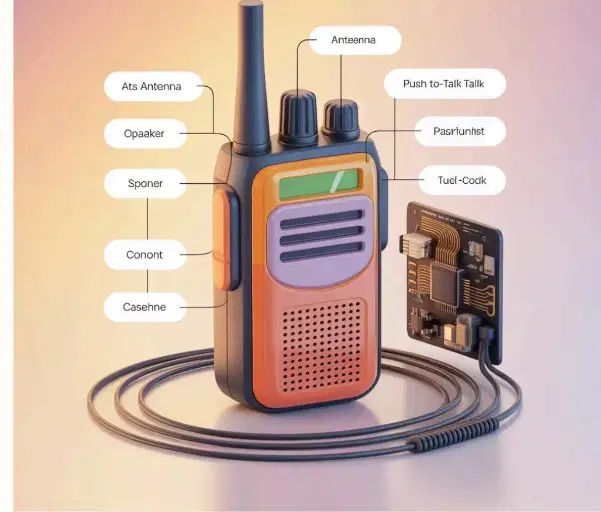
Match the following parts of a walkie-talkie with their correct names as shown in the diagram:
Antenna
Used for transmitting and receiving signals
Push-to-Talk Talk
Must be pressed when speaking
Speaker
Plays incoming messages
Power Source
Usually batteries
Microphone
Captures your voice
What does the microphone in a walkie-talkie convert your voice (sound waves) into?
Electrical signals
Magnetic waves
Light energy
Mechanical energy
What type of waves does the walkie-talkie's internal circuitry transform electrical signals into?
Radio waves
Sound waves
Light waves
Water waves
At what speed do radio waves travel through the air?
The speed of light (186,000 miles per second)
The speed of sound (1,125 feet per second)
10,000 miles per hour
100,000 miles per second
What happens when another walkie-talkie's antenna catches radio waves?
The internal circuitry converts them back into electrical signals and then into sound through the speaker, reproducing your voice.
The walkie-talkie immediately shuts down to avoid interference.
The antenna starts to heat up and glows.
The walkie-talkie begins to record the radio waves for later playback.
Radio waves require water to travel, just like ocean waves.
True
False
Walkie-talkies typically use specific frequency bands reserved for short-range communication devices.
True
False
What are the primary functions of the antenna on a walkie-talkie?
Transmitting radio waves by converting electrical signals into electromagnetic waves
Receiving incoming radio waves and converting them back into electrical signals
Determining the effective range of communication between devices
All of the above
Fill in the blank: Taller antennas on walkie-talkies can send and receive signals over ______ distances because they can better interact with the radio waves.
greater
shorter
weaker
lower
Professional walkie-talkies often have longer antennas than toy versions designed for children because:
longer antennas improve signal range and clarity
longer antennas are easier for adults to handle
children's walkie-talkies do not require any antenna
professional walkie-talkies are always used outdoors
True or False: The orientation of the antenna does not affect its performance.
True
False
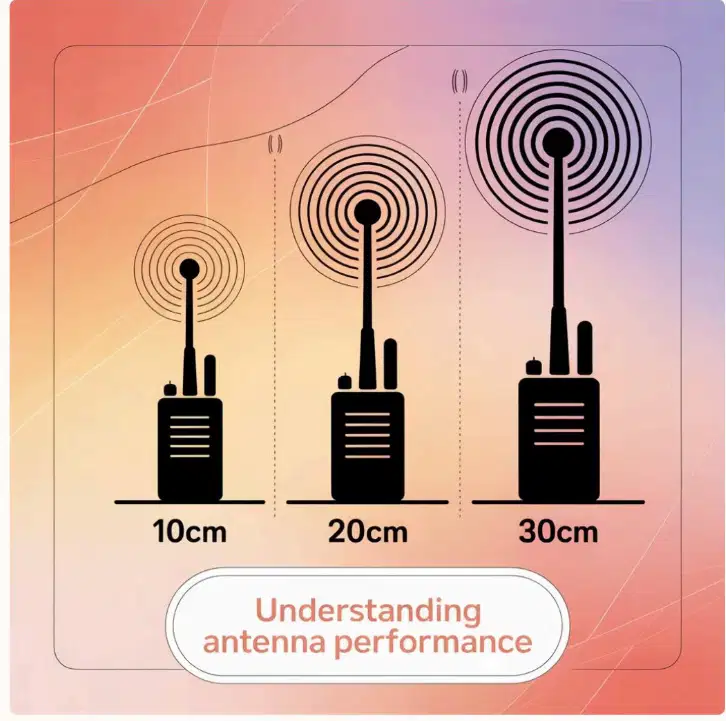
According to the diagram titled 'Understanding antenna performance', which antenna length is likely to provide the greatest range?
10 cm
20 cm
30 cm
For optimal performance, an antenna's length should correspond to a specific fraction of the wavelength being transmitted. Which of the following are common fractions mentioned in the passage?
A) 1/3 or 1/5
B) 1/4 or 1/2
C) 1/6 or 1/8
What are channels in the context of walkie-talkies? Channels are specific _______ that walkie-talkies use to communicate.
radio frequencies
passwords
batteries
antennas
Which government agency in the US regulates the radio frequencies used by walkie-talkies?
FDA
FCC
NASA
EPA
Users must select the same channel on their walkie-talkie devices to communicate with each other.
True
False
What is the purpose of privacy codes in modern walkie-talkies?
To increase battery life
To subdivide channels and reduce interference
To make the device waterproof
To improve sound quality
The channel system can be compared to a playground with multiple slides. If you and your friend want to communicate, you both need to be on the same _______.
slide (channel)
swing
ladder
sandbox
Which of the following is NOT a factor that affects the range of consumer walkie-talkies?
Terrain
Weather conditions
Color of the walkie-talkie
Power output
Fill in the blank: Radio waves used by walkie-talkies cannot easily penetrate ________, dense forests, or large buildings.
thick walls
open fields
clear skies
glass windows
Walkie-talkies can easily communicate through metal structures without any signal loss.
True
False
What is a key difference between walkie-talkies and phones in terms of communication system?
Walkie-talkies use a full-duplex system
Walkie-talkies use a half-duplex system
Phones use a half-duplex system
Both use the same system
Fill in the blank: Most walkie-talkies run on batteries that have ________ life, especially when transmitting.
limited
unlimited
permanent
endless
Which of the following can cause interference with walkie-talkie communication?
Other walkie-talkies
Baby monitors
Wireless equipment
All of the above
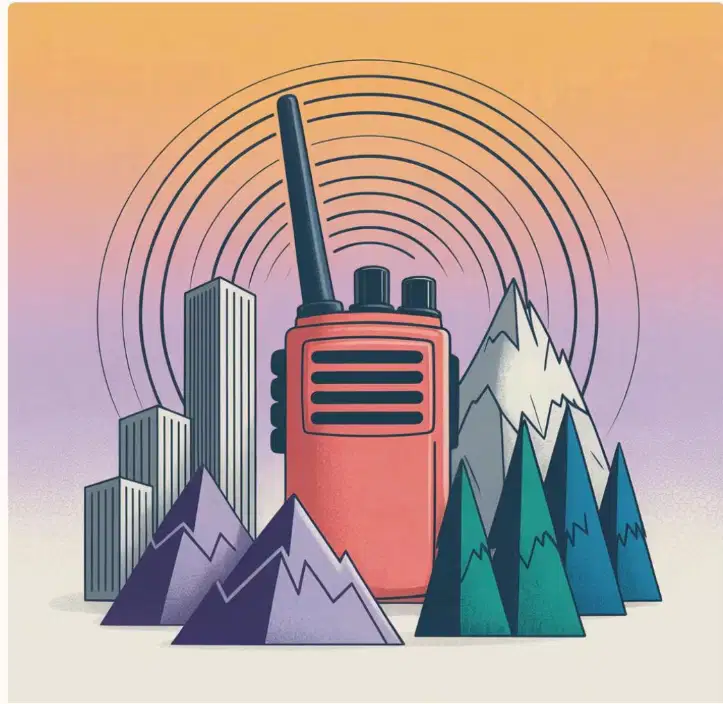
Refer to the image of the walkie-talkie surrounded by mountains and radio waves. What does this image illustrate about walkie-talkie communication?
Walkie-talkies work best in mountainous areas
Terrain can affect the range of walkie-talkie communication
Walkie-talkies do not use radio waves
Mountains improve signal strength
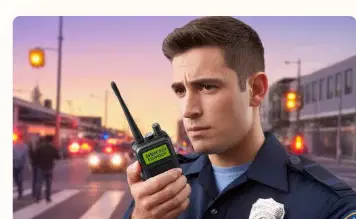
Which professionals rely on advanced walkie-talkies for critical communication during emergencies?
Police officers, firefighters, and paramedics
Teachers and students
Chefs and waiters
Artists and musicians
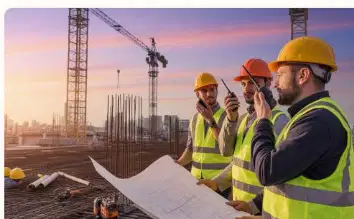
What is one key benefit of using walkie-talkies in construction sites, factories, and warehouses?
They play music
They help supervisors direct teams and respond quickly to safety concerns
They provide internet access
They are used for cooking
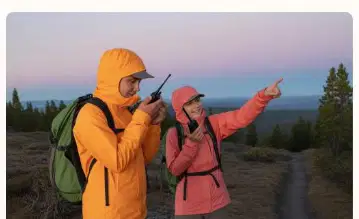
Hikers, campers, and outdoor enthusiasts use walkie-talkies in remote areas where cell phone coverage is unavailable.
True
False
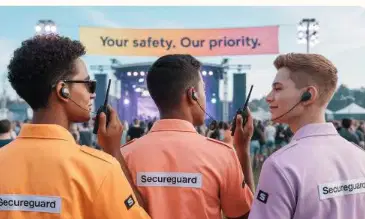
Fill in the blank: Concerts, conferences, and sporting events rely on walkie-talkies for ________ coordination.
staff
musical
culinary
artistic
Professional walkie-talkies typically offer higher power output (up to ___ watts compared to 0.5-1 watt in consumer models).
5
2
10
0.2
Professional walkie-talkies differ from consumer models in which two ways?
They have greater range and durability.
They are smaller and have fewer channels.
They use disposable batteries and are waterproof.
They are less expensive and have built-in games.
Which of the following is a reason walkie-talkies are reliable in emergencies?
They require cell towers to function
They depend on internet connectivity
They operate independently of infrastructure
They need regular service plans
What makes walkie-talkies accessible to users of all ages and technical abilities?
Complicated menus
Pressing a button and speaking
Navigating service plans
Dialing numbers
Walkie-talkies excel at one-to-many communication.
True
False
For children, walkie-talkies provide not only entertainment but also valuable lessons about ________, communication protocols, and the physics of wave propagation.
radio technology
marine biology
ancient history
culinary arts
Why are walkie-talkies considered cost-effective?
They require monthly service fees
They offer a one-time purchase cost for years of use
They need frequent repairs
They have high data charges
How do walkie-talkies work to allow communication across distances without phones or networks?
Walkie-talkies work by converting voice into radio waves that travel through the air to another device, allowing communication across distances without phones or networks.
Walkie-talkies use internet connections to send messages to other devices, requiring a Wi-Fi network.
Walkie-talkies rely on satellite signals to transmit voice communication over long distances.
Walkie-talkies use Bluetooth technology to connect directly to mobile phones for communication.
What is the main advantage of walkie-talkies over cell phones?
They have longer battery life
They don’t require cellular networks or infrastructure
They can transmit over unlimited distances
They allow multiple people to speak simultaneously
What does the microphone in a walkie-talkie convert your voice into?
Digital code
Radio waves
Electrical signals
Sound waves
At what speed do radio waves travel?
The speed of sound
The speed of light (186,000 miles per second)
60 miles per hour
Depends on the power of the walkie-talkie
Why are longer antennas generally better for walkie-talkies?
They look more professional
They use less battery power
They can better interact with radio waves, increasing range
They are more durable
What are channels in walkie-talkie communication?
The buttons on the device
Specific radio frequencies used to communicate
The number of people who can talk at once
The volume settings
What is the purpose of privacy codes in modern walkie-talkies?
To encrypt messages so they can’t be understood
To increase the range of transmission
To reduce interference from other users on the same channel
To save battery power
What is the typical maximum range of consumer walkie-talkies in optimal conditions?
0.5-2 miles
10-20 miles
50-100 feet
Unlimited range
What does "half-duplex" mean in relation to walkie-talkies?
The device works at half power to save battery
Only one person can talk at a time
The device can only communicate with one other walkie-talkie
The range is half of what is advertised
Which of the following would most significantly reduce a walkie-talkie’s effective range?
Using it at night
Using it in a dense forest or inside a building
Having a fully charged battery
Using it with the antenna extended
Which professional group uses walkie-talkies for coordinating operations in noisy environments?
Teachers
Office workers
Construction workers
Librarians
What makes walkie-talkies valuable during natural disasters?
They can predict weather patterns
They continue to function when cell towers fail
They have unlimited battery life
They can penetrate any obstacle
How do walkie-talkies achieve group communication?
By connecting to the internet
By dialing multiple numbers at once
Everyone on the same channel receives the message simultaneously
They can't communicate with more than two devices
What is measured in watts on a walkie-talkie?
Battery capacity
Speaker volume
Power output (affecting range)
Antenna length
Which government agency regulates radio frequencies in the United States?
FBI
FCC
NASA
EPA
What is the relationship between antenna length and wavelength for optimal performance?
The antenna should be as short as possible
The antenna should be exactly the same as the wavelength
The antenna should correspond to a specific fraction (often 1/4 or 1/2) of the wavelength
There is no relationship between antenna length and wavelength
Which of these would NOT typically cause interference with walkie-talkie signals?
Other walkie-talkies on the same channel
Baby monitors
Wireless equipment
LED light bulbs
How do professional walkie-talkies differ from consumer models?
They use completely different technology
They typically offer higher power output, more channels, and better encryption
They require cellular networks to function
They can only communicate with other professional models
What happens when you press the push-to-talk button on a walkie-talkie?
The device starts recording your message
The device switches from receive mode to transmit mode
The battery starts charging
The device scans for available channels
Which of these environments would be most challenging for walkie-talkie communication?
An open field
A small wooden cabin
A large metal warehouse
A quiet library
What type of electromagnetic waves do walkie-talkies use?
X-rays
Microwaves
Radio waves
Gamma rays