
 Worksheets
UNIT TEST: AMERICAN REVOLUTION (OMS)
Total questions: 56
Worksheet time: 5hrs 40mins
Which of the following reasons led to the outbreak of the American Revolution?
Pick 2
A. Colonists did not feel they should be taxed for the French and Indian War debt.
B. Colonists wanted to expand their fur trade and Great Britain was in the way.
C. Colonists wanted limitations set on religious freedom in the colonies.
D. Colonists were angered by the acts and taxes imposed on them without their consent.

Which description of the battle correctly completes the list?
British General Cornwallis surrendered, effectively ending the Revolutionary War.
The Last major battle.

War of 1812
2012
American Revolution
French and Indian War

Which geographic feature is connected to the map above?
Boston Harbor
Mississippi River
Great Lakes
Appalachian Mountains
As late as 1775, many colonists were still reluctant to cut ties with Great Britain. Which of the following events helped convince colonists that freedom was the best option?
Thomas Paine’s pamphlet, Common Sense
King George III’s acceptance of the Olive Branch Petition
The passage of the Intolerable Acts by Parliament
The British defeat of the colonists at the Battle of Bunker Hill
"There shall be a firm and perpetual Peace between his Brittanic Majesty and the said States... all Hostilities both by Sea and Land shall from henceforth cease: All prisoners on both Sides shall be set at Liberty."
This excerpt would be found in which historical document?
Common Sense
Treaty of Paris 1783
Declaration of Independence
Proclamation of 1763
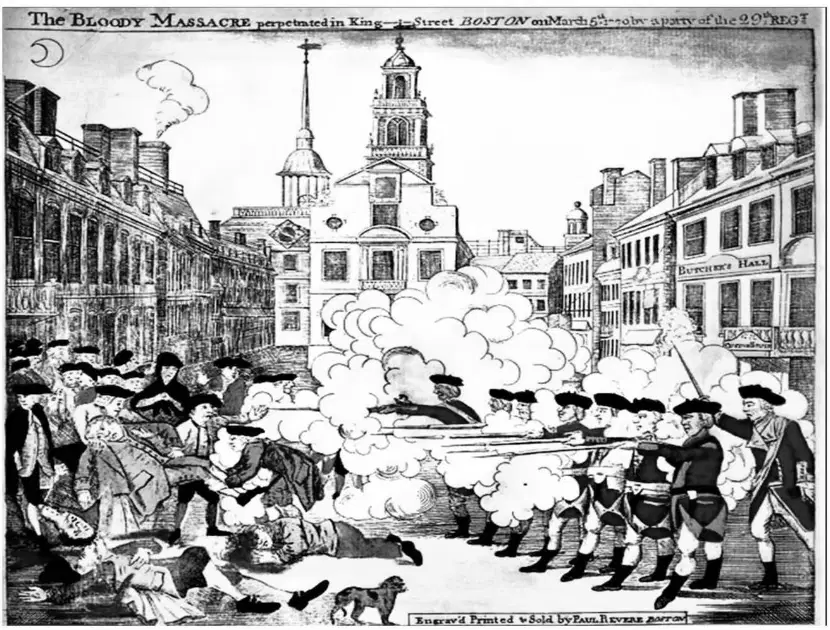
Although the illustration above is the most famous depiction from the night of March 5, 1775, one important Patriot was purposely left out. Who is the forgotten victim?
Sam Adams
King George III
Crispus Attucks
Wentworth Cheswell
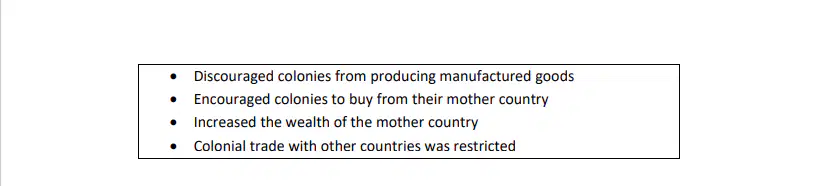
Which economic policy described above increased tensions between the colonies and Great Britain?
Lack of Representation
Quartering of Soldiers
Propaganda
Mercantilism
Increased the wealth of the mother country
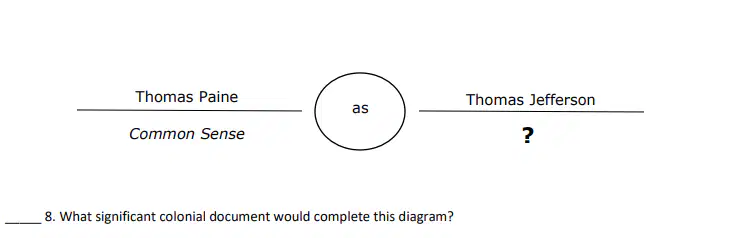
What significant colonial document would complete this diagram?
Declaration of Independence
Poor Richard’s Almanac
Treaty of Paris 1783
The Crisis

The actions outlined in the above boxes are an example of British colonists -
exercising their right to self-government
engaging in acts of civil disobedience
creating grievances against Mother England
contributing further to French and Indian War debt
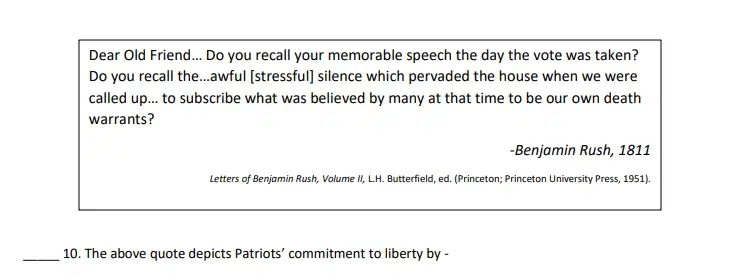
The above quote depicts Patriots’ commitment to liberty by -
signing the Articles of Confederation
enlisting to fight at the Battle of Saratoga
signing the Declaration of Independence
surrendering to the British at Yorktown
Unalienable rights are rights that cannot be taken away, and Thomas Jefferson mentioned them in the Declaration of Independence to emphasize the fundamental freedoms that all people possess. Which of the following best explains why Jefferson included unalienable rights in the Declaration of Independence?
To highlight the basic freedoms that all people are born with and that cannot be taken away
To support the idea of a monarchy ruling the colonies
To encourage colonists to obey British laws without question
To suggest that only certain groups deserve rights
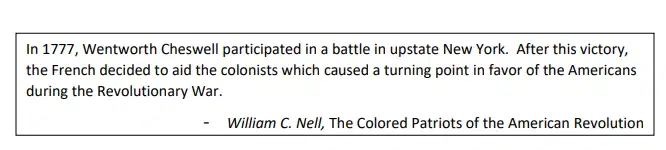
According to the above source, which significant battle did Wentworth Cheswell fight in during the American Revolution?
Yorktown
Saratoga
Trenton
Concord

Which of the following BEST completes this diagram?
A. Conditions during the winter at Valley Forge
B. Treatment of the Patriots after the Battle of Lexington
C. Impact of acts imposed on the British colonists
D. Result of rapid population growth in the colonies
This question has two parts.
This excerpt is from the Declaration of Independence.
…The history of the present King of Great Britain is a history of repeated injuries and usurpations, all having in direct object the establishment of an absolute Tyranny over these States. To prove this, let Facts be submitted to a candid world. …Called together legislative bodies at places unusual and distant… …Quartering large bodies of armed troops among us… …For imposing Taxes on us without our Consent… …Depriving us of Trial by Jury.
Part A: Based on the excerpt, why did colonists feel that Parliament was denying them a voice in government?
Parliament required Americans to serve in the British military.
King George III forced Americans to give up some of their land to Native Americans.
Parliament was making decisions about the colonies without any colonial representation.
British soldiers injured many colonists in hand-to-hand combat.
This question has two parts.
This excerpt is from the Declaration of Independence.
…The history of the present King of Great Britain is a history of repeated injuries and usurpations, all having in direct object the establishment of an absolute Tyranny over these States. To prove this, let Facts be submitted to a candid world. …Called together legislative bodies at places unusual and distant… …Quartering large bodies of armed troops among us… …For imposing Taxes on us without our Consent… …Depriving us of Trial by Jury.
Part B: Which statement supports the answer to Part A?
A. “…let Facts be submitted to a candid world…”
B. “…For imposing Taxes on us without our Consent…
C. “…Depriving us of Trial by Jury…
D. “…Quartering large bodies of armed troops among us…
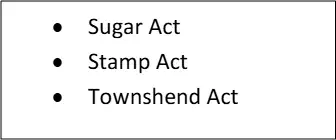
How did the items in the box above contribute to the start of the American Revolution?
Forced colonists to begin trading with surrounding Native tribes.
Colonists felt their rights as Englishmen had been violated.
Forced colonists to rely more heavily on slave labor.
Colonists felt betrayed by Great Britain for establishing new colonies.
Which of the following is a grievance included in the Declaration of Independence?
Colonists were required to house soldiers in their homes.
Colonists were forced to follow the teachings of the Church of England.
Colonists were only allowed access to newspapers printed in England.
Colonists were prohibited from owning slaves.
Which statement BEST represents the opposing viewpoint of colonists regarding the issuance of the Proclamation of 1763?
I do not have enough money to grow crops on my land.
It’s overcrowded in far too many cities, and I need to move west.
War with American Indians will be inevitable, resulting in more debt.
The French will end up losing all claim to land in North America.
What is the significance of the Battle of Yorktown?
Turning point of American Revolution
Signaled the end of fighting
Beginning of American Revolution
Encouraged writing of The Crisis
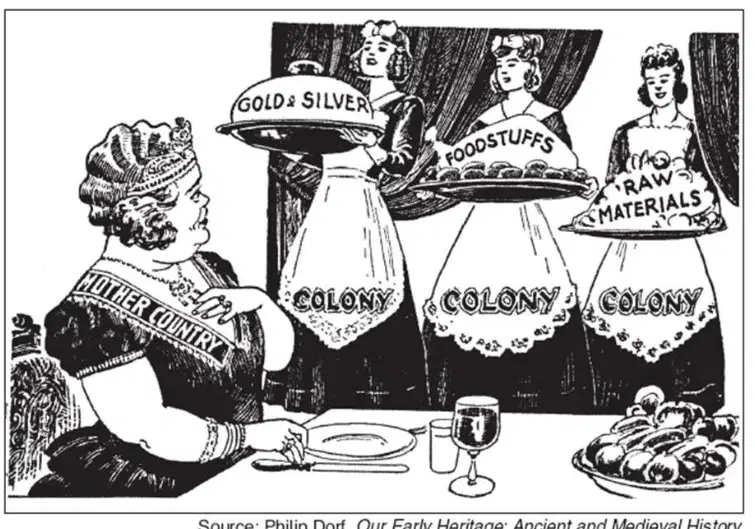
Which cause of the American Revolution is demonstrated in the above political cartoon?
Lack of representation in Parliament
Intolerable Acts
Townshend Acts
Mercantilism
The interaction between the minutemen and the British troops at Lexington and Concord was significant because -
it allowed for peaceful negotiations to end the war.
it signaled the beginning of fighting in the American Revolution.
it led to French involvement in the American Revolution.
it signaled the end of fighting in the American Revolution.
“If particular care and attention is not paid to the ladies, we are determined to foment a rebellion, and will not hold ourselves bound by any laws in which we have no voice, or representation.”
Which colonial figure would MOST LIKELY have written the words in the above excerpt?
A. Abigail Adams to John Adams during the writing of the Declaration of Independence
B. Sam Adams to John Adams during the creation of the Articles of Confederation
C. Ben Franklin to George Washington after the Battle of Saratoga
D. Mercy Otis Warren to Continental Congress during the signing of the Olive Branch Petition
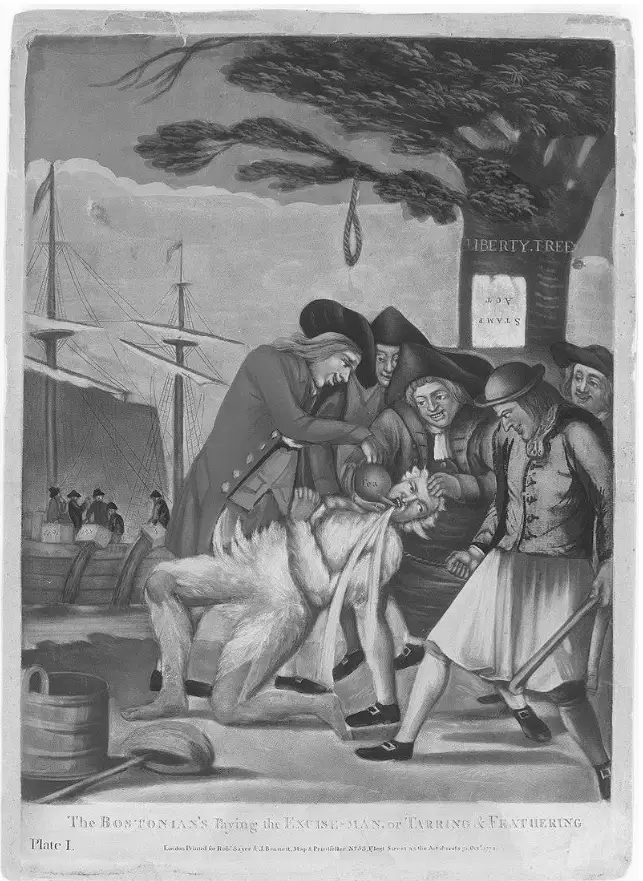
The above political cartoon reflects the colonists’ dissatisfaction with -
the creation of the Articles of Confederation.
restrictions placed on colonists’ freedom of religion.
political debates regarding the passage of the Declaration of Independence.
British economic policies following the French and Indian War.

Which event completes the timeline above?
Intolerable Acts
Declaration of Independence
Battle of Yorktown
Treaty of Paris

The Boston Tea Party was when
The British and colonists traded tea with each other
The colonists would have tea
Colonists dumped tea into Boston Harbor to protest
King George invited people to the palace to party

What does this early American political cartoon represent?
The colonists wanting to control the king
The ocean dividing Britain and America
The king wanting to control the colonists
The land between Britain and America
Which of these taxes/acts forced colonists to house British troops?
Proclamation Act
Quartering Act
Boston Massacre
Intolerable Act
15) Which of these groups was organized to fight back against the British government in the years leading up to the American Revolution?
A) the Tories
B) the Loyalists
C) the Know-Nothings
D) the Sons of Liberty
The colonists objected to the Proclamation of 1763 because it limited their ability to move west of the-
Great Lakes
Hudson River
Appalachian Mountains
Pacific Ocean
Which battle is considered the first battle of the American Revolution?
Battle of Yorktown
Battle of Bunker Hill
Battle of Lexington and Concord
Battle of Saratoga
Which battle was a turning point in the American Revolution because it led to French support for the Americans?
Battle of Bunker Hill
Battle of Saratoga
Battle of Yorktown
Battle of Trenton
Which battle marked the end of the American Revolution?
Battle of Bunker Hill
Battle of Saratoga
Battle of Yorktown
Battle of Trenton


King of England during the Revolutionary War era.
King George III
King Charles II
King George II
King Ferdinand

I was the British general who surrendered at Yorktown, VA
Cornwallis
John Paul Jones
Marquis De Lafayette
George Washington

Answer the question
F
G
H
J


Who wrote the Declaration of Independence?
George Washington
Sam Adams
John Adams
Thomas Jefferson

He wrote the Declaration of Independence in 1776
George Washington
Thomas Jefferson
Ben Franklin
Alexander Hamilton

This list includes rights that are considered --
transferable
legislated
unalienable
inherited

The rights listed above were --
established by a series of Supreme Court decisions
defined by Thomas Jefferson in the Declaration of Independence
established by the ratification of the U.S. Constitution
defined by President George Washington

Established by a series of Supreme Court decisions
Defined by Thomas Jefferson in the Declaration of Independence
Established by the ratification of the U.S. Constitution
Defined by President George Washington in his Farewell Address


What was the first battle of the American Revolution?
Guilford Courthouse
Trenton
Yorktown
Lexington & Concord

The Continental Congress issued this commission to -
Benedict Arnold
Alexander Hamilton
John Hancock
George Washington

A
B
C
D

A
B
C
D

A
B
C
D

A
B
C
D

A
B
C
D

A
B
C
D

