
 Worksheets
Ceramics Safety and Basics
Total questions: 25
Worksheet time: 15mins
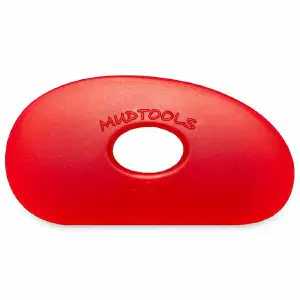
This tool is called:
Red Tool
Rib Tool
Smoothing Tool
Scrape Tool

The wettest form of clay is called:
Slip
Slap
Slop
Slurp
At this stage, you can attach things, but you can no longer mold or shape the clay:
Slip
Plastic
Leather Hard
Bone Dry
At this stage, you can no longer attach or manipulate the clay. It must be fired or recycled.
slip
plastic
leather hard
bone dry
To attach one piece of clay to another, you need to:
smash it together really hard and smooth it
score, slip, stick, smooth
glue it with slip
just stick it together; clay sticks to itself
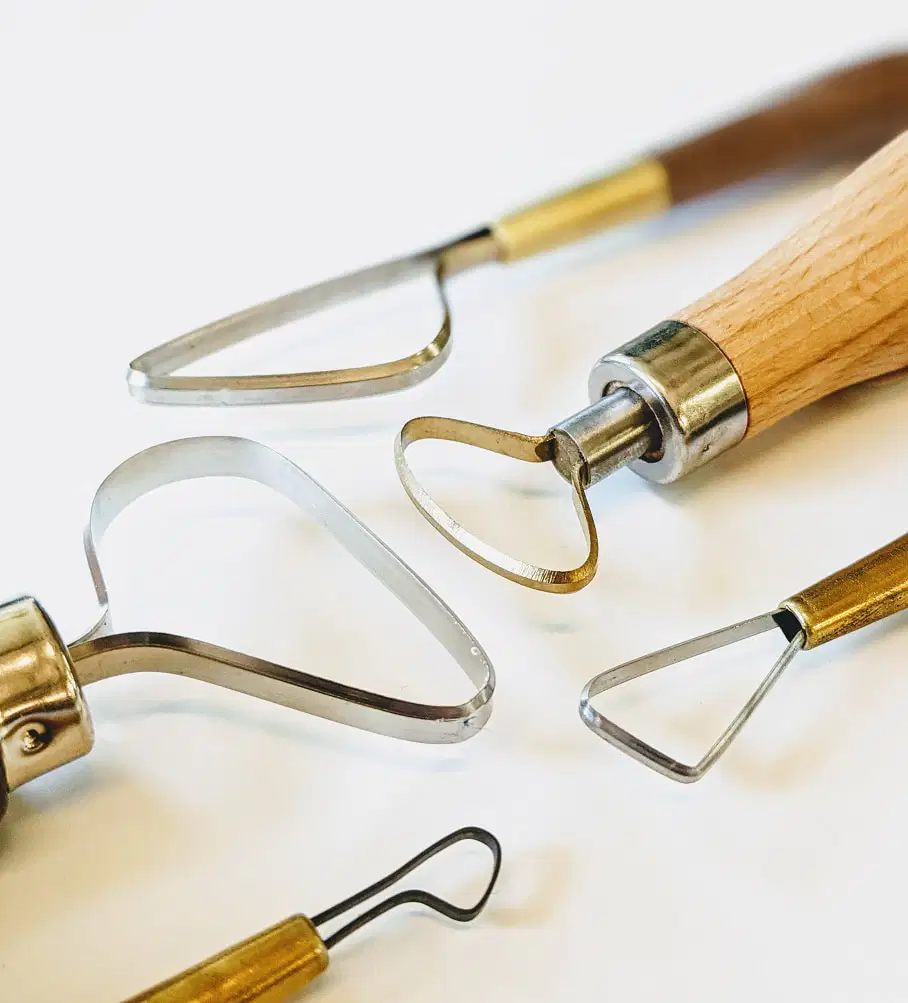
These tools are all called:
rib tools
smoothing tools
carving tools
ribbon tools

The only food-safe way color clay is with:
acrylic paint
tempera paint
underglaze
glaze

This type of clay coloring is better for detail work but requires a clear glaze to be shiny and food-safe.
Underglaze
Glaze
Tempera Paint
Acrylic Paint
Glaze must be wiped from the bottom of all pots because:
The pot will stick to the kiln shelf
The student may be responsible for doing extra work to restore the kiln shelf
It looks nice
All answers are correct
All Montera kiln firings start out with a "candling phase," to:
heat up the clay
heat up the kiln
heat up the kiln room
fully dry out the greenware
Clay is fully dehydrated at this temperature:
200 degrees
527 degrees
862 degrees
1087 degrees

At 1456 degrees:
the clay solidifies
the clay melts
organic materials burn out
you can throw in the one ring
At 1608 degrees
Organic materials burn out
Sintering occurs
Vitrification occurs
Clay burns
Sintering means
Organic materials burn out
particles fuse together to make ceramics solid and strong
clay goes from a porous, absorbent state into a dense, glass-like state to make the pot strong enough to be used
the clay catches on fire

At 2232 degrees what happens?
organic materials burn out
Sintering occurs
Vitrification occurs
the Eye of Sauron appears
Vitrification is
When organic materials burn out
when particles fuse together to make ceramics solid and strong
when the clay goes from a porous, absorbent state into a dense, glass-like state necessary for a pot to be strong and useful
the fire of Smaug
At what stage must ceramics be to go into the kiln?
slip
plastic
leather hard
bone dry
Your item will not be fired without:
Your name on it
A kiln ticket
It looks sturdy enough to fire
All answers are correct

If your piece doesn't make it to firing:
You get a zero
You get exempted from the assignment
You get to remake it. Pottery is just like that sometimes.
You get to tear up somebody else's item

What type of clay is easily moldable?
(a)
What is glaze?
A donut topping
A liquid we use to attach pieces of clay together
A liquid we apply to our work that when fired, melts and becomes glasslike
a liquid we put on unfired clay
Where do we fire our ceramic work?
An oven
A kiln
A microwave
A fireplace
You can attach wet clay to dry clay.
True
False

