
 Worksheets
AP Studio Drawing: Pre-Assessment
Total questions: 118
Worksheet time: 7hrs 34mins

Area in a work of art that catches and holds the viewers attention.
space
unity
emphasis
balance

A principle of design that focuses on a repetition of elements is ________________.
Shape
Pattern
Value
Proportion


Form is...
has a tactile surface
2 Dimensional and can be organic or geometric
3 Dimensional and can be organic or geometric
feels real
The visual distribution of weight through color, texture, and space.
Balance
Line
Emphasis
Contrast
Creates a sense of excitement and helps direct the viewers eye around the artwork.
Movement
rhythm
unity
variety
Defined by a point moving in space.
Line
value
color
space
Element of art by which positive and negative areas are defined or a sense of depth is achieved.
Space
color
texture
line

This element refers to the wavelength of reflected light.
Line
Shape
Color
Texture

This term refers to the quality of wholeness or oneness that is achieved through the effective use of the elements and principles of art.
Unity
Balance
Emphasis
Rhythm
Your sustained investigation (concentration) is intended to help students become inquisitive, thoughtful artists and designers able to articulate information about their work.
True
False
Part of the purpose of the sustained investigation (concentration) is to Investigate Materials, Processes, and _________?
stuff
homework
grades
ideas
Students must come up with _____________ to guide them when creating art.
questions
art
things
none of these
Essential questions are ___________ queries intended to provoke thought, inquiry, discussion, and understanding related to the big ideas.
restricted
open-ended
limited
forgotten
Students must identify with the Formal Qualities (Principles of Design and Elements of Art) when reflecting on their work.
True
False
A concentration requires that an artist pursues a particular idea, issue, or theme. Clearly state the central idea of your sustained investigation (concentration). (3+complete sentences.)
Dry material that is almost like chalk which looks like a colored drawing.
Pencil
Charcoal
Ink
Pastel
This drawing media uses washes.
Pencil
Charcoal
Ink
Pastel
______________ is the most versatile drawing tool.
Pencil
Charcoal
Ink
Pastel
According to the text, this is often used as preliminary sketches.
(More than one answer)
Pencil
Charcoal
Ink
Pastel
Needs a textured surface
(More than one answer)
Pencil
Charcoal
Ink
Pastel


This painting belongs to which art movement?
Fauvism
Surrealism
Futurism
Realism

This painting belongs to which art movement?
Realism
Impressionism
Art Nouveau
Post Impressionism

Which style of art is this painting an example of?
Medieval/Byzantine
Roman
Renaissance
Classic Greek

Which style of art is this painting an example of?
OP Art
Pop Art
Realism
Futurism

Which style of art is this painting an example of?
Realism
Cubism
Op Art
Pop Art

Which style of art is this painting an example of?
Realism
Fauvism
Impressionism
Op Art

Which style of art or movement is this painting an example of?
Abstract Realism
Abstract Impressionism
Abstract Expressionism
Abstract Modern

Which style of this architectural that features the use of the rib vault and the flying buttress, exemplified in Paris's Notre Dame Cathedral?
gothic
neoclassical
baroque
modern

Which style of this architectural that attempts to revive the clean, simple lines of Ancient Greek architecture?
gothic
neoclassical
baroque
modern

Which style of art is this painting an example of?
Dada
Realism
Fauvism
Pointillism
______ tells us what the work says-What mood does the work convey? Serious or comic? Time of Year?
Content
Sensory
Formal
Technical
Expressive
______are things we experience-What kinds of lines are used? How is the form indicated? Is there a texture?
Content
Sensory
Formal
Technical
Expressive
______tell us how art elements are organized, principles of design, How is balance achieved? Is pattern evident? Does the work have rhythm?
Content
Sensory
Formal
Technical
Expressive
____refers to the use of tools, media, and techniques-What types of marks does the work have? How is light indicated? Are wood grains used effectively.
Content
Sensory
Formal
Technical
Expressive
_____can be determined by asking-What is the major theme? Are there minor themes? Why has artist made the work?
Content
Sensory
Formal
Technical
Expressive

This work has the dominant element of _______ and used the _____ method.
shape and silk-screen
color and acrylic
line and woodcut
texture and lithograph

__________is the dominant principle and is created with_____.
Form and Steel
Shape and Marble
Movement and Terra-cotta
Contrast and Wood
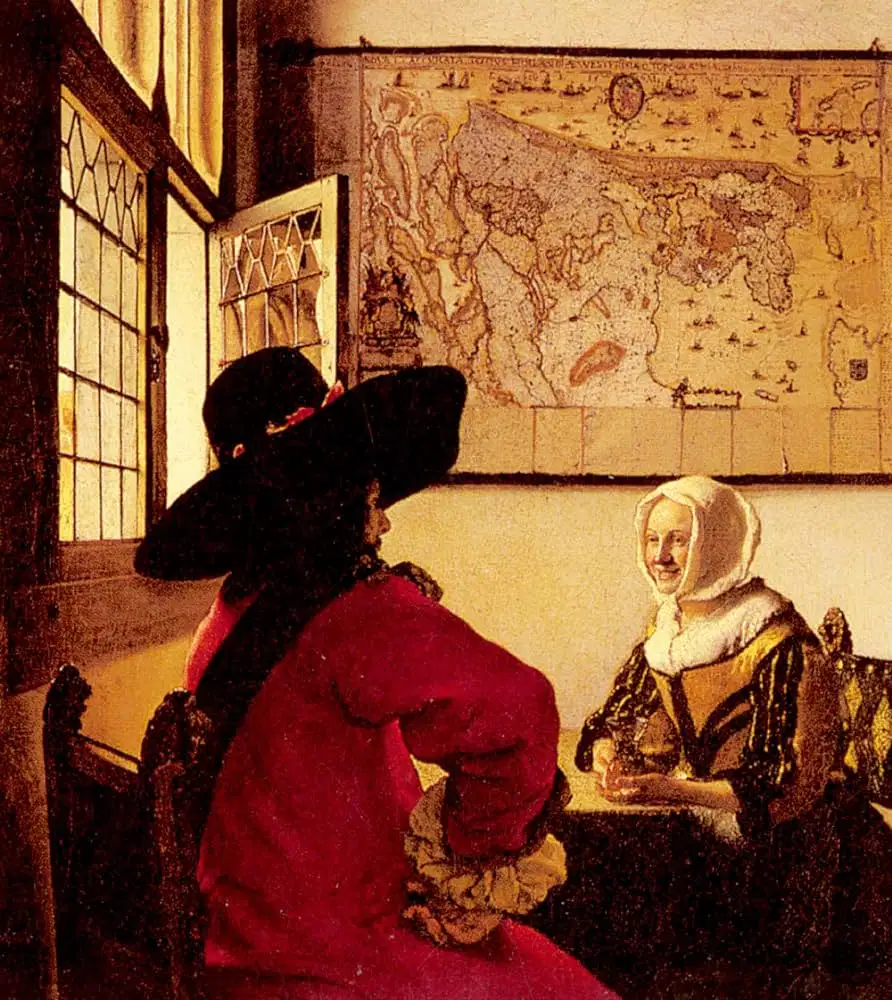
The emphasis in this work is placed on _______.
Officer
Girl
Light
Color

Turner's Burning in the "Houses of Parliment " 1835 has in common unity through ________
values are mostly high keyed and figures are detailed
feathery brushstrokes and abstract forms
limited palette of yellows and oranges with acrylics used in impasto style
Blocks of flat color that emphasize shape
Overlapping, aerial and perspective are used to show depth or _________(element) in art.
Texture
Space
Balance
Contrast
What is the difference between art media and social media?
Art media refers to online platforms for communication and networking, while social media refers to materials used to create an artwork.
Art media refers to the people, places, and things in an artwork, while social media refers to the topic or main idea behind the work of art.
Art media refers to materials used to create an artwork, while social media refers to online platforms for communication and networking.
Art media refers to the tools used to create an artwork, while social media refers to the materials used to create an artwork.
Which of the following is an example of wet media in art?
Colored pencils
Graphite
Watercolor
Charcoal
What is the main idea behind the work of art known as the subject?
The people, places, and things in an artwork
The topic or main idea behind the work of art
The tools used to create an artwork
The materials used to create an artwork
What is a common theme in art that involves understanding one's identity?
Emotion
Identity
Social issues
War and peace
Which type of abstract art uses recognizable persons, places, or things?
Objective abstract art
Cubist art
Impressionist art
Non-objective abstract art
What is a subject matter in art that involves pictures of inanimate objects?
Abstract art
Portraiture
Landscape
Still-life
What is a type of three-dimensional media that artists can sculpt with?
Graphite
Watercolor
Plaster
Colored pencils
Which of the following is an example of dry media in art?
Watercolor
Graphite
Acrylic paint
Oil pastels
What is a theme in art that often involves creating artwork to make a comment on societal issues?
Social issues
Identity
War and peace
Emotion
What is a subject matter in art that involves pictures of land?
Landscape
Still-life
Portraiture
Abstract art
What is a common theme in art that involves understanding one's emotions?
Identity
Social issues
War and peace
Emotion
What is a subject matter in art that involves pictures of people?
Portraiture
Landscape
Still-life
Abstract art
What is a theme in art that often involves creating artwork to understand the dichotomy of life and death?
War and peace
Social issues
Emotion
Life and death
Point where all diagonal lines converge when drawing in perspective
Vanishing point
Center point
Infinity point
Art that is does not show anything from the representational world and is based on formal qualities like the elements of art including line, shape, color, form, etc
Abstract art
Objective art
Cubism
Line that can run through a vanishing point and is where the surface ground meets the air or sky
Skyline
Ground line
Horizon line
Lines that slant
Vertical
Diagonal
Horizontal
A technique for representing 3-dimensional space on a 2- dimensional (paper) surface
Perspective drawing
Spatial drawing
Technical drawing
Lines that run from left to right or right to left
Diagonal
Horizontal
Vertical
Lines that run up and down or from top to bottom
Vertical
Horizontal
Diagonal
When one vanishing point is used for drawing in perspective
One point perspective drawing
Two point perspective drawing
Three point perspective drawing
A square that has been given form
Cube
Cone
Sphere
What does POV stand for?
Point of View
Power of Veto
Persuade or Voice
Purpose of Video
What is another word for "Point of View"?
plot
theme
perspective
conflict
How many images must you submit for your Sustained Investigation?
10
20
15
8
TRUE OR FALSE? The Sustained Investigation includes finished artworks only.
false
true
TRUE OR FALSE: The sustained investigation has to be led by a single theme and questions of inquiry.
true
false
TRUE OR FALSE: Once you have chosen a theme for your portfolio, you must keep that theme for the entire year.
true
false
What is our class goal?
15% of scholars will receive a 3,4 or 5 of their AP Art portfolio and receive college credit.
25% of scholars will receive a 3,4 or 5 of their AP Art portfolio and receive college credit.
80% of scholars will receive a 3,4 or 5 of their AP Art portfolio and receive college credit.
100% of scholars will receive a 3,4 or 5 of their AP Art portfolio and receive college credit.
What is the Selected Works part of the portfolio?
Top 10 works in progress. Do not have to be related to each other. Can be from the sustained investigation.
Top 5 finished artworks. Must be related to each other.
Top 5 finished artworks. Do not have to be related to each other. Can be from the sustained investigation.
Top 3 artworks selected by the teacher. Must be 24x 24 inches.
The captions for the SELECTED WORKS must include the following ______.
height width, materials, citations.
height, width, materials, processes, ideas and citations.
height, width and materials used.
only the ideas.
The WRITING STATEMENT must be written to summarize the SUSTAINED INVESTIGATION. What does it include?
100 characters. An overview of the sustained investigation.
1200 characters. Inquiry questions, experimentation and work revision or evolution.
500 character. Inquiry questions and theme, revision of work.
400 characters. Materials, processes and ideas.
What is the size limit of the images uploaded to Collegeboard?
200GB
2.5GB
3MB
4MB
Your artworks will be the "answers" to your theme and inquiry questions
true
false
The AP Art Exam differs from other AP exams in what way?
AP Drawing is based on a traditional exam that takes two days to complete; day one is “fill in the blank”, day two is a written portion.
AP Drawing Exam is based on an interview with the artist. New for 2021-2022 will be a Zoom Call with the AP Readers.
AP Drawing is not based on a written exam; instead, students submit a portfolio in May to include 15 sustained investigation images.
AP Drawing is not based on a written exam; instead, students submit a Youtube® video demonstrating a technique or skill.
The ENTIRE AP Portfolio is assessed on
Product quality, Composition, and Risk
Composition, Drawing Skill, and Value
Practice, Experimentation, and Revision
Practice, Investment, and Time
INDIVIDUAL works of art are assessed on
Composition, Line, Surface, Mark-Making, Drawing Skill, Light & Shadow, Space, (Risk & Different than Previous Works)
Line, Shape, Value, Color, Texture, Form, Space
Balance, Emphasis, Movement, Rhythm, Unity, and Contrast
Juxtposition, Personal Voice, Overall Impact, Call to Action
The Final Exam for 2nd semester will be
A traditional exam that takes four days to complete and assessed by the College Board®
Participation in a field trip to an artist's studio, including an interview and written reflection.
Participation in an art show, including display preparation, attendance, and display clean-up.
Participation in an interview with an outside expert, and a written article for the newsletter.
Not every class period will be for studio time, some classes will be for ____________.
Sharpening Pencils
Clean-Up
Critique
Social media
According to the AP Syllabus regarding artistic integrity...
Students are encourage to use primary sources when possible.
Students can take their own reference photos, or stage/choose scenes to draw from observation.
Students are not allowed to work from published photographs, works created by others, including Pinterest, and AI.
All of the above
If they must work from published photographs, the resulting work must be processed through their own visual vocabulary, and should not be able to be identified through looking at their finished work.
"You will find that this class is designed by AP to be a group effort. Although we might come from different backgrounds, ages, and friend groups, etc, we are ________________. "
"safest to stay within our friend groups."
"all united in our interest in visual art."
"all expected to figure it out on our own."
"all expected to rely solely on Mr. Blidy."
"In this course we will need to frequently offer each other our best art suggestions, support and reinforcement so we can all improve our work as artists, and _________! "
"create art to sell"
"score the highest possible on the portfolio"
"make friends"
"get an easy "A"
"sit and work by myself, don't bother others"
In the Generating Ideas Video, artists were encouraged to
"awaken your curiosity"
“own your own learning“
"choosing experiences to inform those ideas”
“documenting those experiences on paper”
All of the above
According to the video, “Awaken your curiosity” means to
remember that childlike wonder you once had
observe
ask genuine questions
all of the above
play with materials and images
According to the Inquiry: Formulating Q's that Guide Sustained Inv. video, how is "Inquiry" different from the "wagon wheel" approach?
With the inquiry approach, the next artwork is inspired by the last. With the wagon wheel approach, each artwork is planned from the beginning, each artwork returns to the main topic.
With the inquiry approach, each artwork is planned from the beginning, each artwork returns to the main topic. With the wagon wheel approach, the next artwork is inspired by the last.
With the inquiry approach, Mr. Blidy gives us the next topic. With the wagon wheel approach, each artwork comes from a different topic. The portfolio should consist of 15 separate “wheels”.
None of the above
According to the Video, a Guiding Question is
A driving force behind creating the artwork
A question about materials, processes, and/or ideas
They are usually open-ended and begin with WHAT IF?, HOW?, and WHY?
The artwork is a RESPONSE, but not necessarily an ANSWER, to guiding questions
All of the above
Which is approach is preferred by the College Board, “Wagon Wheel” or “Inquiry” for this course?
Wagon Wheel
Inquiry
What is a "Process Board"?
It is a general map or outline of where supplies are located in the art room.
It is a physical record of the artist’s process in the creation of the artwork.
A board, typically made of foam core or cork, covered in fabric, used to pin artwork to for purposes of critique or display.
This is the wood board that watercolor paper is stapled to, in order to prevent the paper from warping during the application of paint.

The following image is an example of a(n)
An Album Cover
A Process Board
A Book Cover
A Palette
“How do our dreams relate to our reality? I began by researching common dreams most people have such as flying and falling then interpreted them based on my situation. In image 2, dreaming of flying could mean freedom but it could mean fleeing from fears and responsibilities. I used complementary colors to reinforce these contrasting ideas. Then, in an attempt to improve the dream world symbolism, I practiced using white lines to separate the dream from reality. ” Identify an example of how this student "Practiced".
"I experimented with various textured brushes to figure out which is best to convey the ruggedness of reality. However, my ideas shifted from common dreams to more of my own which caused my line-work to shift from representing the dream world to representing reality." Identify an example of how this student "Experimented".
"For example, the colored subject in image 10 represented my specific dream of nonchalantly swimming underwater, while the line-work underneath represents my stressful reality. To better achieve this shift, I revised the final artwork in image 3 which led to image 4 having more powerful symbolism." Identify an example of how this student "Revised".
The evolution of this topic (described in the previous artist statement)
Came from an Inquiry approach; evolved while making.
Came from a Wagon Wheel Approach; each artwork returns to a topic.
"Feed Forward" differs from "Feedback" in that....
with Feed Forward, tips/ advice/ suggestions are given along the way or looking forward, while the artwork is being created.
with Feed Forward, tips/ advice/ suggestions are given at the end of a project.
with Feed Forward, NO tips/ advice/ suggestions are given. Just move forward to the next artwork.
with Feed Forward, tips/ advice/ suggestions are given by the College Board®.
None of the above
What are "Sentence Stems"?
Open-ended questions that allow for positive critiques and room for opportunity for the artist.
Starting sentences with "Consider trying...," or "Maybe you could..."
A way to allow the artist receiving the advice to still feel in control of their artwork itself.
They are kinder than telling someone outright to do something.
All of the above
Finish the sentence about “Critique”….”It’s not personal, it’s about the _________.
Grade
Artwork
Money
Teacher
Artist
What is the minimum requirement of our Process Boards? (for each project)
1 Guiding Question, 3 Composition Sketches, Image Resource for each object Drawn, 3 Progress Photos
1 Composition Sketch, 1 Color Sample
4 Composition Sketches, 1 Image Resource, 4 Progress Photos
None of the above
What should be added to earn an "A" on the media book/process board?
"Practice Sketches" ex. Parts of your final artwork you wish to practice first, ex. Hands, faces, eyes
Color Samples, Practice color swatches, Mini paintings, Scrapbook of inspirational images cut and pasted into your media book.
Annotations (Verbal call-outs), notes, random thoughts written down
All of the above
Why are we using a composition "menu"?
It helps us count calories every day.
In order to keep track of our compositions, and make sure we were “mixing” them up, in order to show the AP readers variety and sophistication.
So we can "order" the same composition for all of our drawings. To show the AP readers, uniformity.
None of the above
The following is an acceptable composition for this course
Symmetrical Balance, Centered Subject, Unusual Viewpoint (interesting point of view, low, high, character POV),
Asymmetrical Balance (Subject off-center, on focal point), Other (Approved and different from above)
Extreme Close-up/Cropped/Full Frame, Composition based on a letter of the alphabet
One/two point perspective (foreground, middleground, background)
All of the above
Students are encouraged to use no more than ____ centered compositions.
1
3
5
12

The following image is an example of a(n) ______ composition.
Centered/Symmetrical
Asymmetrical/Rule of Thirds
Radial Composition
Field Drawing (All-Over Composition)
None of the above

The following image is an example of a(n) ______ composition.
Centered/Symmetrical
Radial Composition
Field Drawing/All-Over Composition
Asymmetrical/Rule of Thirds

The following image is an example of a(n) ______ composition.
Centered/ Symmetrical
Radial Composition
Field Drawing/ All-Over Composition
Cropped/ Asymmetrical
None of the above

The following image is an example of a(n) ______ composition.
Field Drawing/ All over composition
Asymmetrical/Rule of Thirds
Radial Composition
None of the above

The following image is an example of a(n) ______ composition.
Asymmetrical/Rule of Thirds
Radial Composition
Field Drawing (All-Over Composition)
Symmetrical/ Perspective
None of the above

The visual organization of the work is meant to suggest a
solemn procession as part of a civic ceremony
sequence of successive events in an important narrative
contrast between orderly control and chaotic drama
strict hierarchy between the relative importance of the figures

Colour Study: squares with concentric circles was one of Kandinsky's best known works. Why is this Ironic?
It was a practice artwork
it was ugly
it was a mistake
he used the wrong colours

Describe this painting by Vincent Van Gogh. What do you think the story of this image is? What's happening? What does the artist want us to feel?

What type of COMPOSITION do you see?
Diagonal
Rule of 3rds
Centering
The rule of thirds states that objects and subjects of focus should be in the center of the photo
True
False
Choose the definition that matches the term "Foreground".
Surface quality in a work of art (ex. Tree bark)
Still objects that are observed and drawn
Objects in the front of the artwork
Using lines, shapes, etc to lead the viewer through the artwork
Objects in the back of the artwork
Which composition technique involves placing important elements along lines that divide the image into thirds horizontally and vertically?
Golden ratio
Rule of thirds
Symmetrical balance
Radial balance
In art, what is the role of leading lines in a composition?
To create texture
To guide the viewer's eye through the artwork
To define shapes
To balance the elements


