
 Worksheets
AR 1.1 - Automating Mechanisms
Total questions: 42
Worksheet time: 21mins
What is the function of the idler gear in a simple gear train with idler?
To transmit rotary motion to the output gear without changing the direction of rotation
To increase the speed of the driven gear
To function as the primary input gear, which then starts the entire gear train.
To reverse the direction of the driving gear's rotation
What is the function of an idler gear in a gear train?
To change the rotational direction between the driving and driven gears.
To significantly increase the amount of force transmitted to the driven gear.
To initiate or start the entire motion and rotation of the gear train.
To reduce the speed of the driven gear.
What is the main difference between thinking like a scientist and thinking like an engineer?
Scientists study how something works or behaves while engineers use that knowledge to solve problems.
Engineers don't use scientific principles at all, instead they focus only on mathematical calculations to design their projects.
The primary role of an engineer is to create societal problems for people, whereas a scientist's main job is to develop all the solutions.
Two examples of using engineering in everyday life are...
Figuring out how to build a snowman with a mix of snow and slush. Making a paper airplane and flying it across the room.
Following a workout plan to build strength and endurance at the gym. Studying for a test is an academic effort.
Using a pencil sharpener to get a fine point on your pencil. Walking to school is a simple human action.
Following a recipe to cook a complex meal for your family. Watching a movie in the cinema is a simple leisure activity.
What is an engineer?
A person who designs and builds things to solve specific problems
A person who only studies scientific theories without applying them
A person who repairs vehicles and mechanical equipment
A person who works in construction but does not design structures
An engineer is someone who wants to know ________ and ________ things work.
how, why
how, what
when, why
Which type of engineer would help design and build a robot?
All of these engineers would help
Mechanical Engineers
Electrical Engineers
Computer Science Engineers
What type of engineer would design bridges?
Civil Engineers
Mechanical Engineers
Electrical Engineers
Which type of engineer would work to refine oil to make gasoline, make food ingredients, synthesize medicine and protect the environment?
Chemical Engineer
Electrical Engineer
Mechanical Engineer
Which type of engineers might work on creating an artificial pancreas that could cure diabetes?
Biomedical Engineers
Mechanical Engineers
Electrical Engineers
What type of engineering focuses on machinery, robots and engines?
Mechanical Engineering
Industrial Engineering
Chemical Engineering
Electrical Engineering
What are the four main fields of engineering?
Civil, Mechanical, Electrical, Chemical
Military, Civil, Mechanical, Chemical
Military, Biological, Chemical, Physical
Civil, Military, Biological, Chemical
Engineers working on things like artificial flavors, preserving foods, making plastics out of petroleum, coming up with compounds that could replace plastic and be more renewable, all work in the field of:
Chemical Engineering
Mechanical Engineering
Civil Engineering
Solar Engineering
Engineers that work on cell phones, microchips, and even power grids are known as:
Electrical Engineers
Mechanical Engineers
Chemical Engineers
Military Engineers
Engineers that work on machines such as steam engines and robots are known as:
Mechanical Engineers
Biochemical Engineers
Civil Engineers
Military Engineers
Due to the advancements in technology and the development of steam engines, the 19th century gave rise to what branch of engineering?
Mechanical
Aerospace
Biomedical
Engineers often use information from these two fields to help them solve problems:
Science and Math
History and Math
English and Math
Science and History
Engineering was derived from 2 Latin word(s) meaning ________ and ________ .
devise and cleverness
machine and engine
devise and machine
machine and cleverness
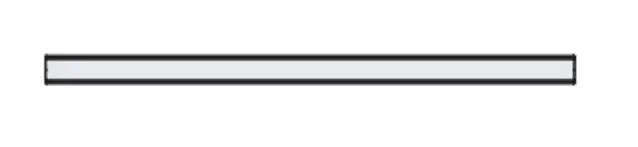
Identify the following part/component
Drive shaft
#8-32 x 1.00'' Screw
Bearing flat
5 X 25 Steel Plate
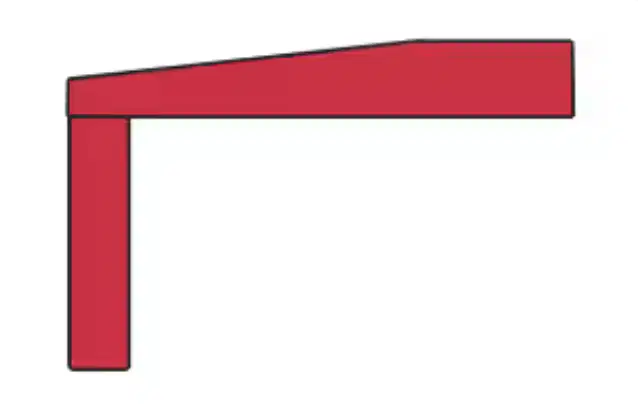
Identify this part/component
Hand crank
Bearing flat
Keps nut
4.6mm Plastic Spacer
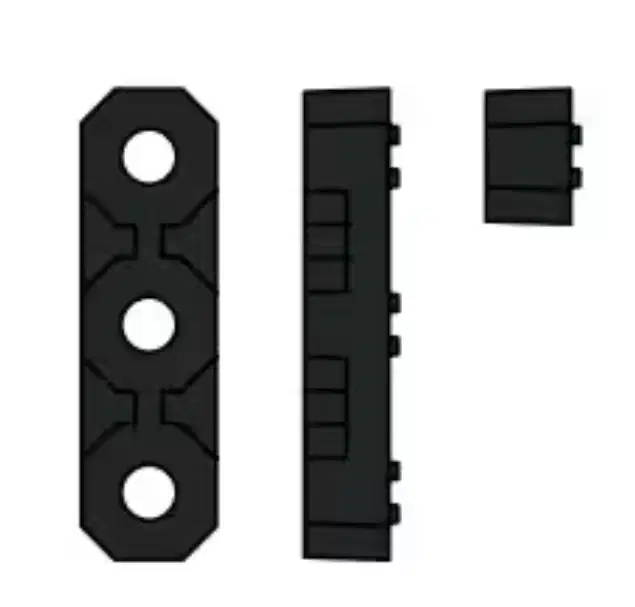
Identify this part/component
Bearing flat
Keps nut
Rubber shaft collar
Hand crank
Which component is used to support and reduce friction between a rotating shaft and the frame of a structure?
Bearing Flat
Drive Shaft
Rubber Shaft Collar
#8-32 Keps Nut
Which part is manually operated and is often used to rotate a shaft or gear system by hand?
Hand Crank
84T Gear
Bearing Flat
Steel Plate
Which gear is typically used in gear trains to reduce speed or increase torque due to its large size?
84T Gear
Hand Crank
60T Gear
Bearing Flat
Which gear has 60 teeth and is used to adjust speed or torque in gear mechanisms?
60T Gear
Drive Shaft
84T Gear
Rubber Shaft Collar
Which fastener has a built-in washer that helps to lock it in place?
#8-32 Keps Nut
Steel Plate
60T Gear
Rubber Shaft Collar
Which component is typically used to transfer rotational force in a gear system?
Drive Shaft
Rubber Shaft Collar
#8-32 Keps Nut
#8-32 x 1.00 Screw
Which part is used to secure other components along a shaft and prevent them from sliding?
Rubber Shaft Collar
Steel Plate
Drive Shaft
60T Gear
What is the name of the part designed to provide structural support to other components in a build?
Steel Plate
Drive Shaft
60T Gear
#8-32 x 1.00 Screw
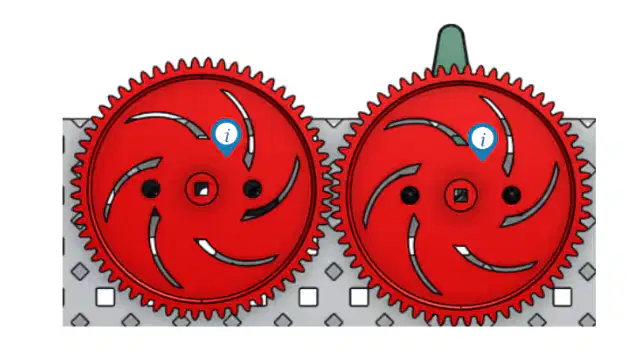
What is this component called?
simple gear train
driven gear
idler gear
driving gear
Which best describes an idler gear?
A gear placed between the driving and driven gears that changes the direction of rotation
A gear that transfers motion from the input gear to the output gear without changing direction
The gear that initiates (starts) movement in the gear train
The final gear in a gear train that receives motion
What is another name for the driven gear?
Output gear
Driving gear
Idler gear
Input gear
What is another name for the driving gear?
Input gear
Idler gear
Output gear
Driven gear
What is another name for the output gear?
Driven gear
Driving gear
Idler gear
Input gear
What is another name for the input gear?
Driving gear
Idler gear
Output gear
Driven gear
In a simple gear train with an idler gear, which of the following is the output gear?
The gear that is driven by the idler gear and completes the movement
The first gear that moves in the system
The gear located between the driving and driven gears
The gear that controls the direction of movement
In a simple gear train, which gear is responsible for starting the movement?
Driving gear
Idler gear
Driven gear
Motor gear
In a simple gear train, which of the following describes how rotary motion is transferred?
The teeth of one gear push the teeth of another, causing both to rotate
The gears slide past each other to create movement
The gears spin independently without contact
One gear moves in a straight line while the other rotates
What happens when a gear in rotary motion engages with another gear?
The second gear also rotates, transferring rotary motion
Both gears stop moving
The first gear switches to linear motion
The second gear moves linearly
Which component in a gear system is primarily responsible for creating rotary motion?
Hand Crank
Steel Plate
Bearing Flat
Rubber Shaft Collar
Rotary motion refers to which type of movement?
Circular movement around an axis
Back-and-forth along a straight line
Side-to-side swinging like a pendulum
Forward motion in a straight path
What is the function of the hand crank in the simple gear build?
To produce rotary motion by spinning a gear on a shaft
To make the build look good
To secure the gears in place and prevent them from moving
To create linear motion by sliding along the shaft

