Wayground logo

Free Printable Worksheets

Font size

S
M
L
XL
Worksheets

Science9_Q1_reviewer

Total questions: 35

Worksheet time: 27mins

Name
Class
Date
1.
Avagadro's number is
a)
6.022
b)
6.022 x 10⁻²³
c)
6.022 x 23
d)
6.022 x 10²³
2.
What is the rounded molar mass of a mole of one hydrogen atom?
a)
1 amu
b)
2 amu
c)
2 g
d)
1 g
3.
Stoichiometry measures chemical that ______, and _____, an given reaction
a)
come out of, go into
b)
go into, come out of
c)
equal, balance
d)
balance, equal
4.
What is the Molar mass of one mole of Iron (Fe)?
a)
55.93 amu
b)
55.93 g
c)
111.86 amu
d)
111.86 g
5.
What is the molar mass of one molecule of Nitrogen N2?
a)
14.01 amu
b)
14.01 g
c)
28.02 g
d)
28.02 amu
6.
What is the molar mass of a molar mass of Carbon Dioxide (CO2)?
a)
12 amu
b)
12 g
c)
44 g
d)
44 amu
7.
What is the Molar mass of the Baking Soda? (NaHCO3)
a)
84 g
b)
84 amu
c)
52 g
d)
52 amu
8.
What is the Molar mass of the Baking Soda? (NaHCO3)
a)
84 g
b)
84 amu
c)
52 g
d)
52 amu
9.
What is the atomic mass of one atom of Nitrogen?
a)
14 amu
b)
14 g
c)
14 kg
d)
None of these
10.
How many molecules are in 2.5 mol of NaCl?
a)
1.51x10²³
b)
146
c)
4.15
d)
1.51x1024
11.
How many carbon atoms are in methane?
a)
1
b)
2
c)
3
d)
4
12.
How many carbon atoms are in ethane?
a)
1
b)
2
c)
3
d)
4
13.
Hydrocarbons are compounds that contain
a)
  Carbon and Nitrogen
b)
Carbon and Hydrogen 
c)
  Carbon, and Oxygen
d)
Carbon, Oxygen, and  Hydrogen 
14.
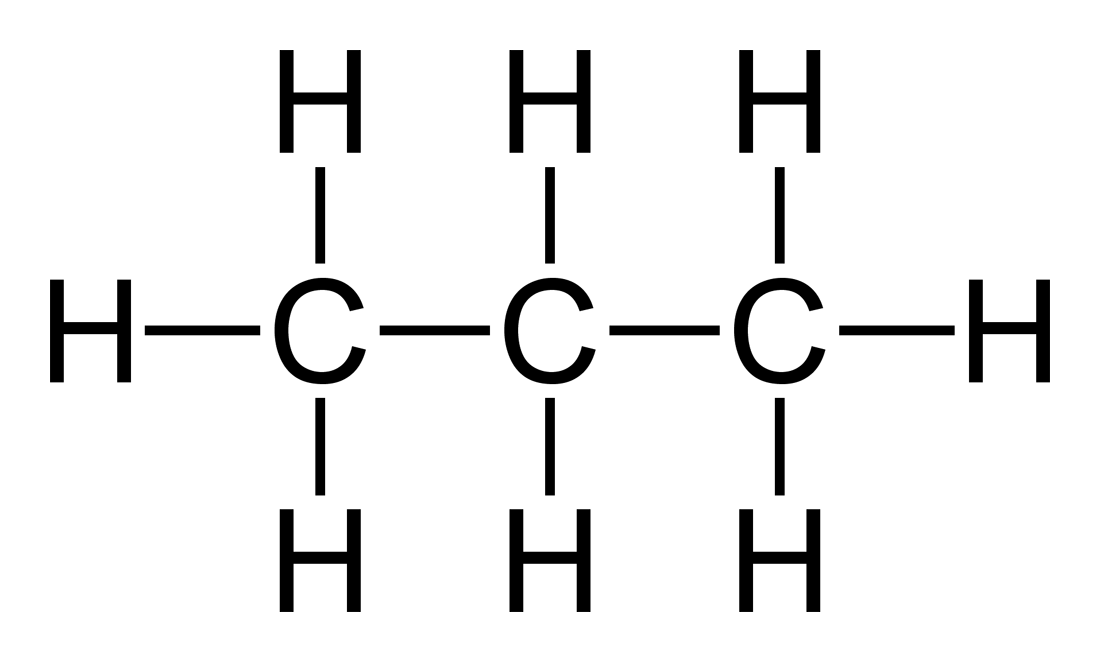
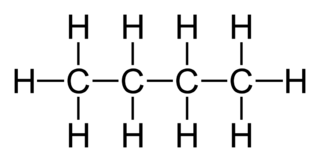
Name this alkane
a)
Methane
b)
Ethane
c)
Propane
d)
Butane
15.
Name this alkane
a)
Methane
b)
Ethane
c)
Propane
d)
Butane
16.
How many carbon atoms are in methane?
a)
1
b)
2
c)
3
d)
4
17.
Name this alkane
a)
Methane
b)
Ethane
c)
Propane
d)
Butane
18.
The following compounds have a molecular formula of
a)
CnH2n+2
b)
CH4
c)
C6H14
d)
CH3CH2CH2CH2CH2CH3
19.

What is the general formula of the alkenes?

a)

CnH2n+1

b)

CnH2n+2

c)

CnH2n

d)

CnH2n+1OH

20.
Hydrocarbons are compounds that contain
a)
  Carbon and Nitrogen
b)
Carbon and Hydrogen 
c)
  Carbon, and Oxygen
d)
Carbon, Oxygen, and  Hydrogen 
21.

The chemical bond formed when two atoms share electrons is call a(n)

a)

covalent bond

b)

ionic bond

c)

metallic bond

d)

electron bond

22.

The electrons that are lost, gained, or shared in chemical bonds are called ________________.

a)

valence electrons

b)

chemical electrons

c)

Lewis electrons

d)

none of the above

23.

How many electrons are needed in the outer energy levels of most atoms for the atom to be chemically stable?

a)

2

b)

4

c)

6

d)

8

24.

Which of the following is a similarity between ionic and covalent bonds?

a)

Both include the gaining and losing of electrons

b)

Both include the sharing of electrons

c)

Both make the elements more stable

d)

Both are typically found as solids at room temperature

25.

______________ compounds are usually the strongest.

a)

Ionic

b)

Covalent

c)

Molecule

d)

solid

26.

What is a valence electron?

a)

an electron that is found in the outermost shell of an atom

b)

an electron found in the innermost shell of an atom

c)

an electron found in the middle shell

d)

an electon found in the nucleus

27.

What is the number of valence electrons of Neon?

a)

6

b)

7

c)

8

d)

9

28.

What is the number of valence electrons of Oxygen?

a)

1

b)

2

c)

6

d)

8

29.
How do covalent bonds form?
a)
Donating & receiving valence e- between atoms.
b)
Opposite slight charges attract each other between compounds.
c)
Scientists are still not sure how they form.
d)
Sharing valence e- between atoms.
30.

Why don't noble gases form bonds?

a)

Noble gases do form bonds

b)

They all have a full octet

c)

They only bond with each other

31.

Atoms in molecules share pairs of electrons when they form

a)

covalent bonds.

b)

ionic bonds.

c)

hydrogen bonds.

d)

polymers.

32.
When a molecule has an opposite electrical charge on each end, it is known as what?
a)
cohesion
b)
polar molecule
c)
hydrogen bond
d)
solution
33.
Which statement explains why water molecules stick together?
a)
both sides are negative
b)
one side has a positive charge and the other side has a negative charge
c)
one side has a negative charge adn the other side has a neutral charge
d)
both sides are positive
34.
Water is a universal solvent because it...
a)
It can be found anywhere
b)
It freezes when it gets cold
c)
floats when frozen
d)
Dissolves most substances
35.
Attractions between the negative Oxygen atom of one water molecule and the positive Hydrogen atom of another water molecule are called
a)
Covalent bonds
b)
Ionic bonds
c)
Polar bonds
d)
Hydrogen bonds